
Hello, readers! It is Monday again! As it is Monday, welcome to another #5OnMyTBR update. The rule is relatively simple. I must pick five books from my to-be-read piles that fit the week’s theme.
This week’s theme: No Prompt
Since there is still no prompt this week, I opted to feature works of Indian writers. I just learned that today is Indian Republic Day. It is celebrated to commemorate the adoption of India’s constitution and the country’s transition to a republic on January 26, 1950. It comes as no surprise that I have quite a lot of works of Indian literature in my reading list; they are indeed prolific writers. However, I must admit that my exploration of Indian literature, beyond Salman Rushdie, has been quite limited. Regardless, I have been expanding my venture into this extensive body of literary work. Anyway, here are some works of Indian literature that are on my to-be-read list.

5OnMyTBR is a bookish meme hosted by E. @ Local Bee Hunter’s Nook where you choose five books from your to-be-read pile that fit that week’s theme. If you’d like more info, head over to the announcement post!

Title: The Guide
Author: R.K. Narayan
Publisher: Penguin Books
Publishing Date: 1985
No. of Pages: 220
Synopsis:
Release from jail, Raju – once India’s most corrupt tourist-guide – takes refuge in an abandoned temple. A peasant mistakes him for a holy man, and gradually, reluctantly, Raju begins to play the part. Villagers bring him offerings; he even grows a magnificent beard. Then God Himself decides to put Raju’s new holiness to the test. . . .

Title: Rich Like Us
Author: Nayantara Sahgal
Publisher: Sceptre
Publishing Date: 1987
No. of Pages: 266
Synopsis:
A story of India: the recent India of Mrs Gandhi’s Emergency when power became arbitrary once more, when – as always in such times -the corrupt, the opportunists, and the bully flourished.
A story of an older India, of a generation who remember the British Raj and Partition, of the continuities and the ties of family and caste and religion that stretch back and back.
But above all, and memorably, it is a story of people: of Rose, the Cockney memsahib, of Western-educated Sonali and traditionally brought-up Mona, of Ravi, Marxist turned placeman, and Kishori Lal, the old idealist who finds that once again a man can be imprisoned just for what he thinks.
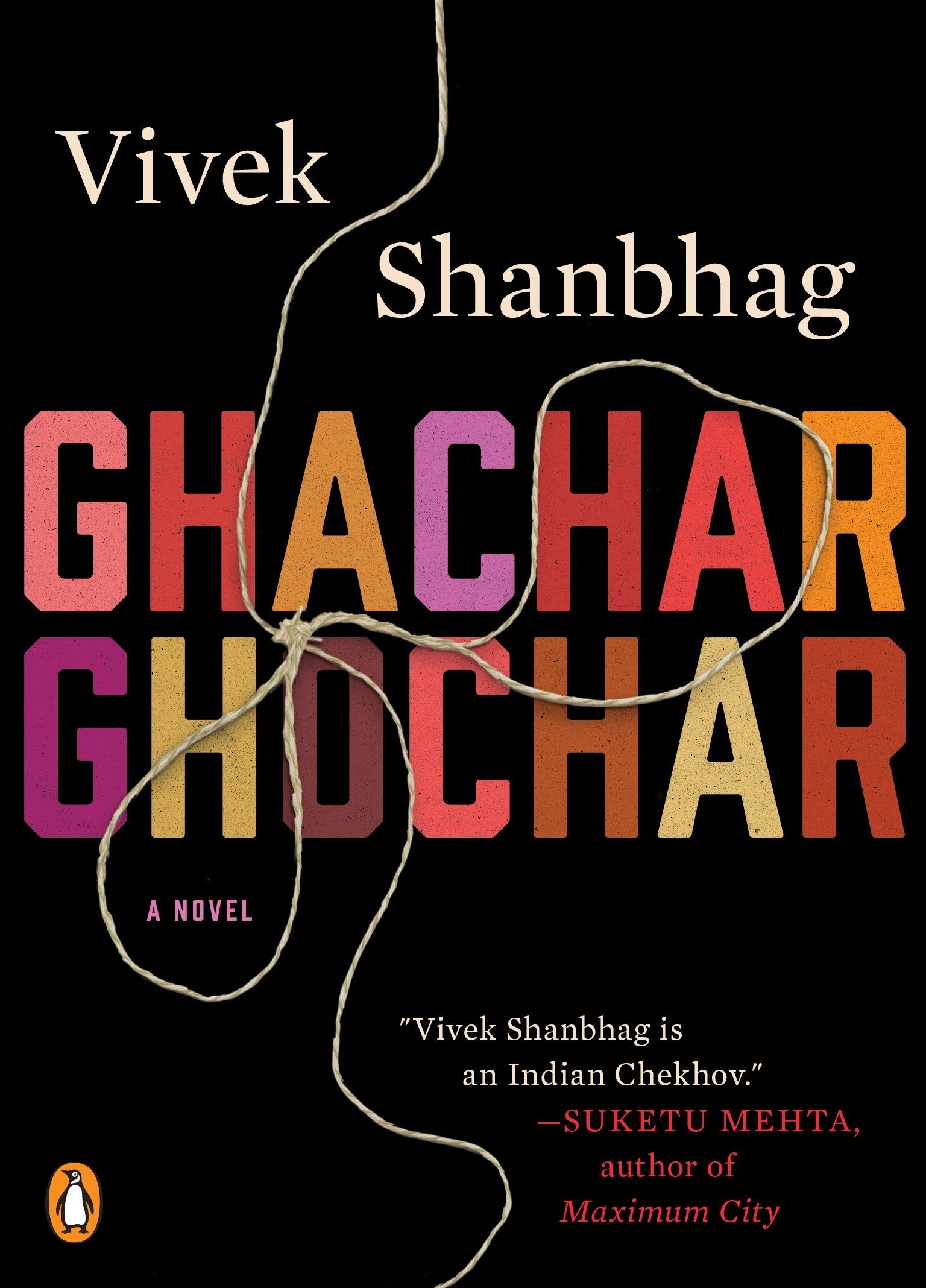
Title: Ghachar Ghochar
Author: Vivek Shanbhag
Translator: Srinath Perur
Publisher: Penguin Books
Publishing Date: 2017
No. of Pages: 118
Synopsis:
A young man’s close-knit family is nearly destitute when his uncle founds a successful spice company, changing their fortunes almost overnight. As the narrator – a sensitive, passive man who is never named – his mother, father, sister, and uncle move from a cramped, ant-infested shack to a large new house on the other side of Bangalore, the family dynamic starts to shift. Allegiances realign, marriages are arranged and begin to falter, and conflict brews ominously in the background. Before he knows it, things are “ghachar ghochar” – a nonsense phrase meaning something tangled beyond repair, a knot that can’t be untied.
Elegantly written and punctuated by moments of unexpected warmth and humor, Ghachar Ghochar is a quietly enthralling, deeply unsettling novel about the shifting meanings – and consequences – of financial gain in contemporary India.

Title: An Equal Music
Author: Vikram Seth
Publisher: Phoenix House
Publishing Date: 1999
No. of Pages: 381
Synopsis:
Vikram Seth occupies a genre of his own. No two books of his have been alike, and yet each has borne the hallmark of its author: the ‘unmistakable breath of life’ as one critic described it, ‘unassailable truthfulness’ in the words of another. In An Equal Music, his first novel since A Suitable Boy, Vikram Seth returns with a story both intricate and intimate, rich with music, art, humour and emotion.
On one level, it is a story about love, love of a woman lost and found and lost again. A chance sighting on a London bus, a letter which should never have been read, a pianist with a secret that touches the heart of her music: from a multiplicity of details, Vikram Seth once again creates the illusion of life. It is also a book about music and about how the love of music can run like a passionate theme through a life. Above all, it is a book to savour and re-read. By turns elegiac and witty, it introduces the readers to another facet of Vikram Seth’s unique talent.
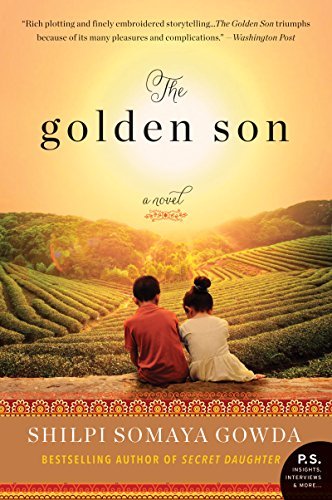
Title: The Golden Son
Author: Shilpi Somaya Gowda
Publisher: William Morrow
Publishing Date: 2016 (2010)
No. of Pages: 392
Synopsis:
Anil is the cherished eldest son of a large family from an Indian village, expected to inherit the role of leader of his clan and arbiter of its disputes. Leena is his closest companion, a fiercely brave girl who loves nothing more than the wild terrain they inhabit and her dear parents. As childhood friends, they are inseparable, with one of those rare relationships that transcends circumstance and the inequalities of life. But with the pressures and complications of adulthood, their paths begin to diverge. Anil journeys to America to pursue his dream of becoming a medical doctor, finding both temptation and trial at a gritty urban hospital in Dallas, Texas. In India, Leena leaves her beloved home to join her new husband in a distant village, to discover her new family has unexpected complications.
Anil and Leena struggle to come to terms with their identities thousands of miles apart. Many years later, their lives intersect once again. Altered by their choices and experiences, these two old friends are reunited when they need each other most. A tender and bittersweet story of friendship and family, The Golden Son illuminates the decisions we must make to find our true selves.
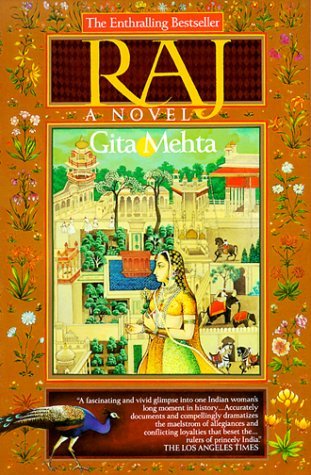
Title: Raj
Author: Gita Mehta
Publisher: Fawcett Columbine
Publishing Date: 1989
No. of Pages: 467
Synopsis:
A writer of unusual subtlety and impressive scope, Gita Mehta possesses a stunning grasp of historical complexities and a keen eye for detail. These qualities are in abundance in Rah, the remarkable story of a woman of royal birth coming of age during India’s fight for independence. With rare grace and narrative flair, Mehta lays bare the complexities of Indian culture and tradition as few foreigners ever experience them.
At the heart of her epic is Jaya Singh. The intelligent, beautiful, and compassionate daughter of the Maharajah and Maharani of Balmer, Jaya is raised in the thousand-year-old tradition of purdah, a strict regime of seclusion, silence, and submission. But with the premature death of her decadent, Westernized husband, Jaya must assume the role of Regent Maharani of Sirpur. She soon finds herself thrust into the center of a roiling political battle in which the future of the kingdom is at stake. It is a conflict that will force Jaya to realize her future as a leader of the Indian people in her own right.
Moving deftly from the desert plains of Balmer to the fertile delta of Sirpur, and spanning nearly half a century, Raj is a powerful, enlightening, and finally, ennobling story of a nation struggling passionately to be born.
 The Pine-Scented Chronicles