
Happy Wednesday, everyone! Woah! Just like that, we are already in the second month of the year. How has the year been so far? I hope that the year is going well for everyone. It is unfortunate, but we must go back to our realities. Regardless, I hope the rest of the work week will go smoothly.
With this said, the middle of the week also means a fresh WWW Wednesday update. WWW Wednesday is a bookish meme hosted originally by SAM@TAKING ON A WORLD OF WORDS.
The mechanics for WWW Wednesday are quite simple: you just have to answer three questions:
- What are you currently reading?
- What have you finished reading?
- What will you read next?

What are you currently reading?

It’s already the middle of the week. This also means we have only two more days until the weekend. I hope everyone makes it through the workweek. Reading-wise, my 2026 reading journey is going as designed. I am currently in the midst of a foray into Latin American literature. It has been quite some time since I dedicated a month or two to reading works by writers from the region—if my memory serves me right, the last time was in 2023. The time is now ripe for a return. My current read takes me to a familiar name: Luis Alberto Urrea, whom I first encountered in early 2018 while researching books to include on my Books I Look Forward To list. His novel The House of Broken Angels was a recurring presence on similar lists, prompting me to include it on my own. It also became the first novel by the Mexican American writer that I read. A couple of years later, I encountered another one of his works, The Hummingbird’s Daughter, during the Big Bad Wolf Sale.
I was not planning to read The Hummingbird’s Daughter, but it had been some time since I last read one of Urrea’s works. Originally published in 2005, the novel is set in the late 1800s and early 1900s and begins in the state of Sinaloa, on the vast Santano ranch owned by Tomás Urrea. At the ranch, fourteen-year-old Cayetana Chávez, a poor and illiterate Indigenous woman familiarly referred to as La Semalú (the Hummingbird), gives birth to Tomás’s daughter, whom she names Rebecca. Assisting her is Huila, the ranch’s healer, midwife, and spiritual guide. The early sections of the novel move quickly, capturing Cayetana’s lack of maternal instincts. One day, when her daughter is two, Cayetana leaves Rebecca with her sister and never returns. The story then moves forward a couple of years. Rebecca, now a young girl, is recognized by Huila. However, Rebecca corrects her, saying that her name is Teresa and that she goes by Teresita.
Teresita has become a God-fearing girl who reveres God and the saint she was named after. When Huila tells her that she does not look like she is of “the People” (the Indigenous community), Teresita is offended. Her life begins to unravel when a young boy named Buenaventura tells her that her father is Tomás, naturally piquing her interest. Loreto, Tomás’s wife, also recognizes traces of Urrea blood in her. Reluctantly, her father accepts her. This coincides with Teresita’s spiritual awakening. After exhibiting miraculous healing powers, Huila takes her under her wing and begins educating her in matters of spirituality and the healing properties of plants. The Hummingbird’s Daughter has several layers. Teresita’s awakening is just one facet of the novel. In the background, Mexico is experiencing political and social upheaval. I am halfway through the book, and it has me quite invested. I can’t wait to see how the story further unfolds.
What have you finished reading?
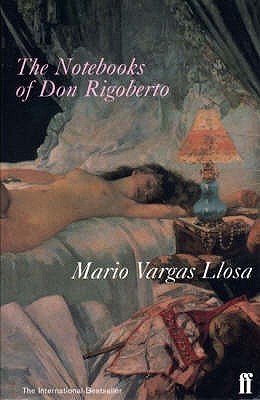
My foray into Latin American literature is in full swing. In the previous week, I was able to tick off two more works by writers from the region. The first of these is Mario Vargas Llosa’s The Notebooks of Don Rigoberto, a book I also included on my 2026 Top 26 Reading List. Must-read lists first introduced me to the Peruvian writer. His works—particularly The War of the End of the World and The Feast of the Goat—were repeatedly featured on such lists, and they became the first two books by the Nobel Laureate in Literature that I read. I later learned that Vargas Llosa is among the leading voices of the Latin American Boom in the second half of the twentieth century. Anyway, a couple of years after reading my first Vargas Llosa novel, I am now reading my fifth book by the Peruvian writer: The Notebooks of Don Rigoberto.
Originally published in 1997 in Spanish as Los cuadernos de don Rigoberto, The Notebooks of Don Rigoberto chronicles the life of its titular character. Apparently, the novel is a continuation of In Praise of the Stepmother, which I have yet to read. This, however, does not hamper my enjoyment of the book. Don Rigoberto’s story unfolds largely through the perspective of Fonchito (Alfonso), his son from a previous marriage. Fonchito is fascinated by his father’s notebooks, which contain erotic drawings and stories. We also learn that Don Rigoberto works as an insurance executive during the day. At night, he devotes himself to his passionate pursuits. Enveloped in anonymity by the darkness, he transforms into a pornographer and sexual enthusiast. Passion and sex are not unusual subjects in Vargas Llosa’s oeuvre, and these are themes he writes about particularly well. I am reminded here of Aunt Julia and the Scriptwriter. Don Rigoberto is forced to divert his energies following emotional turmoil stemming from the absence of his estranged wife, Lucrecia, who has moved away with her maid, Justiniana. Doña Lucrecia’s absence leaves a gaping hole in his life—she is, after all, his true love. Yet there is more to Don Rigoberto than eroticism. He is deeply fascinated by art and literature, collecting books and artworks in abundance. When he acquires new pieces, he parts with older ones, initially by donating them to charity. The characters’ fixation on art captures the intersection between sexuality and aesthetics, which is among the novel’s many themes. Still, the central question remains: what happened between Don Rigoberto and Doña Lucrecia? The crux of the story apparently revolves around the events that led to Lucrecia’s banishment from Don Rigoberto’s household. He expelled her after discovering her affair with Fonchito—a scandal depicted in In Praise of the Stepmother.
The story is also about Fonchito, who attempts to emulate his father. Like him, he aspires to become an artist and is obsessed with the decadent painter Egon Schiele. He even once asked his stepmother to model the pose from one of Schiele’s drawings. Fonchito is no embodiment of innocence; his veneer conceals manipulative tendencies. At the start of the novel, he visits his stepmother to seek her forgiveness, which she reluctantly grants. The Notebooks of Don Rigoberto certainly has an intriguing premise and stands in sharp contrast to Death in the Andes, the last Vargas Llosa novel I read. It explores the interplay between fantasy and reality, portraying eroticism as a means of self-expression. The novel also examines the intimate connections between fantasy, art, and literature, suggesting that aesthetic appreciation is inevitably tied to sexuality. The characters’ murky personalities make them especially compelling, while their complex dynamics add nuance to the narrative. Ultimately, The Notebooks of Don Rigoberto offers a different dimension of the Nobel Laureate’s body of work—and makes it imperative for me to finally read In Praise of the Stepmother.
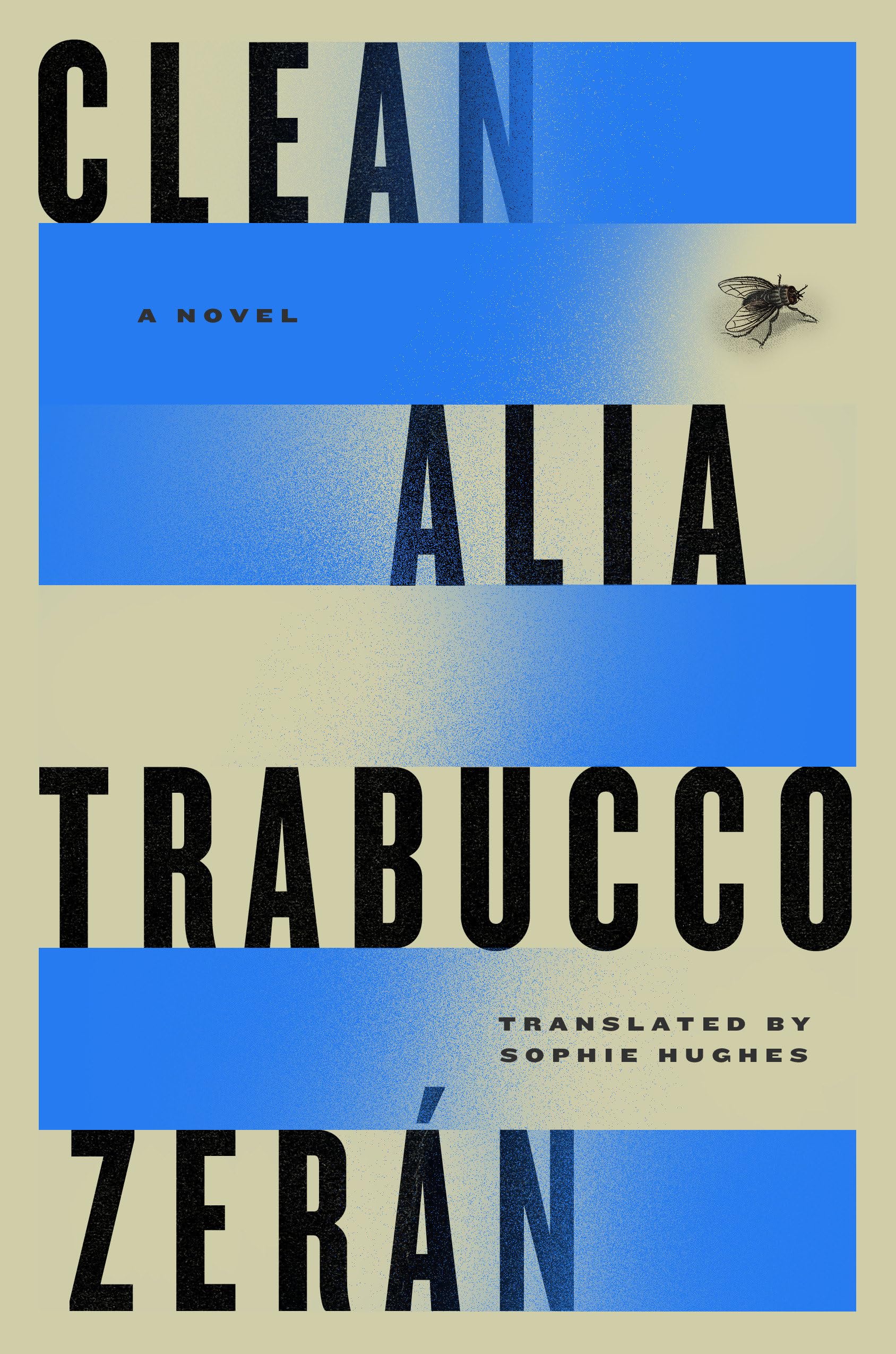
From Peru, my next read took me to Chile, a part of the literary world that has slowly been becoming familiar to me. Thanks to Isabel Allende, I have expanded my venture into Chilean literature. Although she remains my most-read Chilean writer, I have since explored the works of her countrymen Roberto Bolaño, José Donoso, Alejandro Zambra, and, more recently, Alberto Blest Gana. However, it is evident that beyond Allende, my engagement with Chilean literature has been dominated by male writers. This makes Alia Trabucco Zerán a notable deviation. Apparently, I have already featured her and her novel, Clean, in one of my Goodreads Monday updates. Further, the Chilean writer’s debut novel, La Resta (2015; trans. The Remainder), was shortlisted for the 2019 International Booker Prize. Anyway, in January, I acquired a copy of Clean, although I was not aware at the time that I had already mentioned it in one of my posts.
Originally published in 2022 as Limpia, the novel is primarily narrated by Estela García. When the story opens, we learn that she is locked in an interrogation room, although we are not initially told why. Framed as a monologue, Estela speaks to police officers she assumes are listening from another room. As always, the answer to this initial mystery lies in the past. We learn that Estela is forty years old and was born to a single mother in the Chilean countryside. Seven years earlier, she moved to the capital in search of work, leaving her mother behind. She was hired by a wealthy couple to be their housemaid. The señor was a doctor, while the señora worked for some sort of corporation. When the wife became pregnant, Estela was also tasked with caring for the child after birth. The girl was named Julia. In the present, however, Julia has been found dead in the family’s swimming pool. Estela then recounts the circumstances and events leading up to the young girl’s death. She is diligent in the discharge of her duties, though she initially struggles to fit in. This is when things begin to unravel. She witnesses scenes she was never meant to see. She becomes a surrogate parent to Julia, whom she fondly refers to as “animal.” This closeness, however, breeds silent resentment from the señora, who grows jealous of their bond. At the same time, Estela bears witness to the family’s dysfunction and deep-seated inequality. She herself is treated as an invisible presence. To her employers, Estela is reduced to actions rather than a person—“making the bed, airing the rooms, scrubbing the vomit out of the rug.” She is slowly stripped of her humanity. In this sense, the novel takes on a psychological dimension, with Estela painting a portrait not only of her own life, but also of the rot within the household she serves.
Yet a lingering question remains: what happened to Julia? Suspicion falls on Estela, hence her monologue. It does not help that her narrative is circuitous—an apparent deliberate choice meant to cultivate suspense. Estela meanders through stories of rats infesting the house and the lies she is forced to invent to assure her employers that the infestation has been dealt with. There is also poison. Through these details, Estela grips the reader, keeping us on edge. Trabucco Zerán does a resplendent job of engaging the reader. Ironically, she withholds any physical description of Estela, effectively placing the reader in the same position as the señor and señora. It is a brilliant narrative stroke. Estela’s testimony becomes her reclamation of power—the first time she is truly seen and given the space to speak freely about the abuses she has endured. Clean is Estela’s act of seizing back the narrative. Her story captures the intricacies of domestic service while underscoring the social dichotomies that persist in contemporary society. Despite its brevity, Clean is packed with powerful messages about domestic labor exploitation, power, trauma, and class struggle. Overall, it is a compelling and unsettling read.
What will you read next?

 The Pine-Scented Chronicles