Hello, readers! It is Monday again! As it is Monday, welcome to another #5OnMyTBR update. The rule is relatively simple. I must pick five books from my to-be-read piles that fit the week’s theme.
This week’s theme: No Prompt
Since there is still no prompt this week, I opted to feature works of Central American writers. This is in connection with my ongoing venture into Latin American literature. Admittedly, my foray into the works of Central American literature is quite limited. Apart from works by El Salvadorian Manlio Argueta and two works by writers of Central American origin, I have not read any other works by writers from the region. To think that it was only this year that I read one of these three works. Still, with my vision of expanding my literary horizon, I am looking forward to reading more works from the region. Without ado, here are some works of Central American writers I am looking forward to reading.
5OnMyTBR is a bookish meme hosted by E. @ Local Bee Hunter’s Nook where you choose five books from your to-be-read pile that fit that week’s theme. If you’d like more info, head over to the announcement post!

Title: The President
Author: Miguel Angel Asturias
Country: Guatamela
Synopsis:
Guatemalan diplomat and writer Miguel Ángel Asturias (1899–1974) began this award-winning work while still a law student. It is a story of a ruthless dictator and his schemes to dispose of a political adversary in an unnamed Latin American country usually identified as Guatemala. The book has been acclaimed for portraying both a totalitarian government and its damaging psychological effects. Drawing from his experiences as a journalist writing under repressive conditions, Asturias employs such literary devices as satire to convey the government’s transgressions and surrealistic dream sequences to demonstrate the police state’s impact on the individual psyche. Asturias’s stance against all forms of injustice in Guatemala caused critics to view the author as a compassionate spokesperson for the oppressed. My work,” Asturias promised when he accepted the Nobel Prize for Literature, “will continue to reflect the voice of the people, gathering their myths and popular beliefs and at the same time seeking to give birth to a universal consciousness of Latin American problems.” (Source: Goodreads)
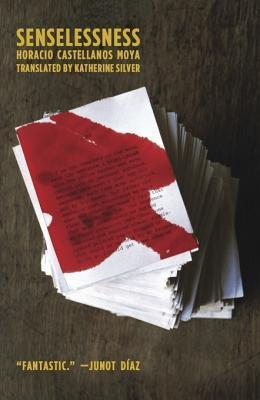
Title: Senselessness
Author: Horacio Castellanos Moya
Country: El Salvador
Synopsis:
A boozing, sex-obsessed writer finds himself employed by the Catholic Church (an institution he loathes) to proofread a 1,100 page report on the army’s massacre and torture of thousands of indigenous villagers a decade earlier, including the testimonies of the survivors. The writer’s job is to tidy it up: he rants, “that was what my work was all about, cleaning up and giving a manicure to the Catholic hands that were piously getting ready to squeeze the balls of the military tiger.” Mesmerized by the strange Vallejo-like poetry of the Indians’ phrases (“the houses they were sad because no people were inside them”), the increasingly agitated and frightened writer is endangered twice over: by the spell the strangely beautiful heart-rending voices exert over his tenuous sanity, and by real danger—after all, the murderers are the very generals who still run this unnamed Latin American country. (Source: Goodreads)
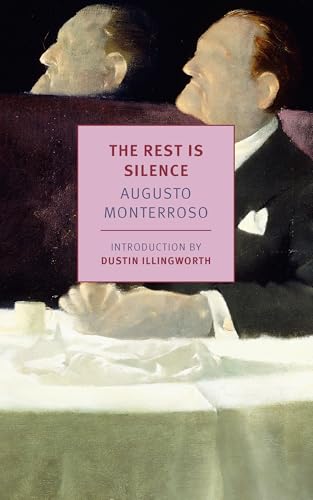
Title: The Rest is Silence
Author: Augusto Monterroso
Country: Honduras
Synopsis:
The one and only novel by the renowned Guatemalan writer Augusto Monterroso—Latin America’s most expansive miniaturist, whose tiny, acid, and bracingly surreal narratives Italo Calvino dubbed “the most beautiful stories in the world”—The Rest Is Silence presents the reader with the kaleidoscopic portrait of a provincial Mexican literary critic, one Eduardo Torres, a sort of Don Quixote of the Sunday supplements, whose colossal misreadings are matched only by the scale of his vanity.
Presented in the form of a festschrift for the aging writer, this rollicking metafiction offers up a bouquet of highly unreliable reminiscences by Torres’s friends, relations, and servants (their accounts skewed by envy, ignorance, and sheer malice), along with a generous selection of the savant’s own comically botched attempts at “criticism.”
Monterroso’s narrative is a ludicrous dissection of literary self-conceit, a (Groucho) Marxian skewering of the Mexican literary landscape, and perhaps a wry self-portrait by an author who is profoundly sensible of just how high the stakes of the art of criticism really are—and, consequently, of just how far it has to fall. (Source: Goodreads)
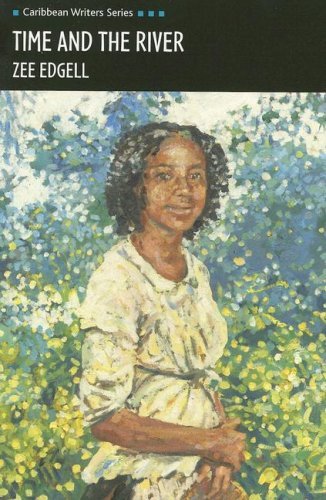
Title: Time and the River
Author: Zee Edgell
Country: Belize
Synopsis:
Time and the River is about freedom and slavery, hope and betrayal. It tells the story of people who don’t own their own land or time, or even their own bodies. Leah Lawson is the daughter of a slave owner and a slave woman in Belize (the former British Honduras). In dreaming of a better future Leah must make some difficult choices. Her life takes drastic turns, changing her from slave into mistress, and forcing her to take the lives of her family and best friend into her own hands. (Source: Goodreads)
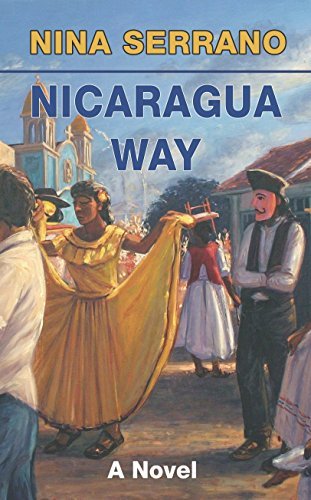
Title: Nicaragua Way
Author: Nina Serrano
Country: Nicaragua
Synopsis:
Nicaragua Way tells the story of Lorna Almendros, a San Francisco Nicaraguan-American poet, passionately engaged in supporting revolutionary struggles in Latin America and the Sandinista solidarity movement in the U.S. Lorna is a mature single woman living in San Francisco, California, raising a teen daughter, searching for her Latino roots among a cast of fascinating characters in culturally diverse San Francisco’s Mission District. Lorna’s memories of her Nicaraguan grandfather sweep her and her daughter, Rini, into the inspiring revolutionary fever of the era’s Nicaraguan Sandinista revolution. San Francisco’s barrio comes alive as the brutal Somoza dynasty falls opening a new era of social justice for all of Central America. This feminist tale is a coming of age story of an older woman. Set in San Francisco and Managua between 1975 and 1989, the novel portrays a rich cast of characters, including Rini, Lorna’s daughter; Eddie, an organizer and revolutionary guerrilla fighter; Helen, her best friend, and a city politician; and Maria Rosa, a Nicaraguan-exiled immigrant. They move between San Francisco’s activist-arts community and Nicaragua, building support for change in the shadow of the U.S. undeclared wars in Central America.Nicaragua Way is a story of a woman in the resistance movement from before the 1979 revolutionary triumph to the end of the revolutionary project with the 1989 election defeat. Along the way the protagonist raises a daughter, falls in love, fears menopause and empty nest blues, faces deaths, intrigue, passions, and never stops writing poems. It is Lorna’s life as an activist and writer, (or “artivist” as some call it) that propelled her forward, As it has been for me. The writing of Nicaragua Way was a 23-year experience spanning the years from 1993 to 2016, fictionalizing the road I myself traveled in the cause of peace, social justice, international friendship, and solidarity. My two decades as the writer began as my protagonist’s story ended. The dividing line was the 1990 electoral defeat of the Sandinista government, an event with the same kind of impact as Trump victory in the USA. I began writing the novel to find a way out of my personal despair due to that election loss. The creation of Lorna’s journey was my own path to rekindling hope and inspiration. With every rewrite, Lorna became stronger, standing up for herself as she faced ever-increasing political and personal challenges in the Nicaragua solidarity movement within the US. My portrayal of Lorna and Rini’s ever deepening involvement in social issues facing Nicaragua during the ten years of transformation is shadowed by the electoral defeat of the revolutionaries in 1990. When the Nicaragua revolution collapsed under the weight of the Contra War led by Ronald Reagan and the Iran-Contra gang, my spirits spiraled downward. I had to understand what happened on a personal level. For me, the political is personal. I had to re-examine my own intimate journey through Nicaragua’s revolutionary years and the international Central American solidarity movement. My inspiration slowly returned as I wrote the story of Lorna’s life in the pages of my novel. I overcame writer’s block, disillusionment, and all the rest of the negativity that keeps us from being our best most creative and resilient selves. I learned that writing is a healing and creative journey.Nicaragua Way can lead readers back to hope and inspiration. It opens a path for readers to find their own strength and creativity to help foster change. (Source: Goodreads)
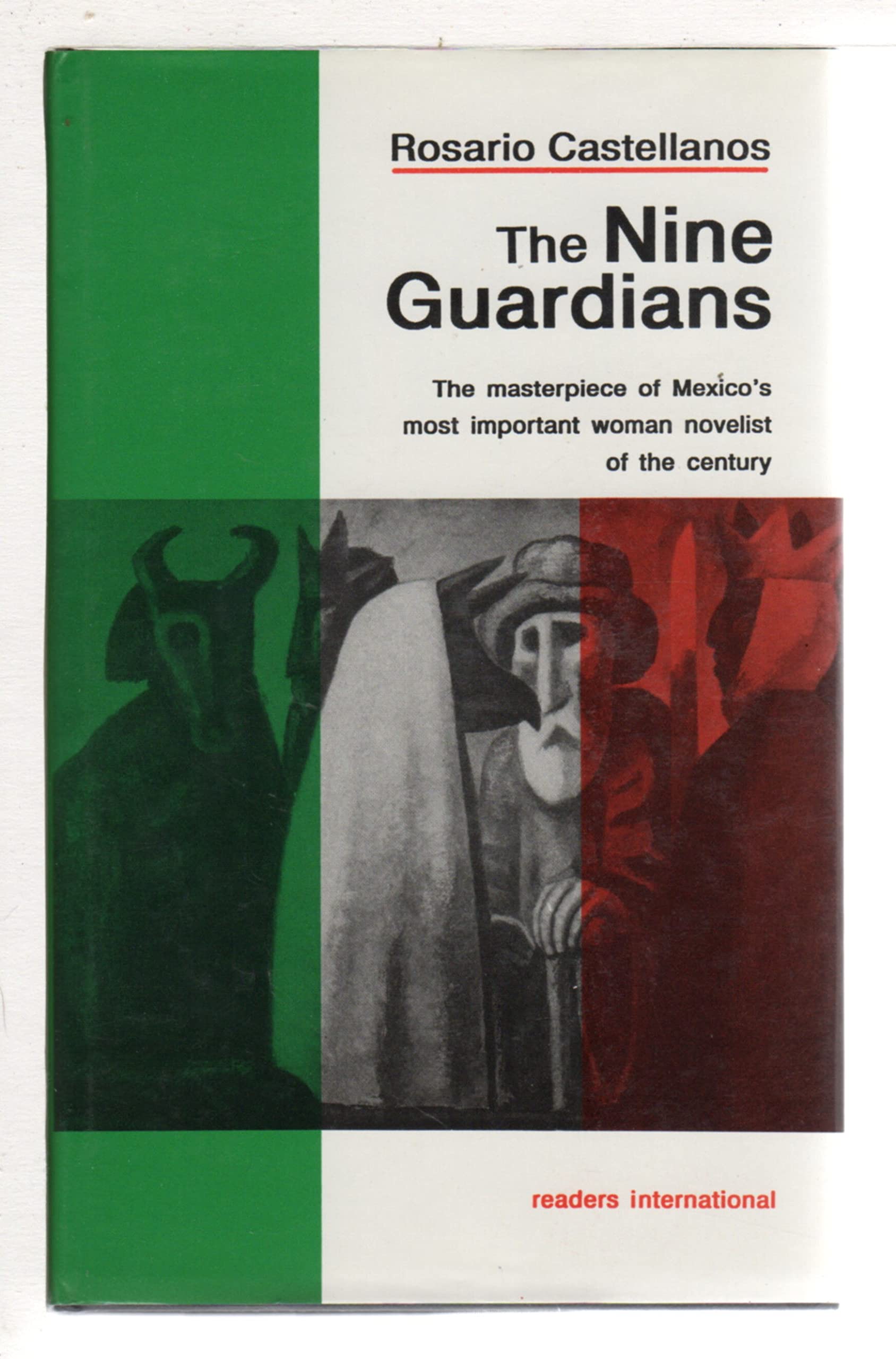
Title: The Nine Guardians
Author: Rosario Castellanos
Country: Mexico
Synopsis:
The seven-year-old narrator shares her observances of her parents, a wealthy landowner and his wife, and a nurturing Indian servant who has cared for the girl and her brother since birth
 The Pine-Scented Chronicles