
Happy Wednesday, everyone! Woah! Just like that, we are nearly midway through the second month of the year. How has the year been so far? I hope that the year is going well for everyone. It is unfortunate, but we must go back to our realities. Regardless, I hope the rest of the work week will go smoothly.
With this said, the middle of the week also means a fresh WWW Wednesday update. WWW Wednesday is a bookish meme hosted originally by SAM@TAKING ON A WORLD OF WORDS.
The mechanics for WWW Wednesday are quite simple: you just have to answer three questions:
- What are you currently reading?
- What have you finished reading?
- What will you read next?

What are you currently reading?
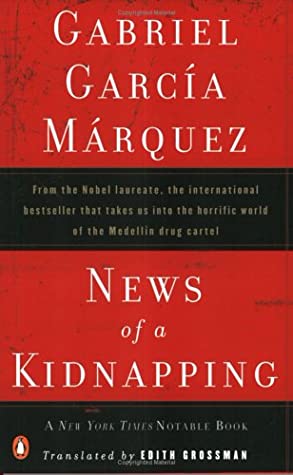
It’s already the middle of the week. This also means we have only two more days until the weekend. I hope everyone makes it through the workweek. Reading-wise, my 2026 reading journey is going as planned. I am currently in the midst of a foray into Latin American literature. It has been quite some time since I dedicated a month or two to reading works by writers from the region—if my memory serves me right, the last time was in 2023. The time is now ripe for a return. My current read takes me to a familiar name: Gabriel García Márquez. It was must-read lists that first introduced me to the Colombian Nobel laureate in Literature. His novel One Hundred Years of Solitude, which I read in 2015 or 2016, was among the first works of magical realism I encountered. A decade later, I am reading my ninth García Márquez novel, News of a Kidnapping. This makes him the Nobel laureate in Literature I have read the most, leapfrogging Kazuo Ishiguro by one book.
Originally published in 1996 as Noticia de un secuestro, News of a Kidnapping is a work of nonfiction, specifically a journalistic account. It chronicles the kidnappings of ten prominent Colombians by Pablo Escobar’s Medellín cartel from 1990 to 1991. As García Márquez explains in the acknowledgments, the book was conceived when his friends Maruja Pachón de Villamizar and Alberto Villamizar approached him to write about Maruja’s abduction. However, while working on the book, he uncovered nine additional kidnappings that took place around the same time. This prompted him to go beyond his friend’s story and include the others as well. The story opens with the kidnapping of Maruja Pachón and Beatriz Villamizar de Guerrero on November 7, 1990. It was initially believed that Maruja was abducted because of her relation to Gloria Pachón, her sister and the widow of New Liberalism founder and journalist Luis Carlos Galán.
The book also recounts the abduction of Diana Turbay, the director of Criptón, a television news program, who was taken along with four members of her news team. Her father, Julio César Turbay, was a former Colombian president. German journalist Herold “Hero” Buss was also kidnapped, as were Marina Montoya and Francisco Santos Calderón. The kidnappings were reportedly ordered by Medellín cartel leader Pablo Escobar. The threat of extradition to the United States prompted him to carry out the abductions. Meanwhile, the rest of the country was grappling with domestic terrorism and the proliferation of drugs. There is such a novelistic quality to the narrative that I often forget it is a work of nonfiction. Still, the book provides valuable insights into the Colombian cartel and how it shaped contemporary Colombian society. I am nearly finished with it.
What have you finished reading?

My foray into Latin American literature is in full swing. In the previous week, I was able to tick off two more works by writers from the region. The first of these is Luis Alberto Urrea’s The Hummingbird’s Daughter, a book I was not originally planning to read. However, it had been some time since I last read one of the Mexican American writer’s works. In fact, it was in 2018 when I first encountered Urrea. While researching books to include on my 2018 “Books I Look Forward To” list, I came across The House of Broken Angels. Curious about what it had in store, I added it to my most anticipated releases list that year. Needless to say, I was reeled in by Urrea’s writing. So when I came across The Hummingbird’s Daughter during a Big Bad Wolf sale, I did not hesitate to buy it.
Originally published in 2005, the novel is set in the late 1800s and early 1900s. It begins in the state of Sinaloa, on the vast Santano ranch owned by Tomás Urrea. There, fourteen-year-old Cayetana Chávez, a poor and illiterate Indigenous woman familiarly referred to as La Semalú (the titular Hummingbird), gives birth to Tomás’s daughter, whom she names Rebecca. Assisting her is Huila, the ranch’s healer, midwife, and spiritual guide. The early sections of the novel move quickly, capturing Cayetana’s lack of maternal instinct. One day, when her daughter is two years old, Cayetana leaves Rebecca with her sister and never returns. The story then moves forward a few years. Rebecca, now a young girl, is recognized by Huila. However, Rebecca corrects her, saying that her name is Teresa and that she goes by Teresita. Teresita has become a God-fearing girl who reveres both God and the saint she was named after. When Huila tells her that she does not look like she is of “the People” (the Indigenous community), Teresita is offended. Her life begins to unravel when a young boy named Buenaventura tells her that Tomás is her father, naturally piquing her interest. Loreto, Tomás’s wife, also recognizes traces of Urrea blood in her, though Tomás himself remains unaware. This revelation coincides with Teresita’s spiritual awakening. After exhibiting miraculous healing powers, Huila takes her under her wing and begins educating her in matters of spirituality and the healing properties of plants. In a way, this marks the beginning of Teresita’s coming of age. As her spiritual nature merges with rebellion, she begins to challenge societal norms, standing up against the oppressive realities of her time.
In the background, sweeping changes are transforming Mexico. Political upheaval marks the nation. The turbulent landscape prompts Don Tomás to relocate his household to Cabora in Sonora, as his political affiliations are at odds with those of President Porfirio Díaz. In Cabora, Teresita’s spiritual awakening comes full circle. It is there that Don Tomás finally acknowledges her. His friend, Lauro Aguirre, also teaches her to read—a luxury rarely afforded to women of that time. A brutal attack nearly leaves her for dead. However, she is miraculously revived, and with her recovery comes a strengthened ability to heal others. Thus begins the story of the Saint of Cabora. The Hummingbird’s Daughter is multilayered. On the surface, it is Teresita’s coming-of-age story—her personal odyssey and journey toward understanding herself and her heritage. At the same time, it is a story of resistance, of standing up against the strictures of her era, particularly those imposed on Indigenous people. The rich historical context adds depth to the narrative. Overall, The Hummingbird’s Daughter was a pleasant read, one that exceeded my expectations.
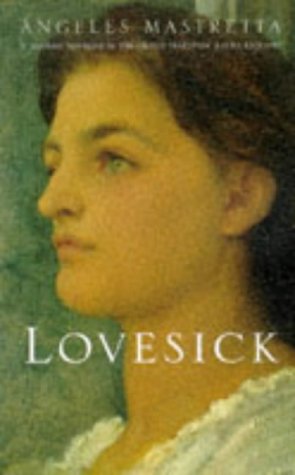
I didn’t have to travel far for my next read. From Mexico, my literary journey took me, well, back to Mexico. From the northern state of Sonora, Ángeles Mastretta’s Lovesick transported me to the state of Puebla. It was through an online bookseller that I first came across Ángeles Mastretta. Despite having no idea who she was or what her novel Lovesick was about, I acquired a copy. A couple of years later, I finally made it part of my literary journey, including it in both my 2026 Top 26 Reading List and my 2026 Beat the Backlist Challenge. Mastretta is also a journalist and actress. In 1974, she received a scholarship from the Mexican Writers’ Center. In 1978, she published La pájara pinta (The Colorful Bird), a collection of poetry. In 1985, she released her debut novel, Arráncame la vida (Tear This Heart Out). Meanwhile, Lovesick was her sophomore novel.
Originally published in Spanish in 1996 as Mal de amores, Lovesick was a literary sensation that earned Mastretta the prestigious Rómulo Gallegos International Novel Award. Set in turn-of-the-century Mexico, the novel charts the story of Emilia Sauri. Born into a privileged yet freethinking family, Emilia was raised among progressive eccentrics. Her father, Diego, was a Mayan pharmacist and herbalist in sleepy Puebla—Mastretta’s hometown. He had high hopes for his only child and trained her accordingly. The crux of the story, however, lies in her romantic relationships, as the title suggests. The first of her two great loves is Daniel Cuenca, whom she meets as a young girl. In one memorable scene, Emilia pushes Daniel into a pond and then jumps in after him. Even then, it is evident that romance looms on the horizon. As they grow into adolescence, their paths begin to diverge. Emilia, under her father’s tutelage, immerses herself in the study of medicine. Daniel, on the other hand, claims to desire peace but cannot resist the pull of conflict. With the Mexican Revolution looming, he assumes a prominent role in the revolutionary movement. After the overthrow of dictator Porfirio Díaz in 1911, chaos inevitably followed. In some ways, Lovesick echoes The Hummingbird’s Daughter, particularly in its exploration of personal growth against political upheaval. The stark dichotomy between Daniel and Emilia is mirrored in the relationship between Emilia’s mother, Josefa, and her sister Milagros. Josefa’s world revolves around love, while Milagros advocates for justice amid turmoil. Daniel’s deep political involvement becomes a point of contention between him and Emilia. Politics is, in a sense, Daniel’s mistress.
Meanwhile, while studying medicine, Emilia encounters Dr. Antonio Zavalza. Politically and temperamentally, Antonio is Daniel’s antithesis. While Daniel thrives on danger and uncertainty, Antonio is steady, tolerant, and peace-loving—the embodiment of stability and professional ambition. Emilia must confront her feelings for both men as pandemonium unfolds in the background. She oscillates between them, reflecting her struggle to reconcile passion with purpose. Like The Hummingbird’s Daughter, the novel unfolds against a lush historical backdrop. Lovesick captures the social and political turmoil of the Mexican Revolution (1910–1920). Daniel participates in revolutionary campaigns alongside figures such as Emiliano Zapata and Pancho Villa—a stark contrast to Emilia’s pursuit of healing. The novel is therefore far more than a romance. Lovesick is a story of love, independence, and the complexities of social change, while also exploring the pursuit of personal ambition. Like The Hummingbird’s Daughter, Lovesick is a deeply compelling read.
What will you read next?

 The Pine-Scented Chronicles