
Happy Wednesday, everyone! Woah! Just like that, we are already in the last week of the second month of the year. In a couple of days, we will be welcoming the third month of the year. How time flies! Still, I want to know how your year has been so far. I hope that the year is going well for everyone. It is unfortunate, but we must go back to our realities. Regardless, I hope the rest of the work week will go smoothly.
With this said, the middle of the week also means a fresh WWW Wednesday update. WWW Wednesday is a bookish meme hosted originally by SAM@TAKING ON A WORLD OF WORDS.
The mechanics for WWW Wednesday are quite simple: you just have to answer three questions:
- What are you currently reading?
- What have you finished reading?
- What will you read next?

What are you currently reading?
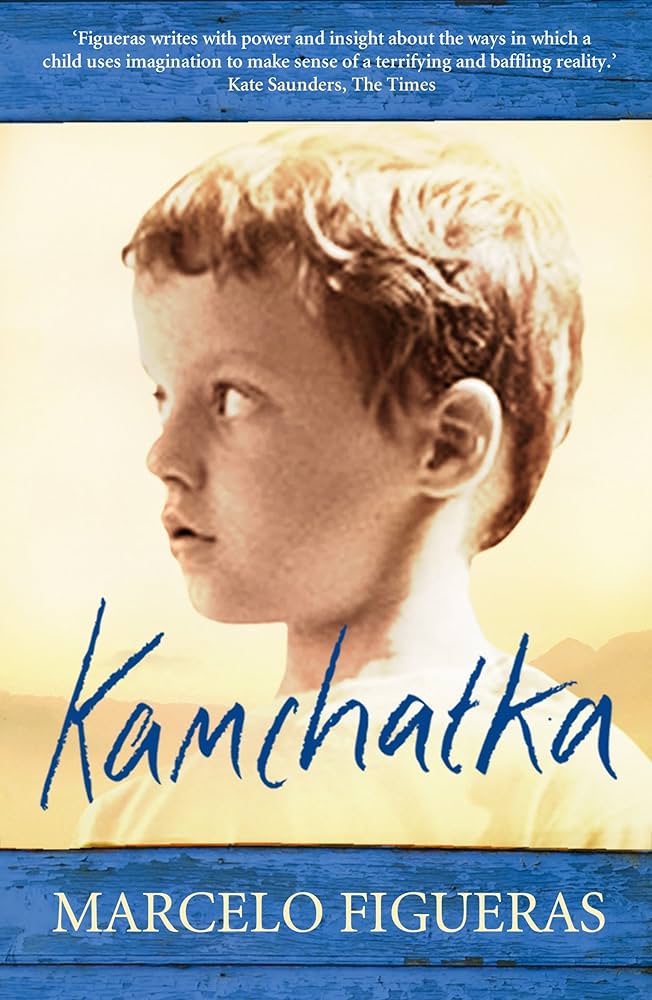
It’s already the middle of the week, which means we have only two more days until the weekend. I hope everyone makes it through the workweek. Reading-wise, my 2026 reading journey is going as planned. With the month coming to a close, so too is my foray into Latin American and Caribbean literature. It has been quite a memorable journey—one that introduced me to new names while allowing me to revisit familiar literary territories. I suppose the long wait was worthwhile; the last time I dedicated a month to Latin American literature was back in late 2023. Today, I embarked on a new literary journey with Marcelo Figueras’s Kamchatka. If my memory serves me right, it was during a random foray into a bookstore that I first encountered the Argentine writer. However, the book was left to gather dust on my bookshelf, a fate it shares with most of my books.
When I learned that Figueras was Argentine, I decided to include the novel in my ongoing venture into Latin American literature. Honestly, the first thing that comes to mind when Kamchatka is mentioned is the frozen Russian peninsula. The novel’s narrator and main character is, so far, an unnamed ten-year-old boy. At the start of the novel, he recounts how he and his younger brother, whom he affectionately refers to as “the Midget,” were abruptly pulled out of school by their mother. She tells her sons that they are going on holiday. However, it is no ordinary holiday—they are headed to a safe house. This naturally raises the question of why they are on their way to one, which brings us to the story’s setting.
The novel is set in 1970s Buenos Aires. In Argentina, it was a time of pivotal political and social upheaval. It was when Argentina’s Dirty War (Guerra sucia) began. The term refers to the period of state-sponsored violence under the dictadura cívico-militar (civic-military dictatorship), or military junta. During this time, military and security forces, reinforced by death squads such as the Argentine Anticommunist Alliance (AAA, or Triple A), hunted down anyone suspected of being a political dissident. Anyone believed to be associated with socialism, communism, left-wing Peronism, or the Montoneros movement was persecuted. It is no wonder that Perón is often mentioned. I have just started reading the book, but I am already invested—mainly because of its historical context. I will be sharing more of my impressions in this week’s First Impression Friday update.
What have you finished reading?

As February approaches its inevitable end, I have surprisingly been gaining some momentum. In the past week, I was able to complete three books. I suppose I was in a rush to finish as many works of Latin American and Caribbean literature as I could. The first of the three books I completed was Alejo Carpentier’s The Kingdom of This World. It was through an online bookseller that I first came across the Cuban writer. Before then, I had neither encountered him nor read any of his works. Still, my curiosity got the better of me. Imagine my surprise when I learned that it was listed as one of the 1,001 Books You Must Read Before You Die. Unfortunately, it too was left to gather dust on my bookshelf. Come 2026, when I decided to venture into Latin American and Caribbean literature, it was one of the first books that came to mind. I subsequently included it in my 2026 Top 26 Reading List. In reading the book, I am essentially hitting two birds with one stone: I plan to read at least 20 works from the 1,001 Books You Must Read Before You Die list.
Originally published in 1949 as El reino de este mundo, The Kingdom of This World is Carpentier’s sophomore novel, although it is often considered his magnum opus. The novel transports readers to Haiti before, during, and after the Haitian Revolution. The revolution began in 1791 and eventually concluded with the declaration of Haitian independence in 1804. At the heart of the novel is Ti Noël, an enslaved Haitian on the plantation of Monsieur Lenormand de Mézy. He resents his master and wishes him dead. Ti Noël’s story begins with the tales told to him by a fellow enslaved man, Macandal. Macandal regales him with stories of Vodou loas (spirits or gods), which inspire Ti Noël. After losing his arm in a cane mill, Macandal claims to have acquired Vodou powers. He then vows to exterminate the white inhabitants of Haiti through mass poisoning, aided by Ti Noël and other enslaved people. However, his plan is uncovered, prompting him to transform himself—at least in legend—into animals. He remains incognito, except to his followers. Eventually, he is captured and burned at the stake. Nevertheless, his vision lives on. The narrative then shifts twenty years later. Another enslaved man, Bouckman the Jamaican, instigates another uprising. The enslaved workers storm the homes of their enslavers directly. The revolution falters amid violence and brutality.
In the midst of the chaos, Lenormand de Mézy takes Ti Noël with him to Cuba, where he gambles away his fortune. As he declines in wealth, health, and morale, Ti Noël manages to secure his freedom and return to Haiti. The once-tumultuous territory has now gained its independence. Formerly enslaved individuals, such as Henri Christophe, now rule over others. How will Ti Noël navigate this new world? The Kingdom of This World is a lush narrative, rich with folklore, magic, and, above all, history. Carpentier examines the nature of revolution, emphasizing the distinction between revolution and mere reaction. The latter yields no meaningful change, while the former produces progress. The novel is also steeped in cultural touchstones. Vodou and nature play significant roles in the story, alongside explorations of destiny, violence, and sexuality. Overall, The Kingdom of This World is a compelling read and a rewarding discovery.

After reading three books by new-to-me writers consecutively, I broke the streak with my second novel by Nobel Laureate in Literature V. S. Naipaul. I had actually forgotten that the Nobel laureate was Trinidadian until I came across Half a Life while sifting through my bookshelves for my next read. I never considered it when I began my venture into Latin American and Caribbean literature. His lineage is interesting. His grandparents were of Indian (as in the South Asian country) heritage. He was born in Trinidad and Tobago but eventually acquired British nationality. I believe it was through must-read lists that I was first introduced to him, even before I learned that he was a Nobel Prize in Literature recipient. In 2022, I read my first Naipaul novel, A Bend in the River, making Half a Life my second. In truth, I had no plans to read the book until I rediscovered it while foraging through my bookpile.
At the heart of the 2001 novel is Willie Chandran, whose middle name is Somerset. The story opens with Willie asking his father, a Brahmin, how he came to have such a name. As one might guess, it was inspired by the British writer W. Somerset Maugham. Apparently, the writer once visited Willie’s father at the temple where he was living under a vow of silence. As a tribute, Willie’s father gave his son the writer’s name. Willie’s question prompts his father to revisit the past, recounting the struggles their family endured from the 1890s onward. Willie’s great-grandfather had been a priest who abandoned his vocation and impoverished temple to join the court of a maharaja. By doing so, he paved the way for the family’s upward mobility—a rare opportunity for people of their station. Willie’s father was originally meant to attend a professional school and enter into an arranged marriage with his college principal’s daughter. Instead, he rebelled against his Brahmin family by taking up with a black, low-caste woman, whom he neither loved nor liked. The couple had two children: Willie and Sarojini. As the narrative progresses, Willie once again takes control of the story. Aware that his children had limited prospects in India, his father sought a scholarship for him through English acquaintances. Though initially unsuccessful, Willie eventually secured a scholarship to a little-known college in London.
Willie sees London as an opportunity to reinvent himself—to rewrite his personal history. He fabricates an illustrious past, which grants him entry into a bohemian circle of immigrants. His desperate need for reinvention underscores the novel’s exploration of identity and belonging. Even his name compels him to question who he is; names carry particular weight in Indian culture, as similarly explored in Jhumpa Lahiri’s The Namesake. Willie is never fully at ease at the crossroads of cultures. In London, he attempts to reconcile his Indian and African heritage. This struggle highlights the intricacies of colonial and postcolonial identity, as well as the broader theme of cultural dislocation. Longlisted for the prestigious Booker Prize, Half a Life revisits familiar Naipaul territory. It is a propulsive read about personal turmoil, the complexities of mixed heritage, and the lingering legacy of colonialism.

My three-book reading week concluded with another unfamiliar name—at least a writer whose work I had not read before: Jorge Barón Biza. It was during the pandemic that I first came across the Argentine author. Writing, it seems, ran in his family; his father was a writer, while his mother was a historian. As usual, it was through an online bookseller that I discovered Barón Biza and his novel The Desert and Its Seed. Curiosity got the better of me, prompting me to acquire the book despite having no real knowledge of who he was or what the novel was about. Still, it suffered the same fate as many of my other books—it was left to gather dust on my bookshelf. Had I not rediscovered it while foraging through my bookpile, I might never have considered reading it. Interestingly, my foray into Argentine literature has been sparse at best, so picking it up felt like a natural choice.
Originally published in 1998 as El desierto y su semilla, the novel opens with a destabilizing domestic rupture set in 1964 Buenos Aires. Aron Gageac, an anarchist, threw a glass of sulphuric acid into the face of his ex-wife, the historian Eligia, after finalizing their divorce. The following day, Aron takes his own life. This chain of events becomes the narrative’s catalytic moment. Their son, Mario, witnesses the event, which irrevocably alters the course of his life; he functions as the narrative’s interpretive lens. He then traces his parents’ history back to the 1930s, when his father emerged as an opponent of Argentina’s military dictatorship. Both parents were critics of the government of Juan Perón, a stance that resulted in imprisonment and periods of exile in Europe and Uruguay. Political conviction and displacement, however, placed sustained pressure on the marriage. Over time, ideological fervor gives way to personal volatility, and the domestic sphere becomes another site of fracture. The eventual divorce appears less as a singular failure and more as the culmination of accumulated tensions—political, psychological, and relational. In the aftermath, Mario tends to his disfigured mother. He observed his mother’s prolonged medical recovery, an experience that became central to his psychological formation. The novel then tackles the deeper concern about identity: How does trauma reshape the self? What remains constant when the body changes?
Meanwhile, Mario sought intimacy with prostitutes, introducing a parallel inquiry into desire, guilt, detachment, and the understanding of the female body. These dual trajectories—care and escape—are not sensational contrasts but explorations of coping mechanisms within adolescence. The novel draws inspiration from the author’s biography. Barón Biza’s father, the writer Raúl Barón Biza, was responsible for a similar attack on his mother, the historian Clotilde Sabattini. With this autobiographical proximity, personal history becomes material for examining memory, inheritance, and the long shadow of violence. Rather than centering spectacle, The Desert and Its Seed meditates on fragmentation—of the body, of the family, and of national identity. The novel is less about the incident itself and more about its reverberations: how individuals narrate catastrophe, and how storytelling becomes a means of containment, interpretation, and, perhaps, survival.
What will you read next?

 The Pine-Scented Chronicles