
And with that, the second month of the year has officially closed its doors. We are already two months into 2026. How time flies! I hope the first two months of the year have been kind to everyone. As time takes its natural course, I hope you were able to generate momentum as you pursued your goals and aspirations. But before I could wave goodbye to the second month of the year, let me share the book titles I acquired during the month. After having a sort of book haul lockdown by acquiring less and reading more, I reversed it in the past two months by having a book haul binge-buying fest. It was without design, but I guess I am making up for lost time. Without ado, here are the books I acquired in February.
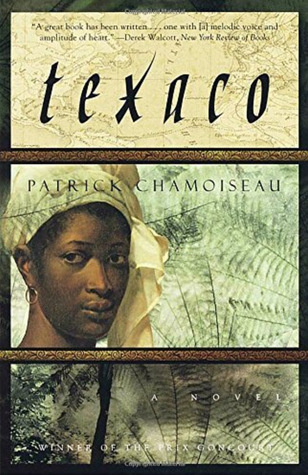
Title: Texaco
Author: Patrick Chamoiseau
Translator (from French and Creole): Rose-Myriam Réjouis and Val Vinokurov
Publisher: Pantheon Books
Publishing Date: 1997 (1992)
No. of Pages: 390
Synopsis:
Of black Martinican provenance, Patrick Chamoiseau gives us Texaco (winner of the Prix Goncourt, France’s most prestigious literary prize), an international literary achievement, tracing one hundred and fifty years of post-slavery Caribbean history: a novel that is as much about self-affirmation engendered by memory as it is about a quest for the adequacy of its own form.
In a narrative composed of short sequences, each recounting episodes or developments of moment, and interspersed with extracts from fictive notebooks and from statements by an urban planner, Marie-Sophie Laborieux, the saucy, aging daughter of a slave affranchised by his master, tells the story of the tormented foundation of her people’s identity. The shantytown established by Marie-Sophie is menaced from without by hostile landowners and from within by the volatility of its own provisional state. Hers is a brilliant polyphonic rendering of individual stories informed by the rhythmic orality and subversive humor that shape a collective experience.
A joyous affirmation of literature that brings to mind Boccaccio, La Fontaine, Lewis Carroll, Montaigne, Rabelais, and Joyce, Texaco is a work of rare power and ambition, a masterpiece.
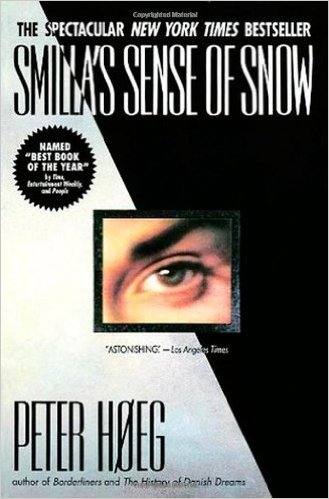
Title: Smilla’s Sense of Snow
Author: Peter Høeg
Translator (from Danish): Tiina Nunnally
Publisher: Farrar, Straus and Giroux
Publishing Date: 1993 (1992)
No. of Pages: 453
Synopsis:
Smilla’s Sense of Snow presents one of the toughest heroines in modern fiction, Smilla Qaavigaaq Jaspersen is part Inuit, but she lives in Copenhagen. She is thirty-seven, single, childless, moody, and she refuses to fit in. Smilla’s six-year-old Inuit neighbor, Isaiah, manages only with a stubbornness that matches her own to befriend her.
When Isaiah falls off a roof and is killed, Smilla doesn’t believe it’s an accident. She has seen his tracks in the snow, and she knows about snow. She decides to investigate and discovers that even the police don’t want her to get involved. But opposition appeals to Smilla.
As all of Copenhagen settles down for a quiet Christmas, Smilla’s investigation takes her from a fervently religious accountant to a tough-talking pathologist and an alcoholic shipping magnate and into the secret files of the Danish company responsible for extracting most of Greenland’s mineral wealth – and finally onto a ship with an international cast of villains bound for a mysterious mission on an uninhabitable island off Greenland.
To read Smilla’s Sense of Snow is to be taken on a magical, nerve-shattering journey – from the snow-covered streets of Copenhagen to the awesome beauty of the Arctic ice caps. A mystery, a love story, and an elegy for a vanishing way of life, Smilla’s Sense of Snow is a breathtaking achievement, an exceptional feat of storytelling.
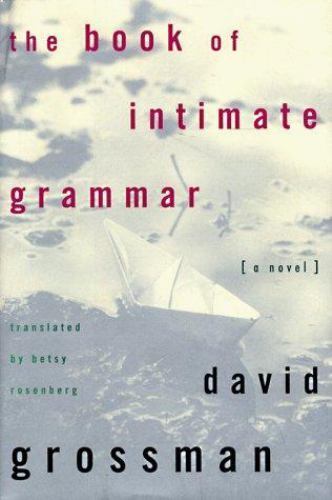
Title: The Book of Intimate Grammar
Author: David Grossman
Translator (from Hebrew): Betsy Rosenberg
Publisher: Farrar, Straus and Giroux
Publishing Date: 1994 (1991)
No. of Pages: 343
Synopsis:
David Grossman, the leading Israeli novelist of his generation, showed himself in his internationally acclaimed novel, See Under: LOVE, to be a consummate artist of the inner life of the child. Now, in his most moving and accessible novel yet, he gives us the story of the greatest and most universal tragedy, the loss of that childhood world. At twelve, Aron Kleinfeld is the ringleader among the boys in his Jerusalem neighborhood, their inspiration in dreaming up games and adventures. But as his friends begin to mature, Aron remains imprisoned for three long years in the body of a child. While Israel inches toward the Six-Day War, and while the voices of his friends change and become strange to him, Aron lives in his child body as though in a nightmare. Like a spy in enemy territory, he learns to decipher the internal codes of sexuality and desire, to understand the unyielding bureaucracy of the human body. Hurled between childhood and adulthood, between the pure and the profane, he is like a volcano of emotions and impulses. But, like his hero Houdini, Aron still struggles to escape from the trap of growing up.
The Book of Intimate Grammar is about the alchemy of childhood, which transforms loneliness and fear into creation, and about the struggle to emerge as an artist. Funny, painful, and passionate, it is a work of enormous intensity and beauty.
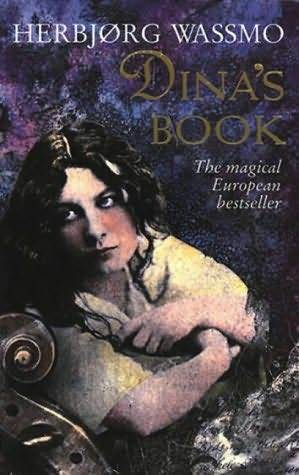
Title: Dina’s Book
Author: Herbjørg Wassmo
Translator (from Norwegian): Nadia M. Christensen
Publisher: Black Swan
Publishing Date: 1996 (1989)
No. of Pages: 527
Synopsis:
Set in Norway in the mid-nineteenth century – a land of short, blazing, idyllic summers and dark, frost-rimed winters, of mountains, bear-hunts and hazardous sea voyages – Dina’s Book centres around a beautiful, eccentric and unpredictable woman who bewitches everyone she meets.
At the age of five Dina unwittingly causes her mother’s death. Blamed by her father and banished to a farm, she grows up untamed and untaught. Her guilt becomes her obsession: her unforgiving mother haunts her every day.
When she finally returns home she is like a wolf cub, tamed only by her tutor, Lorch, who is able to reach through music. Married off at sixteen to a wealthy fifty-year-old landowner, Jacob, she becomes sexually obsessive and wild. Jacob dies under odd circumstances and Dina becomes mute. When finally she emerges from her trauma, she runs his estate with an iron hand. But still Dina wrestles with her two unappeased ghosts: Jacob and her mother. Until one day a mysterious stranger, the Russian wanderer, Leo, enters her life and changes it forever…

Title: August 1914
Author: Aleksandr Solzhenitsyn
Translator (from Russian): H.T. Willetts
Publisher: Farrar, Straus and Giroux
Publishing Date: 2000 (1983, 1971)
No. of Pages: 846
Synopsis:
In his monumental narrative of the outbreak of the First World War and the ill-fated Russian offensive into East Prussia, Aleksandr Solzhenitsyn has written what Nina Khrushcheva, in The Nation, calls “a dramatically new interpretation of Russian history.” The assassination of tsarist prime minister Pyotr Stolypin, a crucial event in the years leading up to the Revolution of 1917, is dazzlingly reconstructed from the alternating viewpoints of historical witnesses. The sole voice of reason among the advisers to Tsar Nikolai II, Stolypin died at the hands of the anarchist Mordko Bogrov, and with him perished Russia’s last hope for reform.
August 1914 is the first volume of Solzhenitsyn’s epic, The Red Wheel; the second is November 1916. Each of the subsequent volumes will concentrate on another critical moment, or “knot,” in the history of the Revolution. The result is a meditation on history unequaled in any novel since War and Peace.

Title: What I Loved
Author: Siri Hustvedt
Publisher: Picadr
Publishing Date: 2003
No. of Pages: 367
Synopsis:
The international bestseller What I Loved begins in New York in 1975, when art historian Leo Hertzberg discovers an extraordinary painting by an unknown artist in a SoHo gallery. He buys the work; tracks down the artist, Bill Wechsler; and the two men embark on a lifelong friendship. Leo’s story, which spans twenty-five years, follows the evolution of the growing involvement between his family and Bill’s. But the bonds between the two families are tested, first by sudden tragedy, and then by a monstrous duplicity that slowly comes to the surface. Combining the intimacy of a family saga with the suspense of a thriller, What I Loved is a deeply moving story about art, love, loss, and betrayal.
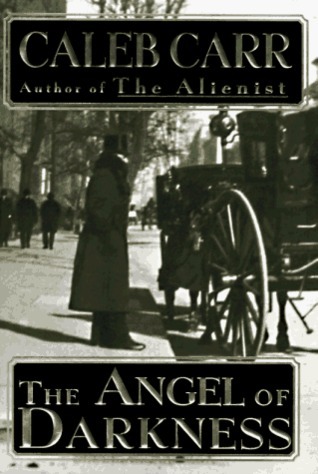
Title: The Angel of Darkness
Author: Caleb Carr
Publisher: Random House
Publishing Date: 1997
No. of Pages: 626
Synopsis:
In The Angel of Darkness, Caleb Carr brings back the vivid world of his bestselling The Alienist but with a twist: this story is told by the former street urchin Stevie Taggert, whose rough life has given him wisdom beyond his years. Thus New York City, and the groundbreaking alienist Dr. Kreizler himself, are seen anew.
It is June 1897. A year has passed since Dr. Laszlo Kreizler, a pioneer in forensic psychiatry, tracked down the brutal serial killer John Beecham with the help of a team of trusted companions and a revolutionary application of the principles of his discipline. Kreizler and his friends – high-living crime reporter John Schuyler Moore; indomitable, derringer-toting Sara Howard; the brilliant (and bickering) detective brothers Marcus and Lucius Isaacson; powerful and compassionate Cyrus Montrose; and Stevie Taggert, the boy Kreizler saved from a life of street crime – have returned to their former pursuits and tried to forget the horror of the Beecham case. But when the distraught wife of a Spanish diplomat begs Sara’s aid, the team reunites to help find her kidnapped infant daughter. It is a case fraught with danger, since Spain and the United States are on the verge of war. Their investigation leads the team to a shocking suspect: a woman who appears to the world to be a heroic nurse and a loving mother, but who may in reality be a ruthless murderer of children.
Once again, Caleb Carr proves his brilliant ability to re-create the past, both high life and low. As the horror unfolds, Delmonico’s still serves up wondrous meals, and a summer trip to the elegant gambling parlors of Saratoga provides precious keys to the murderer’s past. At the same time, we go on revealing journeys into Stevie’s New York, a place where poor and neglected children – then as now – turn to crime and drugs at shockingly early ages. Peppered throughout are characters taken from real life and rendered with historical vigor, including suffragist Elizabeth Cady Stanton; painter Albert Pinkham Ryder; and Clarence Darrow, who thunders for the defense in a tense courtroom drama during which the sanctity of American motherhood itself is put on trial. Fast-paced and chilling, The Angel of Darkness is a tour de force, a novel of modern evil in old New York.
 The Pine-Scented Chronicles