
Happy Wednesday, everyone! Woah! Just like that, we are already in the third month of the year. How time flies! I hope the first two months of the year have been kind and great to everyone. I know living is not a walk in the park, but it is my fervent prayer that everyone’s year is going well for everyone. Regardless, I hope the rest of the work week will go smoothly.
With this said, the middle of the week also means a fresh WWW Wednesday update. WWW Wednesday is a bookish meme hosted originally by SAM@TAKING ON A WORLD OF WORDS.
The mechanics for WWW Wednesday are quite simple: you just have to answer three questions:
- What are you currently reading?
- What have you finished reading?
- What will you read next?

What are you currently reading?

It’s already the middle of the week, which means we have only two more days until the weekend. I hope everyone makes it through the workweek. Reading-wise, my 2026 reading journey is going as planned. With the end of February comes a new literary journey; the first two months of the year were spent venturing across Latin American and Caribbean literature. It has been quite a memorable journey—one that introduced me to new names while allowing me to revisit familiar literary territories. I suppose the long wait was worthwhile; the last time I dedicated a month to Latin American literature was back in late 2023. For March, I have commenced a new literary journey, one that will take me to a very familiar literary territory: European literature. I actually didn’t have any plans for my March reading journey until the very last minute. Realizing that I had listed several works by European writers in my reading challenges, I resolved to focus on European literature.
This brings me to my first book of the month. It was during a random trip to the bookstore that I first encountered Polish writer Władysław Reymont and his novel The Peasants. Imagine my surprise when I learned that Reymont was a Nobel Prize in Literature laureate. This made it imperative for me to secure a copy of the book, and I even made it part of my 2026 Top 26 Reading List. Originally published in four parts between 1904 and 1909, The Peasants is widely recognized as Reymont’s greatest literary achievement. It was also the book that earned him recognition from the Swedish Academy. The four volumes comprising the novel are titled after the different seasons. The story commences in autumn, transporting us to the village of Lipce in central Poland, where we are introduced to an eclectic cast of characters.
At the heart of the story is the Boryna family. The patriarch, Maciej, is one of the richest and most respected farmers in the village. He has been widowed twice and has grown children. This did not hinder him from pursuing a third marriage. He chose 19-year-old Jagusia (Jagna), unaware of her questionable reputation for having affairs with various men. She married Maciej largely because her calculating mother advocated for the union. Still, Jagna is a passionate woman who is indifferent to Maciej’s affluence. Their marriage, however, is opposed by Maciej’s son, Antek. He is jealous of his father and fears that his inheritance will slip away. I have just started the second volume, which means I am now in Winter. It is no surprise that the harsh season is bound to adversely impact the farmers. I can’t wait to see how the story develops. As the book is rather hefty, I expect that I will feature it in this week’s First Impression Friday.
What have you finished reading?
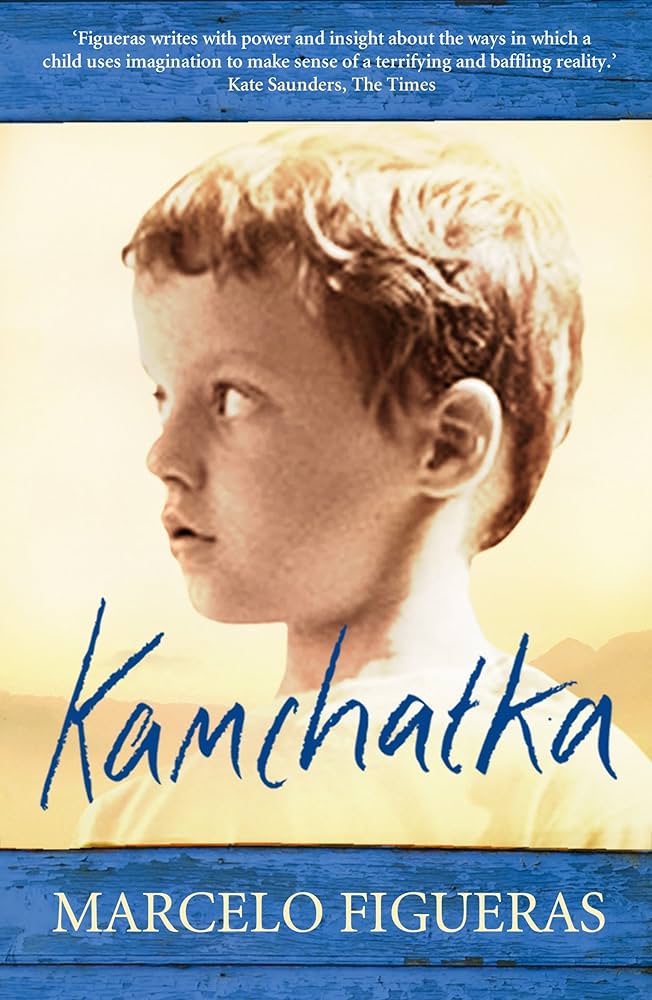
With February dwindling down, I endeavored to read as many works by Latin American writers as I could. Thankfully, I was able to complete two more before the month ended. It all started when I rummaged through my book pile for works by Latin American and Caribbean writers. Among the titles I found was Marcelo Figueras’ Kamchatka. When I learned that Figueras was Argentine, I decided to include the novel in my ongoing venture into Latin American literature, even though it had not originally been part of the plan. Before 2024, I had never encountered Figueras or read any of his works. It was during a random trip to the bookstore that I first came across his name. I didn’t even know he was Argentine at the time. It then became imperative for me to read the book, as my foray into the works of Argentine writers is quite limited. It was sheer curiosity that compelled me to obtain a copy. I suppose my curiosity was piqued by the disconnect between the book’s title and the writer’s nationality (he is, of course, of Spanish descent).
Honestly, the first thing that comes to mind when Kamchatka is mentioned is the frozen Russian peninsula. That is why I was surprised that the novel was written by a Latin American author. Apparently, the title was inspired by the game Risk, a strategic board game of diplomacy, conflict, and global conquest. Often played by two to six players, the goal is global domination by controlling all 42 territories across six continents. Among those territories is Kamchatka. At the heart of Kamchatka is an unnamed ten-year-old boy who serves as the novel’s primary narrator. His narrative begins when he and his younger brother, whom he affectionately refers to as “the Midget,” are abruptly pulled out of school by their mother. Though taken aback, they are assured that they are going on a holiday. However, it is no ordinary holiday. Mother and sons are headed to a safe house. The boys are instructed to choose new names for themselves. After finding a book about Harry Houdini on top of a cupboard, the narrator decides to call himself Harry, which leads him to dream of becoming an escape artist. Meanwhile, the Midget chooses the name Simon. Interestingly, Harry and his father play Risk during their days of “holiday,” which they spend in a rented quinta. This chain of events naturally raises the question of why they are in hiding, which brings us to the story’s setting. The 1970s in Argentina were marked by profound political and social upheaval, including the onset of the Dirty War (Guerra sucia). The term refers to a period of state-sponsored violence under the civic-military dictatorship, or military junta. During this time, military and security forces—reinforced by death squads such as the Argentine Anticommunist Alliance (AAA, or Triple A)—hunted down anyone suspected of being a political dissident. Those believed to be associated with socialism, communism, left-wing Peronism, or the Montoneros movement were persecuted. It is no wonder that Perón is frequently mentioned in the narrative.
Harry’s parents, upper-middle-class professionals—his father a human rights lawyer and his mother a scientist—are activists who oppose the regime. Both lose their jobs, prompting them to take their sons into hiding in a safe house in suburban Buenos Aires. Interestingly, their political activities are never fully explained. In poignant portraits, Figueras captures the intricacies of family dynamics, particularly during a period of crisis. Harry’s family tries its best to preserve its identity despite the turmoil surrounding them, a testament to their bond and resilience. Memory emerges as an important theme in the novel. Figueras illustrates how memory shapes our understanding of history and personal experience. Meanwhile, Harry’s desire for escape evolves into an exploration of the power of imagination. The game Risk becomes a symbolic escape from the family’s grim reality. Overall, Kamchatka is a compelling and thought-provoking coming-of-age novel set against a backdrop of terror and fear. And yes, hope springs eternal for young Harry.
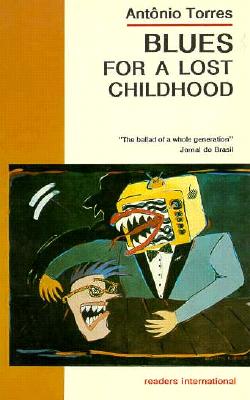
Concluding my two-month venture into the depths of Latin American and Caribbean literature is another unfamiliar name. It was through an online bookseller that I first came across Antônio Torres and his novel Blues for a Lost Childhood. I had no idea who Torres was, nor had I read any of his works before. I later learned that he is a Brazilian writer—the second Brazilian author I read during my exploration of Latin American literature. Interestingly, the other was Jorge Amado. In the book’s introduction, I discovered that Torres is also from the state of Bahia, as is Amado. It is no wonder, then, that Amado was mentioned in the introduction. Like Kamchatka, I had not planned on reading Blues for a Lost Childhood, except that I managed to unearth it from my piles of books. Realizing that my venture into Brazilian literature is rather limited, I decided to include it in my ongoing literary journey.
Originally published in Portuguese in 1986 as Balada da Infância Perdida, the novel is narrated by an anonymous voice. One sleepless night in Rio de Janeiro, the unnamed narrator is plagued by memories amid the sounds of jazz, television, and gunshots from nearby cafés and shanties. As he tosses and turns, visions appear; voices, sounds, and ghosts of his childhood invade his mind: “Lost souls, wandering creatures: Come to me. You have nothing to lose. You are masters of your own time. The worst is, a relative never comes alone. My mother will be accompanied by my Aunt Madalena, her good sister, the kindly soul who brought me up for a time. And heaven knows how many hangers-on.” In his drunken stupor, his deep dive into the past forces him to revisit memories of his father, who abandoned the family. His recollections of his mother are marked by the hardships she endured, having given birth to two dozen children. Yet one memory stands out—that of his elder cousin Calunga, Carlos Luna Gama. The narrator loved Calunga like a brother and mentor. Calunga embodied the great hopes of their small town in the dusty northeastern state of Bahia. An idealist, he left his hometown for the big city, hoping to make a name for himself. However, the modern forces of society eroded his morale and enthusiasm. After a long and varied career as a student, marksman, reporter, and war hero, he returned home to die. It is through the narrator’s memories of Calunga that an important dimension of the novel emerges: thirty years of Brazilian history. Torres vividly captures the national crisis that followed the rise of a dictatorship after the 1964 military coup. He also portrays the political and religious upheavals of the period, all interwoven with Calunga’s personal story.
The novel is enriched by cultural touchstones. A collage of Brazilian life—drawn from everyday popular culture, snippets of newspapers and media, popular songs, and even the Brazilian national anthem—creates a lush tapestry. In this sense, Blues for a Lost Childhood lives up to its byline: A Novel of Brazil. Still, the narrative can feel disjointed and occasionally meandering, weighed down by the many elements it seeks to integrate. The novel unfolds in a modified stream-of-consciousness style. Nevertheless, Torres accomplishes much with remarkable skill, particularly in his vivid portrayal of cultural hybridization. He subtly highlights the struggle to maintain Brazilian cultural identity against the encroachment of Western popular culture—forces that Calunga himself wrestled with.
What will you read next?

 The Pine-Scented Chronicles