
Just like that, we are already done with the second month of 2026. With two months down, I hope everyone is already back on track. I hope the first two months of the year have been brimming with blessings, good news, and answered prayers. Personally, I have just started with a new company. It has been rather hectic and challenging, but I am looking forward to what this new environment has in store for me. In many ways, it feels like a fresh start. I hope everyone else is also finding their footing. Either way, I wish everyone well on their individual journeys. For those whose goal is simply to move from one point to another, know that that is perfectly fine, too. I am proud of you and your resilience. In times like these, with so much turmoil surrounding us, silencing the noise can be a challenge. I hope that 2026 will be kinder to you. Above all, I hope everyone stays healthy—in mind, body, and spirit.
To commence my 2026 reading journey, I ventured into the world of Latin American and Caribbean literature. Before the year began, I realized that it had been quite some time since I dedicated a month or two to reading works by writers from the region. I admit that my engagement with the region’s literature is still somewhat limited, though I have been making a conscious effort to expand my reading horizons beyond popular names such as Isabel Allende, Gabriel García Márquez, and Mario Vargas Llosa. Since I still have several works of Latin American and Caribbean writers, I extended this journey to February. This literary journey has reminded me of the region’s diversity and rich cultural heritage—both of which make for compelling literature. Contrasts permeate the region. It also endured various upheavals in the contemporary period. Still, Latin American and Caribbean literatures remain resilient and vibrant, as captured in the works of its most revered writers. Without further ado, here is how I wrapped up my venture into Latin American literature.
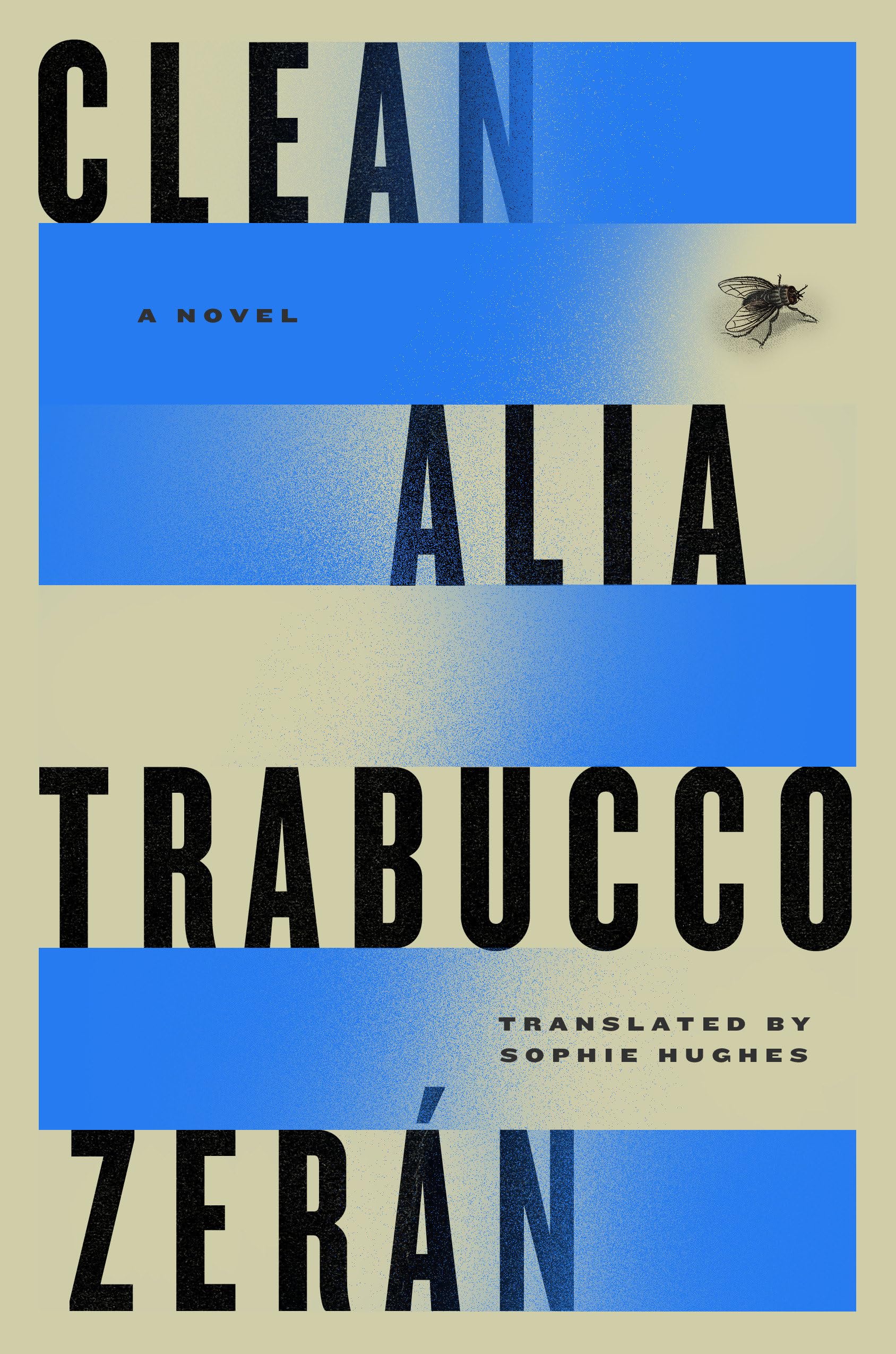
Clean by Alia Trabucco Zerán
I commenced my February reading journey by traveling to Chile, a part of the literary world that has slowly become familiar to me thanks to Isabel Allende. However, my engagement with Chilean literature has been dominated by male writers. This makes Alia Trabucco Zerán a notable deviation. The Chilean writer rose to international recognition when her debut novel, La Resta (2015; trans. The Remainder), was shortlisted for the 2019 International Booker Prize. In January, I secured a copy of Clean and immediately made it part of my venture into Latin American literature. Originally published in 2022 as Limpia, the heart of the novel is Estela García, who, at the start of the story, was locked in an interrogation room. Framed as a monologue, Estela addressed police officers she assumed were monitoring her. The story then pans to the past. Estela was born to a single mother in the Chilean countryside. Seven years earlier, she moved to the capital in search of work; she was then hired by a wealthy couple to be their housemaid. After the wife became pregnant, Estela was tasked with caring for the child, a girl named Julia. In the present, however, Julia has been found dead in the family’s swimming pool. In the interrogation room, Estela recounted the circumstances leading up to the young girl’s death. While she is diligent in the discharge of her duties, Estela initially struggles to fit in, but she eventually assumes the role of a surrogate parent to Julia. This closeness, however, breeds silent resentment from the señora. Estela also bears witness to the family’s dysfunction and deep-seated inequality. Estela was treated as an invisible presence, stripped of her humanity. In this sense, the novel takes on a psychological dimension. Following Julia’s unfortunate demise, suspicion falls on Estela. Is she guilty? It did not help that Estela meanders through stories of rats infesting the house and the lies she is forced to invent to assure her employers that the infestation has been dealt with. But it was deliberate as the details grip the reader. While Trabucco Zerán does a resplendent job of engaging the reader, she withholds any physical description of Estela, effectively placing the reader in the same position as the señor and señora. It is a brilliant narrative stroke. Estela’s testimony becomes her reclamation of power—the first time she is truly seen and given the space to speak freely about the abuses she has endured. Despite its brevity, Clean is a compelling read packed with powerful messages about domestic labor exploitation, power, trauma, and class struggle.
Goodreads Rating:


The Hummingbird’s Daughter by Luis Alberto Urrea
From Chile, my venture into Latin American literature next took me north to Mexico. I was not originally planning to read Luis Alberto Urrea’s The Hummingbird’s Daughter. However, it had been some time since I last read one of the Mexican American writer’s works; the last time I read one of his works was in 2018, when I first encountered him. Needless to say, I was reeled in by Urrea’s writing. So when I came across The Hummingbird’s Daughter, I did not hesitate to buy it. Originally published in 2005, the novel transports the readers to the late 1800s and early 1900s. In the state of Sinaloa lies the vast Santano ranch owned by Tomás Urrea. Fourteen-year-old Cayetana Chávez, a poor and illiterate Indigenous woman referred to as La Semalú (the Hummingbird), gave birth to Tomás’s daughter, whom she named Rebecca. Assisting her is Huila, the ranch’s healer, midwife, and spiritual guide. Cayetana, however, lacked maternal instinct, abandoning her two-year-old daughter in the company of her sister. A few years later, Rebecca is now a young girl. She was recognized by Huila, but Rebecca corrected her, saying that her name is Teresa and that she goes by Teresita. It was at this juncture that Teresita’s life started to unravel. A young boy named Buenaventura told her that Tomás is her father. Loreto, Tomás’s wife, also recognized traces of Urrea blood in her, though Tomás remains unaware. This revelation coincided with Teresita’s spiritual awakening. After exhibiting miraculous healing powers, Huila takes her under her wing and begins educating her in matters of spirituality and the healing properties of plants. She also begins to challenge societal norms and stand up against the oppressive realities of her time. Mexico was swept by political upheaval, prompting Don Tomás to relocate his household to Cabora in Sonora. In Cabora, Teresita’s spiritual awakening comes full circle. After a brutal attack nearly left her for dead, she is miraculously revived, and with her recovery comes a strengthened ability to heal others. Thus begins the story of the Saint of Cabora. The Hummingbird’s Daughter is a multilayered story. It is Teresita’s coming-of-age story, marking her personal odyssey toward understanding herself and her heritage. It is also a story of resistance, of standing up against the strictures of her era, not only for herself but also for her fellow Indigenous people. The rich historical context adds depth to the narrative. Overall, The Hummingbird’s Daughter was a pleasant read, one that exceeded my expectations.
Goodreads Rating:

Lovesick by Ángeles Mastretta
I didn’t have to travel far for my next read. From the northern Mexican state of Sonora, Ángeles Mastretta’s Lovesick transported me to the state of Puebla. It was through an online bookseller that I first came across Ángeles Mastretta. Despite having no idea who she was or what her novel Lovesick was about, I acquired a copy. A couple of years later, I included it in both my 2026 Top 26 Reading List and my 2026 Beat the Backlist Challenge. Originally published in Spanish in 1996 as Mal de amores, Lovesick is Mastretta’s sophomore novel. It was a literary sensation that earned Mastretta the prestigious Rómulo Gallegos International Novel Award. Set in turn-of-the-century Mexico, the novel charts the story of Emilia Sauri. Born into a privileged yet freethinking family, Emilia was raised among progressive eccentrics. Her father, Diego, was a Mayan pharmacist and herbalist in sleepy Puebla. Diego had high hopes for his only child and trained her accordingly. The crux of the story, however, lies in her romantic relationships. When she was younger, she fell in love with Daniel Cuenca. However, as they grow into adolescence, their paths diverge. Emilia immersed herself in the study of medicine, while Daniel gravitated toward conflict. As the Mexican Revolution loomed, he assumed a prominent role in the revolutionary movement. After the overthrow of dictator Porfirio Díaz in 1911, chaos ensued. Daniel’s deep political involvement is a contentious point between him and Emilia. While studying medicine, Emilia encountered Dr. Antonio Zavalza. Politically and temperamentally, Antonio was Daniel’s antithesis. While Daniel thrives on danger and uncertainty, Antonio is steady, tolerant, and peace-loving—the embodiment of stability and professional ambition. Emilia must then figure herself out and confront her feelings for both men. Meanwhile, pandemonium unfolds in the background. Internally, Emilia struggled to reconcile passion with purpose. Like The Hummingbird’s Daughter, the novel unfolds against a lush historical backdrop. Lovesick captured the social and political turmoil of the Mexican Revolution (1910–1920). Daniel’s participation in the revolution alongside figures such as Emiliano Zapata and Pancho Villa was a stark contrast to Emilia’s pursuit of healing. The novel is therefore far more than a romance. It is the story of love, independence, and the complexities of social change, while also exploring the pursuit of personal ambition. Like The Hummingbird’s Daughter, Lovesick is a deeply compelling read.
Goodreads Rating:
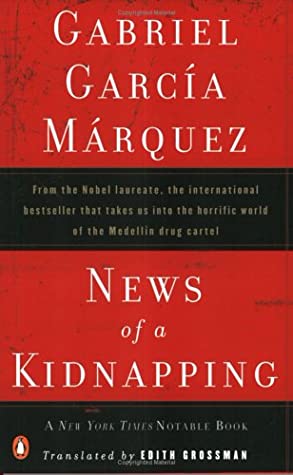
News of a Kidnapping by Gabriel García Márquez
A foray into Latin American and Caribbean literature would not be complete without Colombian writer Gabriel García Márquez. The renowned master of the Latin American magical realism, he has become a staple of my literary journeys, especially during and after the pandemic. News of a Kidnapping is the Nobel Laureate in Literature’s first work of nonfiction that I have read. It is also the ninth book by García Márquez that I’ve read, making him my most-read Nobel Laureate in Literature. Originally published in 1996 as Noticia de un secuestro, News of a Kidnapping chronicles the abduction of ten prominent Colombians by Pablo Escobar’s Medellín cartel between 1990 and 1991. The book was conceived after García Márquez’s friends Maruja Pachón de Villamizar and Alberto Villamizar approached him about writing an account of Maruja’s kidnapping. However, when he started working on the project, he uncovered nine additional kidnappings occurring around the same time, prompting him to examine the broader pattern of abductions. It was impossible to separate Maruja’s ordeal from the others. The narrative opens with the kidnapping of Maruja Pachón and Beatriz Villamizar de Guerrero on November 7, 1990. It was initially believed that Maruja was targeted because of her relation to Gloria Pachón, her sister and the widow of New Liberalism founder and journalist Luis Carlos Galán. As the story unfolds, however, more sinister forces are revealed to be at play. The book also recounts the abduction of Diana Turbay, director of the television news program Criptón, who was taken along with four members of her news team. German journalist Herold “Hero” Büss was also kidnapped, as were Marina Montoya and Francisco Santos Calderón. The book captures the hostages’ experiences in captivity while also conveying their families’ efforts to secure their release. These personal stories are set against the broader backdrop of modern Colombian history and society. The kidnappings underscored the culture of violence that permeated the country at the time. A central figure in this atmosphere of fear and instability was Pablo Escobar, leader of the Medellín cartel, who orchestrated the kidnappings in response to the threat of extradition to the United States. The rest of the country was also grappling with domestic terrorism and the proliferation of drugs. The strong novelistic quality to the narrative made me forget it is a journalistic account. News of a Kidnapping provides valuable insight into the Colombian drug trade and how it shaped contemporary Colombian society.
Goodreads Rating:
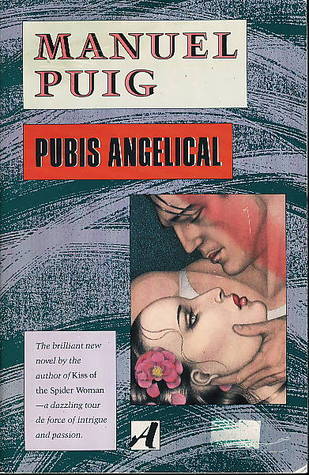
Pubis Angelical by Manuel Puig
From Colombia, my foray into Latin American literature next took me to Argentina with Manuel Puig’s Pubis Angelical. I have often encountered Puig’s Kiss of the Spider Woman through online booksellers. I am not sure why I kept on holding back on buying the book. A couple of years later, through yet another online bookseller, I came across Pubis Angelical. Without further ado, I secured a copy, as I was curious about the Argentine writer’s body of work and intended to make it part of my ongoing literary journey across Latin America. Pubis Angelical was originally published in 1979. Its opening line alone caught my fancy: “Streaks of moonlight filtered through the curtain’s lace toward the satin pillow, which soaked them up. The hand of the new bride, beside her dark hair, offered its palm up defenselessly. Her sleep appeared serene.” The novel develops along two major narrative threads. The first follows an anonymous woman referred to simply as the “Mistress,” whose story opens the book. A Viennese actress in the years leading up to World War II, she was ensnared in a marriage to a wealthy German munitions magnate known only as the Master. The “most beautiful woman in the world,” the Mistress was soon swept in intrigue, her life unraveling with secrets that were gradually unveiled as the story unfolds. The second narrative thread is set in the 1970s and centers on Ana. Ana was an Argentine woman currently confined to a Mexican sanatorium while battling cancer. Before her admission, she had escaped a troubled marriage. The political upheavals in her homeland further fueled her desire to flee. Ana’s deteriorating health compels her to reflect on her life. As the novel progresses, subtle connections begin to tie the two narratives together. Both women reflect on their relationships with men. Interestingly, they were initially depedent on men and, by extension, on family for validation and approval. They then found their voices. An element of suspense makes the Mistress entangled in a conspiracy. The novel engages with themes of Peronism, fascism, and political instability. Its political overtones span South America, particularly Argentina and Mexico City. Hollywood also emerges as a symbolic setting—the dream factory of mythic filmmaking, yet equally a place of cynicism and shattered illusions. It is no wonder that Pubis Angelical is often cited as Puig’s work most influenced by pop culture. These varied elements combine to create an intriguing and compelling reading experience.
Goodreads Rating:
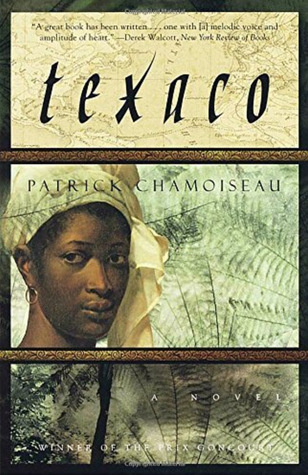
Texaco by Patrick Chamoiseau
From one new-to-me writer to another, my next read also took me to a literary territory I had never explored before. It was only recently—through an online bookseller—that I came across Martinican writer Patrick Chamoiseau. This was one of the chief reasons I secured a copy of his book, Texaco, and immediately made it part of my ongoing venture into Latin American and Caribbean literature. Interestingly, his novel Texaco is the first book originally written in French that I have read in over a year. Originally published in 1992, Texaco is set in a shantytown on the outskirts of Fort-de-France, the Martinican capital. At the heart of the story is Marie-Sophie Laborieux. The daughter of a formerly enslaved man, Marie-Sophie recounts her family’s tragic history using her father’s memories, his interpretations of the past, and the stories passed down from his ancestors. Their story began in the 1820s. This delve into the past was set into motion by the arrival of the Urban Planner named Christ, a city employee, who is tasked with “rationalizing” Texaco. His mission is met with resistance from Marie-Sophie, who challenges his assumption that the residents of Texaco are little more than vermin. Texaco, we learn, was named from the oil tanks in the vicinity. Marie-Sophie emerges as the community’s leader. Her father, Esternome, was granted freedom after saving his master’s life, yet he continued to live in poverty and near-servitude. Details of magic and spirits enriched the story. When his wife Ninon was killed, and his hometown Saint-Pierre was destroyed during the 1902 eruption of Mount Pelée, Esternome moved in with Adrienne Carmélite Lapidaille, a woman whom he followed in the hope that she would give him food. Adrienne, however, was a witch who enchanted Esternome. Her spell was broken when Esternome impregnated Adrienne’s blind sister, Idoménée. Thus begins the story of Marie-Sophie. Born before World War I and orphaned at a young age, she sold fish in the city and worked as a housekeeper before building her home in Texaco. Her story of resilience amid chaos mirrors Martinique’s own tumultuous history, from the struggle to end slavery to the enduring legacy of colonialism. Chamoiseau paints a vivid portrait of his homeland, its people, and its vibrant culture. Texaco serves as a microcosm of the diversity that has long defined Martinique. Language ultimately emerges as one of the novel’s central themes, highlighting Martinique’s layered and contested history. Overall, Texaco is a rewarding read—one that deepened my appreciation for Martinique, its people, and its history.
Goodreads Rating:


The Kingdom of this World by Alejo Carpentier
Before the COVID19 pandemic, I had never come across Alejo Carpentier nor had I read any of his works. It was through an online bookseller that I first came across the Cuban writer and his novel, The Kingdom of this World. Still, my curiosity got the better of me. Imagine my surprise when I learned that the book is one of the 1,001 Books You Must Read Before You Die. It was, however, left to gather dust on my bookshelf. Come 2026, when I decided to venture into Latin American and Caribbean literature, it was one of the first books that came to mind, hence its inclusion in my 2026 Top 26 Reading List. Originally published in 1949 as El reino de este mundo, The Kingdom of This World is Carpentier’s sophomore novel. Often considered his magnum opus, the novel transports readers to Haiti before, during, and after the Haitian Revolution. At the heart of the novel is Ti Noël, an enslaved Haitian on the plantation of French Monsieur Lenormand de Mézy. He resents his master and wishes him dead. Ti Noël’s story begins with the tales of great kingdoms and epic battles in which the animals were allies of men, told to him by Macandal, a fellow enslaved Black man. Macandal regales him with stories of Vodou loas (spirits or gods). Macandal also claimed to have acquired Vodou powers after he lost his arm in a cane mill. He then vows to exterminate the white inhabitants of Haiti, with the aid of his fellow slaves. However, his plan was foiled, prompting him to transform himself into an animal. While he remains incognito, he is recognizable to his followers. Eventually, he was captured and burned at the stake. The narrative then shifted twenty years later. Another enslaved man, Bouckman the Jamaican, instigated another uprising. The revolution faltered amid violence and brutality. In the midst of the chaos, Lenormand de Mézy took Ti Noël with him to Cuba, where he lived a decadent life, resulting in his decline in wealth, health, and morale. Ti Noël managed to secure his freedom and return to Haiti, which has now gained its independence. Ironically, former slaves, such as Henri Christophe, now ruled over others. The Kingdom of This World is a lush narrative, rich with folklore, magic, and, above all, history. Carpentier examined the nature of revolution, emphasizing the distinction between revolution and mere reaction. The novel is also steeped in cultural touchstones. Vodou and nature play significant roles in the story, alongside explorations of destiny, violence, and sexuality. Overall, The Kingdom of This World is a compelling read and a rewarding discovery.
Goodreads Rating:

Half a Life by V. S. Naipaul
After reading three books by new-to-me writers consecutively, I broke the streak with my second novel by Nobel Laureate in Literature V. S. Naipaul. I had actually forgotten that the Nobel laureate was Trinidadian until I came across Half a Life while sifting through my bookshelves for my next read. It was must-read lists that first introduced me to him, even before I learned that he was a Nobel Prize in Literature recipient. In 2022, I read my first Naipaul novel, A Bend in the River. In truth, I had no plans to read the book until I rediscovered it. At the heart of the 2001 novel is Willie Chandran, whose middle name is Somerset. The story opens with Willie asking his father, a Brahmin, how he came to have such a name. As one might guess, it was inspired by the British writer W. Somerset Maugham. Apparently, the writer once visited Willie’s father at the temple where he was living under a vow of silence. As a tribute, Willie’s father gave his son the writer’s name. Willie’s question prompts his father to revisit the past. We learn about their family’s struggles from the 1890s onward. Willie’s great-grandfather was a priest who abandoned his vocation and the impoverished temple he served to join the court of a maharaja. By doing so, he paved the way for the family’s upward mobility—a rare opportunity for people of their station. Willie’s father was originally meant to attend a professional school and enter into an arranged marriage with his college principal’s daughter. Instead, he rebelled against his family by marrying a black, low-caste woman, whom he did not love. The couple had two children: Willie and Sarojini. Still, Willie remains the core of the story. Aware that his children had limited prospects in India, his father sought a scholarship for him through English acquaintances. It was initially unsuccessful, but Willie eventually secured a scholarship to a little-known college in London. Willie sees London as an opportunity to reinvent himself, literally. He fabricated an illustrious past, which granted him entry into a bohemian circle of immigrants. His need for reinvention underscores the novel’s exploration of identity and belonging. Even his name compelled him to question who he is. Willie is never fully at ease at the crossroads of cultures. As he attempts to reconcile his Indian and African heritage in London, the novel captures the intricacies of colonial and postcolonial identity, as well as the broader theme of cultural dislocation. Longlisted for the prestigious Booker Prize, Half a Life is a propulsive read about personal turmoil, the complexities of mixed heritage, and the lingering legacy of colonialism.
Goodreads Rating:

The Desert and Its Seed of Love by Jorge Barón Biza
From the Caribbean, my literary journey next took me to another unfamiliar name: Jorge Barón Biza. It was during the pandemic that I first came across the Argentine author. I was through an online bookseller that I discovered Barón Biza and his novel The Desert and Its Seed. Curiosity got the better of me, prompting me to acquire the book despite having no real knowledge of who he was or what the novel was about. It was then left to gather dust on my bookshelf. Had I not rediscovered it while foraging through my bookpile, I might never have considered reading it. Originally published in 1998 as El desierto y su semilla, the novel opens with a destabilizing domestic rupture set in 1964 Buenos Aires. Shortly after finalizing their divorce, Aron Gageac, an anarchist, threw a glass of sulfuric acid into the face of his ex-wife, the historian Eligia. The following day, Aron took his own life. This chain of events becomes the narrative’s catalytic moment. Their son, Mario, was a witness to this event, which irrevocably altered the course of his life. He then traced his parents’ history. In the 1930s, his father emerged as an opponent of Argentina’s military dictatorship. Both parents were critics of the government of Juan Perón, a stance that resulted in imprisonment and periods of exile in Europe and Uruguay. Their political conviction and ensuing displacement, however, placed pressure on the marriage. The domestic sphere then became fractured. The divorce is then a culmination of accumulated tensions—political, psychological, and relational. In the aftermath, Mario had to tend to his disfigured mother. He observed his mother’s prolonged medical recovery, an experience that became central to his psychological formation. Meanwhile, Mario sought intimacy with prostitutes, introducing a parallel inquiry into desire, guilt, detachment, and the understanding of the female body. These dual trajectories—care and escape—are then explorations of coping mechanisms within adolescence. What makes the novel even more compelling is the inspiration behind it. It was from the author’s own life. Barón Biza’s father, the writer Raúl Barón Biza, was responsible for a similar attack on his mother, the historian Clotilde Sabattini. With this autobiographical proximity, personal history becomes material for examining memory, inheritance, and the long shadow of violence. The Desert and Its Seed, however, is less about the incident itself but more about its reverberations: how individuals narrate catastrophe, and how storytelling becomes a means of containment, interpretation, and, perhaps, survival.
Goodreads Rating:
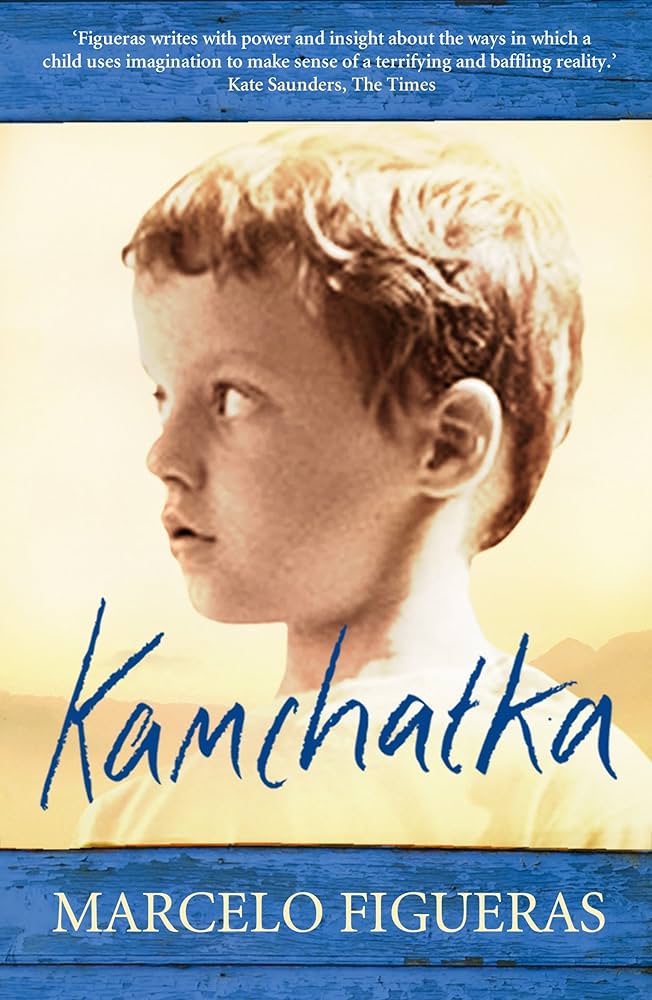
Kamchatka by Marcelo Figueras
It is quite unfortunate that my venture into Argentine literature is quite limited, so far. I am grateful that in February, I was able to read the works of three Argentine writers, all of whom are new-to-me. The last of the trio is Marcelo Figueras. When I learned that Figueras was Argentine, I decided to include his novel Kamchatka in my ongoing venture into Latin American literature, even though it had not originally been part of the plan. Before 2024, I had never encountered Figueras or read any of his works. It was during a random trip to the bookstore that I first came across his name. It was sheer curiosity that compelled me to obtain a copy. Honestly, the first thing that comes to mind when Kamchatka is mentioned is the frozen Russian peninsula. Apparently, the title was inspired by the game Risk, a strategic board game of diplomacy and global conquest, with the goal of global domination by controlling all 42 territories across six continents. Among those territories is Kamchatka. At the heart of Kamchatka is an unnamed ten-year-old boy whose narrative begins when he and his younger brother, Midget, were abruptly pulled out of school by their mother. Though taken aback, they were assured that they were going on a holiday. However, it is no ordinary holiday. They were headed to a safe house, and the boys were instructed to choose new names for themselves. A book about Harry Houdini, which he found on top of a cupboard, made the narrator choose Harry. Interestingly, Harry and his father play Risk during their days of “holiday,” which they spend in a rented quinta. Gradually, Figueras established the context. The story was set in 1970s Argentina, a period marked by profound political and social upheaval, including the onset of the Dirty War (Guerra sucia). During this time, military and security forces hunted down anyone suspected of being a political dissident. Anyone associated with socialism, communism, left-wing Peronism, or the Montoneros movement were persecuted. Harry’s parents, upper-middle-class professionals, are activists who oppose the regime. In poignant portraits, Figueras captured the intricacies of family dynamics, particularly during a period of crisis. Memory emerges as an important theme in the novel, with Figueras illustrating how memory shapes our understanding of history and personal experience. Meanwhile, Harry’s desire for escape evolves into an exploration of the power of imagination. The game Risk becomes a symbolic escape from the family’s grim reality. Overall, Kamchatka is a compelling and thought-provoking coming-of-age novel set against a backdrop of terror and fear.
Goodreads Rating:
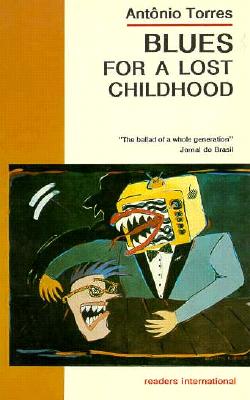
Blues for a Lost Childhood by Antônio Torres
It was without design, but I am concluding my venture into Latin American and Caribbean literature the way I started it: with the work of a Brazilian writer. I suppose this also underscores how limited my venture into Brazilian literature has been, because Antônio Torres’s Blues for a Lost Childhood is just the second work by a Brazilian writer that I read during this two-month venture. Imagine my surprise when I learned that he is also from the state of Bahia, the same state as Jorge Amado, whose Home Is the Sailor was the first work of Latin American literature I read this year. Like Kamchatka, I had not planned on reading Blues for a Lost Childhood, except that I managed to unearth it from my piles of books. Originally published in Portuguese in 1986 as Balada da Infância Perdida, the novel is narrated by an anonymous voice. Insomniac and often inebriated, the unnamed narrator is frequently plagued by memories amid the sounds of jazz, television, and gunshots from nearby cafés and shanties. As he tosses and turns, visions appear; voices, sounds, and ghosts of his childhood invade his mind. In his drunken stupor, his deep dive into the past forces him to revisit memories of his father, who abandoned the family. His recollections of his mother are marked by the hardships she endured, having given birth to two dozen children. Yet one memory stands out—that of his elder cousin Carlos Luna Gama, or familiarly, Calunga. To the narrator, Calunga was more than just a cousin. He was a brother and a mentor who also embodied the great hopes of their small town. He was an idealist who left his hometown for the big city in hopes of making it big. However, the modern forces of society eroded his morale and enthusiasm. After a long and varied career as a student, marksman, reporter, and war hero, he returned home to die. Calunga’s story is intertwined with thirty years of Brazilian history, from the national crisis that followed the rise of a dictatorship after the 1964 military coup to the political and religious upheavals of the period. A collage of Brazilian life—drawn from everyday popular culture, snippets of newspapers and media, popular songs, and even the Brazilian national anthem—creates a lush tapestry. In this sense, Blues for a Lost Childhood lives up to its byline: A Novel of Brazil. Still, the narrative can feel disjointed and occasionally meandering. Nevertheless, Torres accomplishes much with remarkable skill, particularly in his vivid portrayal of cultural hybridization. He subtly highlights the struggle to maintain Brazilian cultural identity against the encroachment of Western popular culture—forces that Calunga himself wrestled with.
Goodreads Rating:
Reading Challenge Recaps
- 2026 Top 26 Reading List: 7/26
- 2026 Beat The Backlist: 6/20; 21/60
- 2026 Books I Look Forward To List: 0/10
- Goodreads 2026 Reading Challenge: 21/100
- 1,001 Books You Must Read Before You Die: 2/20
- New Books Challenge: 0/15
- Translated Literature: 15/50
Book Reviews Published in February
- Book Review # 632: Dream Count
- Book Review # 633: Margosatubig: The Story of Salagunting
- Book Review # 634: Tent of Miracles
- Book Review # 635: The Melancholy of Resistance
- Book Review # 636: Judas
- Book Review # 637: The Story of A Goat
- Book Review # 638: The Zenith
After having a great start to my book review writing last January – I published twice what I usually publish in January – I am glad I was able to carry over the momentum into February. I once again had a prolific writing month, finishing the month with seven book reviews. This is despite the tediousness of my new job. My new job has been quite a challenge, and I find myself in the middle of transforming and improving the current processes again. Anyway, with the seven reviews I published in February, I made a dent in my 2023 pending book reviews. This is a much-needed progress because I have quite a lot of pending reviews from 2023. Six of the seven books I reviewed during the month were from 2023. The only non-2023 book I reviewed during the month is The Melancholy of Resistance, the first book I read this year. I am really making progress on my 2023 book review backlogs.
Still, my pending list continues to grow, as my writing is unable to cope with my reading pace. I am reading way more than I am reviewing. I hope I get to sustain the writing momentum I built in the first two months of the year. I hope that my writing momentum will extend to the rest of the year. For now, my primary focus is to complete my pending June and July 2023 reviews while trying to work on those from 2024 and 2025. I am on track to complete my 2023 backlogs. Occasionally, I might also publish reviews of books I read before I began publishing reviews—such as Haruki Murakami’s Norwegian Wood and Kafka on the Shore, Kazuo Ishiguro’s An Artist of the Floating World, Salman Rushdie’s The Ground Beneath Her Feet, Ian McEwan’s Atonement, and Naguib Mahfouz’s Miramar. These books hold special significance for me as they were the first works I read by these authors.
After spending two months exploring the vast Latin American and Caribbean literary territory, I will be pivoting to Europe. I was actually not planning on venturing into European literature this early in the year, but since I still have no firm plan, I decided to go with it. After all, my ongoing reading challenges also have several works of European writers, such as my current read, Nobel Laureate in Literature Władysław Stanisław Reymont’s The Peasants. This is my first novel by the Polish writer whom I first encountered during a random venture into the bookstore. I also have lined up works by his fellow Nobel Laureates in Literature László Krasznahorkai’s War and War, José Saramago’s The Stone Raft, and Günter Grass’s The Flounder. The Peasants and War and War are both part of my 2026 Top 26 Reading List. These are just among the works of European writers I have on my reading challenges. It promises to be yet another memorable literary journey.
How about you, fellow reader? How is your own reading journey going? I hope you enjoyed the books you have read. For now, have a great day. As always, do keep safe, and happy reading, everyone!
 The Pine-Scented Chronicles