Poetry as a National Identity
Latin American literature as a whole experienced a remarkable ascent to global recognition in the 20th century, especially during the Latin American Boom. It was a period that featured literary titans such as Colombian Gabriel García Márquez, Peruvian Mario Vargas Llosa, Argentine Julio Cortázar, and Mexican Carlos Fuentes. Their works placed Latin American literature as a whole on the literary map. Their works—such as García Márquez’s Cien años de soledad (1967; One Hundred Years of Solitude), Cortázar’s Rayuela (1963; Hopscotch), Fuentes’s La muerte de Artemio Cruz (1962; The Death of Artemio Cruz), and Vargas Llosa’s La ciudad y los perros (1963; The Time of the Hero)—remain among the most recognized works today and are hallmarks of contemporary Latin American literature. They were instrumental in elevating Latin American literature to global consciousness. Their legacy endures, with succeeding generations of Latin American writers drawing inspiration from their fabled lives and diverse oeuvres.
Chilean literature, of course, has also played a prominent role in this remarkable rise of Latin American literature. Chile has produced some of the most revered names in the world of literature and some of the world’s most recognized titles. Their lush bodies of work have also earned them several accolades across the globe. Chile has even produced two Nobel Laureates in Literature: Gabriela Mistral and Pablo Neruda. Mistral’s 1945 recognition by the Swedish Academy was particularly historic because she was the first Latin American writer to earn the literary award, often considered the world’s most prestigious. While both Nobel laureates were renowned for their poetry, Chile has also produced some of the most recognized prose writers, such as Roberto Bolaño, José Donoso, Isabel Allende, and Luis Sepúlveda. It comes as no surprise that Bolaño started as a poet before shifting to prose and fiction writing.
The exponential rise to prominence of Chilean literature also paved the way for the global ascent of a new generation of writers. Among this esteemed group is Alejandro Zambra. Born on September 24, 1975, in suburban Santiago, he was raised during the dictatorship of Augusto Pinochet, prompting him to refer to himself and his generation as “children of the dictatorship.” Interestingly, Zambra has confessed that writing was a career he did not originally consider. It was a vocation he did not choose, only one he pursued because he was worse at other things. Nevertheless, like Bolaño, his literary career started with writing poetry, drawing influences and inspiration from noted poets such as Nicanor Parra, Jorge Teillier, Gonzalo Millán, and Enrique Lihn. In 2006, he finally made the pivot to prose writing with the publication of Bonsái. It was a literary sensation that earned Zambra the Chilean Critics Award for Best Novel of the Year in 2006.
It is better to write than not to write. Poetry is subversive because it exposes you, tears you apart. You dare to distrust yourself. You dare to disobey. That’s the idea, to disobey everyone. Disobey yourself. I don’t know if I like my poems, but I know that if I hadn’t written them I’d be dumber, more useless, more individualistic. I publish them because they’re alive. I don’t know if they’re good, but they deserve to live.
Alejandro Zambra, Chilean Poet
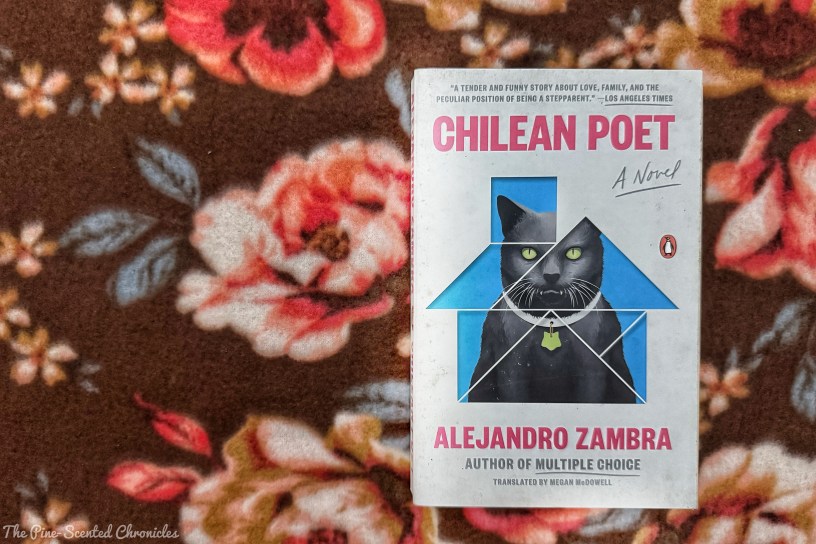
This mark of literary excellence is also palpable in Zambra’s latest novel, Chilean Poet. Originally published in March 2020 as Poeta chileno, it was made available to Anglophone readers in 2022. Set in the Chilean capital in the early years of Chile’s democracy in the 1990s, the novel commences with a reminiscence: “Those were the days of apprehensive mothers, of taciturn fathers, and of burly older brothers, but they were also the days of blankets, of quilts, and of ponchos…” The omniscient narrator then introduces the novel’s primary protagonist, Gonzalo Rojas, as a teenager hailing from Maipú, where the author also grew up. Gonzalo falls in love with the beautiful Carla. The two high school sweethearts share a torrid romance during their school years despite belonging to opposite sides of the socio-economic spectrum. She resides in an upscale Santiago neighborhood, while he comes from a humble suburb. Like many teenagers, they attempt to have sex under piles of blankets, quilts, and ponchos to avoid being detected by Carla’s mother.
It is also during this period that Gonzalo begins to fall in love with poetry. For a country that boasts sensational poets and where poetry is almost a second language, it is unsurprising that Gonzalo develops an interest in it. For the young Gonzalo, poetry compels him to bring out the best in himself. He is “moved by the Nerudian hope of managing to write something so extraordinarily persuasive that Carla could not go on rejecting him.” As fate would have it, young love soon peters out despite Gonzalo and Carla’s deep and lasting connection. She yearns for freedom from the suffocating grasp of men, leaving Gonzalo heartbroken. He hurtles into depression but finds reprieve in writing to Carla. Penning poems and dedicating them to his former love becomes the only way Gonzalo can cope with the heartache. While his written work is lackadaisical—he is no Pablo Neruda—writing poetry nevertheless becomes central to Gonzalo’s sense of self and his hopes for the future.
The story then moves forward in time. As the old adage goes, life and love move in ways beyond our understanding. Nearly a decade after they part ways, Gonzalo and Carla’s paths converge once again. They spot each other in the most innocuous of places: a gay nightclub. They dance and talk, and once they confirm that neither is homosexual, they retreat to Gonzalo’s apartment. Gradually, they begin rekindling their romance. However, there is initially a dealbreaker that holds Gonzalo back. During the time they are apart, Carla has a son, Vicente, with one of her lovers, León. When Gonzalo confronts her about her son, Carla initially evades his questions, determined to protect herself. Eventually, she realizes that Gonzalo is serious about rekindling their relationship and picking up where they left off. Gonzalo slowly begins to accept Vicente, assuming the role of a father who wants to be part of the boy’s life. Although they are both apprehensive at first, Gonzalo and Vicente eventually form a bond.
Everything seems to be looking up for Gonzalo, but things soon turn south. Without Carla’s acquiescence, Gonzalo plans to move the family to the United States because he finds Chile too indolent. This comes after he publishes a collection of poems and wins a grant to pursue a doctorate in New York. Gonzalo expects Carla to agree to the arrangement, but he is met instead with her vehement refusal, prompting another separation. In the novel’s second half, the spotlight shifts from the couple to Vicente. Now eighteen years old, Vicente aspires to be a poet, influenced by Gonzalo. However, Gonzalo and Carla’s separation is not easy on him. For six years, he struggles to cope with life without Gonzalo. Eventually, he transforms Gonzalo’s former study into a studio and library of his own. The passage of time also allows him to develop a deeper appreciation for poetry.
The world is falling to pieces and everything almost always goes to shit and we almost always hurt the people we love or they hurt us irreparably and there doesn’t seem to be a reason to harbor any kind of hope, but at least this story ends well, ends here, with the scene of these two Chilean poets who look each other in the eye and burst out laughing and don’t want to leave the bar for anything, so they order another round of beers.
Alejandro Zambra, Chilean Poet
In his fifth novel—and his heftiest to date, with his earlier novels barely crossing the 100-page mark—Zambra has produced a multilayered story, with poetry serving as both catalyst and primary driver. In many ways, the novel is a homage to Chile’s rich literary heritage. Chile has long been known for its impressive roster of poets, a fact emphasized by Gonzalo’s aspiration. This is further underscored with the arrival of Pru, a journalist from New York who travels to Santiago to research and write “an article about a literary country, a country where poetry is oddly, irrationally important.” This leads her to interview writers from different walks of life. Many of them are unacknowledged poets, and in a country with a lush literary heritage like Chile, one can encounter them anywhere. Pru meets many variations: poet-critics, poet-booksellers, and even poet-translators. She also encounters a poet-performer who writes poems on separate sheets of paper with both hands simultaneously.
Chilean poetry, Pru soon realizes, is no mere pastime. She finds it a more authentic expression of the self compared with those who simply live by the rules and “keep their heads down.” Chilean poetry becomes a hallmark of national identity and a stamp of national pride. Identity, then, becomes a central theme in the story, examined primarily through Gonzalo. From his humble beginnings, his love for poetry leads him toward a literary career, yet he continues to struggle with identity. Even as a teenager, he is keenly aware of the class dichotomies between himself and Carla. Zambra’s depiction is strikingly realistic. Gonzalo nevertheless manages to find a sense of identity and belonging in the company of poetry. Yet even within poetry he struggles to find a foothold. Early in the story, he combs through his library in search of a suitable pen name, since he shares the same name as a mid-century avant-garde poet. This effectively bars him from publishing under his real name.
Gonzalo experiments with various pseudonyms that incorporate the names of influential poets such as Arthur Rimbaud, Allen Ginsberg, and Alejandra Pizarnik. In the end, he chooses the pseudonym Gonzalo Pezoa. It is an ingenious choice, as it pays homage to his literary heritage—particularly the Chilean poet Carlos Pezoa Véliz and the Portuguese poet Fernando Pessoa. This is just one instance of Gonzalo’s struggle with identity. Another emerges when he assumes the role of a stepfather to Vicente. Gonzalo takes offense at the Spanish word for stepfather, padrastro. The suffix -astro can connote anything from a minor annoyance to a deadbeat dad. Interestingly, Chilean Poet features fathers and literary forefathers who come with baggage. The novel subtly portrays the Chilean model of poet-patriarchs and astutely critiques the literary masculinity that has come to define modern Chilean poetry.
For Gonzalo, avoiding the term padrastro becomes a way of preserving the purity of his relationship with Vicente. In one affectionate scene, Gonzalo informs a grocery store clerk that he and Vicente are friends. The moment reveals the limitations of language in describing the depth of their relationship. “The word stepfather and the word stepson are so ugly in Spanish—padrastro, hijastro—but we have to use them,” Gonzalo laments. Nevertheless, the lack of a proper term does not hamper Gonzalo and Vicente from developing a strong bond. Gonzalo leaves an impression so deep that his absence creates a gaping hole in Vicente’s life. Vicente’s aspiration to become a poet is largely derived from this relationship.
He thought they weren’t bad, or rather that it would be hard to decide if they were good or bad, which meant they were more good than bad. He also thought they weren’t bad, but they were unnecessary. It didn’t seem like the world needed those poems. He wanted to write the poems no one had written before, but at that moment he thought no one had written these particular poems because they weren’t worth writing.
Alejandro Zambra, Chilean Poet
Against this personal backdrop, Chile itself is grappling with its own identity. After enduring decades of dictatorship, the early 1990s brim with hope as the country begins to reclaim its democratic freedoms. For a nation that nearly lost its identity, poetry emerges as a powerful force in recapturing its national spirit. While the novel is not packed with poems, it explores the promise and power of poetry. Zambra captures the magic that poetry holds: a space where one can dwell with diverse solitudes, where fantasies and dreams merge with reality. Toward the end of the story, when they reunite once again, Gonzalo asks Vicente, “What kind of poems do you want to write?” Vicente replies, “True poems. Honest poems, poems that make me change, that transform me.” This exchange underscores the profound role that poetry and writing play in the expression of the self.
Zambra is resplendent in adroitly weaving together the novel’s various elements. The narrative is both poetic and clever. He vividly captures the cycles of love, as love and romance become subtly central themes. In Chilean Poet, love passes through disappointments, rejections, misunderstandings, bad timing, and circumstance. Zambra portrays these emotional currents with honesty and tenderness. An element of humor and compassion enriches the narrative, providing warmth that contrasts with the obstacles the characters face. A life-affirming message is subtly woven into the story’s lush tapestry. While moments of melancholy exist, hope ultimately prevails, both on a personal and national level.
At its heart, Chilean Poet is also about the art of storytelling. Spanning decades and shifting between past and present, the novel reflects the process of storytelling itself. Gonzalo becomes a storyteller, and his journey traverses a vast landscape of themes. Beyond poetry, the novel explores the intricacies of parenthood and step-parenthood. It examines family dynamics and magnifies the beauty of makeshift families while emphasizing the importance of authentic connections. Brimming with affection, warmth, humor, failure, and melancholy, Chilean Poet is ultimately a novel about change—a reminder that transformation often occurs within the quiet rhythms of everyday relationships, such as one between a stepfather and a stepson.
He remembers when he thought he could affect other people with his poems: he thought he could be loved, be accepted, be included. It would have been easier to be disillusioned by poetry, to forget about poetry, than to accept, as Gonzalo did, that he’d failed. It would have been better to blame poetry, but it would have been a lie, because there are those poems he has just read, poems that prove poetry is good for something, that words can wound, throb, cure, console, resonate, remain.
Alejandro Zambra, Chilean Poet
Book Specs
Author: Alejandro Zambra
Translator (from Spanish): Megan McDowell
Publisher: Penguin Books
Publishing Date: 2022 (2020)
No. of Pages: 358
Genre: Literary, Historical
Synopsis
After a chance encounter at a Santiago nightclub, aspiring poet Gonzalo reunites with his first love, Carla, now the mother of a six-year-old son, Vicente. Soon the three form a happy sort-of family – a stepfamily, though no such word exists in their language.
Their ambitions ultimately pull the lovers in different directions, but Vicente nevertheless inherits his ex-stepfather’s love of poetry. When, at eighteen, he meets Pru, an American journalist adrift in Santiago, he encourages her to write about Chilean poets. Her research leads her to an eccentric, dysfunctional community – another kind of family. Will it also lead Vicente and Gonzalo back to each other?
Written with enormous insight, humor, and tenderness, and brilliantly translated by four-time International Booker Prize nominee Megan McDowell, Chilean Poet is a moving exploration of family – what it means to create one, to lose one, and to find one unexpectedly.
About the Author
To learn more about the Chilean writer Alejandro Zambra, click here.
 The Pine-Scented Chronicles