
First Impression Friday will be a meme where you talk about a book that you JUST STARTED! Maybe you’re only a chapter or two in, maybe a little farther. Based on this sampling of your current read, give a few impressions and predict what you’ll think by the end.
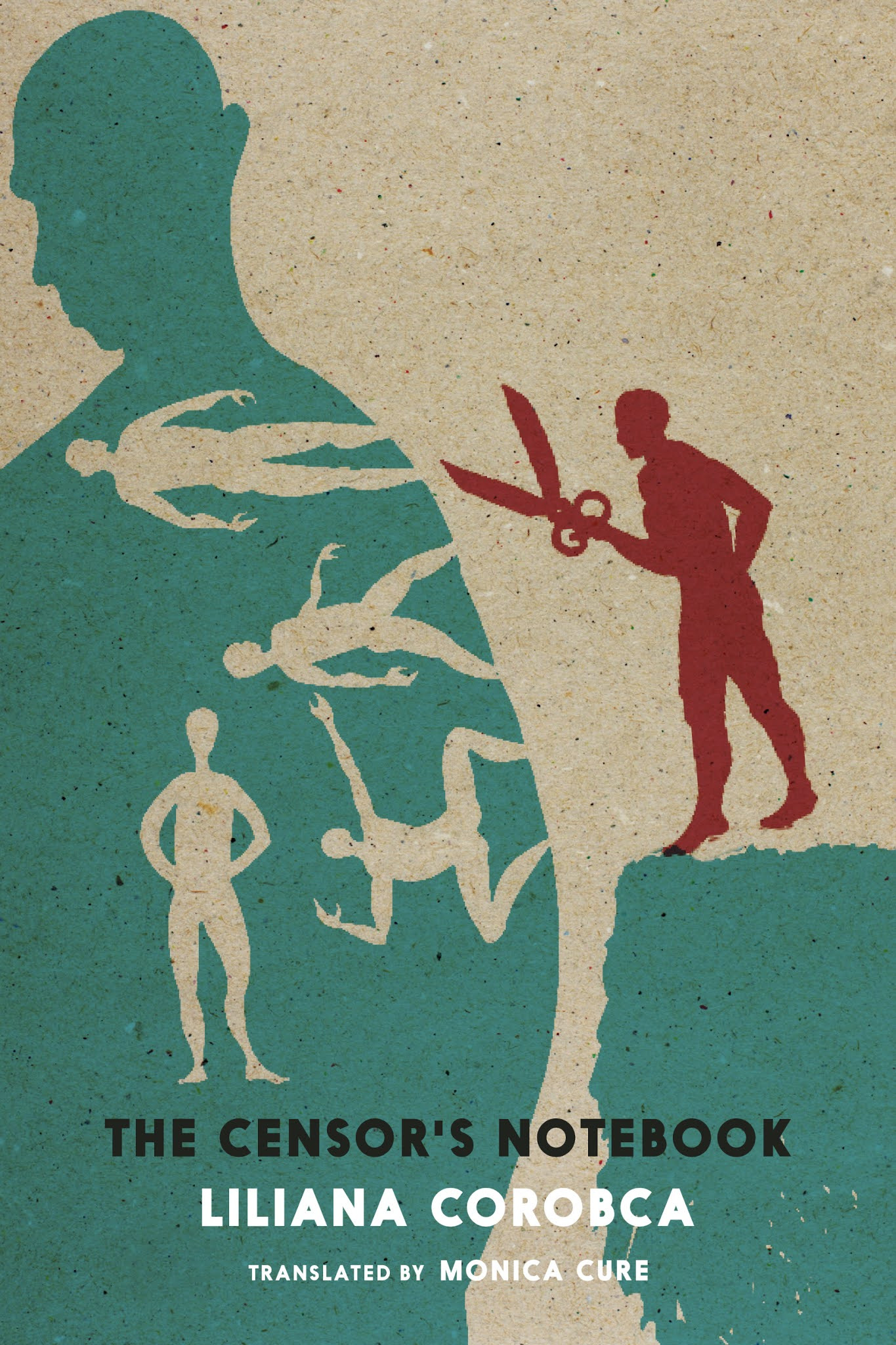
Synopsis:
window into the intimate workings of censorship under communism, this novel begins with a seemingly non-fiction frame story – an exchange of letters between the author and Emilia Codrescu, the former chief of the Secret Documents Office in Romania’s feared State Directorate of Media and Printing, the government branch responsible for censorship. Codrescu was once responsible for the burning and shredding of censors’ notebooks and the state secrets in them, but prior to fleeing the country in 1974 she stole one of these notebooks. Now, forty years later, she makes the notebook available to Liliana for the newly instituted Museum of Communism.
The work of censor – a job about which it is forbidden to talk – is revealed in this notebook, which discloses the structures of this mysterious institution and describes how these professional readers and ideological error hunters are burdened with hundreds of manuscripts, strict deadlines, and threatening penalties. The Censor’s Notebook asks whether literature has the power to keep alive personal and political truths in an age when censorship is pervasive.
It’s the end of the workweek—yay! I hope the week has been kind to everyone and that you’re all ending it on a high note. Just like that, we are nearly halfway through the third month of the year. Third month of the year? Woah. How time flies! I can’t believe we are already in March. At times, it feels like nothing of consequence has happened; yet at the same time, it also feels like a lot has happened. Because what do you mean that in a couple of weeks, the world is unraveling? I sure hope that the ongoing Middle Eastern conflict will de-escalate—or, if not be resolved soon—since its impact is far-reaching. On a brighter note, I hope the year is providing everyone with plenty of opportunities to grow and improve. With the weekend looming, I hope everyone has a great one and ends the workweek on a high note. It is now time to dress down and wear more comfortable clothes. I hope you spend the weekend wisely—whether by resting from the rigors of a demanding career, pursuing your passions, completing household chores, spending time with loved ones, or simply relaxing. I hope you’re all doing well—physically, mentally, and emotionally.
Currently, my venture into European literature is in full swing. After spending the first two months of the year reading the works of Latin American and Caribbean writers, I decided to cross the Atlantic Ocean and venture into the diverse tapestry of the European literary landscape. Honestly, toward the end of February, I didn’t have any idea what my March literary journey was going to look like. Then I realized that my reading challenges are also filled with works of European literature. It was this realization that made me decide to venture across the vast and rich tapestry of European literature. I commenced this new literary journey with Polish writer Władysław Stanisław Reymont’s (born Rejment) The Peasants. It was one of the books I listed on my 2026 Top 26 Reading List. After completing this massive book, I reverted to something more traditional with Jane Austen’s Persuasion. The switch is also in line with this month’s motif. March is Women’s History Month, and International Women’s Day is celebrated on March 8.
From one female writer to another. My next read takes me to Romania, a literary territory that, admittedly, I have yet to explore further. It was during a random foray into a local bookstore that I first came across Liliana Corobca and her novel The Censor’s Notebook. I had never encountered the Romanian-Moldovan writer before, but her book immediately piqued my interest, prompting me to secure a copy. I then made it part of my 2026 Top 26 Reading List, making it the third consecutive book from the list that I have read. I guess I am starting on my reading goals early to avoid cramming toward the end of the year. Originally published in Romanian in 2017 as Controlul cărții. Cenzura literaturii în regimul comunist din România (literally Book Control: Censorship of Literature in the Communist Regime in Romania), it was eventually translated into English in 2022. Actually, it was the book’s title that first caught my fancy, especially in a perilous period on the verge of censorship. It is also the first book originally written in Romanian that I have read.
As limited as my venture into Romanian literature is my understanding and knowledge of Romanian history. However, I am aware of its dark contemporary history, particularly post–World War II. This is partly thanks to the works of other European writers, such as Romanian-born German writer and Nobel Laureate in Literature Herta Müller. Anyway, The Censor’s Notebook opens with the writer herself receiving a letter from a woman named Emilia Codrescu-Humml in 2016. She claims to have in her possession a notebook about censorship, which she smuggled out when she fled Romania in 1974. You see, Liliana, in the present, has been chosen to helm the newly instituted Museum of Communism. The notebook then takes readers to communist Romania under the leadership of the strongman Nicolae Ceaușescu—a name often spoken in either fear or reverence, along with other strongmen across the world. But the Romania of the 1960s and 1970s is wracked with fear.
During the regime, government censors kept notebooks—hence the book’s title. In these notebooks, they recorded their thoughts on both their lives and the books they were working on. This provides a dual perspective. Before escaping from Romania, Codrescu-Humml was employed by the General Directorate of Press and Publications (GDPP). Among the more senior members of the unit, her responsibilities included shredding and destroying secret documents. The censors’ notebooks were among those she was meant to shred; they were never meant to be kept for posterity. However, her curiosity got the best of her, eventually leading her to steal a notebook from the Literature Department. Originally turned over for destruction, Codrescu-Humml wound up with Filofteia Moldovean’s notebook. She was one of three readers in Office Two. Ironically, Codrescu-Humml had her designs on a different officemate, whom she deemed more interesting.
The bulk of the novel then details the lives of censors. The story transitions to Filofteia’s notebook. The year is 1974. Filofteia is among the seniors in her unit. She is the quintessential model employee—the one often held up as the office prototype. She is tasked with reviewing novels. Her two other colleagues, on the other hand, deal with works of poetry. What makes Dina (or Diana)—as everyone refers to her—an effective worker is her dispassionate approach to her job. She is proud of her work. While her colleagues often experience a surge of emotions while reading works of poetry, Dina is more level-headed. She is rarely emotionally moved by the works of full-length prose she reads. She still remains objective, sticking to the rules, although she does not resent her colleagues’ flashes of emotion. Palpably, she is cognizant of the role she has to play in the grander scheme of things, hence her calculating nature.
Still, there is an interiority revealed through her notebooks. We learn that she resents the freedom afforded to writers. She has little respect for writers, whom she believes abuse their freedom of expression. She argues that their criticism should not extend to the state and its leadership. This somehow captures the pervasive political ideology espoused by the regime. Slowly but surely, Corobca also depicts the repression prevalent during the regime. She takes readers across a landscape of fear and even the pervasive surveillance of the period. Still, there seems to be more to Dina than what appears on the surface. There is depth beneath the veneer of a submissive cog in the wheel. I am looking forward to how her story unfolds. Will her views vis-à-vis literature and writers change as she experiences the horrors of the regime? Or has she been so shaped by the regime that she has transformed into a pessimist?
Interestingly, despite being thick, the novel is a quick read. Or perhaps accessible is the operative term. I am nearly midway through the book, but there are still many things I am looking forward to. How about you, fellow reader? What are you reading this weekend? I hope you’re enjoying your current book. Happy weekend!
 The Pine-Scented Chronicles