
Happy Wednesday, everyone! Woah! Just like that, we are nearly midway through the third month of the year. How time flies! I hope the first two months of the year have been kind and great to everyone. I know life isn’t a walk in the park, but it is my fervent prayer that everyone’s year is going well. Regardless, I hope the rest of the workweek goes smoothly.
That said, the middle of the week also brings a fresh WWW Wednesday update. WWW Wednesday is a bookish meme hosted originally by SAM@TAKING ON A WORLD OF WORDS.
The mechanics for WWW Wednesday are quite simple: you just have to answer three questions:
- What are you currently reading?
- What have you finished reading?
- What will you read next?

What are you currently reading?

It’s already the middle of the week, which means we have only two more days until the weekend. I hope everyone makes it through the workweek. Reading-wise, my 2026 reading journey is going as planned. After spending the first two months of the year reading works by Latin American and Caribbean writers, I am now in the midst of a European literary adventure. Honestly, I was not originally planning to read works by European writers this March—or this early in the year. I also had no plans for March when I concluded my Latin American and Caribbean literary adventure. Realizing that I had listed several works by European writers in my reading challenges, I resolved to focus on European literature. Like my earlier foray into Latin American and Caribbean literature, this pivot has reintroduced me to familiar names such as Jane Austen. It has also introduced me to writers whose oeuvre I have yet to explore—among them, the French writer Inès Bayard.
It was during a visit to a bargain bookstore that I first encountered the writer and her novel The Little Family. It immediately piqued my interest, prompting me to secure a copy. I was not planning to read the book this year, but since I am currently exploring European literature—and with March being Women’s History Month—I decided to pick it up. I suppose I am also making up for the lack of French literature in my 2025 reading list. The novel opens with a horrific event that reminded me of Alia Trabucco Zerán’s Clean. In the opening scene, Thomas, the young son of Marie and Laurent, meets a tragic end at the dinner table. He is poisoned by his mother, who also takes her own life. Marie shows no remorse, but through intimate details, we are given glimpses into her motivations for the horrific act. Meanwhile, Laurent survives but suffers immensely from the poison he ingested.
This atrocious act raises several questions: What happened? What pushed Marie to commit such a deed? As always, the answers to these lingering questions lie in the past. I was not prepared for what followed. We learn that Marie was raised in suburban Paris before moving to the city for work. There, she met and married Laurent. For years, they were happily married. Marie was a dutiful wife, supportive of her husband’s ambitions as a lawyer at a prestigious firm, while she worked as a financial consultant at a bank. They shared a genuinely affectionate relationship. However, things began to unravel when the unthinkable happened. This traumatic event left a deep mark on Marie. She became more sensitive to her surroundings and started noticing details she had previously overlooked. She also began reflecting on the role of the modern woman. I am now more than halfway through the story, and I must say I am completely gripped. I am looking forward to its conclusion.
What have you finished reading?

My venture into the works of female European writers—and my second by a European writer this year—commenced with a very familiar name. I mean, who has not heard of Jane Austen? She is one of the shining representatives of British literature. Her works are ubiquitous and widely considered classics. Transcending time, they remain among the most studied and discussed in contemporary literary circles—a testament to her enduring legacy. It was during my university years that I read my first Austen novel, Pride and Prejudice. It was a memorable read, although I admit I struggled with it. It was, after all, one of the first English literary classics I encountered. It would take nearly a decade before I read my next Austen novel, but the long wait proved worthwhile. This March, I read my sixth Austen novel, Persuasion, which I purchased during the 2024 Big Bad Wolf Sale.
Now, nearly a decade and a half after reading my first Austen novel, I am close to completing the Austen set with Persuasion, her sixth completed novel; I have yet to secure a copy of Lady Susan. As one of the classics, I included it in my 2026 Top 26 Reading List. Persuasion was Austen’s last completed novel, published posthumously alongside Northanger Abbey. The novel opens at Kellynch Hall, the Elliot family estate, home to the vain and status-conscious Sir Walter Elliot and his three daughters: Elizabeth, Anne, and Mary. The story, however, centers on twenty-seven-year-old Anne. Due to their father’s extravagant lifestyle, the family faces financial difficulties, prompting them to rent out their estate to Admiral and Mrs. Croft, a respectable naval couple. This is familiar Austen territory, particularly in terms of romance. Sir Walter, Elizabeth, and Mrs. Clay—a widowed, lower-class companion—leave for Bath, while Anne stays with her sister Mary at Uppercross Cottage for two months, hoping to encounter Captain Wentworth again. Captain Wentworth, now a successful naval officer, also reenters Anne’s social circle. Despite Anne’s initial fear that he still harbors resentment over their broken engagement, they gradually rekindle their former attachment. However, obstacles remain. Misunderstandings and a lack of communication create a wedge between them—he believes she is in love with someone else, and she fears the same of him. Tension and emotional uncertainty begin to surface.
Captain Wentworth, now a successful naval officer, also reenters Anne’s social circle. Despite Anne’s initial fear that he still harbors resentment over their broken engagement, they gradually rekindle their former attachment. However, obstacles remain. Misunderstandings and a lack of communication create a wedge between them—he believes she is in love with someone else, and she fears the same of him. Tension and emotional uncertainty begin to surface. These conflicts highlight the novel’s central theme: how external forces and social pressures shape personal decisions. These same forces led to their initial separation and continue to loom over them in the present. Still, Anne embodies emotional intelligence, as is often the case with Austen’s heroines. Marriage, social class, and enduring love once again lie at the heart of the novel. Persuasion is, in many ways, the quintessential Austen work.
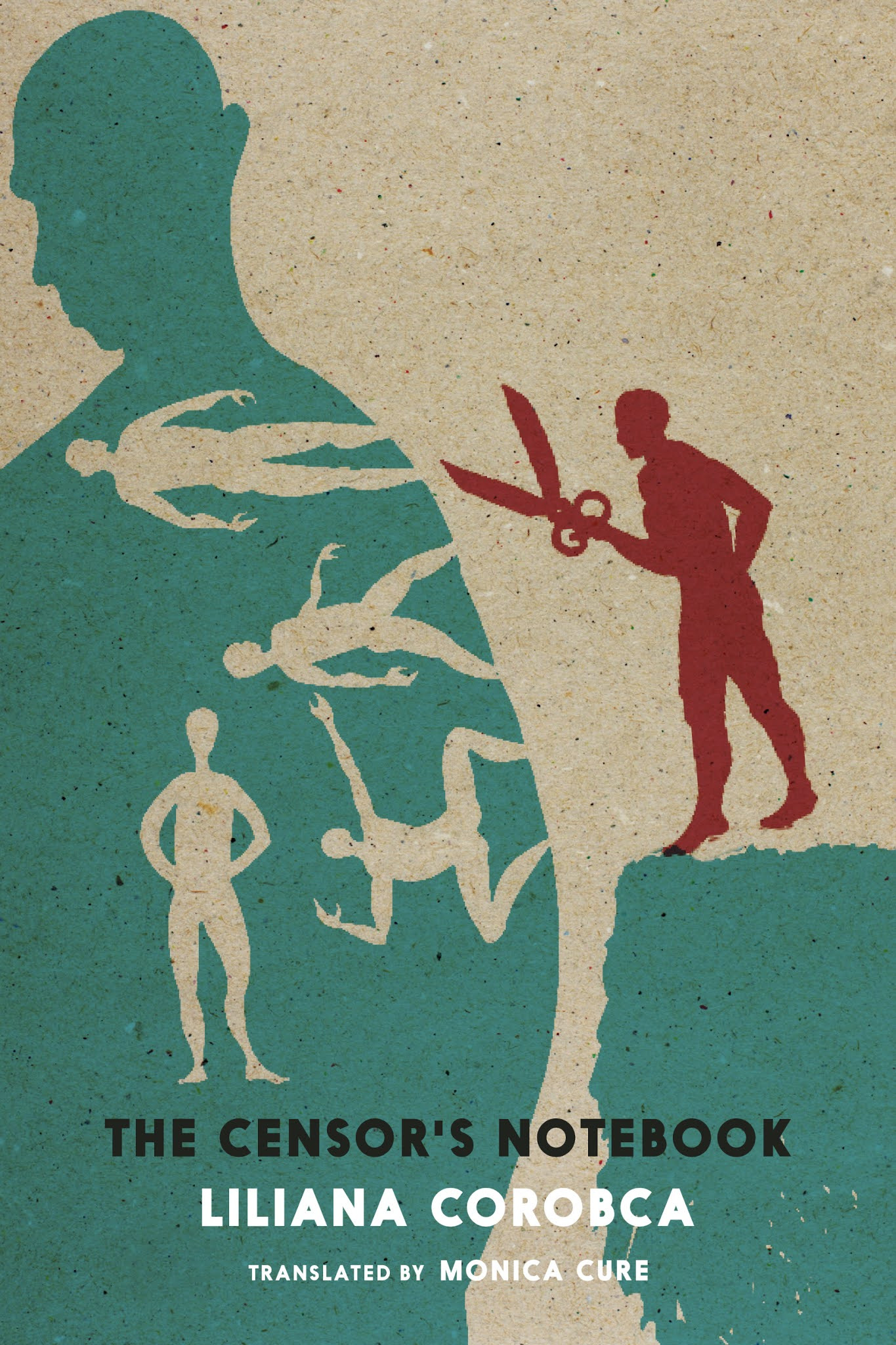
It was a slow reading week by my personal standards. I finished the week with only two completed books. The second book I read took me to Romania, a literary territory I have rarely ventured into. In fact, apart from the Romanian-German writer Herta Müller, I cannot recall reading any works by Romanian authors. This makes Romanian-Moldovan writer Liliana Corobca’s The Censor’s Notebook somewhat unique—she, like the Nobel laureate, has Romanian roots. I had never encountered Corobca before, but her book immediately piqued my interest, prompting me to secure a copy. I then included it in my 2026 Top 26 Reading List, making it the third consecutive book from the list that I have read. It seems I am getting an early start on my reading goals to avoid cramming toward the end of the year.
Originally published in Romanian in 2017 as Controlul cărții: Cenzura literaturii în regimul comunist din România (literally Book Control: Censorship of Literature in the Communist Regime in Romania), it was translated into English in 2022. It is the first book originally written in Romanian that I have read. The novel opens with the writer receiving a letter in 2016 from a woman named Emilia Codrescu-Humml, who claims to possess a notebook about censorship that she smuggled out of Romania when she fled in 1974. Corobca, having been chosen to helm the newly established Museum of Communism, finds the notebook to be a powerful vestige of the past. Before escaping Romania, Codrescu-Humml worked for the General Directorate of Press and Publications (GDPP), where she was tasked with shredding secret documents—including censors’ notebooks—that were never meant to be preserved. However, her curiosity got the better of her, leading her to steal one from the Literature Department. The notebook belonged to Filofteia Moldovean, one of three readers in Office Two. From here, the narrative transports readers to communist Romania under the rule of strongman Nicolae Ceaușescu. During this period, government censors kept notebooks in which they recorded their thoughts about both their personal lives and the texts they reviewed, offering a compelling dual perspective. The bulk of the novel focuses on the lives of these censors in 1974. Filofteia—also called Dina or Diana—is a model employee assigned to review novels, while her two colleagues handle poetry. What makes Dina particularly effective is her dispassionate approach to her work. She takes pride in her role. While her colleagues are often emotionally stirred by the poetry they read, Dina remains level-headed and controlled.
She is rarely moved by the prose she reviews, maintaining objectivity and adhering strictly to the rules, even as she does not begrudge her colleagues their emotional responses. She is keenly aware of her role in the broader system, which explains her calculated nature. The notebook also contains her personal reflections, including her resentment toward the freedom afforded to writers. She believes they abuse their freedom of expression and argues that criticism should not extend to the state and its leadership. This perspective encapsulates the pervasive ideology of the regime. Gradually, Corobca reveals the repression that defined the era, guiding readers through a landscape marked by fear and constant surveillance. This is where the novel draws its strength: it offers a glimpse into the world of censors while vividly capturing the suffocating presence of authoritarian rule. The novel also highlights the enduring power of literature and writing. Overall, The Censor’s Notebook is a compelling read that underscores both the beauty and the necessity of expression—especially in a world on the brink of chaos.
What will you read next?


 The Pine-Scented Chronicles
all of these sound amazing also latine and carribean lit?! i’m so interested, i might need to look through your archive xD
LikeLike