War, Faith, and the Human Spirit
In the Ganges River delta, Bengali civilization emerged around 1000 BCE. By then, the region was known as Vanga or Ganga Rashtra. Evidence excavated in the region suggests that Bengal had been inhabited as early as 2000 BCE. The flourishing of Vedic civilization around 1000 BCE played a seminal role in the development of Bengali civilization into an influential regional force. With this prosperity came the growth of Hinduism and Buddhism, which remain among the most influential religions in the region. However, the dominance of native Indian religions was disrupted by the arrival of Islam in the eighth century. Islam gradually became the preeminent religion from the early 13th century onward. The conquests led by Bakhtiyar Khalji and the activities of Sunni missionaries, such as Shah Jalal, further spread Islam across the region. For centuries, the Mughal Empire controlled the region.
Alongside the development of Bengali civilization was the growth of its literature. When Bangladesh declared its independence from Pakistan—it had been a province of Pakistan following the second partition of Bengal in 1947—parts of Bengali literature became integrated into Bangladeshi literature, which reached its height during medieval times, when Muslim rulers became patrons of the arts. Poetry was its most prevalent form, producing poets such as Alaol, Chandi Das, and Daulat Kazi. The 19th century marked the modernization of Bengali literature. Rabindranath Tagore, Kazi Abdul Wadud, Kazi Nazrul Islam, Bankim Chandra Chattopadhyay, and Mir Mosharraf Hossain were among the prominent figures of the period. Tagore even earned the distinction of becoming a Nobel Laureate in Literature. Following partition and the eventual declaration of Bangladesh’s independence, Bangladeshi English literature gradually emerged.
Among the prominent names in contemporary Bangladeshi English literature is Tahmima Anam (তাহমিমা আনাম). Although she was born in Bangladesh, she was raised in Paris, New York, and Bangkok. Her peripatetic childhood, however, did not prevent her from understanding and appreciating her homeland. Through her parents, she learned about the Bangladesh Liberation War, an armed conflict sparked by the rise of Bengali nationalism and the self-determination movement in East Pakistan. At the conclusion of the war, Bangladesh secured its independence in 1971. Four years later, Anam was born. Despite not experiencing the war firsthand, her body of work is deeply influenced by it. Her PhD thesis in anthropology at Harvard University focused on the aftermath of the war. When she made her literary debut in 2007 with A Golden Age, the Bangladesh Liberation War was a central theme.
She felt the urge to tell him more, to explain about the abortions she had done after the war, and that she hadn’t realised until later, much later, that she had racked up a debt she was still struggling to repay. How could he know – he was just a soldier, he had killed as a matter of principle, but the war babies, the children of rape, had been left to junior doctors, the volunteers in ragged tents on the outskirts of town.
Tahmima Anam, The Good Muslim
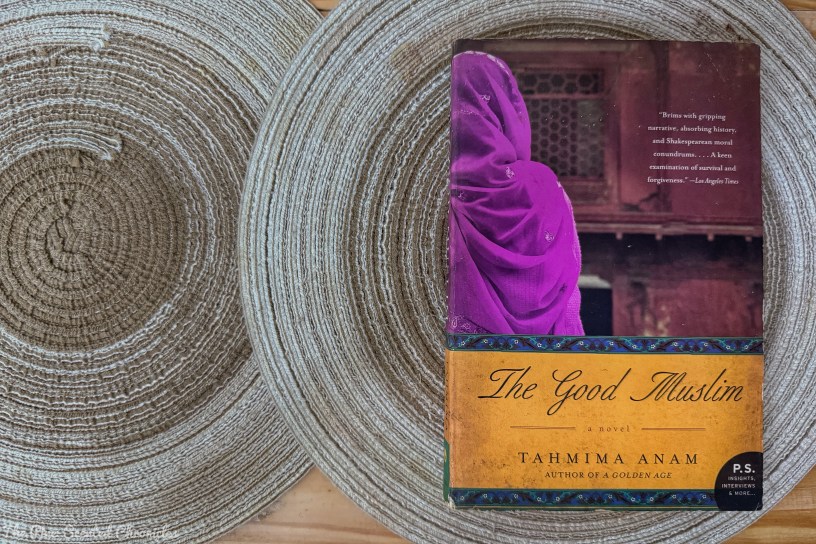
The war remains a central theme in her sophomore novel, The Good Muslim. Originally published in 2011, Anam builds on the success of her debut novel. The Good Muslim follows two major plotlines, the first set in the twilight years of the war. In December 1971, the war finally ended, resulting in the liberation of Bangladesh from East Pakistan. Those who fought began to return home. Among the guerrilla fighters was Sohail Haque, who was visibly scarred by the conflict. During his journey, he began to reflect on how the war had adversely affected his life. He used to be a geographer, but the war had left a deep scar on him. Upon his return, he witnessed an atrocious attack at a barracks deserted by retreating Punjabi soldiers. He rescued a girl named Piya. This memory, along with others he witnessed during the war, has tormented Sohail for years.
The second major plotline charts the story of Sohail’s sister, Maya. The year is 1984. Maya receives a telegram informing her of the death of her brother’s wife, Silvi. This marks a long-awaited homecoming, as nearly a decade has passed since she was last home. For the siblings, it is an impending reunion they are both wary of. It has been seven years since they last had contact, when Maya fled Dhaka, filled with frustration. Ironically, before the war, they were inseparable. On her journey, Maya experiences moments of introspection. A liberal-minded doctor, she traveled to the countryside to help women affected by the war, including performing abortions for women and girls who were raped. The prospect of reuniting with a family she has not been in contact with for years makes her reflect on her life in Rajshahi and the threats that drove her away. Her apprehension about returning home also stems from the prospect of reuniting with her estranged brother.
To understand the radical shift in the siblings’ dynamics, Anam delves into the past; as is often the case, the past holds the key to understanding the present. Before the war, Sohail and Maya were inseparable. However, the landscape of their lives was irreversibly altered by the war. Tormented by the horrors he experienced and witnessed, Sohail undergoes an existential crisis that prompts him to search for meaning in post-war Bangladesh. This sets him on a path of transformation. Unable to reconcile who he was before and after the war, he turns to religion and gradually surrenders himself to it. He adopts a puritanical interpretation of Islam and becomes a charismatic religious leader, on the cusp of fanaticism. He marries their neighbor Silvi, who is equally devout, and begins living with his followers above his mother’s home, preaching to them.
Maya meets her brother’s newfound religious fundamentalism with skepticism. She struggles to reconcile the brother she once knew—the loving sibling who admired the works of Rilke and collected books—with the man he has become. After his religious awakening, Sohail burns these books, believing there is only The One (the Koran). They once shared liberal views on religion, even ridiculing the excesses of faith with their university and fellow freedom-fighter friends. Seeing her brother enmeshed in religious fundamentalism, Maya is appalled. As their paths diverge, she remains steadfast in her progressive ideals but feels increasingly alienated. Her return home revives memories of why she fled Dhaka. Although she finds comfort in their welcoming mother, she struggles to reconnect with Sohail and instead forms a bond with her neglected nephew, Zaid.
Her eyes adjusted to the new contours of the building. The decline was far worse than she had imagined. Here, grey streaks across its back, where the drainpipe had leaked; there, the slow sinking of its foundations, as if the house were being returned to the earth; and, above, the collection of shacks that made up the first floor, built by her brother out of a mixture of brick and tin and jute, making it appear as though an entire village had fallen from the sky and landed on the rooftop.
Tahmima Anam, The Good Muslim
Central to the story is the Bangladesh Liberation War. For the Haque siblings, it is a catalytic event. It began when the Pakistani military junta in West Pakistan, under Yahya Khan, launched Operation Searchlight to suppress protests calling for Bengali political autonomy. The widespread atrocities committed during this operation led to the Bangladesh genocide. In retaliation, civilian insurgents and Bengali military defectors from the Pakistan Army initiated a guerrilla campaign, attacking West Pakistani troops and pro-Pakistani militias with support from India. India’s involvement escalated into the Indo-Pakistani War, which ended on December 16, 1971, securing victory for the Bangladeshi liberation movement. These conflicts resulted in the deaths of between 300,000 and 3,000,000 people, with tens of millions displaced.
However, gaining independence did not end the nation’s struggles. The years following the war saw the unraveling of a young nation searching for its identity. The story of Maya and Sohail becomes a microcosm of this struggle. Both siblings were shaped by the war in ways they could not have anticipated. With Sohail battling at the frontline, Maya was doing volunteer work, prompting her to eventually pursue a career in medicine. She initially planned to be a surgeon, but a year in residence made her realize that her skills were needed somewhere else. She was needed as a regular doctor more than as a surgeon. Like her brother, the war set her on a path of self-discovery. Finding a new calling, her medical endeavors led her to the countryside, where there was a lack of medical facilities and professionals. There, she found fulfillment in helping women, especially those affected by the war.
As the dust settled after Bangladesh’s independence, the country stood on the brink of socio-economic upheaval. The issues Maya witnessed in the countryside were part of a broader post-war crisis. Many women were raped by enemy soldiers, their dignity violently stripped away. Despite being declared heroines of the war, they faced social stigma in a deeply patriarchal society. Many sought abortions, which Maya often performed. Yet this did little to silence societal judgment, as these women were seen as “stained.” With little hope of marriage, some fled to Pakistan. For Maya, a staunch feminist, witnessing this injustice was deeply disillusioning. She also faced resistance during her work in Rajshahi, which ultimately contributed to her departure.
Upon her return, Maya encounters a changed Bangladesh, one that is different from what she knew of it before. She discovers more instances of corruption that continued to undermine Bangladesh. Her reunion with old friends made her learn about the prevalent social concerns in her homeland. Corruption has become prevalent, and police brutality is ubiquitous. Maya herself became involved with an anti-government newspaper. Shafaat Rahman, the newspaper’s editor, was cognizant of the dangers they face in light of their exposé of the numerous corrupt practices and government injustices that undermined modern Bangladeshi society. Still, he was unfazed. In writing, Maya found a way to reclaim her voice, while confronting her past and exposing the maladies of the present. The political backdrop includes the rise of Hussain Muhammad Ershad, who seized power in a bloodless coup in 1982.
They should have closed the roads and cleaned the pavements, and there should have been a bigger crowd, thousands of people carrying children on their backs, grasping at the retreating feeling of having once, many years ago, done something of significance.
Tahmima Anam, The Good Muslim
Still, the overarching theme is religion. Anam explores the dichotomy between religious fundamentalism and secularism through Sohail and Maya. She emphasizes how religion provides reprieve in times of hardship, guiding individuals through dark moments. However, religious extremism can also be pervasive, as seen in Sohail. It drives a wedge between him and his family, especially his sister. Drawn by his faith, he creates another rift—this time between himself and his son. He is adamant that his son receive a traditional Muslim education, sending him to a madrasa in Chandpur in the belief that it will offer better guidance. Maya, however, views this as a form of abandonment. This tension highlights the novel’s exploration of family dynamics shaped by contrasting ideologies. Anam underscores how personal beliefs influence both individual identity and relationships. In many ways, the siblings embody the clash between tradition and progressive ideals in modern Bangladesh.
The Good Muslim vividly explores the trauma brought about by war, examining its aftermath and its impact on personal identity. The contrast presented in the novel raises an important question: What does it mean to be a “good” Muslim? Does adherence to the fundamental tenets of Islam suffice, or is it more important to be a conscientious member of society? Anam offers a nuanced perspective. The importance of faith, especially in times of upheaval, cannot be overstated—it serves as an anchor and a source of stability. However, it must also have boundaries. True understanding of faith requires awareness of one’s social context. Fundamentalism and extremism are not confined to Islam; they can emerge in any belief system. In a rapidly changing world, tradition and progress continually interact, and both must be applied with discernment.
In her sophomore novel, Tahmima Anam presents a compelling exploration of timely and significant themes that extend beyond her native Bangladesh. As the paths of siblings Sohail and Maya diverge, The Good Muslim, on the surface, examines the tensions between religious fundamentalism and liberalism, representing opposing forces in modern society. Their story demonstrates how personal ideologies shape both individual lives and relationships. Beyond religion, the novel also explores the lasting impact of war and conflict on individuals and society. It portrays trauma as both a burden and a catalyst for healing and self-discovery. By also examining the complexities of politics and family dynamics, The Good Muslim emerges as a multifaceted depiction of human resilience in an increasingly uncertain world. Ultimately, it suggests that hope endures, as love and understanding provide pathways toward healing.
Book Specs
Author: Tahmima Anam
Publisher: Harper Perennial
Publishing Date: 2011
No. of Pages: 297
Genre: Literary
Synopsis
In the dying days of a brutal civil war in Bangladesh, Sohail Haque stumbles upon an abandoned building. Inside he finds a young woman whose story will haunt him for a lifetime to come.
Almost a decade later, Sohail’s sister, Maya, returns home after a long absence to find her beloved brother transformed. While Maya has stuck to her revolutionary ideals, Sohail has shunned his old life to become a charismatic religious leader. And when Sohail decides to send his son to a madrasa, the conflict between brother and sister comes to a devastating climax.
The Good Muslim is an epic about faith, family, the rise of religious fundamentalism, and the long shadow of war from prizewinning Bangladeshi novelist Tahmima Anam.
About the Author
Tahmima Anam (তাহমিমা আনাম) was born on October 8, 1975, in Dhaka, Bangladesh. When she was just two years old, she and her family moved to Paris, where her parents joined UNESCO as employees. She grew up in Paris, New York, and Bangkok. After receiving a scholarship at Mount Holyoke College in South Hadley, Massachusetts, United States, she pursued a Bachelor of Arts degree in Cultural Anthropology. She earned her PhD in anthropology from Harvard University in 2005 for her thesis “Fixing the Past: War, Violence, and Habitations of Memory in Post-Independence Bangladesh”. In 2005, she also completed her Master of Arts in Creative Writing at Royal Holloway, University of London.
In 2007, she made her literary debut with the publication of A Golden Age, the first novel in what would eventually be collectively referred to as the Bengal Trilogy. Her debut novel won the Commonwealth Writers’ Prize Best First Book Award, and was shortlisted for the Guardian First Book Award and the Costa First Novel Award. In 2011, the sequel to the book, The Good Muslim, was published to similar critical success. It was longlisted for the Man Asian Literary Prize. The last book in the trilogy, The Bones of Grace, was published in 2016. Her most recent novel, The Startup Wife, was published in 2021. Her writing has appeared in prestigious publications such as Granta, The Financial Times, and The Guardian. She became a Contributing Opinion Writer for the International New York Times in 2013.
She currently resides in London. In 2016, she was elected to the Royal Society of Literature.
 The Pine-Scented Chronicles