
Happy Wednesday, everyone! Woah! Just like that, we are nearly through the third month of the year. Today is actually the last Wednesday of March. How time flies! I hope the first two months of the year have been kind and great to everyone. I know life isn’t a walk in the park, but it is my fervent prayer that everyone’s year is going well. Regardless, I hope the rest of the workweek goes smoothly.
That said, the middle of the week also brings a fresh WWW Wednesday update. WWW Wednesday is a bookish meme hosted originally by SAM@TAKING ON A WORLD OF WORDS.
The mechanics for WWW Wednesday are quite simple: you just have to answer three questions:
- What are you currently reading?
- What have you finished reading?
- What will you read next?

What are you currently reading?

It’s already the middle of the week, which means we have only two more days until the weekend. I hope everyone makes it through the workweek. Reading-wise, my 2026 reading journey is going as planned. After spending the first two months of the year reading works by Latin American and Caribbean writers, I am now in the midst of a European literary adventure. Honestly, I was not originally planning to read works by European writers this March—or this early in the year. I also had no plans for March when I concluded my Latin American and Caribbean literary adventure. Realizing that I had listed several works by European writers in my reading challenges, I resolved to focus on European literature. Like my earlier foray into Latin American and Caribbean literature, this pivot has reintroduced me to familiar names, while introducing me to writers whose oeuvre I have yet to explore. My current read has taken me to a familiar name in British writer Hilary Mantel.
It was during a visit to a bargain bookstore that I first encountered Mantel over a decade ago. Her novel Wolf Hall was ubiquitous. However, I felt like the book was not for me, hence why I dismissed it. A decade later, I would encounter Mantel again during the pandemic. Her latest novel, The Mirror and the Light, was longlisted for the Booker Prize. Had it won the prestigious prize, all the books in her Thomas Cromwell trilogy would have won the Prize, an unprecedented feat. It fell short, but it was still impressive. Also, it made me reconsider reading the trilogy. After the pandemic, I secured a copy of all three books. Last year, I read the first book in the trilogy, and as part of my venture into the works of European women writers, I resolved to read Bring Up the Bodies. Actually, it has become imperative for me to read the trilogy after Mantel’s passing back in 2021. I do lament the fact that it is only now that I am reading her works.
Anyway, I just started reading Bring Up the Bodies. Just like its predecessor, the book opens with a list of the characters and a family tree. Story-wise, it picks up where Wolf Hall left off. Cromwell is now Master Secretary to the King’s Privy Council. It is September 1535, and we are transported to the court of King Henry VIII. The King was beginning to get tired of his wife, Anne Boleyn, his second wife. I just started reading the book, but I already have an iota about how the story will end. However, I am curious what Cromwell’s role is going to be this time around. Since I just started reading the book, I don’t have much of an impression to share for now. I will be sharing them in this week’s First Impression Friday update.
What have you finished reading?

After a slow start to my March reading journey, I was able to pick up the pace in the past week. I was able to finish three books, all of which are works by European women writers, a venture that commenced with Jane Austen’s Persuasion. The first of three books I finished in the past week transported me to France. After having a French-less reading year in 2025, I have already read my second book this year. I am somehow making up for lost time, so to speak. Interestingly, my venture into the works of French women writers is even more limited. This makes reading Inès Bayard’s This Little Family a step in the right direction. It was during a visit to a bargain bookstore that I first encountered the writer and her novel, This Little Family. It immediately piqued my interest, prompting me to secure a copy. I was not planning to read the book this year, but since I am currently exploring European literature—and with March being Women’s History Month—I decided to pick it up.
Originally published in 2020 as Cette Famille, This Little Family novel opens with a horrific event that reminded me of Alia Trabucco Zerán’s Clean. In the opening scene, Thomas, the young son of Marie and Laurent, meets a tragic end at the dinner table. He is poisoned by his mother, who also takes her own life. Meanwhile, Laurent survives but suffers immensely from the poison he ingested. Marie showed no remorse for her actions. This atrocious act raises several questions: What happened? What pushed Marie to commit such a deed? As always, the answers to these lingering questions lie in the past. I was not prepared for what followed. We learn that Marie was raised in suburban Paris before moving to the city for work. There, she met and married Laurent. For years, they were happily married. Marie was a dutiful wife, supportive of her husband’s ambitions as a lawyer at a prestigious firm, while she worked as a financial consultant at a bank. They shared a genuinely affectionate relationship. They reached a point in their relationship where they are both ready to expand their family and have a family. However, things began to unravel when the unthinkable happened. After a tense meeting with the new CEO, in which she presented with excellence, Marie found her bicycle vandalized. The new CEO then offered her a ride home. Although she was initially uneasy about the proposal, she accepted his offer to avoid riding the Metro. However, his demeanor changed, and he started to sexually assault her. After doing the deed, her new boss threatened that she would lose the perfect life she’s worked so hard for if she dared to speak. It is for this reason that Marie decided to keep silent.
This traumatic event left a deep mark on Marie. There was a slight chance that the baby could be Laurent’s. However, Marie was sure it was conceived during the assault. The moment her pregnancy was confirmed, Marie already loathed the baby and even contemplated having it aborted at one point. She even threw herself down the stairs in an attempt to lose the baby. It was all for naught, and when the baby was born, she tried to keep a distance from him. For her, he was a reminder of the night she was assaulted. In the midst of this, Marie became more sensitive to her surroundings and started noticing details she had previously overlooked. She began reflecting on the role of the modern woman. The bulk of the novel confronts the intricacies of motherhood, marriage, and even societal norms. This Little Family tackles the pressures placed on women while grappling with trauma and the abuses they often face. Despite its dark themes, the novel is a timely and compelling read, especially in a period when the #MeToo movement remains prevalent.

My next read takes me back again to the United Kingdom, with yet another trilogy. Apparently, there is something about British women writers, historical fiction, and trilogies. I am not complaining. Historical fiction, after all, is just right up my alley. Anyway, it was Barker’s Greek mythology–themed novels that first made an impression on me. During the pandemic, I read The Silence of the Girls and The Women of Troy. Interestingly, these were something of a deviation from her primary body of work. She has gained global recognition with her Regeneration Trilogy. The third book in the trilogy, The Ghost Road, even earned her the prestigious Booker Prize. For this reason, I tried to secure copies of the trilogy. In 2024, I finally completed the set. However, they suffered the same fate as many of my other books: they gathered dust on my shelves.
Honestly, I wasn’t planning to read any of Barker’s works this year. But then I realized I was focusing on works by European female writers—of which I have very few. This seemed like the perfect opportunity to reduce my backlist. This led me to the first book in the trilogy, Regeneration. Originally published in 1991, it introduces Dr. W. H. R. Rivers, an army psychiatrist stationed at Craiglockhart War Hospital. In the novel’s opening, he learns of poet Siegfried Sassoon’s indictment of the ongoing war; interestingly, the narrative is interspersed with poetry. Apparently, the story is set during the First World War. I find this interesting because most works of historical fiction I read are set during the Second World War. Anyway, Sassoon, we learn, is also a lieutenant in the British military. Upon learning of his public denunciation, the military grew concerned about public opinion turning against the war, especially since there was no end in sight. The military then enlisted the help of Sassoon’s friend Robert Graves, a fellow officer and poet. Graves labeled Sassoon as “shell-shocked” after convincing him that his critique of the war would not lead to the court-martial he seemed to desire, but rather to public embarrassment. He then arranged for Sassoon to be sent to the hospital, partly to discredit him. Dr. Rivers, however, was skeptical of Sassoon’s conditions. By agreeing to be admitted, Sassoon effectively acknowledged a psychological condition. However, Dr. Rivers doubted the claims that Sassoon was shell-shocked. He was also reluctant to harbor a “conscientious objector.” Dr. Rivers and Sassoon’s initial discussion further underscored his stance that Sassoon was a CO.
But it was not all about Sassoon. At Craiglockhart, we are also introduced to Dr. Rivers’ other patients, such as Billy Prior and David Burns. However, they all share similarities. They were all suffering from the trauma of the war. Billy was a young officer who suffered from mutism, memory loss, and night terrors. David, on the other hand, was suffering from severe PTSD; he could not eat without vomiting. For his part, Dr. Rivers was exploring the ethical dilemma of healing soldiers with the prospect of preparing them to return to the frontlines. All of these elements make Regeneration a very compelling read. It takes us beyond the battlelines, as Barker confronts the horrors of war, particularly its psychological dimensions. She also explored the intricacies of masculinity and how it often results in emotional repression. Beyond the war, the story examines the role of art as a form of therapeutic expression. Overall, Regeneration is a promising start to the trilogy. I can’t wait to read the rest of the books in the trilogy.
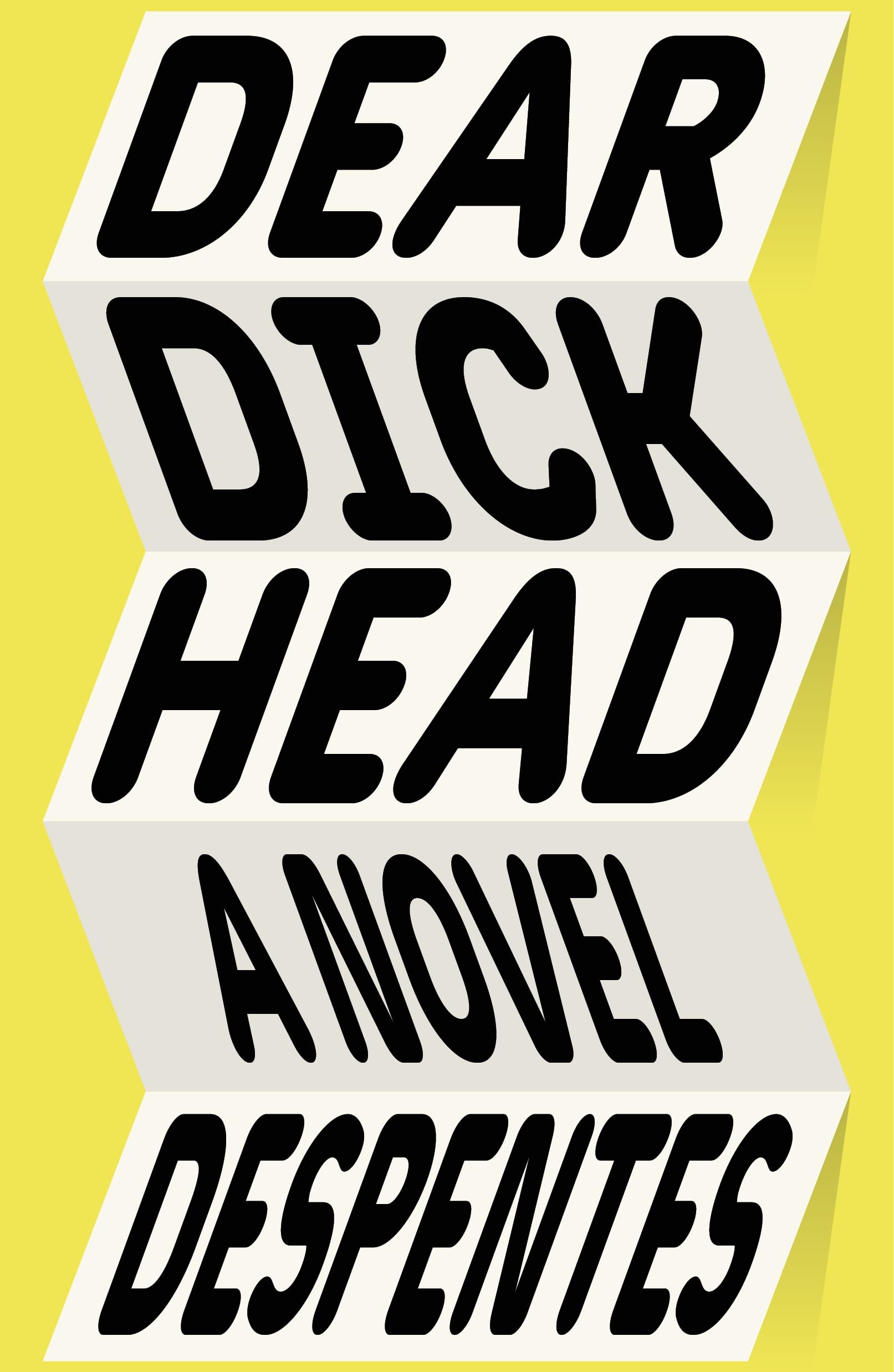
I guess my venture into European women’s literature is essentially a foray into French and British literatures. This is without design. I just realized that most of the books in my reading challenges are works of British writers. Anyway, my three-book venture concluded with another unfamiliar French name; I am also, again without design, alternating new-to-me and familiar writers. It was just this year that I came across Virginie Despentes. I am surprised. She has quite a commendable literary career that commenced in the early 1990s. Her works have also earned her various accolades, with Vernon Subutex 1 even shortlisted for the International Booker Prize. Through an online bookseller, I came across her latest novel, Dear Dickhead. I was also not planning on reading the book, yet here I am.
Originally published in 2022 as Cher connard, the novel was translated into English in 2024. In a way, the novel is epistolary as it came in the form of emails; we can refer to it as a modernized version of the novel of letters. The story introduces Oscar Jayack and Rebecca Latté, childhood neighbors reacquainted as adults. Oscar is a mid-list writer who prides himself on being anti-establishment. Meanwhile, Rebecca is a movie star who has become frustrated with her uncertain position in the industry. Aging women were increasingly relegated to the sidelines. After a chance meeting in Paris, Oscar casually attacks Rebecca’s image in an Instagram post. He described her as a “wrinkled toad.” Adding salt to the wound, he found her repulsive, writing that she looked like “a tragic metaphor for an era swiftly going to hell.” Of course, in a world where social media is the newest means of connection, the post reached Rebecca, who could not resist responding to the demeaning post. She opens her scathing response with the titular Dear Dickhead. She described him as looking “like a pigeon shitting on my shoulder as you flap past. It’s shitty and unpleasant.” This opens up an exploration of a plethora of subjects, which is, interestingly, connected with This Little Family. In the midst of a barrage of online communication between Oscar and Rebecca, Zoé Katana, Oscar’s former assistant and now a feminist blogger, accused her former boss of sexual assault. This gave Rebecca the bullet she needed to retaliate against Oscar. For his part, Oscar attempted to justify himself rather than apologizing. Rebecca and Oscar only traded online tirades. Slowly, the #MeToo Movement was introduced into the story.
The discourses between the two main characters – occasionally disrupted by entries from Zoé – are wide and farreaching. This makes them interesting, although at times they tend to deviate and meander. Their posts and emails covered popular culture and feminism, while expanding on seminal subjects of gender and privilege. Rape, aging, and consent were also subjects inherent in their discourses. All the while, the COVID19 pandemic was sweeping the streets of Paris. Gradually, these discourses opened new avenues for the characters to explore and reflect on themselves. There was more to the surface. As their vulnerabilities are exposed, we learn that both Oscar and Rebecca are both survivors of addiction. Addiction is as integral to the story as the #MeToo movement. The novel also captured the intricacies of living an online existence; I guess this is exacerbated by the pandemic. At times, I thought that the Despentes was a young writer, not only because of the subjects she explored but also on how she explored them. Overall, Dear Dickhead is a plesantly delightful read. I guess delightful is not the apt term considering the bleak subjects it explored. Still, it was a worthy read.
What will you read next?


 The Pine-Scented Chronicles