
Happy Tuesday, everyone! Today is the last day of March. Tomorrow we will be welcoming a new month. I hope that the year is going in everyone’s favor. Before we could wrap up March, let me cap it with my last Top 5 Tuesday update for the month. Top 5 Tuesday was originally created by Shanah @ the Bionic Bookworm, but is now currently being hosted by Meeghan @ Meeghan Reads.
This week’s topic: Books That Should be Modern Classics
Modern is rather subjective, because one must be able to define what it is, at least with respect to time. 2000 could already be ancient for some, but modern for others. Regardless, I am sharing books I feel will transcend time because they grapple with concerns that are not only prevalent but will persist in the future.

Anxious People by Fredrik Backman
Snippet from my review: Doused in humor prevalent in Backman’s works, Anxious People, however, was more than just a novelty act. In his latest work, the Swedish writer has again demonstrated why he is a writer to look forward to. His lenses magnify our human tendencies. He vividly captures who we are and what we are. The humor belies his deep insights, but both elements shine through. His insights make the reader reflect on themselves, without being preachy or pushy. Backman plays to his strongest card, and that is the keen understanding of what it is to be a human being. In Anxious People, Backman has crafted a timely, relevant, and rewarding read that mirrors the concerns of our time.

The Overstory by Richard Powers
Snippet from my review: With the declining state of both nature and human conditions, hope still springs eternal. Change can be a very tall task. Even the novel underscored how radical acts have barely mitigated the proliferation of eco-terrorism, like Douglas’ realization. Capitalism, corporate interests, and our tendency for greed and moral corruption are all too tall an order to overcome. Nevertheless, Powers subtly underscored the fact that humans can still change. Through several instances and in the characters’ own realizations, he demonstrated how the war on eco-terrorism is not entirely hopeless. It can start with small steps and the journey to change can be arduous but with the proper mindset, it is not impossible. However, this can only be achieved through the development of a symbiotic relationship with nature. Humans and trees can still coexist.
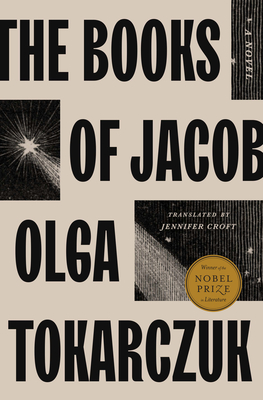
The Books of Jacob by Olga Tokarczuk
Snippet from my review: The Books of Jacob is a labyrinth of ideas. It is rich in discourses that cover a vast terrain of subjects and themes. With the intersection of three major religions, the novel brimmed with discussions of theology and religion. The Kabbalah was repeatedly referred to. Diplomatic history was also captured by the novel. This lush landscape was reminiscent of Tokarczuk’s Booker International Prize-winning novel, Flights. Tokarczuk also grappled with familiar and profound themes such as the meaning of life and the birth of ideas. While Jacob’s actions were viewed as heretical by Jews, his actions also remind us that norms and dogmas can be challenged, hence paving the way for new ideas. Contrary to how we see and understand things, perspectives are not monochromatic or linear. Tokarczuk’s refusal to conform to literary norms is one manifestation of this idea. The novel’s reverse pagination, starting from the last page, was another Jewish reference, but, at the same time, it was a nod to Jacob’s idea.

Human Acts by Han Kang
Snippet from my review: But whilst Human Acts is no perfect masterpiece, it gave a visceral and luminous experience. In seven heartbreaking chapters and seven distinct characters, Kang delivered a literary masterpiece that evoked the very same emotion she felt seeing the picture of a mutilated girl, one of many victims of the flourish of blood and barbarity. She reminded her readers of the fragility of our human spirits. Kang powerfully described the feeling of being shot; of the moment the bullet enters then exits the body; of how, in between the egress and the ingress, the bullet shatters something tender in us in slow, painful motion. She trudged the thin line of indifference to deliver a work where emotions spring eternal, evoking a collective sense of humanity, not once, not twice but seven times.

Vagabonds by Eloghosa Osunde
Snippet from my review: In their debut novel, Osunde crafted a compelling story. Through Vagabonds!, they transported the readers into the underbelly of a megacity that was teeming with life. Queerness was at its core but it was also a scathing social and political commentary that probed into the maladies that keep Nigeria shackled to the ground. It was brimming with dark subjects ranging from murder, cannibalism, assault, transphobia, homophobia, violence, and even suicide. Political and moral corruption was a recurring theme as well. But despite all of these weighing heavily on the shoulders of the characters and of Lagos as a whole, healing is possible through love and acceptance which comes both from within ourselves and from those surrounding us. Vagabonds! is a searing debut that pays homage to people who society has tagged as outsiders. Osunde reminds their readers that those who hide behind their shadowselves also matter and that their stories deserve to be heard.
Here are other books I feel like will remain beloved across time.





 The Pine-Scented Chronicles