
Happy Wednesday, everyone! Woah! Just like that, we are already in the fourth month of the year. I hope the first quarter of the year has been kind and great to everyone. I know life isn’t a walk in the park, but it is my fervent prayer that everyone’s year is going well. Regardless, I hope the rest of the workweek goes smoothly.
That said, the middle of the week also brings a fresh WWW Wednesday update. WWW Wednesday is a bookish meme hosted originally by SAM@TAKING ON A WORLD OF WORDS.
The mechanics for WWW Wednesday are quite simple: you just have to answer three questions:
- What are you currently reading?
- What have you finished reading?
- What will you read next?

What are you currently reading?
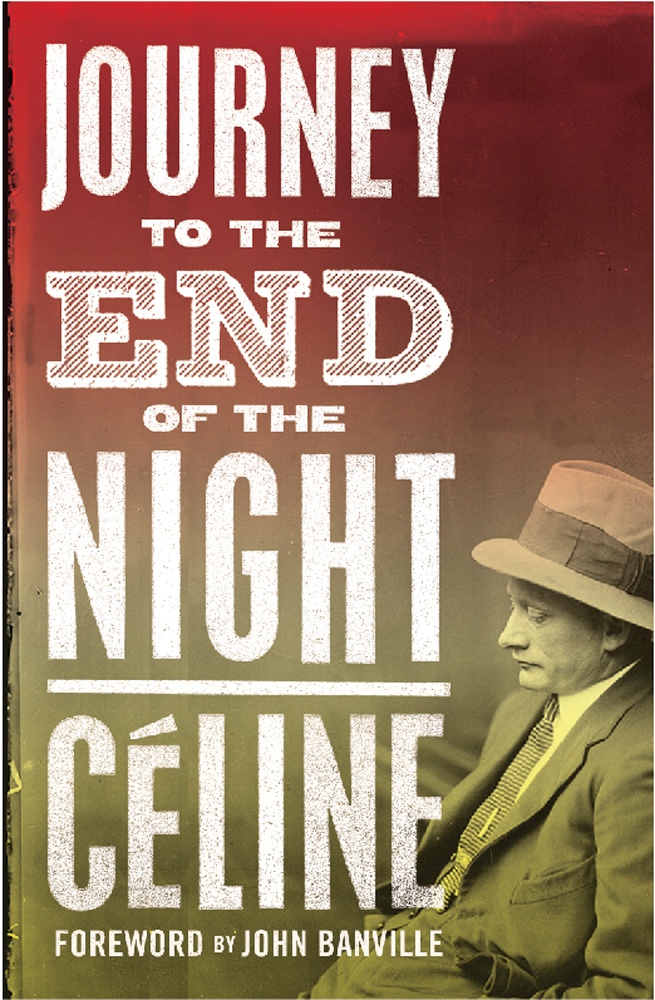
It’s already the middle of the week, which means we have only two more days until the weekend. I hope everyone makes it through the workweek. Thankfully, tomorrow is a holiday here in the Philippines, in observance of the Day of Valor (Araw ng Kagitingan). Tomorrow is also my mother’s birthday, so I hope she has a blessed birthday. Anyway, my 2026 reading journey is going as planned. After spending the first two months of the year reading works by Latin American and Caribbean writers, I am now in the midst of a European literary adventure. While I had not originally planned to read works of European literature this month, the realization that I had listed several works by European writers in my reading challenges prompted me to pivot toward them. Because of the number of works of European literature in my reading challenges, I am extending the journey to this month. Like my earlier foray into Latin American and Caribbean literature, this pivot has reintroduced me to familiar names while also introducing me to writers whose oeuvres I have yet to explore. My current read has taken me to an unfamiliar territory.
It was must-read lists that first introduced me to French writer Louis-Ferdinand Céline. In particular, his novel Journey to the End of the Night was a prominent presence in such lists. It was even included as one of the 1,001 Books You Must Read Before You Die. Originally published in 1932 as Voyage au bout de la nuit, it is Céline’s first novel. The novel charts the fortunes of Ferdinand Bardamu, who we first meet as a student of medicine in Paris. The year was 1914, and the First World War was just over the horizon. Military parades were in vogue. During one parade, Bardamu was moved by the pageantry of the parade, despite his political ideologies. At the same time, a sense of heroism seizes him, prompting him to voluntarily enlist for the French Army during the outbreak of the War. He was soon disillusioned by the realities of the war once he was sent to the battlelines. The horrors and absurdity of war made him lose his youthful enthusiasm.
On the front lines, he faced enemies he had never met before, prompting him to question his purpose and intentions. His body refused to adhere to the command of his officers. Faced with the Germans, he could not seem to make sense of the war. He questioned why he had to shoot at men who had not harmed him or caused him any injuries. He also then realized that his ambivalence made him a coward in the eyes of his countrymen. I just started reading the novel, but the introduction gave me some insight into what it’s about. There is also a sort of familiarity about the writing. I guess having read several novels about war has made this a bit of a familiar territory. But there is something more about Journey to the End of the Night that compels me to delve deeper. Apparently, it is semiautobiographical and is often considered a modern classic. This makes me look forward to reading the book. I will be providing more of my impressions of the book in this week’s First Impression Friday update.
What have you finished reading?
In celebration of Women’s History Month, March was primarily dedicated to the works of European women writers. All the books I read during the month, except the first, were written by women. This mini literary journey concluded in the same manner in which it commenced—with the work of a British writer. I began with Jane Austen’s Persuasion and ended with Dame Antonia Susan Duffy (Byatt is her former married name). It was must-read lists that first introduced me to her. Her Booker Prize–winning novel, Possession, was ubiquitous, and it would become the first of her works I read. Nearly a decade later, I am now reading my third A. S. Byatt novel, Still Life. I had not originally planned to read it, but since I am in the midst of a foray into the works of European women writers, I decided to include it in my ongoing reading journey.
I had already started the book when I learned that Still Life is the second installment in Byatt’s Frederica Quartet. Oh well—there was no turning back. Originally published in 1985, the novel opens in 1980, when Alexander Wedderburn visits an art exhibition at the Royal Academy of Arts in London, specifically to see works by Van Gogh. He is waiting for his old friend Frederica Potter, whom I later learned is the central figure of the quartet. When she arrives—stylish and beautiful—the two reconnect and engage in lively conversation about fashion and the arts. They analyze various paintings, discussing the messages subtly embedded within them. Their early exchanges highlight their contrasting personalities: Alexander is philosophical, while Frederica values clarity. This dynamic establishes the tone for the rest of the novel, where art—and even literature—is woven into its rich fabric. Beauty and aesthetics are, from the outset, overarching themes, much like in the other Byatt novels I’ve read. The present timeline, however, serves only as a prelude to the novel’s deeper story. The narrative then shifts to Yorkshire and moves back in time. In December 1953, we meet Stephanie, Frederica’s older sister. She is married to Daniel Orton and is six months pregnant. While she loves her husband and unborn child, she is filled with regret over lost opportunities. Before her marriage, Stephanie was a gifted student, deeply engaged in the academic world. However, marriage came at a cost: she had to give up her intellectual life to focus on building a family. Her idealistic and gentle husband is also facing challenges. As a curate, he struggles with the indifference of his parishioners and his own doubts. Although the couple shares a generally tender relationship, marital tensions simmer beneath the surface. Another source of strain is Marcus, Stephanie’s younger brother, who has moved in with them after experiencing a mental breakdown. Meanwhile, Frederica is busy preparing her application to Cambridge University. With their children gone, their parents, Bill and Winnifred, must confront life on their own. In many ways, each family member is navigating a period of transition—mirroring the broader changes taking place in the United Kingdom after World War II, as the country rebuilt itself socially and economically from the trauma of war.
The novel explores a wide range of themes. Stephanie’s storyline examines the weight of societal expectations placed on women, particularly in terms of gender roles. This domestic burden is not unique to her; many of the women in the novel face similar pressures, sacrificing their ambitions for family life. Marcus’s storyline touches on mental health, while Frederica’s engages deeply with the arts. The title itself is an artistic reference, and beyond that, the novel is rich in intellectual and literary discourse. The characters discuss works such as John Milton’s Paradise Lost, Kingsley Amis’s Lucky Jim, Charles Dickens’s Our Mutual Friend, Jean-Paul Sartre’s Nausea, and Evelyn Waugh’s Brideshead Revisited, among others. Tolstoy, George Eliot, and Jane Austen are also mentioned. The novel is as much about literature as it is about art, with discussions of science also astutely woven into its rich tapestry. Still, the novel remains true to its title. Art emerges as a means of capturing and appreciating the fleeting moments of existence. Through the convergence of art and quotidian life, Still Life stands as a quintessential Byatt novel.

From the United Kingdom, my venture into European literature next took me to a territory that is slowly becoming more familiar. During the lead-up to the announcement of the 2018 Nobel Prize in Literature laureate, I came across Hungarian writers Péter Nádas and László Krasznahorkai. Both were highly touted for the prestigious prize. Neither was recognized by the Swedish Academy at the time, although the latter would eventually be awarded the prize in 2025. Nevertheless, this introduced me to the wonders of Hungarian literature. I went on to read two of Nádas’s books and four by Krasznahorkai. I was also introduced to other Hungarian writers, such as Nobel laureate Imre Kertész and Magda Szabó. Another writer I encountered was Sándor Márai, whom I first discovered through an online bargain bookseller. His novel Embers immediately piqued my interest, and without further ado, I secured a copy. Apparently, he had a prolific literary career, with 46 published works. However, most of his writings remain untranslated, and it is only relatively recently that they have begun gaining global attention.
Embers was originally published in 1942 in Hungarian as A gyertyák csonkig égnek, which literally means “Candles burn until the end.” At the heart of the novel are two old friends. An elderly general—a septuagenarian—invites his former military school companion to dinner. Konrad was once the general’s closest friend, yet they have not seen each other in forty-one years. Konrad had disappeared under circumstances that are gradually revealed as the story unfolds. In his secluded woodland castle at the foot of the Carpathian Mountains in Hungary, the general awaits his old friend’s arrival. The novel unfolds over the course of a single evening, during which the host and guest share not only a meal but also a reckoning. As the past looms over the two aged men, they begin exchanging increasingly barbed words. Their conversation grows more heated, as both harbor long-standing grievances—though it is the general who initially dominates the exchange, with Konrad largely remaining a silent observer. In many ways, their interaction resembles a courtroom drama, with the general as the interrogator and Konrad as the accused. As the night deepens, their dialogue reveals not only personal grievances but also deeper existential reflections. With tension simmering, the narrative repeatedly returns to the past, where the truth ultimately resides. They revisit even the most mundane moments from their school and military academy days. Central to their shared memory is the general’s beautiful, long-deceased wife, Krisztina. As recollections of a hunt gone awry resurface, regret begins to intertwine with nostalgia. Over the course of the evening, the general confronts Konrad with questions that have haunted him for decades—questions surrounding the events that led to Konrad’s sudden disappearance.
The dynamics of friendship form the novel’s overarching theme, but memory—and its burdens—emerges as its primary driving force. Memory becomes a poignant motif, with both characters haunted by the ghosts of their past. Fragments of long-buried emotions and resentments surface, revealing how deeply these experiences have shaped their lives. What ultimately elevates the novel, however, is its philosophical depth. The conversation between the two men meanders through reflections on loyalty, love, betrayal, and morality—familiar themes in literature. Yet Márai’s treatment of these ideas gives them renewed resonance. His writing adeptly captures atmosphere, creating a mood that is perfectly attuned to the novel’s concerns. Overall, Embers is a pleasant surprise. I did not approach it with high expectations, but its storytelling and the quality of its prose proved deeply engaging.
What will you read next?

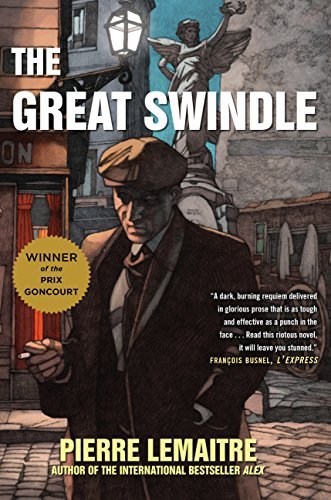
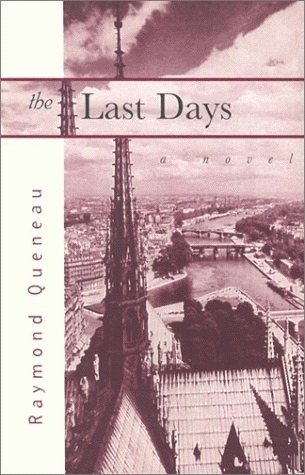
 The Pine-Scented Chronicles