
Just like that, we are already done with the first quarter of 2026. With three months down, I hope everyone is already back on track. However, it was unfortunate how global geopolitical tensions quickly escalated in March. The Middle East once again finds itself at the center of global attention as Iran, the United States, and Israel tussle. But to call it merely a tussle undermines how these tensions adversely impact the rest of the world. I sincerely hope that tensions will de-escalate, if not be fully resolved, soon. Anyway, I hope the first quarter of the year has been brimming with blessings, good news, and answered prayers. Personally, I am still trying to pace myself in my new company. It has been rather hectic and challenging. In many ways, it feels like a fresh start. I hope everyone else is also finding their footing. I wish everyone well on their individual journeys. For those whose goal is simply to move from one point to another, know that that is perfectly fine, too. I am proud of you and your resilience. In times like these, with so much turmoil surrounding us, silencing the noise can be a challenge. I hope that 2026 will be kinder to you. Above all, I hope everyone stays healthy—in mind, body, and spirit.
After spending the first two months of the year reading works of Latin American and Caribbean literature, I have since crossed the Atlantic to venture into works by European writers. Interestingly, I was not planning to read European writers so early in the year. However, realizing that I have several works by European authors in my ongoing reading challenges made me re-evaluate this choice. Then again, I also remembered that March is Women’s History Month, with International Women’s Day celebrated on March 8. This led me to focus on works by European women writers. While unexpected, it was a memorable journey—introducing me to new names while reacquainting me with familiar ones. As I explored the works of European women writers, I was reminded of the important place they hold—not only within the ambit of literature, but also in shaping the wider world. Without further ado, here is how my foray into their works, and my first month into European literature, unfolded.

The Peasants by Władysław Stanisław Reymont
Interestingly, my first read in March is not the work of a woman writer. Still, it is a book written by a literary titan. A random foray into a local bookstore first introduced me to Polish writer Władysław Stanisław Reymont (born Rejment) and his novel The Peasants. The book’s heft immediately piqued my interest. I secured a copy of the book even before learning that Reymont was awarded the Nobel Prize in Literature in 1924, with The Peasants the primary motivation for his selection by the Swedish Academy. This made me include the book in my 2026 Top 26 Reading List. Originally published in four parts between 1904 and 1909, The Peasants is widely recognized as Reymont’s greatest literary achievement. The four parts were later collectively published as Chłopi in 1909. The four volumes comprising the novel are titled after the different seasons, with the story commencing in autumn (Jesień, 1904). Reymont transports readers to the Polish countryside village of Lipce. He introduced an eclectic cast of characters, with the novel’s literary lens focusing on one family: the Boryna family. In a village overrun with destitution, Maciej, the patriarch, was able to create a fortune, making him one of the richest and most respected farmers in the village. Widowed twice with grown children, he pursued a third marriage, choosing nineteen-year-old Jagusia (Jagna). However, Jagusia is no pure young woman, and Maciej was unaware of her reputation. Beyond her ill reputation, Jagna is actually a passionate woman who is indifferent to Maciej’s affluence. Their marriage visibly upsets Maciej’s son, Antek, who opposes it. Interestingly, Antek has his own designs on Jagna, even though he is already married to Hanka. He is both jealous of his father and fears that his inheritance will slip away. As is often the case in the countryside, the Boryna family’s story is riddled with intrigue. As winter (Zima, 1904) swiftly settles in, Antek hears rumors surrounding his stepmother. Still, Antek and Jagna grow closer, even after the announcement of Jagna’s pregnancy. When spring (Wiosna, 1906) arrives, Antek and some of his fellow villagers are imprisoned after a fight in the forest; this fight, however, repairs the relationship between Antek and his father. In this eventful novel, poverty is the central theme, with Reymont’s vivid depiction of collective peasantry the novel’s strongest facet. He captured a group of people living on the fringes, relying chiefly on what the land could provide. The changes in seasons highlight the vulnerable relationship between humans and nature. Still, despite their differences and struggles, the community comes together as one, bonded by their plight and tradition. The novel also explores immorality and infidelity. However, for some characters, these moments of weakness transform into sources of strength. Overall, The Peasants is an enthralling, albeit complex, read about the colorful life in the countryside and the inherent weaknesses of the human spirit.
Goodreads Rating:


Persuasion by Jane Austen
My venture into the works of female European writers officially commenced with a very familiar name, Jane Austen. Her works are ubiquitous and widely considered classics. A decade and a half after reading my first Jane Austen novel, I have read my sixth Austen novel, Persuasion. I am now close to completing the Austen set; I have yet to secure a copy of Lady Susan. As one of the classics, I included it in my 2026 Top 26 Reading List. Persuasion was Austen’s last completed novel, published posthumously. The novel opens at Kellynch Hall, the Elliot family estate, home to the vain and status-conscious Sir Walter Elliot and his three daughters: Elizabeth, Anne, and Mary. The story, however, centers on twenty-seven-year-old Anne. Their father’s extravagant lifestyle pushed the family into financial distress, prompting them to rent out their estate to Admiral and Mrs. Croft. But there is a twist. Sophia, Mrs. Croft, is the sister of Captain Frederick Wentworth, who was once engaged to Anne. Her father and older sister viewed him as an unsuitable match for the daughter of a baronet. Lady Russell, a distant relative Anne considered a second mother since the death of her own, also saw the relationship as imprudent. She then persuaded Anne to break off the engagement. As Sir Walter, Elizabeth, and Mrs. Clay left for Bath, Anne stayed with her sister Mary at Uppercross Cottage, hoping to encounter Captain Wentworth again. Captain Wentworth, now a successful naval officer, also reenters Anne’s social circle. They gradually rekindled their former attachment. Still, obstacles remain, as misunderstandings and a lack of communication create a wedge between them. He believes she is in love with someone else, and she fears the same of him. Tension and emotional uncertainty begin to surface. Captain Wentworth, now a successful naval officer, also reenters Anne’s social circle. Despite Anne’s initial fear that he still harbors resentment over their broken engagement, they gradually rekindle their former attachment. However, obstacles remain. Misunderstandings and a lack of communication create a wedge between them—he believes she is in love with someone else, and she fears the same of him. Tension and emotional uncertainty begin to surface. These conflicts highlight how external forces and social pressures shape personal decisions. These same forces led to Captain Wentworth and Anne’s initial separation and continue to loom over them in the present. Still, Anne embodies emotional intelligence, as is often the case with Austen’s heroines. Marriage, social class, and enduring love once again lie at the heart of the novel. Persuasion is, in many ways, the quintessential Austen work.
Goodreads Rating:
Lovesick by Ángeles Mastretta
I didn’t have to travel far for my next read. From the northern Mexican state of Sonora, Ángeles Mastretta’s Lovesick transported me to the state of Puebla. It was through an online bookseller that I first came across Ángeles Mastretta. Despite having no idea who she was or what her novel Lovesick was about, I acquired a copy. A couple of years later, I included it in both my 2026 Top 26 Reading List and my 2026 Beat the Backlist Challenge. Originally published in Spanish in 1996 as Mal de amores, Lovesick is Mastretta’s sophomore novel. It was a literary sensation that earned Mastretta the prestigious Rómulo Gallegos International Novel Award. Set in turn-of-the-century Mexico, the novel charts the story of Emilia Sauri. Born into a privileged yet freethinking family, Emilia was raised among progressive eccentrics. Her father, Diego, was a Mayan pharmacist and herbalist in sleepy Puebla. Diego had high hopes for his only child and trained her accordingly. The crux of the story, however, lies in her romantic relationships. When she was younger, she fell in love with Daniel Cuenca. However, as they grow into adolescence, their paths diverge. Emilia immersed herself in the study of medicine, while Daniel gravitated toward conflict. As the Mexican Revolution loomed, he assumed a prominent role in the revolutionary movement. After the overthrow of dictator Porfirio Díaz in 1911, chaos ensued. Daniel’s deep political involvement is a contentious point between him and Emilia. While studying medicine, Emilia encountered Dr. Antonio Zavalza. Politically and temperamentally, Antonio was Daniel’s antithesis. While Daniel thrives on danger and uncertainty, Antonio is steady, tolerant, and peace-loving—the embodiment of stability and professional ambition. Emilia must then figure herself out and confront her feelings for both men. Meanwhile, pandemonium unfolds in the background. Internally, Emilia struggled to reconcile passion with purpose. Like The Hummingbird’s Daughter, the novel unfolds against a lush historical backdrop. Lovesick captured the social and political turmoil of the Mexican Revolution (1910–1920). Daniel’s participation in the revolution alongside figures such as Emiliano Zapata and Pancho Villa was a stark contrast to Emilia’s pursuit of healing. The novel is therefore far more than a romance. It is the story of love, independence, and the complexities of social change, while also exploring the pursuit of personal ambition. Like The Hummingbird’s Daughter, Lovesick is a deeply compelling read.
Goodreads Rating:
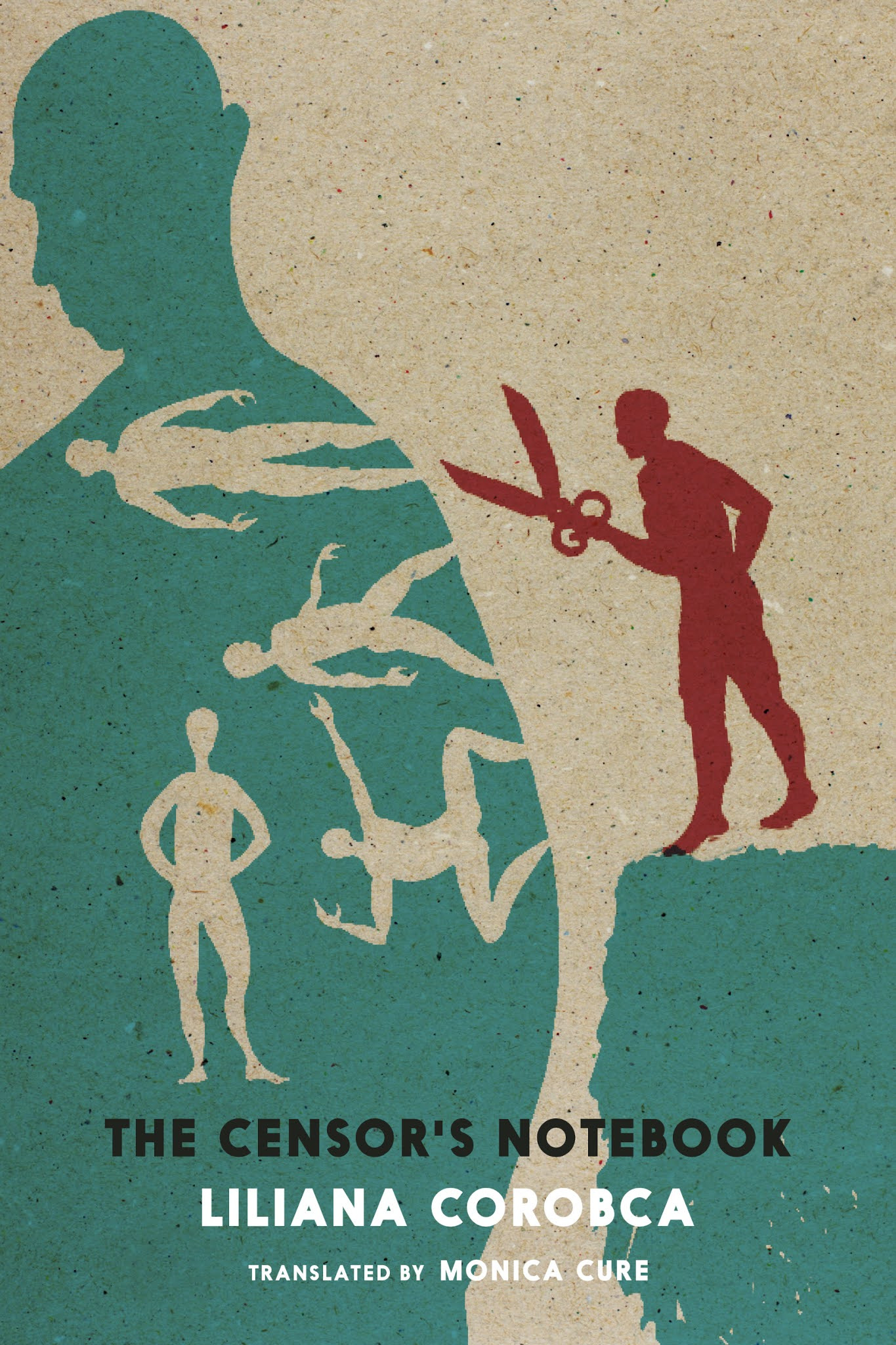
The Censor’s Notebook by Liliana Corobca
From the United Kingdom, my literary adventure next took me to Romania, a literary territory I have rarely ventured into. Apart from Romanian-German writer Herta Müller, I cannot recall reading any works by Romanian authors. This makes Romanian-Moldovan writer Liliana Corobca’s The Censor’s Notebook somewhat unique. I had never encountered Corobca before, but her book immediately piqued my interest, prompting me to secure a copy. I then included it in my 2026 Top 26 Reading List. Originally published in Romanian in 2017 as Controlul cărții: Cenzura literaturii în regimul comunist din România (literally Book Control: Censorship of Literature in the Communist Regime in Romania), the novel opens in 2016, with the writer receiving a letter from a woman named Emilia Codrescu-Humml, claiming she possessed a notebook about censorship she smuggled out of Romania when she fled in 1974. Corobca finds the notebook a wonderful addition to the newly established Museum of Communism. The story then moves to the past when Codrescu-Humml worked for the General Directorate of Press and Publications (GDPP) in a Romania ruled by strongman Nicolae Ceaușescu. She was tasked with shredding secret documents—including censors’ notebooks—that were never meant to be preserved. However, her curiosity led her to steal one notebook from the Literature Department. The notebook belonged to Filofteia Moldovean, one of three readers in Office Two. Government censors kept notebooks in which they recorded their thoughts about both their personal lives and the texts they reviewed, offering a compelling dual perspective. Filofteia—also called Dina or Diana—is a model employee assigned to review novels, while her two colleagues handle poetry. Her dispassionate approach to her work makes her an effective censor. Dina remains level-headed and controlled, rarely moved by the prose she reviews. She adhered strictly to the rules. In her notebook, she shared her resentment toward the freedom afforded to writers, believing that they abuse their freedom of expression. She argued that criticism should not extend to the state and its leadership, encapsulating the pervasive ideology of the regime. Gradually, Corobca reveals the repression that defined the era, guiding readers through a landscape marked by fear and constant surveillance. The novel offers a glimpse into the world of censors while vividly capturing the suffocating presence of authoritarian rule. The novel also highlights the enduring power of literature and writing. Overall, The Censor’s Notebook is a compelling read that underscores both the beauty and the necessity of expression—especially in a world on the brink of chaos.
Goodreads Rating:

This Little Family by Inès Bayard
After having a French-less reading year in 2025, I have already read my second book this year. Interestingly, my venture into the works of French women writers is even more limited. This makes reading Inès Bayard’s This Little Family a step in the right direction. It was during a visit to a bargain bookstore that I first encountered the writer and her novel, This Little Family. Originally published in 2020 as Cette Famille, This Little Family novel opens with a horrific event. Thomas, the young son of Marie and Laurent, meets a tragic end at the dinner table, poisoned by his mother, who also took her own life. Meanwhile, Laurent survives but suffers immensely from the poison he ingested. As Marie showed no remorse for her actions, her atrocious act raises an important question: What pushed Marie to commit such a deed? The answers in the past. Marie was raised in suburban Paris before moving to the city for work. There, she met and married Laurent. They were the picture of a happily married couple. Marie was a dutiful wife, supportive of her husband’s ambitions as a lawyer at a prestigious firm, while she worked as a financial consultant at a bank. One thing, however, was missing: a child. However, things began to unravel when the unthinkable happened. After a tense meeting with the new CEO, Marie found her bicycle vandalized. The new CEO then offered her a ride home, a proposal she was initially uneasy about. However, she was left with the choice of riding the Metro, an option she’d rather avoid. However, during the ride, the CEO sexually assaulted her. Her new boss threatened that she would lose everything if she dared to speak. This traumatic event left a deep mark on Marie. While there was a slight chance that the baby could be Laurent’s, Marie was sure it was conceived during the assault. When her pregnancy was confirmed, Marie already loathed the baby and even contemplated having it aborted. She even threw herself down the stairs in an attempt to lose the baby. It was all for naught, and when Thomas was born, she tried to keep a distance from him. He was a constant reminder of the night she was assaulted. As she struggles in her vow of silence, Marie became more sensitive to her surroundings and started noticing details she had previously overlooked. She began reflecting on the role of the modern woman. As the suspense builds, the novel confronts the intricacies of motherhood, marriage, and even societal norms. This Little Family tackles the pressures placed on women while grappling with trauma and the abuses they often face. With its dark theme, the novel is a timely and compelling read, especially in a period when the #MeToo movement remains prevalent.
Goodreads Rating:

Regeneration by Pat Barker
My next read takes me back again to the United Kingdom. It was Pat Barker’s Greek mythology–themed novels that first made an impression on me. During the pandemic, I read The Silence of the Girls and The Women of Troy. Interestingly, these were something of a deviation from her primary body of work. She has gained global recognition with her Regeneration Trilogy, with the third book in the trilogy, The Ghost Road, earning her the prestigious Booker Prize. In 2024, I finally completed the set, although I wasn’t planning to read any of Barker’s works this year. But then I realized that this is the perfect opportunity to reduce my backlist, leading me to the first book in the trilogy, Regeneration. Originally published in 1991, it introduces Dr. W. H. R. Rivers, an army psychiatrist stationed at Craiglockhart War Hospital. He learns of poet Siegfried Sassoon’s indictment of the ongoing war; the story is set during the First World War. Sassoon, we learn, is also a lieutenant in the British military. Upon learning of his public denunciation, the military grew concerned about public opinion turning against the war, especially since there was no end in sight. The military enlisted the help of Sassoon’s friend Robert Graves, a fellow officer and poet, who labeled Sassoon as “shell-shocked.” He convinced his friend that his critique would not lead to the court-martial he seemed to desire, but rather to public embarrassment. Sassoon was then sent to the hospital, partly to discredit him. Dr. Rivers, however, was skeptical of Sassoon’s conditions. Dr. Rivers doubted the claims that Sassoon was shell-shocked. He was also reluctant to harbor a “conscientious objector.” Dr. Rivers and Sassoon’s initial discussion further underscored his stance that Sassoon was a CO. But it was not all about Sassoon. At Craiglockhart, we are also introduced to Dr. Rivers’ other patients, such as Billy Prior and David Burns, who all share similarities: they were all suffering from the trauma of the war. Billy suffered from mutism, memory loss, and night terrors, while David suffered from severe PTSD. For his part, Dr. Rivers was exploring the ethical dilemma of healing soldiers only to prepare them to return to the frontlines. All of these elements make Regeneration a very compelling read. It takes us beyond the battlelines, as Barker confronts the horrors of war, particularly its psychological dimensions. She also explored the intricacies of masculinity and how it often results in emotional repression. Beyond the war, the story examines the role of art as a form of therapeutic expression; works of poetry riddled the story. Overall, Regeneration is a promising start to the trilogy.
Goodreads Rating:
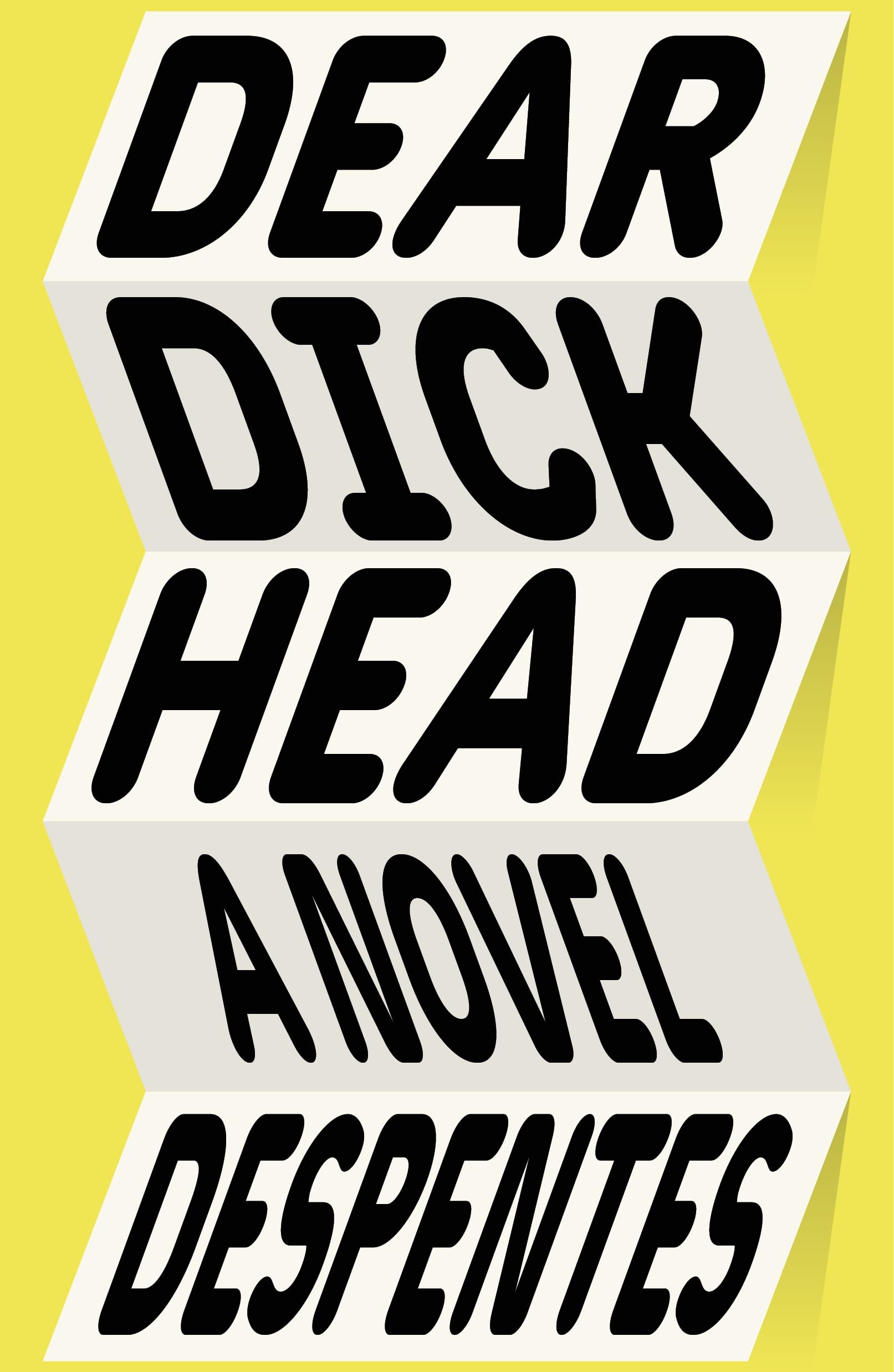
Dear Dickhead by Virginie Despentes
It seems that I have been alternating between French and British writers, although this is without design. My next read takes me to France, with an unfamiliar French name. It was just this year that I came across Virginie Despentes, who has quite a commendable literary career that commenced in the early 1990s. Her works have also earned her various accolades. Through an online bookseller, I came across her latest novel, Dear Dickhead. Originally published in 2022 as Cher connard, the novel is epistolary as it came in the form of emails. The story introduces Oscar Jayack and Rebecca Latté, childhood neighbors who reacquainted as adults. Oscar is now a mid-list writer who prides himself on being anti-establishment, while Rebecca is a movie star who has become frustrated with her uncertain position as an aging woman in the industry. A chance meeting led Oscar to casually attack Rebecca’s image in an Instagram post, describing her as a “wrinkled toad.” He found her repulsive, describing her as “a tragic metaphor for an era swiftly going to hell.” As social media is ubiquitous, the post reached Rebecca, who could not resist responding to the demeaning post. She opens her scathing response with the titular Dear Dickhead. She described him as looking “like a pigeon shitting on my shoulder as you flap past. It’s shitty and unpleasant.” This opens up an exploration of a plethora of subjects. In the midst of a barrage of online communication between Oscar and Rebecca, Zoé Katana, Oscar’s former assistant and now a feminist blogger, accused her former boss of sexual assault. This was the bullet Rebecca needed to retaliate against Oscar. Rather than apologizing, Oscar attempted to justify himself. Gradually, the #MeToo Movement was woven into the novel’s lush tapestry. The discourses between the two main characters – occasionally disrupted by entries from Zoé – are wide and far-reaching, with their posts and emails covering popular culture and feminism. Their discussionalso center on gender and privilege. Rape, aging, and consent were also subjects inherent in their discourses. All the while, the COVID19 pandemic was sweeping the streets of Paris. But there is more to the surface as the discourses opened new avenues for the characters to reflect on themselves. As their vulnerabilities are exposed, we learn that both Oscar and Rebecca are both survivors of addiction; addiction is as integral to the story as the #MeToo movement. The novel also captured the intricacies of living an online existence, exacerbated perhaps by the pandemic lockdowns. Overall, Dear Dickhead is a pleasant read. I guess delightful is not the apt term considering the bleak subjects it explored. Still, it was a thought-provoking and worthy read.
Goodreads Rating:

Bring Up The Bodies by Hilary Mantel
As mentioned, I have been alternating between French and British writers, so it is a no-brainer that my next read is by a British writer. It was a decade ago when I first encountered Hilary Mantel, during random ventures into the bargain book store. Her Booker Prize-winning novel, Wolf Hall, was ubiquitous. However, I dismissed it because I felt at the time that the book was not for me. I would encounter Mantel again during the pandemic after The Mirror and the Light was longlisted for the Booker Prize. After the pandemic, I secured a copy of all three books. Last year, I read the first book in the trilogy, and as part of my venture into the works of European women writers, I resolved to read Bring Up the Bodies, which follows closely after the events of Wolf Hall. After successfully orchestrating the divorce of King Henry VIII from his first wife, Katherine of Aragon, Thomas Cromwell has risen above the ranks. He was now assigned as Master Secretary to the King’s Privy Council. It is now September 1535, and the King was beginning to tire of his wife, Anne Boleyn, his second wife, after three years of marriage. At the start of the novel, the King and Cromwell went on a hunting trip and stayed as guests of the Seymour family, one of the “ancient families” of English nobility, at Wolf Hall. The King was becoming fonder of Jane Seymour. Back in London, Cromwell was faced with several challenges. The King’s separation from Katherine created a diplomatic vacuum, resulting in tension with Emperor Charles V of the Habsburg territories. To avoid war, Cromwell was in constant negotiations with Eustache Chapuys, the Emperor’s ambassador. The King also asked him to work on his separation from Anne, as she brought neither peace nor a son to the King. Ever loyal, Cromwell vowed to make it happen, not only to earn the King’s trust, but to silence the naysayers; older nobles the King trusted looked down on him. But Cromwell was ambitious, diligently building the case against Anne. What he unearthed was a world of intrigue. Rumors have been flying around, and they threaten Anne’s position. History is riddled with conspiracies and rumors that led to the downfall of prominent people. All it took was corroboration. History has always been written by the victors, and for Cromwell, it is also written by the tenacious. But beyond the separation of the King and Anne, the novel explored a plethora of subjects, such as social classes and social change. The classist overtones run parallel to sexist overtones. Anne’s downfall was bits of sexual gossip, underscoring the double standards around sexual promiscuity that persist in Tudor England. Interestingly, I find Bring Up the Bodies a more compelling read than Wolf Hall, although both books are intriguing in their own right. I can’t wait to read the last book in the trilogy.
Goodreads Rating:


Paradise Rot by Jenny Hval
My reading venture next took me to a literary territory I rarely ventured into. Norwegian literature, and well, Scandinavian literature in general, is a largely unexplored territory for me, although I keep on hearing and reading wonderful and positive feedback about Scandinavian writers. This makes Jenny Hval’s Paradise Rot an interesting case. Before the pandemic, I had never come across her. And there is a clear reason why. Paradise Rot is Hval’s debut novel and was only translated into English in 2018. Further, Hval established a name as a singer first, as the vocalist of a gothic metal band, before venturing into writing. Originally published in 2009 as Perlebryggeriet (Pearl Brewery), Paradise Rot charts the fortunes of an initially anonymous twenty-year-old Norwegian girl who arrived in the fictional foggy seaside city of Aybourne in Australia. She was there to attend the local university as an international student. At the start, she struggled with isolation in her new town. Everything was alien, exacerbated by her struggle to find a decent place to live. As she observed everything going around her, she felt out of place. Her fellow international students, such as German Fran-ziska, shared a similar experience of displacement. Their shared experience somehow provided a sense of comfort. In her search for a place, the protagonist arrived in Hawthorn District, a desolate area near the mountains filled with old warehouses. A renovated warehouse piqued her interest. The tenant was Carral Johnston, a thin girl with a playful demeanor, who immediately welcomed the protagonist; her name was eventually revealed as Johanna, or Jo. Warmth exuded from Carral, making Jo gravitate toward her. Carral was quirky and candid, catching Jo off guard. Still, she was fascinated by how Carral was already making her part of her world. Jo herself found herself opening up to Carral. She was taking biology, and she even shared hints about her life in Norway. When they moved in together, a semblance of homoerotic atmosphere started to envelop the story. Hval made the environment a metaphor for their developing friendship. The converted brewery’s interior was filled with raw materials, reflecting Jo’s feelings of vulnerability and isolation, as her new home was a direct contrast to the home she grew up in Norway. The few thin walls barely provided privacy for Jo and Carral, capturing the slow erosion of boundaries that initially set them apart. What develops is a tender and affectionate feeling. Paradise Rot is a deceptively slender novel that examines desire and sexual awakening. While I wish it were longer, the novel was still a thought-provoking story of self-discovery and the beauty of authentic connections.
Goodreads Rating:
Still Life by A.S. Byatt
I concluded my venture into European women’s literature with, surprise, the work of a British writer. This mini literary journey concluded in the same manner in which it commenced. It was must-read lists that first introduced me to Dame Antonia Susan Duffy (Byatt is her former married name). Her Booker Prize–winning novel, Possession, was ubiquitous, and it would become the first of her works I read. Nearly a decade later, I am now reading my third A. S. Byatt novel, Still Life. I had already started the book when I learned that Still Life is the second installment in Byatt’s Frederica Quartet. Oh well—there was no turning back. Originally published in 1985, the novel opens in 1980, when Alexander Wedderburn visits an art exhibition at the Royal Academy of Arts in London, specifically to see works by Van Gogh. He is waiting for his old friend Frederica Potter, the central figure of the quartet. Upon her arrival, the two friends reconnect and engage in lively conversation. They analyze various paintings, discussing the messages subtly embedded within them. This dynamic establishes the tone for the rest of the novel, where art—and even literature—is woven into its rich fabric. The present timeline, however, serves only as a prelude to the novel’s deeper story. In December 1953, we meet Stephanie, Frederica’s older sister. She is married to Daniel Orton and is six months pregnant. While she loves her husband and unborn child, she is filled with regret over lost opportunities. Before her marriage, she was deeply engaged in the academic world. However, she had to give up her intellectual life to focus on building a family. Although the couple shares a generally tender relationship, marital tensions simmer beneath the surface. A source of strain is Marcus, Stephanie’s younger brother, who has moved in with them after experiencing a mental breakdown. Meanwhile, Frederica is busy preparing her application to Cambridge University. With their children gone, their parents, Bill and Winnifred, must confront life on their own. In many ways, each family member is navigating a period of transition—mirroring the broader changes taking place in the United Kingdom after World War II, as the country rebuilt itself socially and economically from the trauma of war. The novel examines the weight of societal expectations placed on women, especially the sacrifices they make to focus on family life. Mental health and the arts were also examined. The title itself is an artistic reference, and beyond that, the novel is rich in intellectual and literary discourse. Still, the novel remains true to its title. Art emerges as a means of capturing and appreciating the fleeting moments of existence. Through the convergence of art and quotidian life, Still Life stands as a quintessential Byatt novel.
Goodreads Rating:
Reading Challenge Recaps
- 2026 Top 26 Reading List: 11/26
- 2026 Beat The Backlist: 6/20; 30/60
- 2026 Books I Look Forward To List: 0/10
- Goodreads 2026 Reading Challenge: 30/100
- 1,001 Books You Must Read Before You Die: 3/20
- New Books Challenge: 0/15
- Translated Literature: 20/50
Book Reviews Published in March
- Book Review # 639: Chilean Poet
- Book Review # 640: A Book of Memories
- Book Review # 641: A Horse Walks Into A Bar
- Book Review # 642: The Good Muslim
- Book Review # 643: The Noodle Maker
- Book Review # 644: The Book of Goose
In terms of my book-reviewing endeavors, I am happy to note that I have been gaining momentum. So far, this year, I have already published seventeen book reviews. While this falls behind my target, I am faring better compared to the previous year. I am glad I was able to carry over the momentum I built in January and February into March. Despite some challenges, I was able to finish six book reviews. My new job has been tedious. It has been quite a challenge, and I find myself in the familiar position of having to transform and improve the current processes. Anyway, with the six reviews I published in March, I made a dent in my 2023 pending book reviews. This is a much-needed progress because I have quite a lot of pending reviews from 2023. Five of the six books I reviewed during the month were from 2023. The only non-2023 book I reviewed during the month is A Book of Memories, signaling the start of the next batch of book reviews I should focus on: 2024 pending book reviews.
Still, my pending list continues to grow, as my writing is unable to cope with my reading pace. I am reading way more than I am reviewing. I hope I get to sustain the writing momentum I built in the first quarter of the year. I hope that my writing momentum will extend to the rest of the year. For now, my primary focus is to complete my pending July 2023 reviews while trying to work on those from 2024 and 2025. With less than 20 book reviews, I am on track to complete my 2023 backlog. Occasionally, I might also publish reviews of books I read before I began publishing reviews—such as Haruki Murakami’s Norwegian Wood and Kafka on the Shore, Salman Rushdie’s The Ground Beneath Her Feet, Ian McEwan’s Atonement, and Naguib Mahfouz’s Miramar. These books hold special significance for me as they were the first works I read by these authors. I just published my review of Kazuo Ishiguro’s An Artist of the Floating World.
My venture into the vast European literary landscape continues into April. I still have quite a lot of works of European writers in my ongoing reading challenges. Further, my focus on the works of European women writers in March made me pass over some of these books. Still, I have a long list of European literary works I want to read, apart from those on my reading challenges. I am about to start reading Aleksandr Solzhenitsyn’s August 1914. This is just my second book by the Russian Nobel Laureate in Literature; it has been over a decade since I read One Day in the Life of Ivan Denisovich. I am also considering reading the works of his fellow Nobel Laureates in Literature, José Saramago, Günter Grass, László Krasznahorkai, Hermann Hesse, and Heinrich Böll. On top of these are Raymond Queneau’s The Last Days, Vassilis Vassilikos’s Z, Pierre Lemaitre’s The Great Swindle, Michel Tournier’s The Ogre, M.M. Kaye’s The Far Pavilions, and Joseph Conrad’s Nostromo.
How about you, fellow reader? How is your own reading journey going? I hope you enjoyed the books you have read. For now, have a great day. As always, do keep safe, and happy reading, everyone!
 The Pine-Scented Chronicles