
Happy midweek everyone! Wow. We are already halfway through the week. We are also nearly midway through the year. How has the year been going for you so far? I hope that the year has been kind to everyone. If not, I hope you will experience a reversal of fortune in the coming months. More importantly, I hope everyone is happy and healthy, in body, mind, and spirit.
With the midweek comes a fresh WWW Wednesday update, my first this year. WWW Wednesday is a bookish meme originally hosted by SAM@TAKING ON A WORLD OF WORDS. The mechanics for WWW Wednesday are quite simple, you just have to answer three questions:
- What are you currently reading?
- What have you finished reading?
- What will you read next?

What are you currently reading?

For June, I have resolved to immerse myself in the works of Asian literature; this was after I spent two months reading the works of Japanese writers. From South Asia, my foray into Asian literature made me backtrack to my part of the vast continent, Southeast Asia with Dương Thu Hương’s The Zenith. Like my current read in last week’s WWW Wednesday update, The Zenith was one of the books I bought during the first edition of the Big Bad Wolf Sale in Manila in 2018. After five years of gathering dust on my bookshelf, I added it to my 2023 Beat the Backlist Challenge to ensure that I will read the book. The start of The Zenith recounted – at least fictionally – the final days of the Vietnamese strongman of Hồ Chí Minh in a remote mountain outpost where he was imprisoned. The story then diverged as it charted the story of another character. I admit, I find the book a little challenging even though I am already in the second part, nearly midway through it. However, I like the descriptive quality of the prose. I hope that there is a reversal of fortune as the story moves forward because the story is very promising, at least to the point that I have reached.
What have you finished reading?
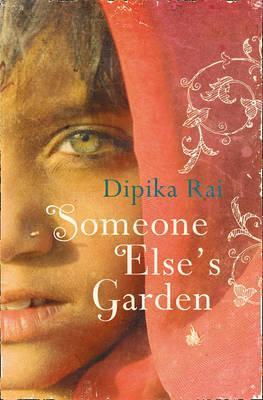
A three-book foray into Indian literature concluded with Dipika Rai’s Someone Else’s Garden. As mentioned above, the book was one of many I bought during the 2018 Manila edition of the Big Bad Wolf Sale. Unfortunately, it was left to gather dust on my bookshelf, hence, its inclusion in m 2023 Beat the Backlist Challenge. Unfortunately, I still have quite a lot from that book haul that I have yet to read; and yeah, the Big Bad Wolf Sale is back again this year, hosting its first physical even since the pandemic started.
Anyway, Someone Else’s Garden is Rai’s debut novel. At the novel’s heart was Mamta, the eldest daughter of seven children born to Lata Bai. Her younger sister was already married off and, at twenty, Mamta is already considered old. In rural India, the older one gets, the more difficult to find a suitable partner. As such, Mamta’s father was constantly complaining about being stuck with “someone else’s garden“; yes, the title pertains to young women considered as “a female burden to be rid of”. Mamta eventually gets married off to an abusive man who brought about his first wife’s death. Her husband plotted her murder but she managed to escape to the big city, risking everything. Women who run away from their husbands are ostracized by the community and their families; runaway brides are taboo. It was in the city that Mamta took control of her destiny. The book was brimming with social and political commentaries. There were also dichotomies between village and city life, with the former representing traditions and the latter representing development. There was a lot to unpack in the seemingly straightforward story. Sadly, Mamta is just one of many young brides treated as “someone else’s garden” by their families.

From India, my next book transported me to Pakistan. Mohsin Hamid’s The Reluctant Fundamentalist is a book that one cannot miss. It was shortlisted for the Booker Prize and is a familiar presence in must-read lists. Not only that, it is listed as one of the 1,001 Books You Must Read Before You Die. I get it, I must read the book. Interestingly, I was reluctant to read the book, at first; I always do, particularly with writers whose works I have not read previously. I managed to get over my apprehensions and I was finally able to read the book.
Hamid’s most popular novel commenced on the streets of Lahore where a Pakistani man named Changez offered to help a nervous American visitor. Together, they headed to a tea shop. Changez first assuaged the visitor’s fears and apprehensions before he started to share his story, with a focus on his life in America. Changez was able to attend Princeton University where he excelled and completed a degree in finance. It wasn’t long before he found a job as an appraiser. Post-university, during a vacation in Greece, he met Erica, an aspiring writer. The two hit it off and they started a relationship. Life was good for Changez. And then September 11 happened. He admitted to the American visitor that he was pleased by the attacks. Through his story, we read about the initial response of America following the harrowing events. Ordinary Pakistanis were discriminated against, but Changez was no ordinary Pakistani so to show solidarity with his countrymen, he grew a beard. It wasn’t long before he reached a eureka moment that resulted in a plummeting of his confidence. He left his lucrative and promising job and returned to Lahore where he met the American visitor. Overall, it was a quick but insightful read.

My three-book week was capped with Négar Djavadi’s Disoriental. This also transported me further west to Iran, Djavadi’s birthplace; Djavadi moved to France following the Iranian Revolution of the 1980s. It comes as no surprise that the novel was written in French and published in 2016 with the title Désorientale. I have just learned that Disoriental was Djavadi’s debut novel; Djavadi also works as a screenwriter and filmmaker. The book was a literary sensation in France, earning Djavadi several accolades such as the Prix de L’Autre Monde, the Prix du Style, the Prix Emmanuel Roblès, the Prix Première, the Prix littéraire de la Porte Dorée, and the Prix du Roman News.
The story came in the form of a flashback and was narrated by Kimiâ Sadr. Kimiâ provided the readers with an evocative picture of her family’s provenance, starting with her paternal grandmother Nour who was born in Iran’s northern Mazandaran province. Her father, Darius was the fourth of six brothers. Darius married Sara and the couple had three daughters. Hovering above Kimiâ was the burden of her society wanting a male child. At the onset, the story seemed like a family saga but as the story moved forward, it slowly painted Iran’s contemporary history, with emphasis on the Iranian Revolution of the late 1970s to the 1980s. Kimiâ’s parents were political activists, immediately setting them apart. With pandemonium inevitable, Darius fled to Paris while his wife and three daughters were smuggled out of Iran. There are several layers to Disoriental, among them was Kimiâ’s recognition of her sexuality. Disoriental is, overall, a riveting read, one that can be recommended to readers who barely have an iota about Iran and its recent history.
What will you read next?


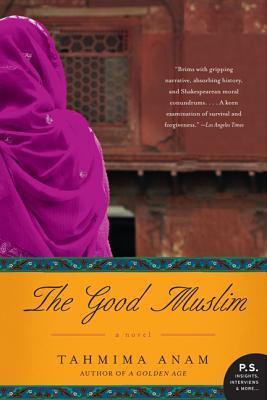
I will be staying in Southeast Asia for a while. After The Zenith, I am considering reading Eka Kurniawan’s Man Tiger. This will be my second novel by the Indonesian writer; Man Tiger is palpably a thinner read compared to Beauty is a Wound, From our neighboring Indonesia, I will be returning home with Ramon L. Muzones’ Margosatubig, This will be my first novel originally written in HIiligaynon. I am also lining up Tahmima Anam’s The Good Muslim which will officially be my first novel by a Bangladeshi writer.
That’s it for this week’s WWW Wednesday. I hope you are all doing great. Happy reading and always stay safe! Happy Wednesday again!


💜
LikeLike
Nice review
LikeLike