Happy Tuesday everyone! As it is Tuesday, it is time for a Top Ten Tuesday update. Top Ten Tuesday is an original blog meme created by The Broke and the Bookish and is currently hosted by That Artsy Reader Girl.
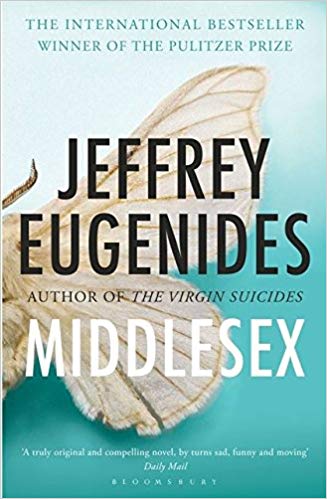
Narrated by Calliope Stephanides, Middlesex’s central theme is genetics, more specifically, hermaphroditism. It realistically captured the discrimination towards individuals who are viewed as different. They are called names. They are abused. They are regarded as monstrosities, ridiculed, and mocked in public. One of the worst is the circus treatment they get for looking different, as when Calliope and her fellow “freaks” were showcased in private shows to earn money. It is sad to say that our current society hasn’t moved on yet from such archaic behavior.
Possession: A Romance Story is both complex and straightforward. It is a multifaceted but astonishing story. The manner in which it was told was mesmerizing. There is so much to be said about this book. The academia stamped all over it can be one’s understudy. From its different elements, poetry is what stood out. It is beautiful and overwhelming at the same time. Possession: A Romance is in part a celebration of the beauty of writing and ultimately, the beauty and tragedy of love. It made me cry, it made me smile, it made me feel frustrated and it made me sad. A book that makes one emotionally invested in the story is something that deserves the encomium it got.
Flights was relentless in challenging ideas and in making the readers think and reflect. One interesting point dealt with the apartment that we leave behind when we travel. In one striking piece titled On the Origin of Species that appeared towards the end of the novel, Tokarczuk reflected on how plastics have slowly occupied several parts of the world. These plastics were seen as airborne anemones that are being spread all over the world by the wind. The undertones of philosophy (mostly on travel), politics, and religion were also subtly woven into the story. Accentuating the novel are 12 intriguing historical maps. However, like most of the novel, their context or relevance was never always clear.
Apeirogon, the reader later learns, is a “shape with a countably infinite number of sides.” This is also an allusion to how the story adamantly defies being defined in a forward manner nor being placed in a box. Apeirogon is genre-bending, it has several sides to it. Filled up with snippets of fact, quotations, remarks, insights, musings, and myth, McCann crafted a rich context, albeit in an unorthodox manner, to the story of two fathers. Apeirogon defies the paradigm, a hybrid novel that possesses a fine mixture of fiction, fact, and history.
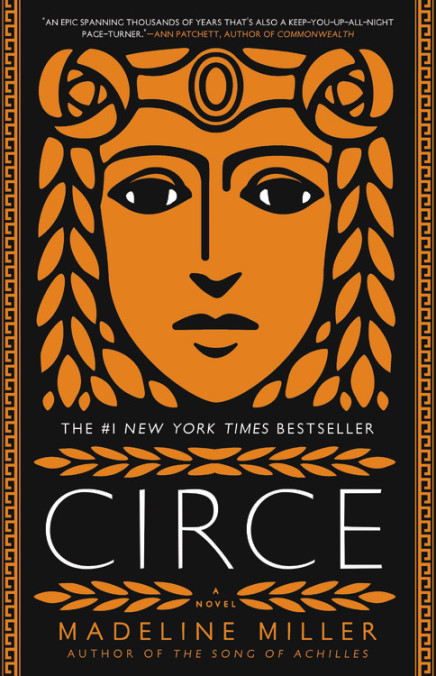
Miller’s sophomore novel, Circe, is about changing perspective. Its biggest accomplishment lies in its depiction of a different Circe, a far cry from the vile and rogue witch that she has been endlessly portrayed. Hemmed in the pages of the book is the story of a dutiful child who yearns for the approval of a mother and father, of a young woman who hankers for love, and of a mother who tries her best to protect her biggest treasure. The tender moments of Circe being a mother is one of the novel’s biggest accomplishment. These vivid moments remained on my mind because it reminded me of the unconditional love mothers for their children.
To say Pachinko is a complex novel is an understatement. It is an ambitious undertaking in which Min Jin Lee strived to cover as much ground as possible. Parts historical, parts political, and parts fictional, Min Jin Lee capably sewed these varying themes into one complex yet interesting tableau, as interesting as the history that Min Jin Lee tried to relate in her story. Moreover, the historical portion provided insights into the dynamics of Japanese-Korean relations. Min Jin Lee conjured an entrancing story that is a literary metaphor of the eponymous Japanese arcade game. Just like the game of pachinko, the characters gambled on their chances – some they won, some they lost. For this round, Min Jin Lee earned an admirable following.
Through his works, the immortality of Milan Kundera’s literary prowess is anything but guaranteed. His works defy literary conventions; to be able to project an entire narrative through a single gesture is sheer genius. Immortality jumps out of the box. Kundera told two different stories in two different periods to redefine the word. There might have been bumps along the way, but Kundera’s savvy and acuity proved superior to everything. Kundera’s works defy norms for he has mastered the craft of conjuring unconventional masterpieces from conventional elements. Immortality is one testament to this enduring talent.
What makes the narrative stand out is its universality. By omitting names of names of people and places, Burns made the story resonate on a global scale. The lack of time element ensures this astute observation. Milkman started as a story of the things that are wrong and that can go wrong in a society. But through its apolitical and unique narrator, the story slowly evolved into one of hope, and of positive message. It may not be your typical read but its depth, and its colorful palette charm the reader. Yes, it is difficult. Yes, it is eccentric at times. But it is this kind of heavy but fascinating and bold reads that make the reading journey worthwhile. The relevance of novels like Milkman resonate beyond the present.
Homegoing touched on heavy and complex subjects but what it made it effective is how Gyasi constructed the story around the idea of home. This was portrayed perpendicularly with each sister’s bloodline. On one side of the spectrum are Effia’s descendants have a strong sense of belonging. Never forced out of Ghana, they built strong ties with their ancestral, and cultural histories. Esi’s descendants were their antithesis. Estranged, they grew up without any iota on their roots, forced to survive atrocities of a life rife with whippings in a continent not their own. They were survivors subtly imbued with tenacity and power. The threads came full circle as the novel concluded. In a way, it was vision of the elation Gyasi felt when she returned to her native country.
Freshwater is a rich novel that touched on several profound but dark and heavy subjects. These include sexual abuse, eating disorder, bisexuality and being a transgender. All of these forays culminate into the novel’s centrifugal point – the search for one’s identity. It is universal theme and one that Ada had to grapple with. In a way, Ada’s spirits can be viewed as allegories for the different faces we project to the world. They are masks we manufactured to mix in the masquerade we call life. Rather than being deliberately manufactured, they were born out of instinct.






 The Pine-Scented Chronicles
🩶
LikeLike