
Wow. July is already done. How time flies. Before we even realize it, we will be preparing for a new year. By September, Filipinos will start decorating their homes for the holiday season. Yes. The Christmas season in the Philippines starts in September. Christmas songs will be played in malls and even on radio stations. Anyway, how has 2023 been so far? I hope that it is brimming with good news and positive vibes. I hope that your year is filled with blessings and new learning. I hope that it is riddled with adventures and growth. If things are not going as planned, I hope that the rest of the year will be kind to you. I hope that you will experience a reversal of fortune. I hope that the remainder of the year will be filled with great news and blessings. More importantly, I hope everyone is and will be healthy, in body, mind, and spirit.
The end of July also marked the conclusion of my two-month foray into the literature of the Asian continent. Compared to my forays into Japanese literature, my venture into Asian literature is rather scant. To redress this glaring dichotomy, I have been hosting an Asian literature reading month. I had one last year as well but it was rather quick. This year, I decided to extend it to two months. I must say that it was two of my most prolific reading months. This journey transported me all over the continent, from China to South Korea to the Philippines to Bangladesh to Israel to Turkey. I tried to cover as much ground as I could but I still fell short of covering every inch of the continent. This is another reason for me to read more works of Asian literature in the coming years. Before I lose it in a swirl of words, here is a peek into how my July reading journey shaped up. Happy reading!

A Horse Walks Into a Bar by David Grossman
Opening my August reading journey was a book that transported me to Israel. David Grossman’s A Horse Walks Into A Bar was my first novel by an Israeli writer and the first initially written in Hebrew. It was through the 2022 International Booker Prize longlist that I first came across the Israel writer. This was enough for me to add him to my growing list of writers whose oeuvre I wanted to explore. Speaking of the International Booker Prize, A Horse Walks Into A Bar won the prestigious literary prize in 2017. The story was related by Avishai Lazar, a retired district court judge who was invited by Dovaleh Greenstein to attend his stand-up routine in a bar in the Israeli coastal town of Netanya. It was an unexpected invitation; although Greenstein and Lazar were once childhood friends, they had not spoken to each other in nearly four decades. Although he was taken aback by the sudden invitation, Lazar accepted it. But instead of a stand-up comedy routine, what the audience witnessed was an aging man degrading himself. It was funny at first but the longer the skit went, the stranger it got. Greenstein was dismantling himself, progressively opening himself up to the scrutiny of his audience. It was a sad story but there were glimmers of hope.

The Garden of the Departed Cats by Bilge Karasu
From Israel, my literary journey next took me to Turkey. Like Grossman, I barely had any iota about Bilge Karasu until I came across his book, The Garden of the Departed Cats through an online bookseller. With my first novel by Karasu, he joins Nobel Laureate in Literature Orhan Pamuk, Elif Shafak, and Elif Batuman as the only Turkish writers whose work/s I read. Originally published in 1979 as Göçmüş Kediler Bahçesi, the novel – at least where the structure is concerned – is reminiscent of Milan Kundera’s The Book of Laughter and Forgetting. Karasu deviated from the norms of writing because rather than a straightforward narrative, his novel was fragmented, and comprised of twelve interconnected stories. This parallel with the late Kundera’s work was also the reason why I was rather apprehensive about reading the book. These stories share similar elements, such as journeys. Through these journeys, Karasu explored a plethora of subjects such as the search for truth, death and loss, and our human yearning for the out-of-reach. Animals were ubiquitous as the book explored the distinctions between humans and animals. Despite this fragmented structure, I must say that Karasu is a riveting storyteller with lyrical and beautiful language.

The House Without Windows by Nadia Hashimi
My next stop is Afghanistan. It cannot be denied that our impression of Afghanistan is shaped by the Taliban and the September 11 attacks. But through the works of writers such as Khaled Hosseini, I read about Afghanistan differently from how the media painted it. Hosseini is joined by Nadia Hashimi. A House Without Windows is the second novel by Hashimi I read although five years have passed since my first. Both Hashimi novels I have read share parallels. These two novels examined the interiors of the life of Afghanistani women. In my second Hashimi novel, the story commenced with a horrific act. A small Afghan community was shocked by the news of the murder of Kamal, a father of four. At the crime scene was a hatchet and his wife, Zeba who was covered in blood. Without ado, Zeba was arrested by the police. What ensued was an evocative portrait of how justice is served in Afghanistan. It was exposed that no proper procedure was observed when the murder was investigated. In the eyes of the police, Zeba was guilty. It did not help that Zeba was a woman; being a woman in this part of the world can be a curse. There were, however, slivers of hope as changes were also shaping the community and how it views justice.

Judas by Amos Oz
Who’d have imagined that I would read two works of Israeli literature in a year? Amos Oz’s Judas is the second novel originally written in Hebrew that I read. Oz, I learned is a prominent figure in Israeli literature. He is always regarded as a contender for the Nobel Prize in Literature. It was through the Big Bad Wolf sale that I first came across him and his novel, Judas. The title alone was enough to pique my interest. Judas Iscariot is a historical figure that many know. For millennia, he has been portrayed as the quintessence of betrayal. Sure enough, betrayal rose to the fore of Oz’s novel, captured through the story of Shmuel Ash. The setting was late 1950s Jerusalem. After quitting university, Ash took a live-in job as a companion to an elderly, incapacitated man, Gershom Wald. Atalia Abravanel was the third occupant of the house. Shrouded in mystery, Atalis enchanted Shmuel. As these three characters interact, Oz explores a plethora of subjects revolving around Israel’s political climate. Religion – as can be gleaned from the title – was also a vessel upon which these subjects were tackled. The story also had undertones of romance. But Judas was also an evocative coming-of-age story.

Whale by Cheon Myeong-Kwan
From the Middle East, I traveled back to East Asia, back to South Korea, with Cheon Myeong-Kwan’s Whale. Whale is the third work by a Korean writer I read this year. I first came across Cheon and his novel when Whale was announced as part of the 2023 International Booker Prize longlist. There has been a spate of Korean novels taking the world by storm; I am not complaining though. Whale, originally published in 2003, was Cheon’s debut novel and is considered a contemporary classic of Korean literature. The novel mainly charted the story of Geumbok. Born in a mountain village, she moved to a coastal city to escape from her abusive father. The sea mesmerized her but the sight of a whale breaching out on the ocean aroused the desire to break through in life. The story then charted her unusual effect on men and her various lovers, from a fishmonger to a Yakuza to a laborer. Her love affair with the laborer brought her back to the mountains, to the village of Pyeongdae where Geumbok established a successful brickmaking business. In a way, Pyeongdae was a microcosm of modern South Korea. Pyeongdae’s exponential growth and development were parallel to South Korea’s. The novel has several layers that make it a riveting read.
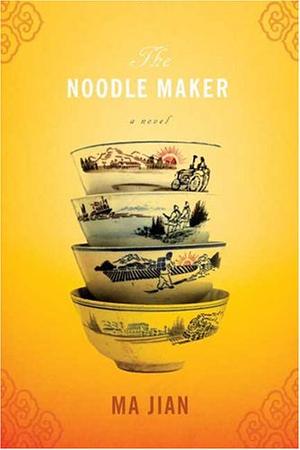
The Noodle Maker by Ma Jian
I didn’t have to travel far for my next reading adventure. Ma Jian’s The Noodle Maker is the third novel by a Chinese writer I read this year which includes Nobel Laureate in Literature Mo Yan. Chinese literature is literature that is largely unexplored, at least by me, which is why I wanted to read more works by Chinese writers. The Noodle Maker was originally published in 1991 as 拉面者. Ma Jian was, I have learned, vocally critical of China’s Communist government. As such, it comes as no surprise that The Noodle Maker is a complex narrative that satirizes the Communist Party. Ma also ditched conventional storytelling and instead built the novel through the stories of an eclectic set of characters such as a professional writer, a professional blood donor, and even an actress. These characters’ stories provided a vivid portrait of the social and political concerns of modern China. The novel provides a window into contemporary Chinese society but the stories keep the readers at t distance. It was not emotionally engaging. The Noodle Maker, nevertheless, provided the readers glimpses of the plights of modern China.
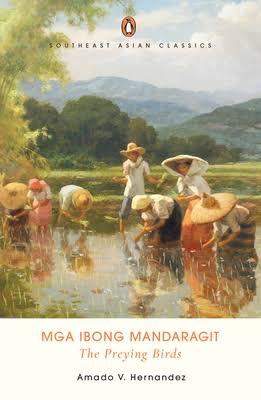
The Preying Birds by Amado V. Hernandez
Like Chinese literature, Philippine literature – my own – is a territory that is largely unexplored. When the opportunity to read a third book by a Filipino writer presented itself, I did not hesitate. Amado V. Hernandez’s The Preying Birds was originally published in serial form before it was collectively published as a single volume in December 1968, carrying the title Mga Ibong Mandaragit. It was translated into English in 2022 as part of Penguin’s Southeast Asian Classics series. Set in the Philippines during the twilight years and the years immediately following the end of the Second World War, The Preying Birds is a scathing socio-political novel that strongly echoed the sentiments captured in the works of the Philippine national hero, Dr. Jose Rizal. The book’s hero, Mando Plaridel was reminiscent of Rizal’s Crisostomo Ibarra/Simoun. He used to be a servant in the household of wealthy landlord Segundo Montero. An act of betrayal turned him into a guerilla. By a stroke of luck, Mando succeeded in retrieving the chest of jewels that was thrown into the sea by Simoun. He then used the treasure to seek social justice. Social justice, however, is a rarity in a society corrupted by greed and personal ambitions. The maladies captured by Hernandez are concerns that remain prevalent in the present. The Preying Birds is, without a doubt, an incisive look at contemporary Philippine society.

Yellowface by R.F. Kuang
By birth and heritage, Rebecca F. Kuang is Chinese. Her family moved from Guangzhou, China to the United States when she was still four years old. She has since established a reputation as a writer of fantasy fiction. Her latest novel, Yellowface, however, was a deviation from the genre she established her reputation in. Yellowface followed the story of two young female writers. On one side was Juniper Hayward. She was white. On the other side was Angela Liu. She was Asian by birth. They reluctantly became friends when they were dormmates and classmates at Yale University; they both aspired to be writers. Transition to the professional world, however, was tricky. Juniper, descended into obscurity while Angela became the darling of the literary crowd. Both living in Washington, D.C., the young women remained friends. An unfortunate turn of events left Juniper with the transcripts of what was supposed to be Angela’s latest work. The novel examined several timely subjects revolving around writing and publishing, including cultural appropriation, cultural authenticity, and the tipping of the literary scale toward diversity. While some subjects were not fully addressed, Yellowface was, nevertheless, a riveting read.

Three Daughters of Eve by Elif Shafak
My literary journey across Asia brought me back to a name that has become very familiar. Elif Shafak first piqued my interest back in 2019 when I encountered her controversial novel, The Bastard of Istanbul. It was, however, with her 2019 Booker Prize-longlisted novel, 10 Minutes 38 Seconds in This Strange World that I started my exploration of her oeuvre. I found her storytelling compelling, hence, my fourth novel by Shafak, Three Daughters of Eve. The novel tells the story of three women. However, it was Peri whose story occupied a huge chunk of the story. Born and raised in Istanbul, she was at odds with her religion, especially since she was raised in a household with a devout Muslim mother and a secularist father. It was the patriarch’s liberality that made him push for his daughter’s education at Oxford University where she met the rest of the titular daughters of Eve: Shirin who had an Iranian heritage and had shirked her religion; and Mona who was born and raised in Egypt and was a devout Muslim. The three crossed paths in the class of the enigmatic Professor Azur, a class with a very open view of religion. Three Daughters of Eve, while it dragged in parts, is an insightful story about our own doubts, whether in our beliefs or not. It is also about loyalty, friendship, and coming of age.
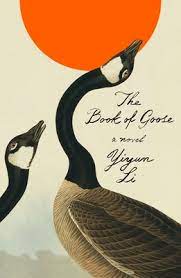
The Book of Goose by Yiyun Li
I have read several positive feedback on the works of Yiyun Li, a Chinese-born writer who moved to the United States in 1996. I again crossed paths with Li in 2022 when her latest novel, The Book of Goose was released. The book was lauded by both literary pundits and readers alike. Curious about what the book has in store, I included it in my foray into Asian literature. Set in the French countryside shortly after the conclusion of the Second World War, the novel tells the story of a pair of thirteen-year-olds, Agnès and Fabienne. They were close friends. One day, Fabienne hatched a plan to write a story. She will narrate it while Agnès will write it. Helping them edit the book – a collection of morbid stories about dead babies – and finding a publisher was a local postmaster. The book, however, only had Agnès as author. Fabienne refused to have her name attached to the book. The book was a sensation and Agnès became the darling of the literary crowd; she was a prodigy. Despite this, the novel’s preoccupation was the friendship of Agnès and Fabienne which was both affectionate and strange. There is a fairy tale quality to the coming-of-age story.

Crying Mountain by Criselda Yabes
Before the month ended, I snuck another work of Philippine literature, Criselda Yabes’ Crying Mountain. This is the fourth novel written by a Filipino writer that I read this year. This is the most I read in a year. Yabes’ debut novel was even longlisted for the 2010 Man Asian Literary Prize. Crying Mountain recalls a historic event that even I have never heard of although the events following it I have an iota about. At the heart of the novel was the burning of Jolo in 1974, another tragic but pivotal chapter in the conflict-laden southern part of the country. The novel was a fictional account of the rise of the Moro National Liberation Front leader Nur Misuari and the ensuing rebellion he led. In response to this challenge, the Philippine military retaliated with violence. This historic event is often considered one of the integral incidents that gave rise to the Moro insurgency in the southern part of the country. These events were captured through the lives of an eclectic set of characters: Rosy Wright, a mestiza; Nahla, a Tausug girl dreaming of becoming famous; Professor Hassan, the rebel leader; and Captain Rodolfo, a soldier assigned at the Southern Command.

Nights of Plague by Orhan Pamuk
I started my venture into Asian literature with the work of a Nobel Laureate in Literature. It is, thus, fitting that I end it with another Nobel Laureate in Literature. When I heard about Orhan Pamuk releasing new work in 2022 – at least a translation of his latest novel – I was among those eagerly waiting in anticipation. I was eventually able to obtain a copy of Pamuk’s latest novel, Nights of Plague, my fourth novel by Pamuk. The fact that the novel was about the plague was one of the reasons why I wanted to read it. Pamuk’s latest novel transports the readers to the turn of the 20th century, to the fictional island of Mingheria, one of the provinces that comprised the declining Ottoman Empire. It was on this remote island that Princess Pakize, “third daughter of the thirty-third Ottoman sultan Murad V” and her husband, Doctor Nuri Bey, were sent by Emperor Abdul Hamid to help aid in the quarantine efforts. A possible plague threatened the island. The novel explores how a plague can undermine the institutions meant to look after the welfare of a nation’s denizens. The novel eerily captured the early months of the COVID-19 pandemic. But it was also a novel about a declining empire, the intricacies of politics, the quest for independence, and the rise against colonialism and imperialism, with a murder mystery to boot. It was, as always, an interesting and insightful story.
Reading Challenge Recaps
- My 2023 Top 23 Reading List: 9/23
- 2023 Beat The Backlist: 9/20; 77/60
- 2023 Books I Look Forward To List: 2/10
- Goodreads 2023 Reading Challenge: 80/90*
- 1,001 Books You Must Read Before You Die: 9/20
- New Books Challenge: 3/15
- Translated Literature: 38/40
*I updated my Goodreads target from 70 to 90 as I am quite ahead of my original target.
Book Reviews Published in July
- Book Review # 446: The Beautiful and Damned
- Book Review # 447: The Little Friend
- Book Review # 448: Whale
- Book Review # 449: Yellowface
- Book Review # 450: A Suitable Boy
- Book Review # 451: Very Cold People
Traditionally, July is a very busy month for me in my job. There are several quarterly and semestral reports that need to be submitted. Nevertheless, I was able to find some time to write book reviews. Publishing six book reviews was a decent effort. Four of these reviews are from my pending reviews in 2022. This further lessens my 2022 backlog to below 15. August, I feel, is going to be another hectic month as I will be transferred to a new function. This is a function that is very new to me, hence, I will have to learn about it. Nevertheless, I am still hoping to complete as many book reviews as I can. As always, I will be taking it one step at a time.
For August, I will be pivoting to African Literature. It has been some time since I ventured into this part of the literary world. Unfortunately, it is also largely unexplored although I have read quite a lot of works of Nigerian writers during the pandemic. The last time I hosted an African Literature Month was back in March 2021. That’s over two years already. For August, I have quite a stacked line up although the majority of the books I have were written by Nigerian writers. I already commenced this journey with Nobel Laureate in Literature Naguib Mahfouz’s Palace of Desire, the second book in his highly heralded The Cairo Trilogy. Apart from Mahfouz, I also have his fellow Nobel Laureates in Literature lined up: J.M. Coetzee, Nadine Gordimer, Wole Soyinka, and Abdulrazak Gurnah.
How about you fellow reader? How is your own reading journey going? I hope you enjoyed the books you have read. For now, have a great day. As always, do keep safe, and happy reading everyone!
 The Pine-Scented Chronicles
🩶
LikeLiked by 1 person