
Happy midweek everyone! How has the year been going for you so far? I hope that the year has been kind to everyone. If not, I hope you will experience a reversal of fortune in the remaining weeks of the year. More importantly, I hope everyone is happy and healthy, in body, mind, and spirit.
With the midweek comes a fresh WWW Wednesday update, my first this year. WWW Wednesday is a bookish meme hosted originally by SAM@TAKING ON A WORLD OF WORDS. The mechanics for WWW Wednesday are quite simple, you just have to answer three questions:
- What are you currently reading?
- What have you finished reading?
- What will you read next?

What are you currently reading?
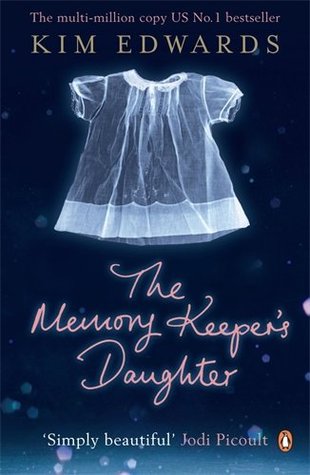
Woah. Tomorrow is the last day of November. I am still processing the fact that November flew past us. Before I realize it, December is just a couple of days away. Nevertheless, I hope that the last month of the year will be kind to everyone. Reading-wise, November was a foray into works of European literature but in the past week, I pivoted toward American literature. As the year inches closer to its inevitable end, my focus has been on books that are part of my reading challenges. My current read, Kim Edwards’ The Memory Keeper’s Daughter, is a part of my 2023 Beat the Backlist Challenge. It is also my 119th read this year. I am just about to start reading the book so I cannot offer much of an impression. I will be sharing it in this week’s First Impression Friday update.
What have you finished reading?
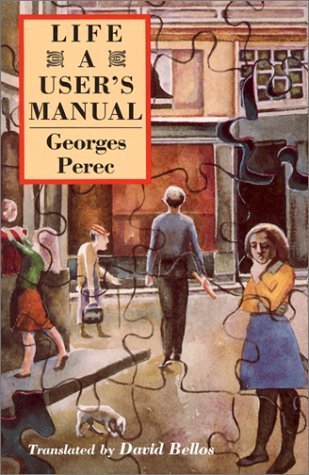
As I mentioned, November was dedicated mainly to works of European literature. Among these works was French writer Georges Perec’s Life: A User’s Manual. This is my first by Perec and was my 115th read this year. It was actually a book I discovered through an online bookseller; the book’s title immediately piqued my interest. I would later learn that the book is listed as one of the 1,001 Books You Must Read Before You Die and other must-read lists. Curious about what the book has in store – I had also not heard of the French writer until that fateful day – I added the book to my 2023 Top 23 Reading List.
Life: A User’s Manual charted the stories of the occupants of a Parisian apartment building located at 11 Rue Simon Crubellier; this somehow reminded me of Muriel Burbery’s The Elegance of a Hedgehog. The occupants of the apartments came to life through vivid descriptions of furnishings, decorations, and other relics unique to the apartment they occupied or were occupying. The novel was bereft of a firm plot but Perec made up for it by providing a lush tapestry of interwoven stories; the novel is a work of postmodern fiction. Nevertheless, his evocative descriptions allowed the readers to know each occupant’s story. The meandering structure can be disorienting but Perec did provide a caveat at the start of the novel: it is a jigsaw puzzle which was also a recurring theme. Percival Bartlebooth, one of the apartment owners, spent half his life painting pictures that he had cut into jigsaw puzzles. He can then spend the second half of his life reassembling these puzzles. It is an interesting idea. It may seem daunting but the writing is very accessible and lyrical. Life: A User’s Manual is an ambitious yet interesting and worthwhile read.
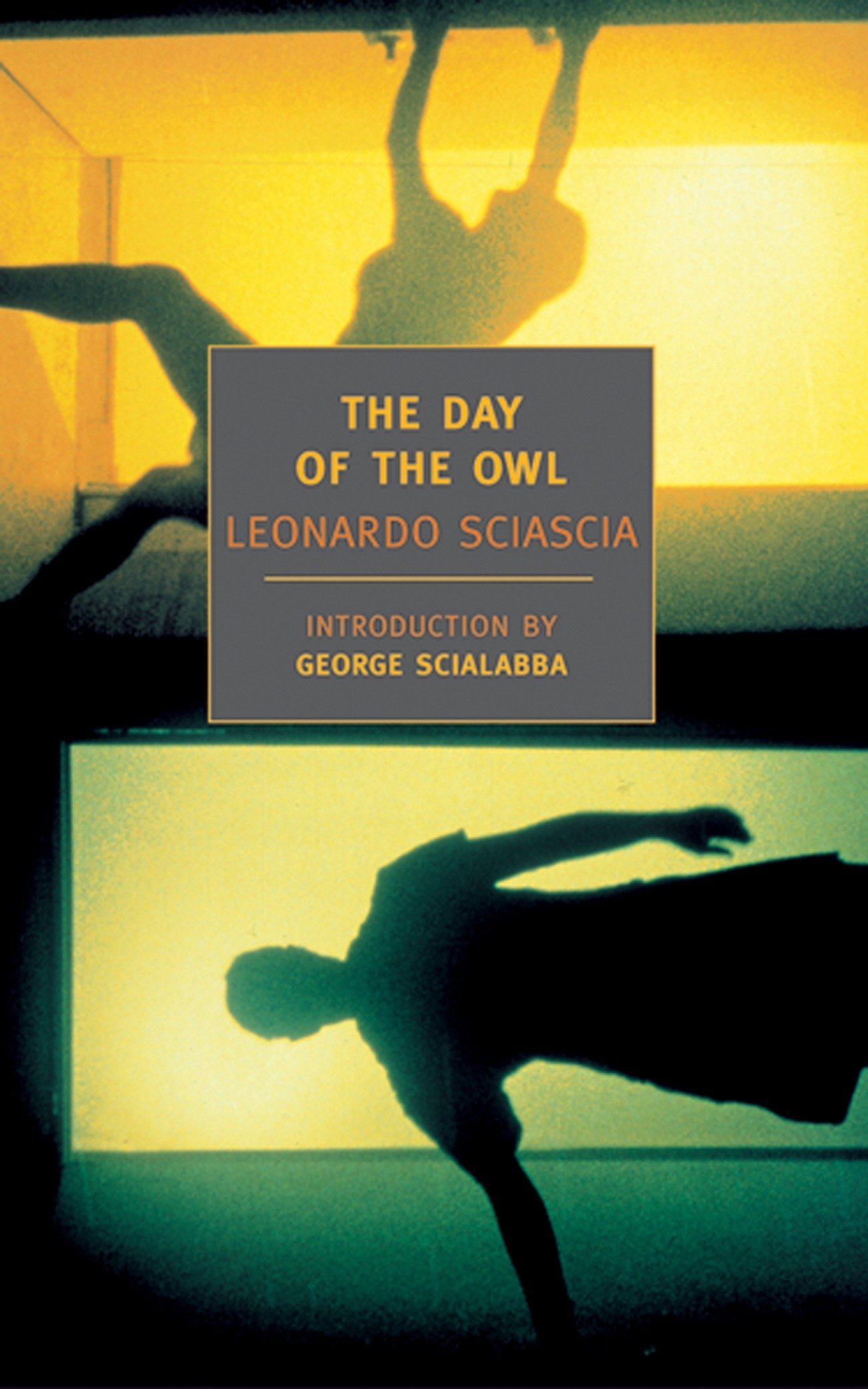
I wrapped up my quick foray into European literature with another writer who was unfamiliar to me: Leonardo Sciascia. Like Life: A User’s Manual, Sciascia’s The Day of the Owl was a book I first encountered through an online seller. I think it was back in 2019 when I obtained a copy of the book; it was also the year I kept on encountering works published by the New York Review of Books (NYRB). I like NYRB because it provided me books and writers I would have not otherwise encountered, like Magda Szabo and Sciascia. I have also included The Day of the Owl in my 2023 Top 23 Reading List.
First published in Italian in 1961 as Il giorno della civetta, the main driver of the novel’s action was the assassination of Salvatore Colasberna, the owner of a small construction company. He was shot while on a bus about to leave the piazza of a small Sicilian town. A lupara, a sawn-off rifle famously associated with the Sicilian mafia, was discovered as the murder weapon. However, none of the passengers or even the bus driver admitted to seeing the murderer. Arriving at the scene of the crime was Bellodi, a Carabinieri captain and former Civil War partisan from Parma. Bellodi was an outsider but he was determined to get to the bottom of the case. What he did not expect was the wall of silence he was met with. All the markings of the Mafia were all over the crime however, no one admitted to the killing. It also did not help that everyone denied the presence of the Mafia, firmly standing by their belief that it was a figment of imagination. The Day of the Owl was a quick and insightful read about the maladies that plague modern Italy.

As my foray into European literature concluded, my literary journey in a different part of the world commenced. It is without surprise that American literature is my most-read literature. It has, even without design, become part of my yearly reading tradition. This year is no different and this year’s journey commenced with an unfamiliar writer. It was through must-read lists that I encountered Erica Jong and her magnum opus, Fear of Flying. It did not take me long to include the book in my own reading list. Obtaining a copy of the book, however, proved to be a challenge. Can’t wait to read the book, I added it to my 2023 Top 23 Reading List.
Fear of Flying was first published in 1973, Jong’s debut novel. The novel charted the fortunes of Isadora Wing, a Jewish journalist from New York City’s Upper West Side. When the readers first meet her, she is aboard a plane traveling to Vienna to attend a convention of psychoanalysts. Her second husband, Bennett, was a psychoanalyst who joined her at the convention. Ironically, Isadora had a fear of flying, hence the book’s title. To occupy her mind, she started reflecting on her limited professional network. She focused her narrative lens on a particular subject: the liberty of females. Isadora had a fear of being rid of male companionship. To appreciate her plight, one must be reminded of the book’s setting. It was the 1970s, a time when the social revolution referred to as the Sexual Revolution (or sexual liberation) took place. Isadora, however, was at a personal crossroads because of her dependency on male presence. After all, she was raised in a traditionally patriarchal society. Fear of Flying was worth the wait.
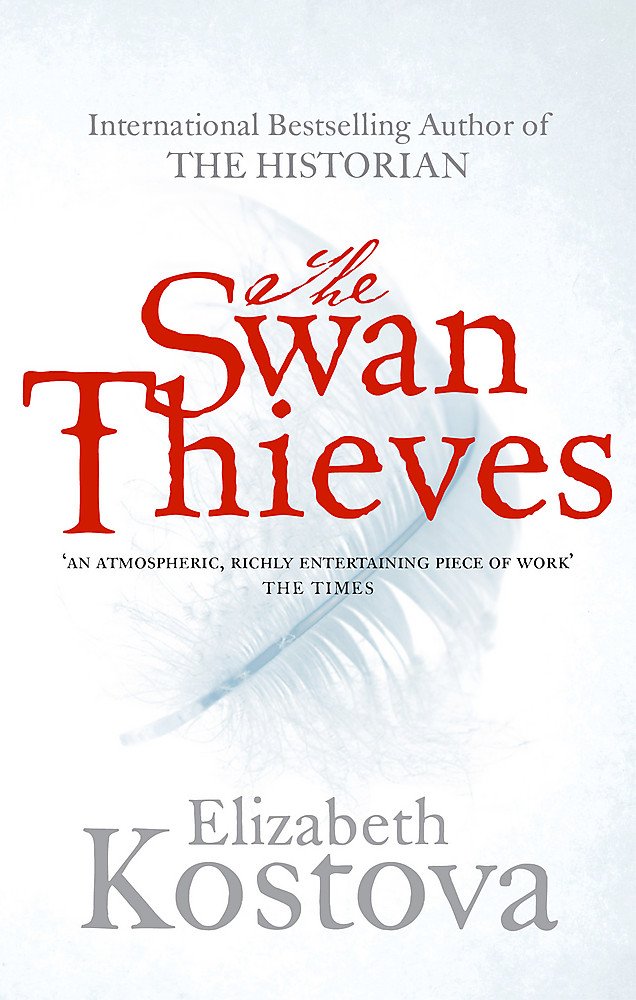
A very productive reading stretch concluded with another unfamiliar writer, Elizabeth Kostova, whom I first encountered through her novel The Historian. It was, however, another work by the American writer, The Swan Thieves, that I was able to obtain, back in early 2019. I didn’t realize that it was that long since I acquired the book. As such, I made the book part of both my 2023 Top 23 Reading List and 2023 Beat The Backlist Challenge. Reading the book was literally hitting two birds with one stone.
The Swan Thieves charted the story of Dr. Andrew Marlow, a psychiatrist in 1999 Washington, D.C. He was also a student of the art, learning to paint or visiting art galleries during his free time. It came as no surprise when a fellow psychiatrist referred a new patient to him. Robert Oliver was a painter who was caught after he attempted to stab a painting, Leda and the Swan by Gilbert Thomas, at the National Gallery of Art. Oliver refused to explain his motivation. Marlowe was taken by Oliver’s case even though the painter still refused to speak. A breakthrough in the case was when Marlow unearthed a stack of letters among Oliver’s belongings. The letters were dated from the late 19th century. Oliver was also uncharacteristically protective of these letters which Marlowe eventually learns were between a woman and painter named Beatrice de Clerval Vignot and her great-uncle Olivier Vignot. Marlow dug deeper and answers were soon achieved. The journey to reaching it, however, was painstakingly long. There was a careful but overwhelming attention to details which, in the grand scheme of things, were unnecessary. It was still a compelling read but it did require significant trimming off.
What will you read next?
 The Pine-Scented Chronicles
🧡
LikeLiked by 1 person