
Happy midweek everyone! With the year dwindling down, I hope that the remaining days of the year will be filled with blessings and good news. More importantly, I hope everyone is happy and healthy, in body, mind, and spirit.
With the midweek comes a fresh WWW Wednesday update, my first this year. WWW Wednesday is a bookish meme hosted originally by SAM@TAKING ON A WORLD OF WORDS. The mechanics for WWW Wednesday are quite simple, you just have to answer three questions:
- What are you currently reading?
- What have you finished reading?
- What will you read next?

What are you currently reading?

With my two major reading challenges finally completed, I have shifted my focus to reading books that are part of my 2023 Top 10 Books I Look Forward To List. This is a reading list I compose yearly but never got to accomplish even just once although I was one book short of making it back in 2020. This year is going to be another failure I guess because I still have five books to go. The sixth book from this list is Ann Napolitano’s Hello Beautiful, a book that was repeatedly included in similar lists, and for good reasons it seems. Hello Beautiful is a modern interpretation of a timeless classic: Louisa Mae Alcott’s Little Women. I loved Little Women which made me look forward to my first Napolitano book. Sure enough, the story centered around four young women in 1980s Chicago: sisters Julia, Sylvie, Emeline, and Cecilia. In ways more than one, they resembled the March sisters. Sylvie, for instance, was drawn to books, reminiscent of Jo March. It is surely an eventful book and I am excited how Napolitano will give her own twist to a timeless and beloved classic.
What have you finished reading?
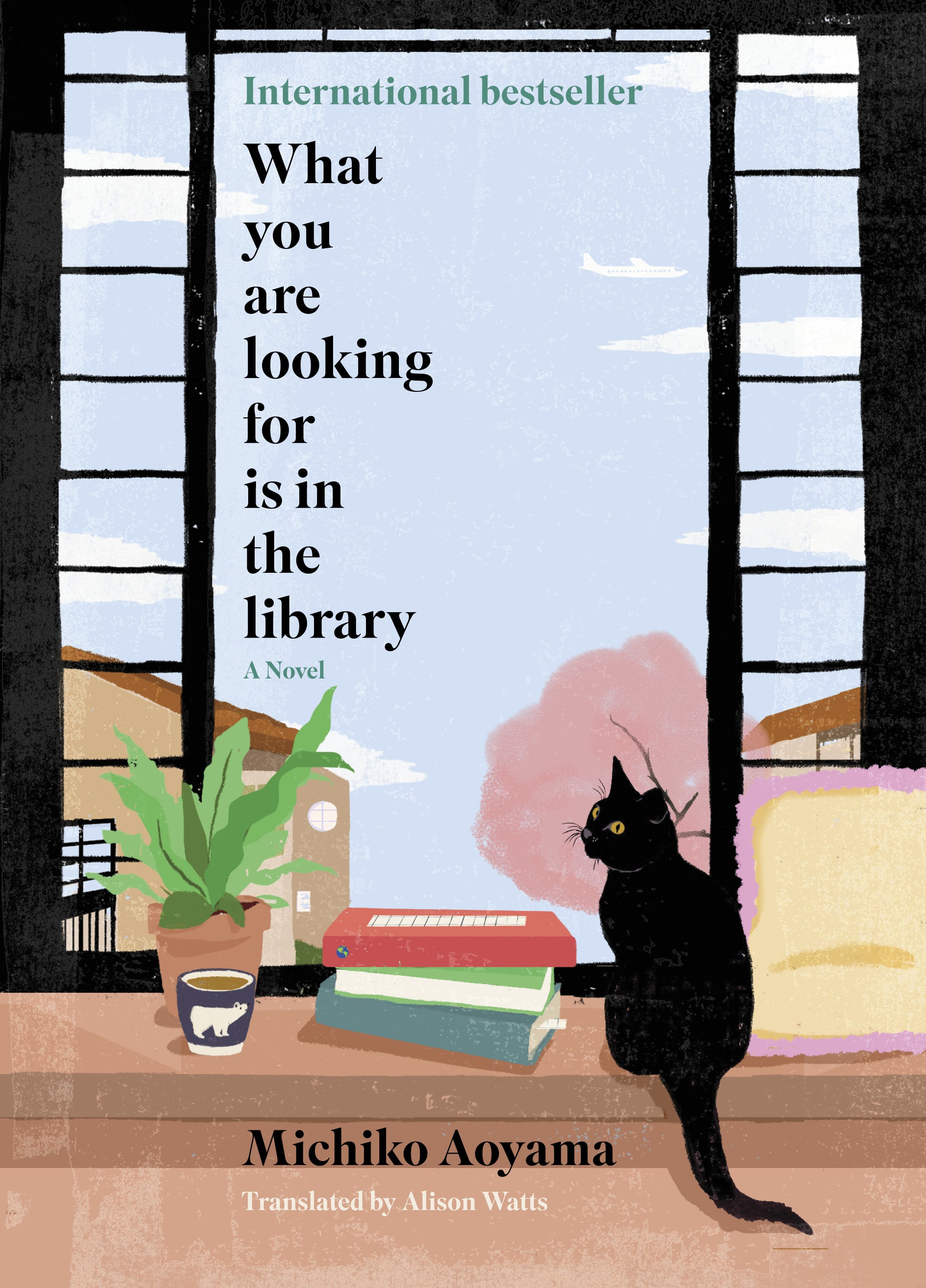
December was meant to be dedicated to works of North American literature; all books pending from my reading challenges belonged to this part of the literary world. However, I decided to deviate from this train of thought. Owing to my recent trip to Japan, I decided to insert some recently translated works of Japanese literature. Among them was Michiko Aoyama’s What You Are Looking For Is in the Library. The book has been making the rounds lately, prompting me to add it to my own reading list. Besides, it is about books and it has a cat on the book cover. This reminded me of Sôsuke Natsukawa’s The Cat Who Saved Books, a book that was part of my most recent Japanese literature month.
Anyway, What You Are Looking For Is in the Library was initially published in 2020 before it was released in English this year. Set in the fictional ward of Hatori in Tokyo, the novel introduces five major characters: Tomoka, a 21-year-old womenswear sales assistant; Ryo, a thirty-five-year-old accountant working in the accounts department of a furniture manufacturer; Natsumi, a forty-year-old former magazine editor; Hiroya, a thirty-year-old NEET (not in employment, education or training); and sixty-five-year old Masao, a retiree. Each character was at a major intersection in their lives. They yearned for something new or better and yet they couldn’t find the heart to pursue it. Enter the enigmatic librarian Sayuri Komachi of their community library. She recommended them books they didn’t know they needed. She had a knack for knowing what kind of book one needed. Sure enough, these books changed their lives. Each story was suffused with tenderness which made readers gravitate toward these characters. Overall, it was a heartwarming read.
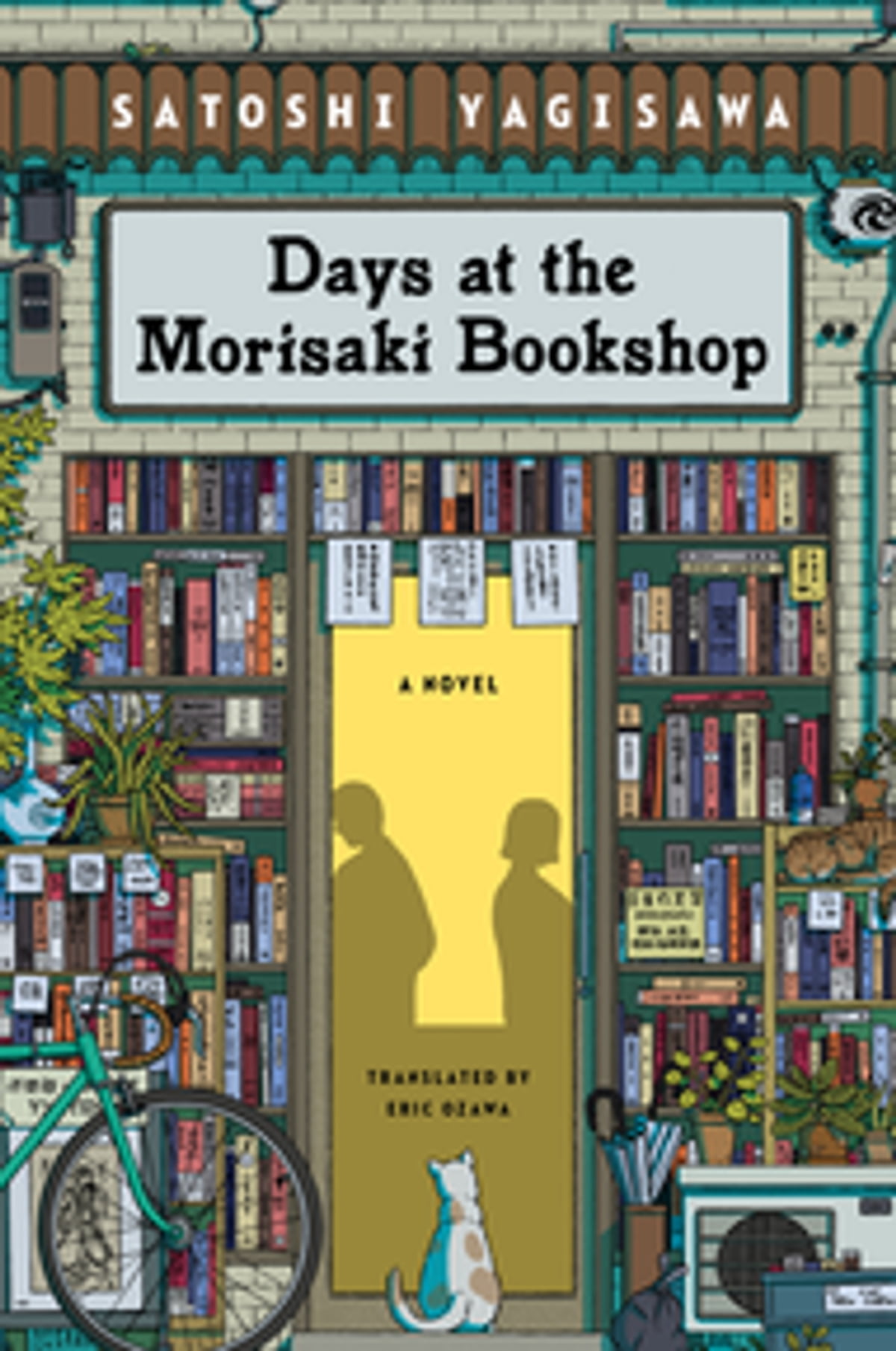
From one book about books to another book about books. Like What You Are Looking For Is in the Library, Satoshi Yagisawa’s Days at the Morisaki Bookshop has also been gaining global interest. I keep encountering the book, whether in online or physical stores. Admittedly, I was a little apprehensive about reading the book at first. Books with so much hype tend to make me rethink about reading them. This is true in the case of Yagisawa’s novel. I eventually relented. I wanted to know what the hype was all about. I am glad I did.
Days at the Morisaki Bookshop, originally published in Japanese in 2009, opened with a heartbreak, a literal heartbreak. Twenty-five-year-old Takako”s boyfriend broke up with her after announcing his marriage to their co-worker. It was a shock to the core because her boyfriend and co-worker have been dating longer than she and her ex-boyfriend did. Broken by the betrayal, she quit her job and had no other prospect. That was until her uncle Satoru offered her to live rent-free in a tiny room above his bookshop, the titular Morisaki Bookshop, located in Tokyo’s Jimbocho district. It was a great surprise because they barely had any interaction. But with no better prospect, she was forced to accept the offer in exchange for opening his bookshop. What ensued was a heartwarming story about families, new beginnings, and the simple pleasures that can be derived from all bookshops and between the pages of any book. It is another masterful slice-of-life story from a gifted Japanese writer. I learned this is the first book in what seems to be a series; the story did leave me wanting more. I hope I get to read the rest of the series.

My brief foray into Japanese literature concluded with Hiro Arikawa’s The Goodbye Cat. Arikawa first gained my interest in 2019 when I read her novel, The Travelling Cat Chronicles. The book broke my heart, literally. It was heartwarming but also heartbreaking. I loved it, and it made me look forward to her other books. It took some time but a new work finally made it to the bookstands. I didn’t even know that she was releasing a new work until I encountered the book on one of my (not-so) random trips to the bookstore. Without ado, I bought the book, not realizing that it was a collection of short stories.
Despite it being a collection of short stories, I was still willing to read the book, making it the second short story collection I read this year; the first one was James Joyce’s Dubliners. As can be expected, the seven short stories comprising the book featured cats. These cats are catalysts in the lives of the families they became a part of. For instance, it was a cat that showed the warmer side of a domineering father; he barely showed any warmth to any of his children. Interestingly, there are a lot of father and child pairings. The fathers are prevalent features. All of the stories are heartwarming. That was until the last two stories which featured familiar characters. The sixth story introduced a younger Satoru; he was the main character in the aforementioned The Travelling Chronicles. It detailed how he became a cat lover. The last story, meanwhile, elucidated on one of the major scenes in Arikawa’s novel, particularly the scene between Satoru and his professor. These last stories left me teary-eyed. To think I was on a plane! But they appealed to me deeply because I knew how Satoru’s story ended. Overall, The Goodbye Cat is a commendable follow up to The Travelling Cat Chronicles.
What will you read next?


💙
LikeLike