New Year everyone! We’ve successfully completed a 365-day revolution around the sun. But with every end comes a new beginning. We are provided with 366 blank pages – 2024 is a leap year – upon which to paint new memories. I hope that we will all paint these blank canvases with good and lasting memories, may it be with the people we love or all by ourselves. Thankfully, things are finally looking up after spending nearly three years under a shroud of uncertainty due to the pandemic. I sure hope that the good times keep on rolling.
As has been the tradition in the past few years, I will be kicking off the new year by looking back to the previous year, its hits, and of course, its mishits. It is also an opportunity to take a glimpse of how the coming year is going to shape up. This book wrap-up is a part of a mini-series that will feature the following:
- 2023 Top Eighteen Favorite Books
- 2023 Book Wrap Up
- 2023 Reading Journey by the Numbers
- 2023 20 Most Memorable Book Quotes (Part I)
- 2023 20 Most Memorable Book Quotes (Part II)
- 2023 New Favorite Authors
- 2024 Books I Look Forward To List
- 2024 Top 24 Reading List
In what is my most productive reading year yet, I was able to complete 130 books. This is the second time that I was able to breach the three-digit mark; the first time was in 2022 when I ended the year with 103 books. I honestly thought that I wouldn’t be able to replicate the feat I achieved in 2022. But lo and behold! Life’s little surprises indeed. I didn’t expect to finish 2022 with over 100 books. More so in 2023.
The 130 books I read in 2023 were written by 123 different writers which eclipses the record I set in 2022; I read the works of 97 different writers in 2022. The writer who I read the most work of was Douglas Adams, with four; these were the last four books in his popular The Hitchhiker’s Guide to the Galaxy series. The other writers who I read at least two works of were Haruki Murakami, Naguib Mafhouz, James Joyce, and Marcel Proust. Further, of the 123 writers I read in 2023, 73 were new-to-me writers. Several of these new-to-me writers left deep impressions, making me want to explore their oeuvre more. In this wrap-up update, I will be featuring writers who gave me some of the most memorable reading experiences I had in 2023. Happy reading!

Author: Paul Murray (born 1975)
Nationality: Irish
Books Read This Year: The Bee Sting
Books I Am Looking Forward To: An Evening of Long Goodbyes, Skippy Dies
I am kicking off this list with the writer with whom I concluded my 2023 reading journey. Interestingly, I have never heard of Paul Murray before 2023. However, midway through, I cam across the Irish writer when his latest novel, The Bee Sting, was earning praises from readers and literary pundits alike. The Bee Sting even earned the Irish writer a couple of awards. My interest piqued, I resolved to read the book, especially after it was shortlisted for the Booker Prize. Murray’s fourth novel, The Bee Sting introduced the Barnes family, a well-to-do Irish family living in the countryside. They seemed like the perfect family portrait but a series of unfortunate events stemming from erroneous decisions threaten to undermine this perfect facade. Tension was brewing, slowly percolating. Murray’s knack for making readers inhabit his characters kept me riveted. It was the right decision to conclude my 2023 with The Bee Sting, easily one of my best reads during the year.

Author: Mariana Enríquez (born December 8, 1973 )
Nationality: Argentine
Books Read This Year: Our Share of Night
Books I Am Looking Forward To: Éste es el mar, Cómo desaparecer completamente
It was in 2021 when I first came across Argentine writer Mariana Enriquez. Her book, The Dangers of Smoking in Bed, was shortlisted for the International Booker Prize; the book’s interesting title and book cover immediately grabbed my attention. My anticipation dipped with I learned it was a short story collection. The universe conspired and Our Share of Night became her first novel to be translated into English. In the lush tapestry that Enríquez adeptly wove together, wealth, power, and evil figured prominently. While these elements have been prominently featured in other books and films, Enríquez gave an astounding account that brings the spotlight to her country of birth’s contemporary history. She highlighted pivotal historical events rarely captured in fiction, at least, from the Anglophone reader’s perspective. It is the conjunction of literal and metaphorical horrors set in a nation still reeling from the atrocities it witnessed. Equal parts marvelous and horrifying, Our Share of Night made me look forward to reading more of Enríquez’s works.

Author: Georgi Gospodinov (born: January 7, 1968)
Nationality: Bulgarian
Books Read This Year: Time Shelter
Books I Am Looking Forward To: The Physics of Sorrow
It was through the (International) Booker Prize that I first came across Georgi Gospodinov. I would be lying if I say that his work was the first book in the longlist that caught my attention. I wasn’t too keen on his third novel Time Shelter but when it was announced as the winner, the switch flipped. I wanted to know what the hype was about. Time Shelter is literal as time and memory transformed into safe havens from the bedlam that our present has turned into. We yearn to return, rather escape to the past where our happiest memories lie. However, nostalgia can be a double-edged sword, as iterated in Gospodinov’s third novel. Time Shelter is a multilayered novel that integrates satire, philosophy, and metafiction into a potent and inventive novel of ideas. The result was a lush tapestry that dealt with the big question of whether our past, both collective and individual, can provide us a sanctuary from the tedium of our quotidian lives. It veers off from reality but Gospodinov makes it sound plausible. It would be a pleasure to read more of the multi-awarded Bulgarian writer’s works.

Author: Ludmila Ulitskaya (Russian: Людмила Евгеньевна Улицкая, born February 21, 1943)
Nationality: Russian
Books Read This Year: Jacob’s Ladder
Books I Am Looking Forward To: Medea and Her Children, The Kukotsky Enigma
Russian literature is a literary territory that has really captivated me; it was unexpected, to say the least. However, it has been some time since I read the work of a new-to-me Russian writer. Enter Ludmila Ulitskaya, a name that has become a regular presence in discourses apropos the Nobel Prize in Literature. As such, I listed her novel, Jacob’s Ladder, in my 2023 Top 23 Reading List. Said to be Ulitsakaya’s final full-length prose, Jacob’s Ladder follows two narrative threads – one in the present and one in the past – that masquerades as a family saga oscillating across periods. Through the story of the Ossetsky family, the novel chronicled Russia’s modern history, from the fall of the Romanovs to the rise of Joseph Stalin to the dismantling of the Union of Soviet Socialist Republics. With the vast territory it covered, Jacob’s Ladder is certainly one of my best reads in 2023. It also drove my interest in Ulitskaya’s oeuvre. Interestingly, Jacob’s Ladder was inspired by the Ulitskaya’s own family history.

Author: Osamu Dazai (Japanese: 太宰 治; June 19, 1909 to June 13, 1948)
Nationality: Japanese
Books Read This Year: No Longer Human
Books I Am Looking Forward To: The Setting Sun
Like Russian literature, Japanese literature has warmed up to me. The past three years saw a remarkable rise in the works of Japanese writers I read. Among the newer ones, at least to me, was Osamu Dazai who was born Shūji Tsushima (津島 修治). I noted how there was an increasing interest in his oeuvre recently; he was a prolific short story writer during his prime. Dazai is considered by many as one of the masters of the I-novel, a form of confessional literature built on actual experiences by the writer. His novel No Longer Human (人間失格, Ningen Shikkaku, 1948) was a prime example of the I-novel. At the heart of the novel was Ōba Yōzō whose journal was the structural framework of the novel. His journal focused on key events in his life, from his childhood until his university days. His stay at the university was pivotal in his life as it was a period of enlightenment. At times dark, moving forward in the story will slowly unveil the plight of Ōba, hence, the book’s title. The dissection of Ōba’s psychological profile was very compelling and Dazai did an impressive job of making the readers part of his journey.

Author: James Joyce (February 2, 1882 to January 13, 1941)
Nationality: Irish
Books Read This Year: Ulysses, Dubliners
Books I Am Looking Forward To: Finnegans Wake, A Portrait of the Artist as a Young Man
James Joyce is easily one of the most recognizable names in the world of literature. Meanwhile, his magnum opus, Ulysses, is also easily one of the most discussed literary titles out there. Decades have passed since the book’s publication and yet it remains an integral part of literary discussions. The book’s reputation surely precedes it. When I first started reading the book in 2017, I shrugged off the sense of intimidation. I failed, prompting me to read the book later on. In 2023, I made it occupy a very important number in my reading journey: the 1000th novel I read. I was still feeling daunted the second time around but once I let loose, so did the story. It doesn’t take much to see that Ulysses is a book that is out of this world. Its structure and its storytelling process refuse to conform to literary conventions. It is also this that made me appreciate the one-day adventure of Leopold Bloom as he traipsed his way across the busy streets of Dublin. I am thankful to the book because it made me see a different kind of literature, one that pushed the boundaries of my own imagination.

Author: Thomas Mann (June 6, 1875 to August 12, 1955)
Nationality: German
Books Read This Year: The Magic Mountain
Books I Am Looking Forward To: Buddenbrooks, Death in Venice, Doctor Faustus
Nobel Laureate in Literature Thomas Mann is a writer whose oeuvre I long wanted to explore. I can’t remember exactly when I first encountered The Magic Mountain but this fateful encounter piqued my interest immediately even though I had no iota about who Mann was back then. It would take years before I could finally read the book. It is the 1,100th novel I read overall. Through the story of Hans Castorp, a dashing young man orphaned at a young age but was raised by his grandfather. The crux of the story was when he decided to pay a visit to his cousin, Joachim Ziemssen an officer in training suffering from tuberculosis and was convalescing in the International Sanatorium Berghof in the Swiss Alps. What was supposed to be a brief stay evolved into a long stay that took the reader across a spectrum of subjects, such as death and the inevitable flow of time. Reading The Magic Mountain, however, was not without its challenges but it was, nevertheless, worth the long wait.
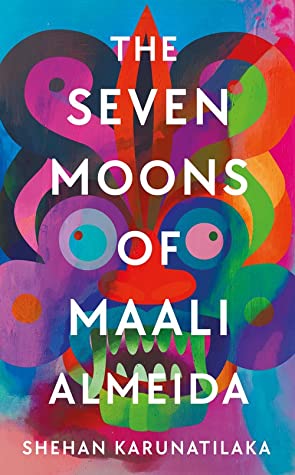
Author: Shehan Karunatilaka (born 1975)
Nationality: Sri Lankan
Books Read This Year: The Seven Moons of Maali Almeida
Books I Am Looking Forward To: Chinaman
When 2023 started, one of the books I was greatly looking forward to was Shehan Karunatilaka’s The Seven Moons of Maali Almeida. Before 2022, I had never heard of the Sri Lankan writer, and had it not been for the Booker Prize, this would have not changed. The Seven Moons of Maali Almeida was among the first books that piqued my interest when the Booker Prize longlist was released. It is a pivotal work of contemporary fiction that casts a vast net over history and the art of storytelling. The story of the titular Maali Almeida, a photojournalist chronicling the atrocities committed in this country, was a grim reminder of the things that are slowly losing meaning in the contemporary such as the importance of memory and history, the atrocities of war, and the corruption of governments and even humanity. Karunatilaka left no stone unturned in his scathing commentaries of the current state of his nation which is still undermined by political unrest. The humor and wit that the book was riddled with belie the devastation caused by the Sri Lankan Civil War, a seminal part of the country’s modern history.

Author: Cheon Myeong-kwan (Korean: 천명관; born 1964)
Nationality: Korean
Books Read This Year: Whale
Books I Am Looking Forward To: My Uncle, Bruce Lee, Modern Family
Like in the case of Time Shelter and Georgi Gospodinov, it was through the International Booker Prize that I first came across Cheon Myeong-Kwan and his novel Whale; the book was longlisted for the prestigious prize, going as far as the shortlist. This underlines the growing interest in Korean literature. Whale was originally published in 2003 and was Cheon’s debut novel. It is considered by many literary pundits as a contemporary classic of Korean literature. Whale is a complex and multilayered novel that reels the readers with its different elements woven together by Cheon’s storytelling. It is an atmospheric story that fuses social and political commentary with magical realist elements. Whale also subtly underscored the very nature of storytelling. It is also the story of a strong woman who rose above adversity and the patriarchy. At one point, Geumbok said “I only have one principle I live by. Small, humble things are embarrassing.” This holds true for the novel: an ambitious undertaking that didn’t shy away from examining complex subjects and realities that some might find off-putting. Whale, at its heart, is a novel of modern South Korea.
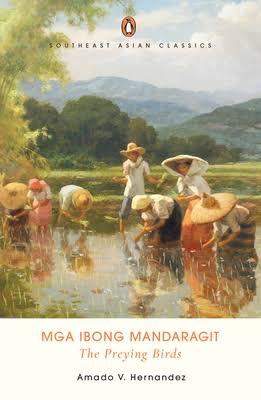
Author: Nana Kwame Adjei-Brenyah (September 13, 1903 to March 24, 1970)
Nationality: Filipino
Books Read This Year: The Preying Birds
Books I Am Looking Forward To: Crocodile Tears
Ironically, my reading list is lacking in the works of Philippine literature, at least relative to other literary territories I have been immersing myself in. My exploration of my own part of the literary world is dishearteningly limited. Nevertheless, I have been trying to make up for lost time, leading me to Amado V. Hernandez’s The Preying Birds which also happens to be the first novel originally written in Tagalog that I read. Set in the Philippines during the twilight years of and the years immediately following the end of the Second World War, The Preying Birds is a scathing socio-political novel that strongly echoed the sentiments captured in the works of the Philippine national hero, Dr. Jose Rizal. In a way, the book’s hero, Mando Plaridel was a conduit of Rizal’s Crisostomo Ibarra/Simoun. Social justice reverberated all throughout. Social justice, however, is a shot in the dark in a society undermined by greed. The maladies captured by Hernandez are concerns that remain prevalent in the present. Despite the passage of time, The Preying Birds is, a timely and incisive look at contemporary Philippine society.
Below are other books written by new-to-me writers who made my 2023 reading journey more meaningful.




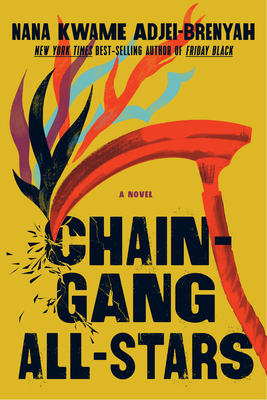
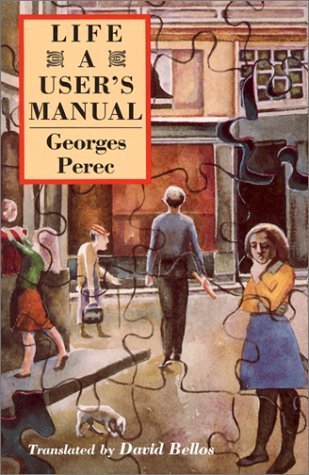


Mizuki Tsujimura, The Lonely Castle in the Mirror
Jabari Asim, Yonder
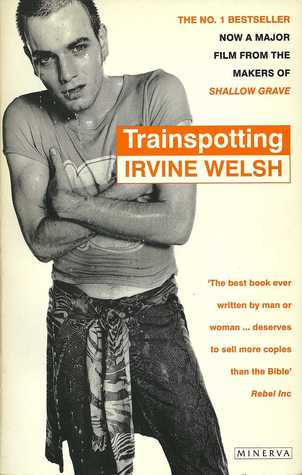
Irvine Welsh, Trainspotting
R.F. Kuang, Yellowface
Perumal Murugan, The Story of a Goat
Nana Kwame Adjei-Brenyah, Chain-Gang All-Stars
Georges Perec, Life: A User’s Manual
Giuseppi Tomasi di Lampedusa, The Leopard
Yiyun Li, The Book of Goose
Ann Napolitano, Hello Beautiful
How about you fellow reader, which authors impressed you in 2023? I hope you get to share it in the comment box as I am more than interested in knowing your answers.
 The Pine-Scented Chronicles
📖
LikeLike