A Return to Harlem
In the ambit of contemporary American literature, Colson Whitehead has established quite a reputation. Since breaking into the literary scene in 1999 with the publication of his debut novel, The Intuitionist, Whitehead has built a credible storytelling and writing vitae that included novels, essays, and short stories. His works earned him several accolades. Since making a successful debut, he has published nine novels, two of which earned him the prestigious Pulitzer Prize in Fiction: The Underground Railroad in 2017 and The Nickel Boys in 2020. With this feat, Whitehead joined an esteemed list of writers who were able to win the prize at least twice; he was just the fourth and the first African American writer to achieve this feat. The Underground Railroad also earned Whitehead the 2016 National Book Award for Fiction.
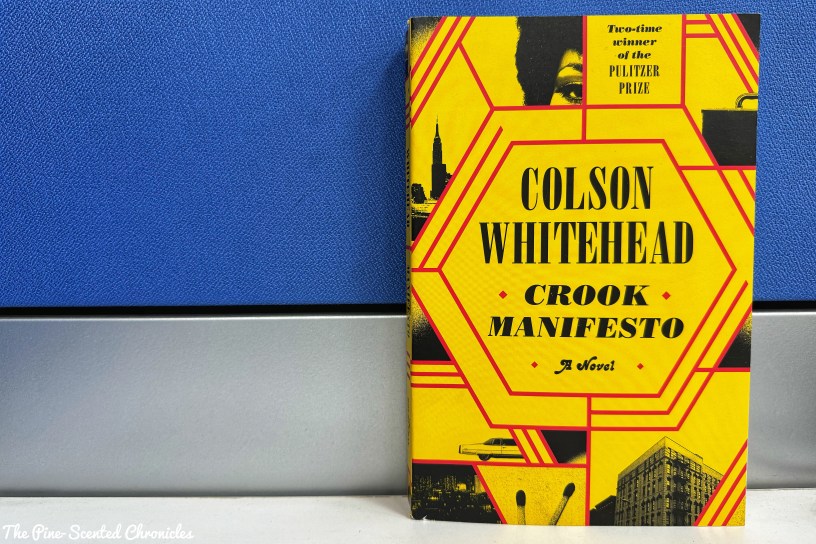
Before Whitehead started working on The Nickel Boys – inspired by the Dozier School for Boys in Florida, a reform school that operated for over a century and was revealed as highly abusive – Whitehead had already conceived what would be his eighth novel, Harlem Shuffle. However, he shelved Harlem Shuffle to focus on The Nickel Boys. Following The Nickel Boys’ success, Whitehead continued working on Harlem Shuffle while he was in quarantine during the pandemic in New York City. The book was eventually published in 2021 to wide critical acclaim. No less than former US President Barack Obama named the book as one of his favorite books of 2021. The book was also a finalist for the 2021 Kirkus Prize for Fiction. Harlem Shuffle would also be the first book of a planned trilogy. In 2023, Whitehead released the sequel to the book, Crook Manifesto.
Harlem Shuffle charted the adventures and misadventures of Rick Carney. Born to a family with a complicated and shady history, Carney endeavored to make a name for himself that is detached from his father’s nefarious legacy. A first-generation college graduate, Carney was determined to establish himself as an upstanding and respectable citizen of Harlem and New York. However, no matter how much he tries, his family’s legacy keeps haunting him. Every street and corner of Harlem screamed at him his father’s villainy. With Rick not being able to run away from his provenance, he eventually became a man of dichotomies. His legitimate and successful furniture store, for instance, occasionally sold stolen goods he received from his friends and other members of his family. In this balancing act, he was able to survive the tumultuous 1960s.
“Churn.Carney’s word for the circulation of goods in his illicit sphere, the dance of TVs and diadems and toasters from one owner to the next, floating in and out of people’s lives on breezes and gusts of cash and criminal activity. But of course churn determined the straight world too, memorialized the lives of neighborhoods, businesses. The movement of shop owners in and out of 383 West 125th Street, the changing entities on the deeds downtown in the hall of records, the minuet of brands on the showroom floor”
~ Colson Whitehead, Crook Manifesto
Move forward to the 1970s and the dawn of a new era. Or perhaps not. In Crook Manifesto, we learn that Rick has finally retired from his illicit activities and enterprise: “four years of honest and rewarding work in home furnishings.” With his legitimate business thriving, his focus is now on his family: his wife, Elizabeth, and their children May and John. But life, with its winding alleys, always has a pleasant, rather unpleasant surprise in store. The year was 1973; the story was divided into three parts in different periods. May desperately wanted a pair of tickets for an upcoming Jackson 5 show. However, the tickets were all sold out. With no other recourse, Rick was prompted to reestablish contact with one of his old associates: Munson. Munson was a crooked New York City white cop in a black precinct and a fixer to boot; he was also introduced in Harlem Shuffle.
In this world, no transaction is ever straightforward. In exchange for Munson obtaining a pair of tickets for Ray, Ray must secure a buyer for a stash of stolen diamonds; rekindling past connections can be quite complicated. Munson obtained the diamonds during a recent heist. Against his will, Ray agreed to the deal. Ray eventually surmised that finding a buyer for the diamonds would be difficult as the heist was high-profile. The red flags were everywhere but fatherly generosity pushed Ray to aim for the impossible. Everything went awry and before Ray could caution it, everything started to tailspin. Ray again finds himself swept into a whirlpool of capers, heists, and crazy coincidences. The world he left behind four years ago came knocking at his door.
The second part of the book transpired in 1973. Ray was back to selling stolen but his business is still thriving. Out of the blue, another former associate from his crime-dealing days came waltzing in his furniture store. Zippo, a close friend of Ray’s late cousin Freddie, has turned his life around to become a full-time photographer and filmmaker. Zippo had a project in mind. He wanted to film a blaxploitation movie that would be shot in Harlem. Zippo was also hoping that Ray’s furniture showroom be one of the locations for the movie. Ray agrees, putting into motion yet another unexpected reunion. Zippo enlisted the assistance of Pepper to run security on the set. Pepper was another former associate. He was drawn to the thug life and was averse to the idea of going straight. The movie was completed but received a lukewarm reception from both critics and viewers.
For the novel’s last section, the story again jumped period. The year was 1976. For the United States of America, it was a big year as the nation was celebrating its second centenary. It was a momentous feat. A new character was introduced by Whitehead. Alexander Oakes was a childhood friend of Ray’s wife Elizabeth. He was a former district attorney and a rising local politician who was running for the office of borough president. When the last section opened, we met the Carney family gathering at the local Dumas Club to participate in Oakes’ political fundraiser. However, Carney saw through Oakes’ flowery and superfluous words. Oakes was a man who played to the crowd’s sentiment. He soon lost interest and left as soon as he arrived.
“It didn’t hit him until he sat on the steps. He set down his office salvage. Down the street he saw his store from that new angle, and it was as if the building belonged to someone else. The fire someone else’s tragedy, the misfortune of a stranger he had no connection to. In the instant that the store existed outside of him, an alien object, he felt it: run over by his express of grief that left him mangled in the dark. He had worked so hard – no one knew how difficult it had been. There had been no one, no witnesses, until the hard part was doen. You’ve come a long way.”
~ Colson Whitehead, Crook Manifesto
But as the nation gears up for its bicentennial celebration and politicians kick off their political campaigns, New York City is starting to unravel. In Ray’s neighborhood, a spate of arson attacks was plaguing Harlem. The most recent of these attacks injured the 11-year-old son of one of Ray’s neighbors. To get to the bottom of these attacks, Ray enlisted the assistance of Pepper. On the surface, these attacks seemed random but the deeper Pepper digs into the case, the more sinister it got. As a starting point, Pepper visited the offices of the company that owned the recently torched building for a visit. However, there was something off about the company. Pepper then connected with his former associates and other convicted arsonists. Everyone denies knowledge of the attacks.
Like its predecessor, Crook Manifesto is steeped in morality. Ray, no matter how much he avoids complications and despite his resolve to reform his life, always finds himself in dire straits where he has to weigh in on his options. He is often left with options that are polarities; he must either choose black or white, and more often than not, the black bails him out more swiftly than the white does. What Whitehead conjured is a compelling man of vast contradictions. Meanwhile, Pepper was the antithesis of Ray. Pepper’s philosophy was simple: “A man has a hierarchy of crime, of what is morally acceptable, and what is not, a crook manifesto, and those who subscribe to lesser codes are cockroaches.” The book’s title was drawn from his philosophy. The novel is also a testament to Whitehead’s uncanny ability to draw the readers in with his flawed characters and make the readers invest in them. With the second book of the trilogy, he brought more depth and complexity to these characters.
The novel, however, goes beyond portraying crookedness as mere leitmotif. Crookedness, as portrayed by Whitehead is a knee-jerk reaction to circumstances. Law-abiding citizens can become petty criminals and petty criminals can become law-abiding citizens depending on the situation. There is no black and white as their moral compass swings from left to right. They bend under the right kind of pressure. This does not preclude the reality that some men are inherently evil. Munson, for example, has had his values corrupted by the system. He found himself implicated in an ongoing investigation into the deeply entrenched institutional police corruption. This underscores how white policemen abuse their power through their oppression of the African American community. This is an ugly reality that persists in the contemporary.
Harlem then turns into a microcosm for a city that is slowly being undermined by corruption. The case of the arson attacks, for instance, involved not different individuals, as Ray initially surmised. However, upon Pepper’s sleuthing, there was more than meets the eye. Something was afoot as the investigation showed a vast web comprising of different groups. They have colluded in order to benefit from the urban renewal funding available for the development of new properties. This portrays how organized crime has hindered development, particularly in areas that are often overlooked, and contributed to the decay of New York City.
“It was carved into the faces of the Upper East Siders, where something more downcast had replaced the smirks, and behind the eyes one discovered a vague and unformed hopelessness instead of the standard entitled cheer. Things were definitely in decline all over, across zip codes. Strike threats and work stoppages, the eyllow stain of pollution above and dangerous fractures in the infrastructure below. It was creeping on everyone, like a gloom blowing over the East River and into the vast grid, the apprehension that things were not as they had been and it would be a long time before they were right again.“
~ Colson Whitehead, Crook Manifesto
Through Whitehead’s compelling storytelling, Harlem slowly transformed into a major character. Whitehead made the neighborhood come alive. Located in Upper Manhattan, it was established as a settlement in 1658 by the Dutch governor of New Amsterdam, Peter Stuyvesant, and was originally called Nieuw Haarlem, after the Dutch city of Haarlem. Over the years, it was a witness to several drastic changes, from its razing to the ground during the American Revolution to its being a refugee camp for migrants to its being the center of an artistic movement known as the Harlem Renaissance. In the contemporary, it has also become synonymous with Big Apple’s African American population.
Harlem also played a seminal role during the Civil Rights Movement when it was the main platform for political, social, and economic empowerment. This lush history became a canvas upon which Whitehead wrote an atmospheric tale. But under Whitehead’s careful orchestration, Harlem turns into a microcosm for the city it is a part of. The fault lines creating schisms in the city were vividly captured in Harlem. Crook Manifesto is a tension-inciting story backdropped on a neighborhood and a city that are ripe for changes. The book’s structure, however, is fragmented and leaves much to be desired. Rather than a cohesive whole, the novel came across as a collection of short stories.
Beyond its flaws, Crook Manifesto is a compelling story of a man at odds with himself and his destiny, of a neighborhood slowly developing its own character, and of a city on the brink of decay and ripe for change. Change, conflict, and politics were highlighted in the novel which was further enriched by its fascinating social commentary about the lives of African Americans in Harlem in the 1970s. All of the novel’s various elements were masterfully woven together into a lush tapestry by Whitehead’s capable hands. He has certainly proven himself a capable storyteller who can craft an eclectic cast of characters. Building on the tempo Whitehead established in Harlem Shuffle, Crook Manifesto – part-crime fiction, part-historical fiction, and part-political fiction – is the convergence of familiar subjects in the ambit of American literature but also cements Whitehead’s status as among today’s most excitable writers.
“The residential building that went up years later didn’t fit with the rest of the block, the bright orange bricks were a bit too loud, its character overall dull and bereft of style. The city had recovered, they had survived, the future was here, and it looked like crap. The neighbors complained. It wasn’t what had been there before, the people said, we like the way it used to be. They always said that when the old city disappeared and something new took its place.“
~ Colson Whitehead, Crook Manifesto
Book Specs
Author: Colson Whitehead
Publisher: Doubleday
Publishing Date: 2023
Number of Pages: 319
Genre: Historical, Literary, Crime
Synopsis
It’s 1971. Trash piles up on the streets, crime is at an all-time high, the city is careening toward bankruptcy, and a shooting war has broken out between the NYPD and the Black Liberation Army. Amid this collective nervous breakdown furniture store owner and ex-fence Ray Carney tries to keep his head down and his business thriving. His days moving stolen goods around the city are over. It’s strictly the straight and narrow for him – until he needs Jackson 5 tickets for his daughter, May, and he decides to hip up his old police contact, Munson, fixer extraordinaire. But Munson has his own favors to ask of Carney and staying out of the game gets a lot more complicated and deadly.
It’s 1973. The counterculture has created a new generation, the old ways are being overthrown, but there is one constant – Pepper, Carney’s endearingly violent partner in crime. It’s getting harder to put together a reliable crew for hijackings, heists, and assorted felonies, so Pepper takes on a side gig doing security on a Blaxpoitation shoot in Harlem. He finds himself in a freaky world of Hollywood stars, up-and-coming comedians, and celebrity drug dealers, in addition to the usual cast of hustlers, mobsters, and hit men. These adversaries underestimate the seasoned crook – to their regret.
1976. Harlem is burning, block by block while the whole country is gearing up for Bicentennial celebrations. Carney is trying to come up with a July Fourth ad he can live with (TWO HUNDRED YEARS OF GETTING AWAY WITH IT!), while his wife, Elizabeth, is campaigning for her childhood friend, former D.A. and rising politician Alexander Oakes. When a fire severely injures one of Carney’s tenants, he enlists Pepper to look into who may be behind it. Our crooked duo have to battle their way through a crumbling metropolis run by the shady, the violent, and the utterly corrupted.
Crooked Manifesto is a darkly funny tale of a city under siege, but also a sneakily searching portrait of the meaning of family. Colson Whitehead’s kaleidoscopic portrait of Harlem is sure to stand as one of the all-time great evocations of a place and a time.
About the Author
To learn more about two-time Pulitzer Prize-winning writer Colson Whitehead, click here.
 The Pine-Scented Chronicles