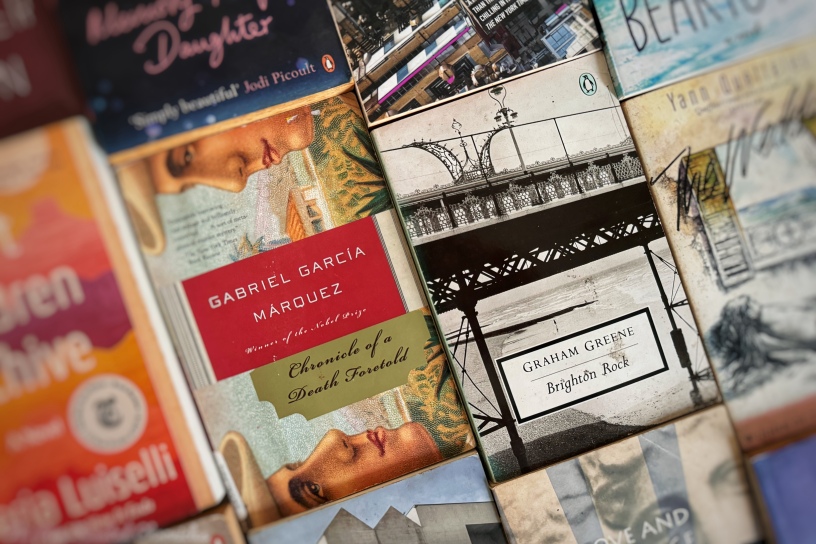
The curtain has closed for another month. We have made it through the first half of the year. Woah. Time flies fast. Well, time has no other recourse but to take its natural course. Nevertheless, I hope that the first half of the year has been kind to and great for everyone. I hope everyone is thriving despite the challenges that we face daily. I hope everyone is doing well, in mind, body, and spirit. In terms of my bookish adventures, the first half of the year has been very prolific. I am glad I was able to build on the momentum I built during the pandemic. As of the end of June, I already completed reading 63 books. Last month, my reading progress prompted me to adjust my initial goal of 80 books. Because signs point to another 100-book year, I recalibrated my Goodreads goal to 100 books. I just hope that I sustain this reading momentum.
In May, I commenced a journey across the vast landscape of European literature; it has become a fixture. Its vast territory makes it a well for amazing reads, especially considering that it is a territory that is largely unexplored, at least by me. In May, I focused on the works of European Nobel Laureates in Literature. The journey, as expected, was scintillating. It pushed the boundaries of my understanding of European literature. Toward the end of May, I switched to works by other European writers. This journey reoriented me with writers I am already familiar with but whose oeuvre I haven’t explored in years. It also introduced me to writers whose oeuvres I haven’t explored before. Anyway, here is a look back at how my June reading journey shaped up. Happy reading!

Devils by Fyodor Dostoevsky
I did not expect that I would love Russian literature and it is all thanks to writers such as Leo Tolstoy, Mikhail Bulgakov, and, of course, Fyodor Dostoevsky. In 2017, I read my first novel by Dostoevsky, Brothers Karamazov, a complex book that made me appreciate Russian literature. However, it has been nearly six years since I read my last novel by Dostoevsky, prompting me to include Devils in my ongoing foray into European literature. Devils is regarded as one of the four books that defined Dostoevsky’s literary career. Originally published in serial form from 1871 to 1872, the heart of the novel was Nikolay Vsyevolodovitch Stavrogin, the son of Varvara Petrovna Stavrogina, an affluent landowner and a widow with a vast estate in the Russian countryside. His ideologies were shaped by his tutor, Stepan Trofimovitch Verhovensky, an intellectual with an illustrious academic career. The novel then charts the fortunes of the Stavrogin and Verhovensky families and the other characters orbiting around them. Stavrogin’s town was soon rocked by several intrigues. Serving as the antithesis to Stavrogin was Pyotr Stepanovitch Verhvensky, the estranged son of Stepan. Radicalized, Pyotr was plotting a political revolution in the town. Devils is an eventful novel rife with Dostoevsky’s scathing commentary on radicalism and nihilism. While I find it more political than either Brothers Karamazov and Crime and Punishment, I still relished the book because it again showed a different dimension of the Russian master storyteller’s writing.
Goodreads Rating:


A Book of Memories by Péter Nádas
It was during the leadup to the announcement of the recipient of the 2018/2019 Nobel Prize in Literature that I first came across Hungarian writer Péter Nádas. Unfortunately, he was not awarded the prestigious literary award but it was enough to convince me to include his works on my reading list. His intricate novel Parallel Stories was actually the 700th novel I read. Four years later, I included A Book of Memories on my 2024 Top 24 Reading List. In a way, A Book of Memories echoes several similarities with Parallel Stories, with both stories commencing in Berlin. A Book of Memories, which Susan Sontag called the “greatest novel written in our time,” uses three distinct voices to convey the story of a young anonymous Hungarian writer tormented by his past, hence, the book’s title. As a child, he grew up in the Stalinist 1950s where he had a contentious relationship with his father; his mother, with whom he didn’t have a good relationship either, was also a passive character. In 1970s Berlin, he was a homosexual adult caught in an impasse: should he or should he not confess to the man he loves? A book about the intricacies and poignancy of memories, the book was brimming with ruminations and introspections, the backbone of which were the relationships built by the characters with the people closest to them. What I found captivating about the book was the quality of writing, particularly the descriptions of emotions and places. The details were vivid and even insightful. This made up for a quotable book; I was able to list several quotes involving love, families, and history. Overall, A Book of Memories is a compelling read that makes me look forward to exploring more of Nádas’ oeuvre.
Goodreads Rating:
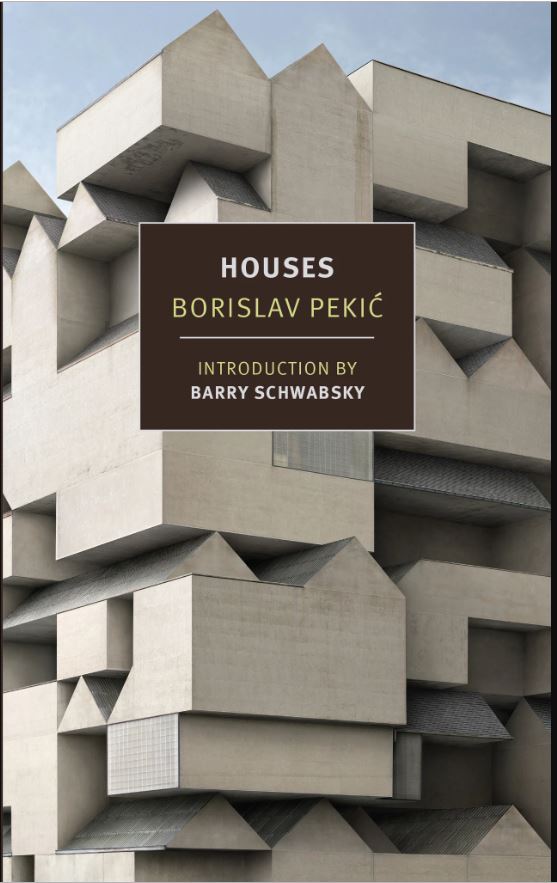
Houses by Borislav Pekić
It was in 2019 when I first encountered New York Review Books. which introduced me to writers whose oeuvres I have not explored before such as Hungarian writer Magda Szabó and Italian writer Leonardo Sciascia. Another name I came across through the NYRB is Serbian writer Borislav Pekić. Before 2019, I had never heard of the Yugoslavian/Serbian writer until I encountered his book through an online bookseller. Driven by curiosity, I obtained a copy of Houses which I included in my 2024 Beat The Backlist Challenge reading list. Originally published in Serbian as Hodočašće Arsenija Njegovana (The Pilgrimage of Arsenie Negovan) in 1970, Houses was Pekić’s second novel and charted the fortune of Arsénie Negovan, a Francophile who dedicated the first half of his life to building houses. For the first time in several decades, he decided to step out of his home on June 3, 1968, when he was seventy-seven years old to take a final glimpse on the houses he built. The last time he ventured out was on March 27, 1941, the day the Yugoslavian military went on a revolt to overthrow the Yugoslav government; two days prior, the government signed an agreement with Nazi Germany. He then let his wife Katarina and his lawyer handle his business affairs. Treating them special, Negovan gave his houses feminine names. Not only was his expedition one of poignancy but also an exploration of Yugoslavia’s contemporary history. Houses is a probe into geopolitics and the economy while painting an image of a man who was in equal parts passionate and delusional.
Goodreads Rating:

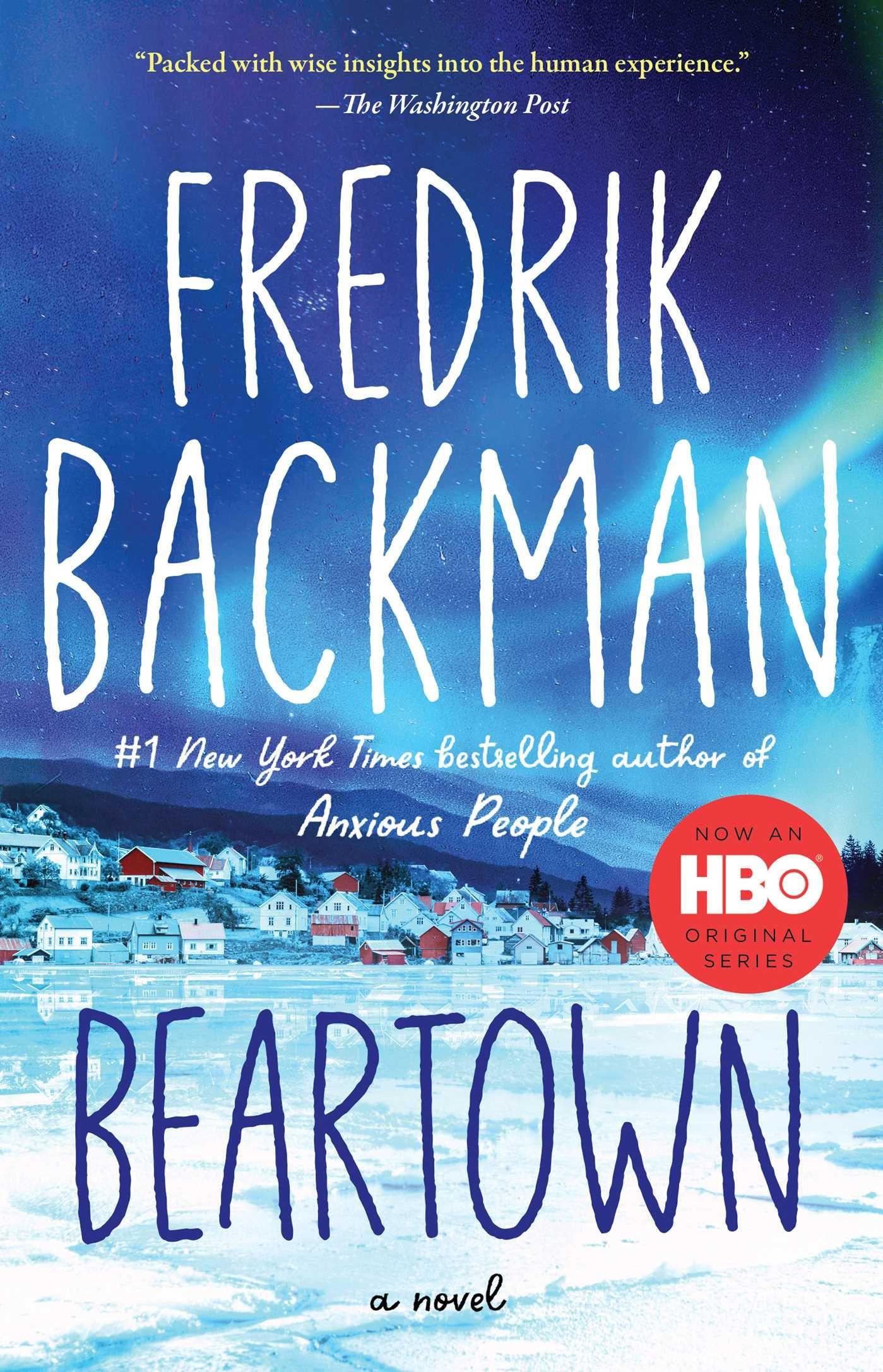
Beartown by Fredrik Backman
From the Balkans, my venture into European literature transported me to the northern part of the continent, to Sweden in particular. Swedish writer Fredrik Backman’s humor captivated the world over but to be honest, I was initially apprehensive about reading any of his works. I eventually gave A Man Called Ove a chance. It was an experience I relished. The rest, they say, was history. At the start of the year, I included Beartown on my 2024 Top 24 Reading List. Beartown is the first book of a trilogy of the same name. Originally published in 2016, the eponymous Beartown is located in the Swedish countryside. As the younger generation opted to pursue opportunities outside of town, Beartown was slowly finding itself on the cusp of decline. Just when all seemed bleak, the town’s spirit was revitalized when the junior hockey team made it to the semifinals of the national youth games. Spearheading the team was prodigy Kevin Erdahl. The novel also introduces Benji, his best friend; David, the team’s coach; and Peter Andersson who was once an ice hockey prodigy himself and is now the general manager of the junior team. The crux of the story, however, involves a tragic incident involving Amat, a new member of the team; Kevin; and Maya, Peter’s oldest daughter. This divided the town and unearthed the fault lines that lay underneath the town’s wall of silence. The novel probes into the dynamics of communities while underscoring timely themes such as addiction, friendship, loyalty, abuse, and the prevalence of the culture of victim blaming. All of these underscored Backman’s innate understanding of human nature.
Goodreads Rating:

Sentimental Education by Gustave Flaubert
One of the most celebrated names in French literature is Gustave Flaubert. I mean, who has not heard of Madame Bovary? While it is one of the most beloved of the literary classics, I did struggle to appreciate the book although I want to reread it. Further, it has been a while since I read the book which prompted me to include his novel, Sentimental Education, a book I copped during the Big Bad Wolf Sale, in my 2024 Beat the Backlist Challenge. Set against the backdrop of the 1848 Revolution, Sentimental Education charted the fortunes of Frédéric Moreau, a young man born to the middle class. His life transformed during a boat ride headed for his childhood home, Nogent-sur-Sein. During the trip, he saw a beautiful woman who he instantly fell in love with; he would later learn her name was Madame Marie (Angèle) Arnoux. His friend Charles Deslauriers encouraged him to pursue Madame Arnoux although she was already married to Jacques. Through Deslauriers, Frédéric got acquainted with Monsieur Dambreuse, a wealthy banker, who was initially dismissive of him; it was an uphill climb for the novel’s hero. Frédéric experienced a reversal of fortune when he received an unexpected but hefty inheritance from a recently deceased uncle. It was a free pass to the elite circles of Paris and, hopefully, to the heart of Madam Arnoux. But fate had other plans. Madame Arnoux was faithful to her husband, endingFrédéric’s love in disillusionment. Once idealistic, his views were pierced by the realities surrounding him. It was, as the title suggests, a “sentimental education.”
Goodreads Rating:

The Wolves of Eternity by Karl Ove Knausgård
I have heard several wonderful things about Norwegian writer Karl Ove Knausgård, a name I keep encountering. However, I have yet to explore his oeuvre. I was ecstatic when I learned that the English translation of his latest work is to be released in 2023. Fortunately, I was able to find a copy of the book which I planned to read last year. However, I was already cramming toward the end of the year, hence, I had to put on hold reading the book. Nevertheless, I added The Wolves of Eternity to my 2024 Top 24 Reading List. The Wolves of Eternity opened in 1986 when nineteen-year-old Syvert Løyning was discharged from his Norway national service duties. He returned home to the countryside to his mother and twelve-year-old brother Joar. His father passed away when Syvert was just eleven. With no concrete plans for the future, he bided his time. When Syvert stumbled upon his father’s old things, including books and letters written in Russian addressed to Asya, his life was turned upside down. His mother’s confession further piqued his curiosity. To decipher the letters. Syvert enlisted help. The letters revealed details about his father’s life he was not privy to. The letters also revealed that he had a half-sister named Alevtina who we learn more about in the novel’s second part which takes the readers to contemporary Moscow. Alevtina works as a biology professor and recently became a doctor. Her life was disrupted when she received a letter from Syvert. As their individual threads intersect. death was a constant; Syvert would run a funeral home business. Despite the dark undertones, it was a pleasantly engaging novel of ideas from one of contemporary’s most heralded writers.
Goodreads Rating:

Baron Wenckheim’s Homecoming by László Krasznahorkai
My journey across European literature next took me to Hungary, a part of the continent I am slowly becoming familiar with due to writers such as Magda Szabo and Péter Nádas. Another Hungarian writer who has piqued my interest is László Krasznahorkai. Like Nádas, I first encountered Krasznahorkai during the lead-up to the announcement of the recipients of the 2018/2019 Nobel Prize in Literature. He was also not announced as an awardee. I read Sátántangó in 2021 and three years later, I am reading my second novel by Krasznahorkai. Baron Wenckheim’s Homecoming is part of my 2024 Top 24 List and was originally published in 2016 as Báró Wenckheim hazatér. Set in the Hungarian countryside where the denizens’ moral compasses were waning. The mayor clings to power through the indulgence of the Police Chief. A motorcycle gang, meanwhile, serves as a watchdog for any unwelcome intrusions from the outside world. The town’s dynamics were disrupted by the news of the return of the titular Baron Béla Wenckheim. Born and raised locally, he spent most of his life overseas. Returning to his hometown, he escaped from his gambling debt in Buenos Aires, Argentina. He was also hoping to reunite with his childhood sweetheart Marika. The townspeople, believing that the Baron was bringing home with him a fortune, had other plans. Everyone was in for a surprise. Baron Wenckheim reminded me of Sátántangó. Both were set in the countryside with townspeople looking forward to the arrival of a character they believe will be their salvation. Baron Wenckheim was another interesting work from the Hungarian writer who is slowly growing up on me.
Goodreads Rating:

Is Mother Dead by Vigdis Hjorth
Norwegian literature is a part of the vast European literary landscape that I have to explore further. So far, this year, I have read three novels by Norwegian writers, the most I read in a year. The third of these novels is Vigdis Hjorth’s Is Mother Dead which I first came across through the International Booker Prize; it was longlisted for the literary prize in 2023. In a way, the book is a breather because my foray into European literature has been dominated by male writers. At the heart of Is Mother Dead is Johanna who, in her middle age, decided to go back to Oslo, Norway after years of being away. A successful artist, her return to her homeland aroused several emotions. Her parents once dictated how she would live her life. They pushed her to pursue a law degree and marry Thorleif, a fellow lawyer. Wanting to break free from this stranglehold and forge her own path – one that was not designed or dictated upon by her parents – she left for America to live with an American artist named Mark. Her abrupt actions caught her parents by surprise. They did not hold back from cutting all ties with their estranged daughter. Decades later, Johanna yearned to reconnect with the family she left behind; her father had already passed away but her mother was still alive and was looked after by her sister. Living within proximity of her mother and her kin, Johanna obsesses about reconnecting with her mother. She left her phone calls and even stalked her on her daily tasks. Overall, Is Mother Dead is a propulsive story about the rifts that exist between parents and children, the price of pursuing one’s passion against all odds, and the gratitude a child owes his or her parents and vice versa.
Goodreads Rating:

The Three Musketeers by Alexandre Dumas
I capped my June reading journey with one of the most beloved literary classics, Alexandre Dumas’s The Three Musketeers. Dumas is renowned the world over and is even one of the inspirations and influences of the Philippine National Hero Dr. Jose Rizal. In fact, this is the reason why I read The Count of Monte Cristo back in university. The book immediately captivated me, making it one of my favorite all-time reads. However, it has been some time since I read a book by Dumas so when the opportunity to read The Three Musketeers presented itself, I did not hold back, I even included it on my 2024 Top 24 Reading List. Originally published in French in 1844 as Les Trois Mousquetaires, The Three Musketeers is set in the early 1600s during the reign of Kings Louis XIII and Louis XIV. The novel charted the madcap adventures of four swashbuckling heroes, starting with D’Artagnan, a Gascon who traveled from the French countryside to Paris to join the Musketeers of the Guard. Along with him was a letter of introduction to Monsieur de Tréville, the commander of the Musketeers, a King’s elite regiment. However, an unfortunate encounter left D’Artagnan beaten unconscious and his letter stolen. This, however, did not stop D’Artagnan from pursuing his original goal of becoming a Musketeer. He also vowed to avenge himself. He managed to get introduced to M. de Tréville who gave him a lukewarm reception and shortly after, he got embroiled in a duel with Athos, Porthos, and Aramis. But who would have thought that from this unlikely situation bloomed a strong bond? The Three Musketeers, as expected, did not disappoint and is easily one of my all-time favorite reads.
Goodreads Rating:
Reading Challenge Recaps
- My 2024 Top 24 Reading List: 15/24
- 2024 Beat The Backlist: 10/20; 61/60
- 2024 Books I Look Forward To List: 2/10
- Goodreads 2024 Reading Challenge: 63/100*
- 1,001 Books You Must Read Before You Die: 10/20
- New Books Challenge: 2/15
- Translated Literature: 20/40
*Updated my Goodreads goal from 80 to 100.
Book Reviews Published in June
- Book Review # 515: Buddenbrooks
- Book Review # 516: The Mandelbaum Gate
- Book Review # 517: So Long, and Thanks for All the Fish
- Book Review # 518: The Preying Birds
- Book Review # 519: Brighton Rock
- Book Review # 520: Devils
- Book Review # 521: Beartown
- Book Review # 522: Mostly Harmless
- Book Review # 523: The Women of Troy
- Book Review # 524: Three Daughters of Eve
Compared to May, my June was rather uneventful despite several holidays in between. Nevertheless, this allowed me to catch up on my pending book reviews. For the third month this year, I managed to publish ten book reviews; this is three reviews short of my original target but I will take what I can. Besides, my persistence (or at least a bit of it) paid off because I was able to complete all my pending reviews from 2023. I am cognizant that I have still quite a hill to climb – I have several pending reviews from April and June 2023 – but I am still glad with my progress. If I can keep this momentum, I will surpass my output last year. This July, I am just hoping to tick off as many pending reviews as I can. My mantra is still to take it one step at a time.
July in perspective. July is my birth month. I usually dedicate it to reading works of Japanese literature which, like Russian literature, has become one of my favorite parts of the literary world. However, for the second year running, I will be deviating. My July reading journey will be a continuation of my foray into the works of European literature. It is just so vast that I have so much ground to cover. I have quite a lot of books in my ongoing reading challenges belonging to this vast part of the literary world. While I was able to make steady progress in the past two months, there is still more waiting to be read and explored. I am currently reading my fourth novel by renowned Italian writer Umberto Eco, Numero Uno.
On top of this, I am also looking at reading Fyodor Dostoevsky’s Poor People which is also a part of my 2024 Beat the Backlist Challenge. Other books I have lined up this July include George Eliot’s Adam Bede, Elena Ferrante’s My Brilliant Friend, Ivan Klíma’s Love and Garbage, Ismail Kadare’s Three Elegies for Kosovo, and Milan Kundera’s Immortality. I am still saddened by the news of Kadare’s recent passing. I am looking forward to this challenge. I can’t also wait to immerse myself in this eclectic mix of literary classics and contemporary literature. How about you fellow reader? How is your own reading journey going? I hope you enjoyed the books you have read. For now, have a great day. As always, do keep safe, and happy reading everyone!
 The Pine-Scented Chronicles