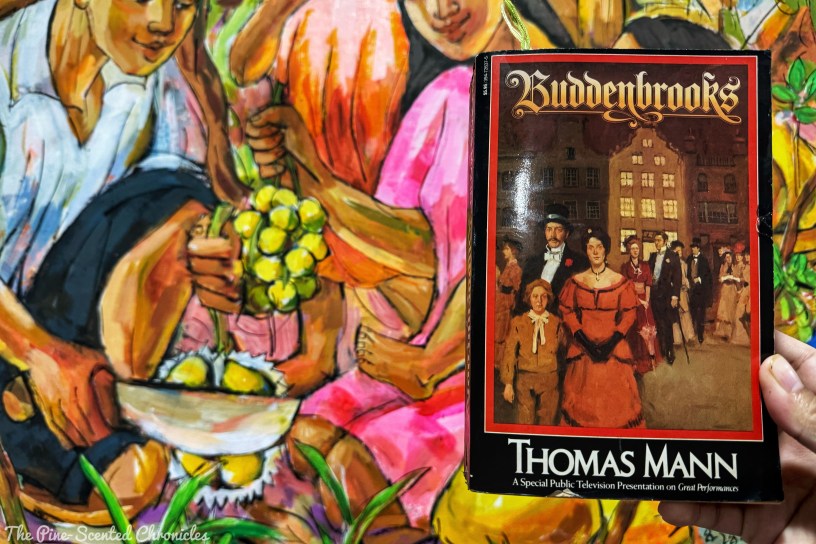
A Family History
German literature – both the language and the country – is undoubtedly one of the most prominent in the vast territory of world literature. It is a rich minefield that has produced some of the most stellar and talented writers who have produced some of the most renowned titles in literature. This long tradition of producing magnificent storytellers has elevated German literature to the upper echelons of literary excellence. The influence of German literature resonates into the present, with several works of German literature remaining integral parts of literary discourses. The bodies of work of German writers have also earned them accolades and recognition from various parts of the world. It is no surprise that some of the revered names in German literature have been lauded by the Swedish Academy.
Among the German writers who received the Nobel Prize in Literature – often considered as the highest achievement for any writer – was Thomas Mann. Born in the northern German city of Lübeck, he moved to Munich, a renowned center of art and literature, following his father’s death in 1891; he was originally designated to take over his father’s grain farm but it was liquidated after Mann’s father’s death. Initially wanting to pursue a career in journalism, he attended lectures in history, economics, art, history, and literature. In 1898, while staying with his older brother in Italy, he published his first literary work, a collection of short stories, Der kleine Herr Friedemann (Little Herr Friedemann). Mann’s stay in Italy proved to be a pivotal moment in his literary career.
While in Rome, Mann started working on the manuscripts for what would be his debut novel. In 1901, Buddenbrooks was published. The rest, they say, was history. The book became a favorite of the German public and upon its translation to English, it catapulted Mann to global recognition. Its resounding success has not escaped the attention of the Swedish Academy. In their citation for Mann’s selection as the recipient of the 1929 Nobel Prize, the Academy lauded the German writer “principally for his great novel, Buddenbrooks, which has won steadily increased recognition as one of the classic works of contemporary literature.” Buddenbrooks is indeed a monumental work in modern literature. Over a century after it was first published, it remains a highly recommended literary masterpiece.
“I bear within me the seed, the rudiments, the possibility of life’s capacities and endeavors. Where might I be, if I were not here? Who, what, how could I be, if I were not me, if this outward appearance that is me did not encase me, separating my consciousness from that of others who are not me? An organism—a blind, rash, pitiful eruption of the insistent assertion of the will. Far better, really, if that will were to drift free in a night without time or space, than to languish in a prison cell lit only by the flickering, uncertain flame of the intellect.”
~ Thomas Mann, Buddenbrooks
The Rise of the Buddenbrooks
At the heart of the novel is the titular Buddenrbook family, an affluent family residing in the Northern German city of Lübeck, Mann’s hometown. The family built their fortune as grain merchants. The success of their trading firm allowed them the luxury of acquiring a grand four-story house at 4 Meng Street. When their story commenced in 1835, the family settled into their new home. The story’s opening sequence takes the readers to a grand housewarming dinner hosted by the patriarch, Johann Buddenbrook Junior, his wife Antoinette, and his son Johann III (Jean). Through the patriarch’s hard work and determination, the Buddenbrook last name was held in high esteem. Their reputation preceded them. Jean was being groomed by his father to take over the family business.
The housewarming dinner was also a vessel for Mann to introduce the other family members. Elizabeth was Jean’s wife. The couple had three children: Antonie (Tony), Thomas (Tom), and Christian. Attending to the Buddenbrooks household’s needs was a throng of servants. Absent from the gathering which also included prominent locals was Gotthold, Jean’s estranged stepbrother. Gotthold has been cut off from the family by Johann Junior for reasons that were obscured; it would eventually be unveiled later in the story. This festive occasion foreshadows several of the underlying subjects and themes explored further in the succeeding parts of the novel. From the interactions between and among the family members, a portrait slowly emerged. Tension thrums on the surface as generational differences create a schism between the family members. This tension was underlined by the arrival of a letter from Gotthold during the dinner. The elder Johann, however, ignored the letter.
Following the end of the party, the story moves forward a few years. Jean and Elizabeth welcomed another child, a daughter they named Clara. More details about the family surfaced when Jean started working on a family tree. Before Antoinette, Johann Junior was married to another woman. This first union bore Gotthold who Johann Junior resented from the onset. A family tree diagram Jean uncovers reveals that the family’s lineage dates back to the sixteenth century. The oldest known Buddenbrook lived in Parchim. The first Johann, Jean’s grandfather, founded the family’s grain business. He also created the family tree diagram his grandson found decades later. The eldest Johann further expanded the diagram by including personal notes about many subjects such as his health and even accidents at work.
The House of Cards Crumbles
Upon taking over the business, Jean was able to expand it. Meanwhile, Jean’s children started to grow. With their growth came the development of their personalities. A proverbial passing of the torch from one generation to another was also occurring. However, this also signifies abrupt and even radical changes. The dichotomies between their characteristics also manifested. Thomas was diligent and hardworking. Like his father before him, he was being groomed to take over the family business. His brother Christian, on the other hand, was his antithesis. Spontaneous and adventurous, Christian was preoccupied with entertainment and leisure. He yearns for a decadent life. Their sister Tony, meanwhile, was growing full of herself. Her conceit made her reject a marriage proposal from a young man, Herman Hagenstrom, from a family of equal stature as the Buddenbrooks.
“We are the bourgeoisie—the third estate, as they call us now—and what we want is a nobility of merit, nothing more. We don’t recognize this lazy nobility we now have, we reject our present class hierarchy. We want all men to be free and equal, for no one to be someone else’s subject, but for all to be subject to the law. There should be an end of privileges and arbitrary power. Everyone should be treated equally as a child of the state, and just as there are no longer any middlemen between the layman and his God, so each citizen should stand in direct relation to the state. We want freedom of the press, of employment, of commerce. We want all men to compete without any special privileges, and the only crown should be the crown of merit.”
~ Thomas Mann, Buddenbrooks
Marriage, a rite of passage each of the Buddenbrook grandchildren experiences, was a thorny subject. While some marriages worked out for the best, like in the case of Johann Junior, and Antoinette, some marriages were not meant to last. Deception abounded, eventually resulting in separation. With this, more characters were also introduced. Among them was Bendix Grünlich of Hamburg. Tony disliked him but the pressure from her father made her relent to marry him. Their union bore a daughter named Erika but, unfortunately, their marriage ended in divorce. Alois Permaneder, a provincial hops merchant from Munich, was Tony’s second husband. Meanwhile, Clara marries Sievert Tiburtius, a pastor from Riga. More marriages took place as Jean’s grandchildren grew up. Their unions made the Buddenbrook scions interact with an eclectic cast of characters.
In the selection of their spouses, several concerns and facets of that period’s social norms were underlined. For one, one’s choice is dictated by the patriarch or another male authority figure. Social and class divides play a seminal role in some of the characters’ romantic overtures. Some were forced to ditch their feelings to uphold their familial duties. The Buddenbrook scions are often reminded of their duties to the family and their endeavors, may it be personal or professional, must be for the betterment of their wealth and their influence. This is a subject repeatedly iterated throughout the story. Dire consequences await those who adamantly stand for their own beliefs and personal desires. The head of the family has no qualms about cutting off anyone. This further underlines the generational divides that existed between and among the family members.
The burden of heritage and family duties weighed down on many of the characters. This further widened the schism that existed among them. These were also factors in the eventual decline of the family business. Thomas tried to salvage a sinking ship but he does not possess his father’s business acumen and leadership skills. The family fortune was slowly dwindling under his leadership. Their situation was exacerbated by Thomas’ siblings who were not faring any better in their own pursuits. They were living unproductive lives and were not contributing any value to either the family name or fortune. This marked the start of the family’s decline. The heir apparent also showed little interest in running the business. The business and the family’s decline ultimately culminated with the heir apparent’s tragic and untimely demise.
The Burden of Tradition
The factors contributing to the inevitable decline of the House of Buddenbrooks was extensively explored by Mann. The generational divide that started to manifest with the passage of each generation can be traced to the very birth of the firm. Johann Senior built the firm diligently and with tight control over its every aspect. He also established the traditions to ensure the firm’s success. Basically, the firm’s success requires different generations working as a unit. Unfortunately, Johann Senior’s grandchildren and great-grandchildren were increasingly having difficulties abiding by these traditions. Some members of the family wanted to break free from these chains. These changing attitudes were threatening to undermine the very core of the Buddenrbrook values.
“He completely lacked any ardent interest that might have occupied his mind. His interior life was impoverished, had undergone a deterioration so severe that it was like the almost constant burden of some vague grief. And bound up with it all was an implacable sense of personal duty and the grim determination to present himself at his best, to conceal his frailties by any means possible, and to keep up appearances. It had all contributed to making his existence what it was: artificial, self-conscious, and forced—until every word, every gesture, the slightest deed in the presence of others had become a taxing and grueling part in a play.”
~ Thomas Mann, Buddenbrooks
In a way, the family’s decline was not an operation of declining wealth but the breaking down of the traditions that once held it together. The strict patriarchal structure was also a seminal factor that contributed to the family’s decline. The scions have little to no constitution. They are expected to make sacrifices, particularly on their personal desires; sacrifice was one of the leitmotifs that riddled the story. The men are expected to join the business. The women, on the other hand, are subservient to the wishes and desires of the Buddenbrook men. The home that the Buddenbrooks occupied also loomed. Its previous occupants also fell from grace, almost a harbinger of the fate that would befall the Buddenbrooks. The house, however, was not only a symbol of decline but also of glory and a place where hope once prospered.
Nevertheless, some want to uphold these traditions even though they have lost meaning with time. Ironically, Tony wanted to protect the family’s traditions even though she was the one who was most burdened by them; she had to experience the failure of two family-approved marriages. As if to underline her loyalty to the family’s virtues, she opposed the sale of their family home in which she found shelter following her failed marriages. Conflicts abounded the story, the most prominent being the conflict between personal desire and family duties. Another prominent conflict underlined by the story of the Buddenbrooks was the conflict between art and business. Being a family of merchants, family members emphasize the latter. Nevertheless, the family home permeated with music. Hanno, Thomas’ son preferred to be an artist and musician like his mother than be like his father.
Mann was resplendent in taking the readers into the world of the Hanseatic bourgeoisie. Through four generations of the Buddenbrook family, Mann captured the bourgeoisie lifestyle, including its mores and virtues. The story of the Buddenbrook family’s decline was a microcosm for the societal and political changes sweeping 19th-century Germany. The world was on the advent of modernity and with this, traditions are being challenged. Various facets of societal norms and the conduct of business were captured by the story. The political landscape was also woven into the novel’s lush tapestry. Thomas himself was elected to the senate which added unnecessary pressure. In this rapidly changing landscape where values and hierarchies are challenged, where children are coaxed to conform to traditions, happiness is a luxury that has increasingly become elusive, as the Buddenbrook children would experience.
Historical context provided a sense of time and these events were seminal in molding contemporary Germany. Among these events are the Revolutions of 1848, the Austro-Prussian War, and the unification of the German Empire under Otto von Bismarck. However, these historic events remain largely in the background, with some like the failed Revolutions of 1848 presented as a joke and some as casual conversation starters. These events remain ephemeral as the impact on the characters is minimal. The preoccupation for some of these events was mainly on how they impacted business and trade. Rather, the novel was more fixated on the physical and mental health of the characters; the decline of these aspects is a further illustration of decline, a leitmotif in the story.
“His games have a deeper meaning and fascination that adults can no longer fathom and require nothing more than three pebbles, or a piece of wood with a dandelion helmet, perhaps; but above all they require only the pure, strong, passionate, chaste, still-untroubled fantasy of those happy years when life still hesitates to touch us, when neither duty nor guilt dares lay a hand upon us, when we are allowed to see, hear, laugh, wonder, and dream without the world’s demanding anything in return, when the impatience of those whom we want so much to love has not yet begun to torment us for evidence, some early token, that we will diligently fulfill our duties. Ah, it will not be long, and all that will rain down upon us in overwhelming, raw power, will assault us, stretch us, cramp us, drill us, corrupt us.”
~ Thomas Mann, Buddenbrooks
A Literary Masterpiece
When Mann started writing Buddenbrooks, he intended for it to be a novella: before the book, Mann exclusively wrote short stories. But from its humble origins, the book expanded and it slowly turned into a homage to old bourgeois virtues. Further, Mann didn’t have to look far as he only had to look into his own family for inspiration. As such, Buddenbrooks is more intimate than one expects. Despite this being his first novel which he wrote when he was in his early twenties, Mann exhibited an elan way beyond his age. He has that uncanny ability to write third-person point-of-view narration with fluid intimacy. The readers become immersed in the characters’ lives and they situate themselves in the characters’ minds. There is a shared human experience that makes the readers empathize with the struggles of the family members.
Interestingly, despite the novel’s resounding success, particularly after its second print, Mann prefers to have his other works, such as The Magic Mountain, be cited by the Swedish Academy. Despite the writer’s reservations, there is no doubt that Buddenbrooks is a soaring literary masterpiece. It is an exemplary debut that sets the tempo for Mann’s succeeding works. It laid out what would be a successful literary career. At its heart is a family at a critical juncture of their lives. Traditions made them but it was also the unraveling of these traditions that was slowly undoing them. They had to sacrifice personal pursuits to uphold the values of the family. But will they be able to survive the advent of modernity and industrialization?
Buddenbrooks paints an intimate portrait of the bourgeoisie in 19th-century Germany and is a testament to Mann’s enduring talent. It casts a net over a vast territory of subjects that range from personal sacrifices to death, and ultimately decline. It is an intimate family saga, a subtle work of historical fiction, and ultimately a literary classic that transcended time and physical boundaries, catapulting Mann to global recognition and literary immortalization. It is a hallmark of Mann’s literary heritage deserving of all the accolades it has received and a fascinating feat rarely witnessed in the ambit of literature.
“Death was a blessing, so great, so deep that we can fathom it only at those moments, like this one now, when we are reprieved from it. It was the return home from long, unspeakably painful wanderings, the correction of a great error, the loosening of tormenting chains, the removal of barriers – it set a horrible accident to rights again.”
~ Thomas Mann, Buddenbrooks
Book Specs
Author: Thomas Mann
Translator (from German): H.T. Lowe-Porter
Publisher: Vintage Books
Publishing Date: May 1984 (1901)
No. of Pages: 604
Genre: Literary, Family Saga, Historical
Synopsis
Originally published in Germany in 1901, Buddenbrooks is Thomas Mann’s first major novel, and one of the two for which he was awarded the Nobel Prize for Literature in 1929.
Buddenbrooks tells the story of four generations of a wealthy bourgeois family in northern Germany. With consummate skill, Mann draws a rounded picture of middle-class life: births and christenings; marriages, divorces, and deaths; successes and failures. These commonplace occurrences, intrinsically the same, vary slightly as they recur in each succeeding generation. And as the Buddenbrook family eventually succumbs to modern influences – influences which are at variance with their own traditions – its downfall becomes certain.
About the Author
To learn more about the 1929 Nobel Prize in Literature recipient Thomas Mann, click here.


I haven’t read this yet, but it’s on my list. 🙂
LikeLiked by 1 person