
Happy Wednesday everyone! Wednesdays also mean WWW Wednesday updates. WWW Wednesday is a bookish meme hosted originally by SAM@TAKING ON A WORLD OF WORDS. Unfortunate
The mechanics for WWW Wednesday are quite simple, you just have to answer three questions:
- What are you currently reading?
- What have you finished reading?
- What will you read next?

What are you currently reading?
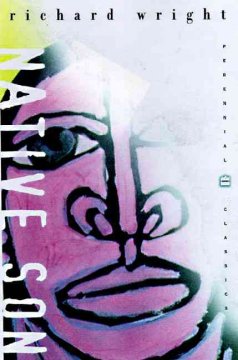
September, in essence, is an extension of my foray into recently published novels, i.e., books published in 2023 and 2024 which I commenced in August. However, most of the books I am looking forward to are still in transit. In the end, I decided to mix it up by reading books from my reading challenges. This took me to Richard Wright’s Native Son. The book is part of my 2024 Top 24 Reading List, making it the 19th book from the said list I read so far. Further, the book is listed as one of the 1,001 Books You Must Read Before You Die; it is the 15th book from the list I read this year. Reading the book’s introduction intrigued me. This is because I barely have any iota on what the book was about. I have also not read any of Wright’s works before. The introduction provided insight, and when I started reading the book, I already had an idea of the story of Bigger Thomas. I will be sharing more of my impressions of the book in this week’s First Impression Friday update.
What have you finished reading?

I had yet another productive reading week as I was able to complete three books, the first of which was Chigozie Obioma’s The Road to the Country. It was only in 2019 that I first encountered the Nigerian writer after his sophomore novel, Orchestra of Minorities, was shortlisted for the Booker Prize. His debut novel, The Fishermen, was also shortlisted for the prestigious prize; I read the book last year. Honestly, I was unaware he was releasing a new work this year. It was only when I came across book reviews of his latest novel that I learned about his latest release. Of course, I jumped onto the bandwagon without ado.
Obioma’s third novel takes the readers to one of the pivotal events in his home country’s contemporary history, the Biafran War; it was through Chimamanda Ngozi Adichie’s Half of a Yellow Sun that I first came across this pivotal historical event. The Road to the Country revolves mainly around Kunle, a young student at the University of Lagos. He was haunted by the past, particularly by the unfortunate accident that left his brother Tunde. Consumed by guilt for the role he played in the accident, he traveled to eastern Nigeria to search for his missing brother; Tunde run away from their hometown of Akure to the east with a young Igbo woman. At this time, the tensions between the Nigerian army and the Biafran army were starting to escalate. Kunle, however, was unaware of this. Unintentionally, Kunle found himself being enlisted as part of the Biafran army. Kunle was a cipher at the onset but started opening up as the story moved forward. He became the readers’ guide to the heart of the conflict. Alternating with his narrative was the voice of a seer, an Ifa diviner living in the 1940s. The seer was conveying Kunle’s story as a set of visions. The Road to the Country is a vivid depiction of a section of Nigerian contemporary history and of the atrocities of war.

Like Native Son, Chinua Achebe’s Arrow of God is a deviation from my foray into more recently published novels. This digression from my original plan came about when I noted that I read works of Nigerian writers in succession; Emezi’s Little Rot and Obioma’s The Road to the Country. I then resolved to read Arrow of God. Besides, the book is part of my 2024 Top 24 Reading List. Achebe is also one of my primers to the world of Nigerian literature. Arrow of God is the 18th book from my 2024 Top 24 Reading List, and it is the third book by Achebe that I have read. It was also the last book I read for August.
Arrow of God is the third book in the highly-regarded The African Trilogy. While the three books in the trilogy don’t share characters, the books are thematically interconnected. The novel is set amongst the rural villages of the Igbo people in colonial Nigeria during the 1920s. When the story commenced, a bitter feud between the villages of Umuaro and Okperi was escalating; they were on the cusp of going to war over a piece of disputed land. Nwaka, an influential and affluent member of Umuaro, advocated for the war. This went against the advice of Ezeulu, the Chief Priest of Ulu, the ruling deity of Umuaro. Nwaka nevertheless pursued the path of engaging in a tribal war which came to an abrupt halt when Captain T.K. Winterbottom, the designated District Officer by the British monarch, restored order. Arrow of God vividly captures Nigeria’s transition to Western ideals. We read about Nigerian culture and traditions, mainly of the Igbo tribe; Achebe’s writing was heavily influenced by Igbo culture. We also read about the exploitation of the Europeans by the Nigerians. As tradition is convoluted by new influences. the locals found themselves in a quandary. Overall, Arrow of God is a compelling read that provides insight into Nigerian history and culture.
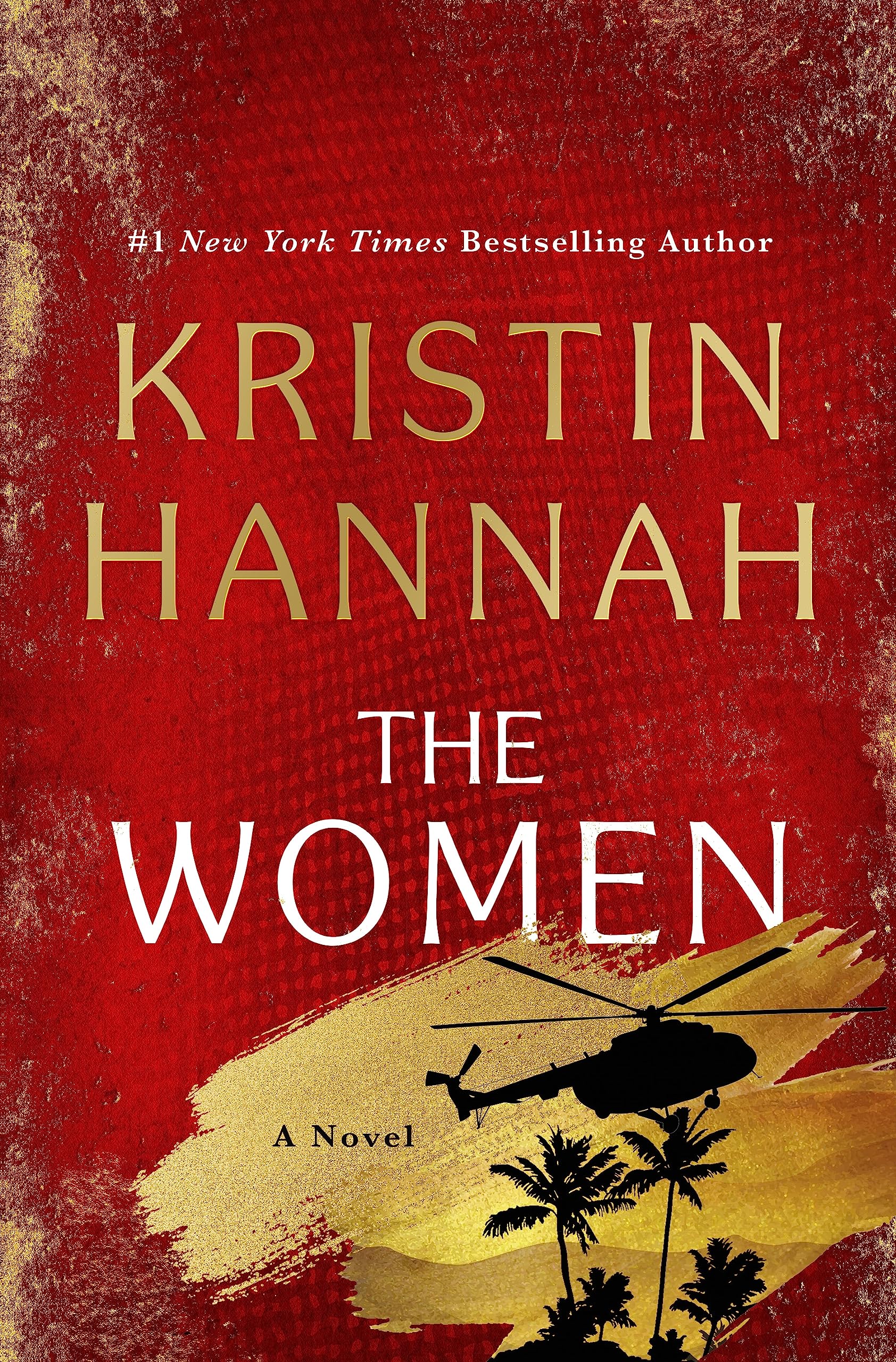
A string of familiar writers concluded with Kristin Hannah’s latest novel. I first encountered the American writer while I was still in university. On Mystic Lake, it barely made an impression on me. Imagine my surprise when, a couple years later, Hannah’s works were gaining positive reviews. Her works were ubiquitous. I wrote her off back then but this recent blurb surrounding her works made me reconsider reading her works. In 2022, I took a chance by reading The Four Winds. The novel redeemed Hannah so when I learned about her latest novel, The Women, I looked forward to it.
The Women is a work of historical fiction like The Four Winds. At the heart of the novel is twenty-year-old Frances “Frankie” McGrath who, when the novel commences, is attending a party in honor of his brother Finley who will soon serve in the Vietnam War. Frankie descended from an affluent family that produced several war heroes. They were all men because women’s roles were already determined. They were meant to find a husband and be the keeper of the house. The sheltered life of Frankie soon changed. During the party, Rye, Finley’s best friend, left a remark that stayed with Frankie: Women can be heroes. Frankie, however, fell into the trap set for her but when a tragedy shook the family to the core, Frankie enlisted for the war to serve as a nurse. This went against her parents’ wishes; they expected her to act like a high society debutant. Undeterred, Frankie found herself at the heart of the war where she witnessed young American soldiers, green as they come, get slaughtered. In a way, the novel was double-edged. It gave voices to the heroics of women which are often shadowed by the accomplishments of men, particularly in the battlefield. The novel also exposed the hypocrisy of the United States. The Women was yet another scintillating work from Hannah. Maybe I should be reading The Great Alone.
What will you read next?


 The Pine-Scented Chronicles
The Great Alone was definitely another fascinating read that delved into life in the US after the Vietnam War. Sounds like you’ve had some good reads. Hope you enjoy your upcoming reads!
LikeLike