Voices Muted by the Din
History is brimming with several heroes and heroic deeds. They are highly revered across the world, with their deeds being subjects of paeans. History speaks highly of them. Alexander the Great, George Washington, Mahatma Gandhi, Martin Luther King, Jr., Charlemagne, Abraham Lincoln, and Nelson Mandela are among this distinct group. Each exhibited different acts of heroism that helped shape and mold the landscape of history. They dismantled some of the most severe institutions in history while some played fundamental roles in a group of people obtaining their independence. Each act is different but each act impacts a lot of people. Each act still resonates in the contemporary. It is also no surprise that every country has recognized its own national heroes, some of them have even been heard in other parts of the world.
There is one thing common about them. They are all men. Unfortunately, history biases men because, historically, women were relegated to roles within the household. Even some of the most popular heroes in mythology are men: Hercules, Odysseus, Perseus, and Achilles, to name a few. Even the modern concept of heroism is centered on men. Superheroes are predominantly male. Captain America, Hulk, Ironman, and Wolverine are all men and all imbibe overflowing virile energy. Sure, there are female superheroes but they are few and far in between. They are also not as visible as their male counterparts are. Often than not, women are relegated to the role of being the damsel in distress. They are the Disney princesses in need of rescuing. Both history and society pigeonholed women. Does this mean that women are incapable of committing heroic actions?
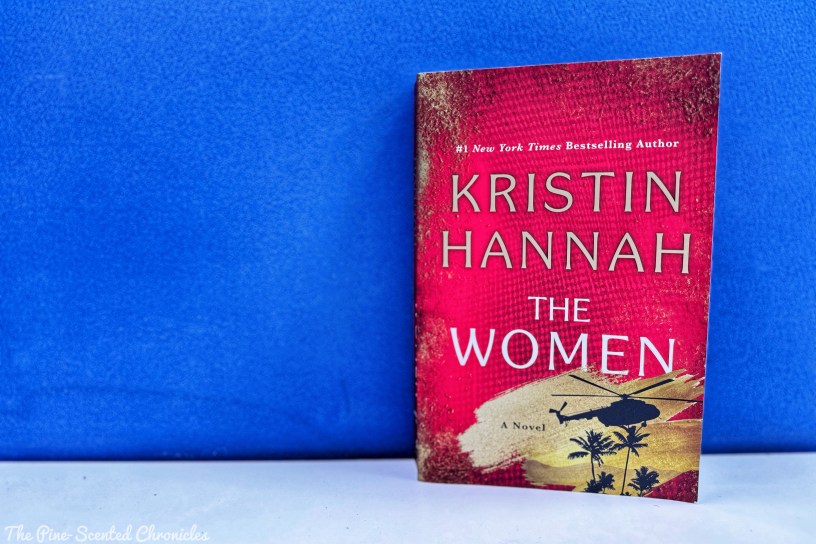
Twenty-year-old nursing student Frances “Frankie” McGrath, the protagonist of Kristin Hannah’s latest novel, The Women, grew up believing that heroism indeed resides in the male gender. The only daughter of the McGraths, she grew up in affluence and a sheltered existence in Southern California; her parents were highly conservative. Descending from a family of war heroes, she was raised listening to stories of her male descendant’s heroic acts. A hall in their vast family home was even dedicated to portraits of McGrath men who have earned distinction for their actions; she referred to it as the heroes’ wall. Soon to join their ancestor’s acts of exemplary bravery and heroism was Finley, Frankie’s older brother. Finley just graduated from the Naval Academy and was set to serve in the Vietnam War. The novel opens with the McGrath family hosting a party for Finley’s graduation.
“We were the last believers, my generation. We trusted what our parents taught us about right and wrong, good and evil, the American myth of equality and justice and honor. I wonder if any generation will ever believe again. People will say it was the war that shattered our lives and laid bare the beautiful lie we’d been taught. And they’d be right. And wrong. There was so much more. It’s hard to see clearly when the world is angry and divided and you’re being lied to.”
Kristin Hannah, The Women
Women can be heroes. This was a line that Frankie did not expect to hear. While everyone was having fun at the party, Frankie found herself on the heroes’ wall. She was soon joined by Rye Walsh, Finley’s friend. It was Rye who uttered the line that left a deep impression on Frankie. Life then takes its natural course. While her brother served in Vietnam, Frankie completed her college degree and started working in local hospitals. However, she was given only menial tasks. Tired of the monotony of quotidian existence and putting weight on Rye’s words – she never forgot them – Frankie enlisted in the Army Nursing Corps. She wanted to join her brother in serving for the country. She wanted to deviate from the conventional path earlier generations have forged for women like her. She wanted to earn her stripe and do her own part as a patriot.
To say that her parents were shocked was an understatement. They were horrified and were unhappy. They have always expected Frankie to be subservient to their wishes. Besides, they felt that Frankie’s preoccupation with her profession was anything but a distraction that she would forget about once she found a perfect partner and settled down. Their shock was not the response that Frankie was expecting. It was the antithesis of the jubilation they exhibited on Finley’s enlistment. Her parents tried to make her change her mind but she was adamant; she also desired to earn her parent’s respect. Unfortunate news from Vietnam consolidated her resolve to join the war. She attended Basic training and, despite her relative youth and inexperience, Frankie was shipped to the battlefield in March 1967.
While Frankie was assigned to a war hospital, what she witnessed upon her arrival was beyond her imagination. The conditions were beyond dire. The smell of blood, death, and violence permeates the air. There was, however, no time to drink in the situation as Frankie was immediately thrown into work. There was a steady stream of the injured and the dying. At the start, Frankie was unable to keep up. When faced with her first MASCAL (mass casualty incident), Frankie can’t help but question whether or not she is the right fit for the job. Thankfully, her fellow nurses and medical professionals were willing to help her navigate the horrific realities of the battlefield. She soon grew a bond with her roommates, Ethel and Barb, who both offered camaraderie and support. Together, they formed a unit that found solace in their shared experiences.
Over time, Frankie, like the young soldiers sent to the front lines of the battlefield, matured; they had no recourse but to do so. She toughened up and learned the ins and outs of surgery and the entire medical field at the warzone. It did not take long for Frankie to embrace her role and become a seasoned nurse. Amid pandemonium and brutality, she has definitely found her place. The more she gets pulled into the heat of the battle, the more her resolve gets consolidated. In a world torn apart by violence, she wanted to do some good. She wanted to bring comfort to the injured and dying, regardless of their ethnicity. She wanted to help the Vietnamese who were caught in the crossfire. But as the dust of the battle started to settle, Frankie and the rest of the world must reckon with the grim heritage left behind by the war.
“But time – and friendship – had done exactly as promised: pain and grief had grown soft in her hands, almost pliable. She found she could form them into something kinder if she was deliberate in thought and action, if she lived a careful, cautious life, if she stayed away from anything that reminded her of the war, of loss, of death.”
Kristin Hannah, The Women
There are two major lenses upon which to appreciate and understand The Women. On the surface, it is a novel about the Vietnam War. It vividly captures the grim realities of war. The warzone is brutal and the conditions are dire. As soldiers exchange fire, the nurses and doctors are working tirelessly as well, sometimes beyond the point of exhaustion. Whether it is on the operating table or at the front line, the images of war are horrific. The novel seduces the senses. Hannah painted portraits of death, violence, horrific injuries, and an overall sense of hopelessness. This was exacerbated by the mixed stench of death and fear which offends the olfactory senses. These are realities that Frankie and everyone in the warzone have to deal with every day. This is on top of protecting themselves from the possibility of the war encroaching into their safe spaces. War, after all, is unpredictable and merciless.
Beyond the images of the war and the ugly realities that have become synonymous with it, Hannah underscored the hypocrisy and duplicity of the United States during the Vietnam War. Young men and women were sent to the battlefield. The American government took advantage of their youth. Most of them were unprepared and no amount of quick training prepared them for the horrors of the battlefield. Frankie had to treat several soldiers who were younger than her. Meanwhile, in the United States, the government was a propaganda machine that painted a rosy picture of the war. They were advocating for their success, reassuring the safe return of the troops. As protests erupted across the country, the government was stifling these calls by lauding the acts of patriotism and heroism exhibited by the troops toeing the battlefront. The realities, of course, were different.
There is no doubt that the conditions at the warzone are desperate but for those who fought the war and survived, what awaited was an even grimmer reality. For one, the emotional toll was overwhelming. Several veterans suffered from PTSD while several also had to deal with life-changing injuries. Several of the veterans received little to no support. Unable to cope with life, some resorted to drugs and alcohol. Some went through depression and attempted suicide. Some suppressed their emotions and acted normally. The government’s inaction prompted veterans to take to the streets and protest en masse to have their voices heard and their concerns addressed. The worst of it was that most of the veterans were ostracized by society at large. Believing their heroics would be lauded, they were soon disillusioned by labels such as “baby killers“. They cannot claim heroics lest the public spat on them as soon as they opened their mouths. They were essentially outcasts.
For female veterans, the situation was worse. Not only were they ostracized by society, their heroic deeds were dismissed. Their fellow veterans, particularly those who fought on the battlefield, were quick to downplay the role they played during the war simply because “they weren’t there.” They were told that their experiences were not real. This was despite witnessing the same horrors and experiencing the same trauma. They were written out of history and their actions were erased. Unfortunately, this is not uncommon. While there was a handful whose heroics were lauded – Joan of Arc for one – history books often undermine the achievements of women, especially in the battlefield. To redress this, literature has come to ensure that these voices muted by history are heard. Maggie Shipstead’s Great Circle, for instance, gave voices to the role of female aviators during the Second World War. On the other hand, Pat Barker’s The Women of Troy captures the story of women during the Trojan War.
“It is a strange world we are all in. Volatile and uncertain. We—Americans, I mean—can’t seem to talk to each other anymore, our disagreements seem insurmountable. I imagine it would feel wonderful to be good at something that mattered. That is something that too many of the women of my generation didn’t consider.”
Kristin Hannah, The Women
Despite the dark clouds hovering above the story – the story was, after all, about a distressing period in history – there were glimmers of hope and rays of sunshine. Lighter moments riddled the story. Frankie was able to survive the ordeals of the battlefield because of the new friends she gained in Vietnam. Amidst the hubbub of bombings and gunfire, camaraderie prospered. Frankie was also the quintessence of courage and compassion. In the line of fire where grief and death were ubiquitous, she exhibited compassion and a zest for life, a stark contrast to the losses embracing her at every turn. When the world turned against her and after experiencing betrayals, she never lost her capacity to love. She was quick to forgive and remains empathetic. She was a memorable character.
All of the novel’s wonderful elements were skillfully woven together by Hannah’s dexterous hands into a lush tapestry. It was a familiar setting but Hannah rivets in her description of the setting. There were some hiccups but for the most part, she was in cruise control, creating a vicarious experience that reels the readers in. She takes us across the jungle canopy aboard a Huey chopper. She provided glimpses of the operating room. We reexperience the war and its horror through the lens of Hannah. With her unflinching gaze, she painted evocative images of war while, at the same time, depicting the lighter moments. Further, Hannah had no qualms about exposing the crimes committed by the United States. These are inconvenient truths that reverberate in the contemporary.
The Women carries with it a powerful message. On the surface, it is truly a novel about women but on the grander scale, it is a story that reclaims the narrative. It dispels the conventional story of heroism that is often attached to men. Women can be heroes. Indeed, history has shown that women are more than capable of being heroes. Unfortunately, their contributions and their heroic deeds are often overshadowed by the heroic deeds of men. Worse, their voices are muted and written out of history. Frankie’s story is a reminder that women are more than capable of displaying indomitable courage amid strife. The novel was also a lacerating probe into the complicity of the United States in the Vietnam War. The story captured what happened both at the battlefield and after the war, including grief, the follies of addiction, and the healing power of activism. The Women’s heart and center is the resilience of the human spirit and the women whose sacrifices often go unheard.
“People will say it was the war that shattered our lives and laid bare the beautiful lie we’d been taught. And they’d be right. And wrong. There was so much more. It’s hard to see clearly when the world is angry and divided and you’re being lied to.”
Kristin Hannah, The Women
Book Specs
Author: Kristin Hannah
Publisher: St. Martin’s Press
Publishing Date: 2024
No. of Pages: 464
Genre: Historical
Synopsis
Women can be heroes. When twenty-year-old nursing student Frances “Frankie” McGrath hears these words, it was a revelation. Raised in the sun-drenched, idyllic world of Southern California and sheltered by her conservative parents, she has always prided herself on doing the right thing. But in 1965, the world is changing, and she suddenly dares to imagine a different future for herself. When her brother ships out to serve in Vietnam, she joins the Army Nurse Corps and follows his path.
As green and inexperienced as the men sent to Vietnam to fight, Frankie is overwhelmed by the chaos and destruction of war. Each day is a gamble of life and death, hope and betrayal; friendships run deep and can be shattered in an instant. In war, she meets – and becomes one of – the lucky, the brave, the broken, and the lost.
But war is just the beginning for Frankie and her veteran friends. The real battle lies in coming home to a changed and divided America, to angry protesters, and to a country that wants to forget Vietnam.
The Women is the story of one woman gone to war, but it shines a light on all women who put themselves in harm’s way and whose sacrifice and commitment to their country has too often been forgotten. A novel about deep friendships and bold patriotism, The Women is a richly drawn story with a memorable heroine whose idealism and courage under the fire will come to define an era.
About the Author
To learn more about Kristin Hannah, click here.


What a brilliant review. This has been on my TBR for ages but I am determined to get to it at some point.
LikeLike