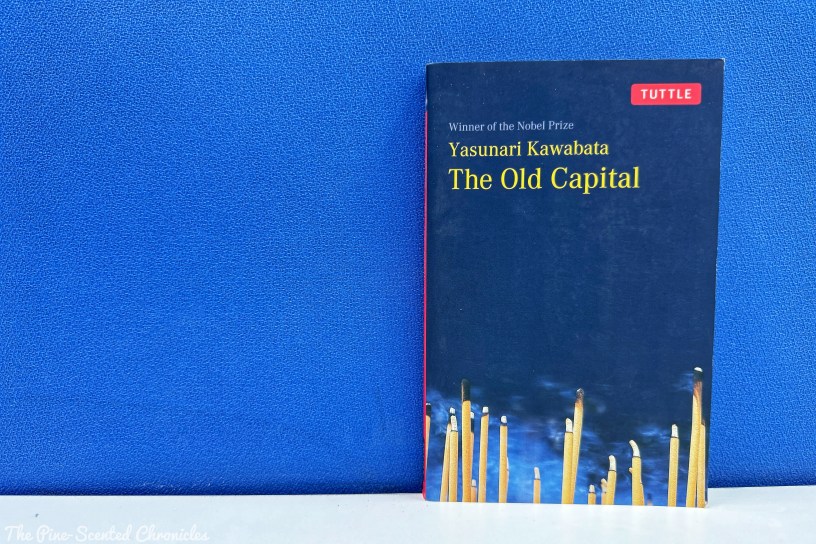
The Quintessential Kawabata
Japanese literature, without a doubt, is one of the richest and most influential national literatures in the world. It has a long tradition of revolutionizing literature and transforming the literary landscape. One of the first published novels was written by a Japanese writer. It also introduced the haiku and the I-novel. The influences of Japanese literature reverberate across time. It is a rich literary minefield that supplies the world with some of the most memorable and amazing literary works out there, from then until now. This long and enduring literary tradition has also produced some of the world’s most outstanding writers such as Yukio Mishima, Jun’ichirō Tanizaki, Osamu Dazai, Natsume Sōseki, Haruki Murakai, and Shūsaku Endō. It was from their legacy that the new wave of contemporary Japanese writers forged their own paths. There has been a palpable growth in interest in works of Japanese literature.
Japanese writers are also perennial contenders for the Nobel Prize in Literature, often considered the zenith of any literary career. Japan has, so far, produced three laureates in literature. The first of them is Yasunari Kawabata (川端 康成) who has become synonymous with Japanese literature. In 1968, he earned the distinction of being Japan’s first Nobel Laureate in Literature. In its citation, the Swedish Academy lauded him “for his narrative mastery, which with great sensibility expresses the essence of the Japanese mind”. This further cemented his legacy as one of Japan’s best writers, if not the world’s. In deciding to present the highly-coveted award to Kawabata, the Swedish Academy cited three of his works. The most recent of these three works was 古都 (Koto); the other two were 雪国 (Yukiguni, 1935–1937, 1947; trans. Snow Country) and 千羽鶴 (Senbazuru, 1949-1952; trans. Thousand Cranes).
古都 (Koto) was originally published in 1962, the book was specifically cited by the Swedish Academy as the one that made the deepest impression in the author’s native country and abroad. It would, however, take about a quarter of a century before it would be first made available to Anglophone readers. The first English translation of the book was released in 1987 with the title The Old Capital. The novel was set in 1950s Kyoto, the titular old capital. Before the capital was transferred to Tokyo in 1868, Kyoto held the distinction of being Imperial Japan’s capital for nearly a millennium. The novel’s concern, however, was Chieko, the daughter and only child of Takichiro and Shige Sada. Her parents operate a traditional Kimono wholesaler in the Nakagyo Ward of Kyoto.
The crickets spent their entire lives in a jar; it was the whole world to them. Chieko had heard the ancient Chinese legend of a ‘universe in a jar’ in which there was a palace in a vessel filled with fine wine and delicacies from both land and sea. Isolated from the vulgar world, it was a separate realm, an enchanted land. The story was one of many such legends of wizards and magic.
The Old Capital, Yasunari Kawabata
When we first met her, Chieko was already a twenty-year-old young woman. For some time, she has already known that her parents are not her real parents. However, discrepancies regarding the story of her origins started to float to the surface. In their version of the story, her parents snatched her from a shrine when they first came across her; she looked abandoned under the cherry blossoms at night at Gion Shrine. They then registered her as their own daughter. However, Chieko had reason to believe that this story was far from the truth. It was too good to be true. She had reason to believe that someone abandoned her on the Sadas’ doorsteps and was found by her adoptive father after returning from a night of drinking. Unraveling the truth of her provenance was one of the main drivers of the narrative.
Was she a foundling? Was she a stolen child? Is she a love child? These questions lingered at the back of Chieko’s mind as she grew up. Despite the questions that permeate Chieko’s identity and personal history, she grew up to be a dutiful daughter. She was raised in the relative comforts that her parents afforded her. The earlier sections of the novel provided intimate glimpses into Chieko’s relationship with her foster father. Details of their lives were also laid down by Kawabata. It was palpable that Chieko was raised in and was surrounded by tradition. Chieko’s world further unraveled with a chance encounter during the Gion Festival at the Yasaka Shrine. She saw a young woman of the same age who she felt looked like her. This initial impression was further confirmed by her friends who thought that the other young woman was their friend. This was no ordinary encounter as it was a fated encounter.
With her curiosity piqued, Chieko established a connection with the young woman who she learned was Naeko. From Naeko Chieko learns that they are twin sisters. This proves Chieko’s gut feeling of being abandoned. However, Chieko was not aware of having a twin sister until that fateful day. Their biological parents – who were poor and have long since passed away – decided to abandon Chieko on the Sadas’ door and keep Naeko. The sisters rebuild the bond which was undone by circumstances. As Chieko was being raised by the Sadas in relative affluence, a stark contrast to Naeko’s life growing up, Naeko remained in her countryside village in Kitayama. She was working in the cedar mountain forests north of the city. As Chieko and Naeko got acquainted, a new prominent storyline slowly emerged. The novel highlights other facets of Chieko’s life, particularly the young men who were vying for her attention.
Amongst her potential suitors were three young men who were, in one way or another, involved with her. Shin’ichi Mizuki was Chieko’s high school friend. While they were close, the nuances of their relationship – whether it was romantic or platonic – were obscured. Shin’ichi’s older brother, Ryusuke was a more willing participant. His interest in her, however, was driven primarily by the possibility of an apprenticeship in Takichiro’s shop. Of her romantic overtures, it was Hideo who stood out. Hideo was a traditional weaver. Chieko and Hideo are more connected than what seems on the surface. Hideo’s father owes his start in business to Takichiro. Hideo and his father, however, consider that they are beneath the Sadas. Naeko’s presence complicates matters as Hideo cannot distinguish between the two sisters. Her affection for them was, interestingly, interchangeable.
Large benches were lined up along a path in the cherry grove, and there was a great commotion of people drinking and singing in a boisterous crowd. Some old country women were dancing gaily, while the drunken men lay asleep, snoring. Some of the men even rolled off the benches.
The Old Capital, Yasunari Kawabata
The highest achievements of The Old Capital, however, lie not in the characters or the story’s thin plot. Kawabata seduces his readers with his sensory writing. With his vivid and descriptive writing, the old capital, Kyoto, started gaining its own character; it was distinct and equally important. Kawabata walks the readers across the city, making them visit temples, walk the city’s various districts, and celebrate and experience traditional seasonal festivals that riddle the Japanese calendar – the novel spans a year – such as the bamboo cutting ceremony at Kurama Temple, the Daimonji fire-lighting festival, the Festival of the Ages.. These are integral elements of Japanese living and tradition. The novel is a cultural treat as it is a window that provides an intimate peek into Japanese society and culture.
Setting the novel in Kyoto was deliberate and symbolic as well. Kyoto has long been considered Japan’s cultural heart. Kyoto is the citadel of everything Japanese. It provides a rich backdrop upon which to explore a theme and concern that is a staple in Kawabata’s oeuvre: the growing influence of the West and how it adversely influences Japanese culture and traditions. Post-war, the influence of the West in Japan has been growing. It threatens to undermine the foundations of Japanese values; this is a concern that is widely probed in post-war Japanese literature. As Western influences encroach on Japanese culture, several traditions were losing their meaning. Traditional festivals pepper the Japanese calendar, with each season coming with its own celebration. However, some of these festivals were abandoned due to lack of financial support or even general interest. To sustain the interest of the public and to keep up with the times, some festivals were altered.
But this exploration of change – change was slow but inevitable – was more prominently and symbolically explored through the kimono, the Japanese traditional clothing, and is amongst the most enduring and distinguishable symbols of Japan. Like how Thousand Cranes walks the readers through the graceful art of the teamaking ceremony, The Old Capital captures the meticulous contours and secrets of kimono making. However, the traditional art of kimono making is under threat by the growing Western influences. Chieko, who has always been surrounded by tradition, preferred her father’s handicrafts even when her contemporaries were also consuming Western articles of clothing. To keep up, some compromises had to be made. As traditions were slowly being dismantled, kimono designs were evolving. They became less oriental, more trendy, and more modern.
The novel also underscores the unfair weight that these changes bear on women like Chieko. Women are taught to exercise restraint when dealing with others. They are expected to conform to the desires of their family. These are inculcated into them from a young age. Ironically, these limitations do not apply to men like Takichiro. They have the liberty to act as they see fit, even if it is to the detriment of their own families. Japanese society, after all, remains highly patriarchal. Men need not consult with their families regarding their actions. Takichiro, for instance, had no scruples pursuing a relationship with geishas who were of his daughter’s age. Elsewhere, the novel examined the subject of existentialism – another staple in the landscape of Japanese literature – the loss of faith, and even the sense of isolation.
He is a painter who was in the forefront of the abstract movement. His paintings are gentle, exceptional. You might say they have the quality of the dream, a quality that would speak even to the heart of an old Japanese like me. I studied them over and over until I came up with this pattern. It’s unlike any traditional Japanese design.
The Old Capital, Yasunari Kawabata
Beyond traditions and culture, the novel explores the indelible connection with nature; it is a fundamental facet of Japanese life. The novel was brimming with imagery and intricate details of nature, from weeping willows to tall cedar trees to cherry blossoms. This was established from the onset when Chieko was studying two violets growing on the trunk of an old maple tree. This made her wonder if they would grow close together. In a way, nature and other imageries that riddle the novel are vessels upon which Kawabata explores other subjects. The beauty, and perhaps even complexity of Kawabata’s works are in his metaphors which often straddle the borders of ambiguity. A casual line, seemingly innocent, encapsulates sexual awakening. This is one of several instances of subtly embedded subjects, characteristic of Kawabata’s writing and of Japanese literature in general.
Those unfamiliar with Kawabata’s writing could feel detached from the characters because emotions are rarely directly expressed. Real intentions are often obscured or muddled. Nevertheless, The Old Capital is the quintessential Kawabata. It explores concerns that are familiar in the landscape of his vast and expansive oeuvre. It is, on the surface, an exploration of the art of kimono weaving, along with the secrets of the trade. However, this soon develops into a probe into how Western influences adversely impact the traditions and rituals that have long been enduring symbols of Japan and its people. They are threatened by change, like how Chieko’s discovery slowly unravels who she is. Rich in imageries and of held-back emotions, The Old Capital is a paean not only to slowly fading traditions but also to a city – Kawabata paints a vivid and moving portrait of Kyoto, making us experience all of its delights – that has been an enduring symbol of Japan’s history and traditions.
There were two designs. One was of chrysanthemums arranged among leaves. It was rendered in such a novel way that one did not recognize them as chrysanthemum leaves. The other design was of maples.
Yasunari Kawabata, The Old Capital
Book Specs
Author: Yasunari Kawabata
Translator (from Japanese): J Mortan Holman
Publisher: Tuttle Publishing
Publishing Date: 1988 (1962)
No. of Pages: 164
Genre: Historical
Synopsis
The Old Capital is one of the three works for which Yasunari Kawabata won the Nobel Prize for Literature. Set in Kyoto – the old capital of Japan for a thousand years – this lyric novel traces the life of Chieko, the beloved adopted daughter of a kimono designer and his wife. Believing that she had been kidnapped by the couple as a baby, Chieko learns one day that she was instead a foundling, left abandoned on a doorstep. Happy with her adopted parents, however, her security and contentment remain undisturbed until an answered prayer at the famous Yasaka Shrine dramatically alters the course of her life.
Over two decades after his death in 1972, Yasunari Kawabata remains one of Japan’s most distinguished and widely translated writers. In 1968 he was awarded the Nobel Prize in Literature, the first Japanese to win the prestigious award.
About the Author
To know more about the recipient of the 1968 Nobel Prize in Literature award Yasunari Kawabata (川端 康成), click here.
 The Pine-Scented Chronicles