
Happy Wednesday everyone! Wednesdays also mean WWW Wednesday updates. WWW Wednesday is a bookish meme hosted originally by SAM@TAKING ON A WORLD OF WORDS. Unfortunate
The mechanics for WWW Wednesday are quite simple, you just have to answer three questions:
- What are you currently reading?
- What have you finished reading?
- What will you read next?

What are you currently reading?
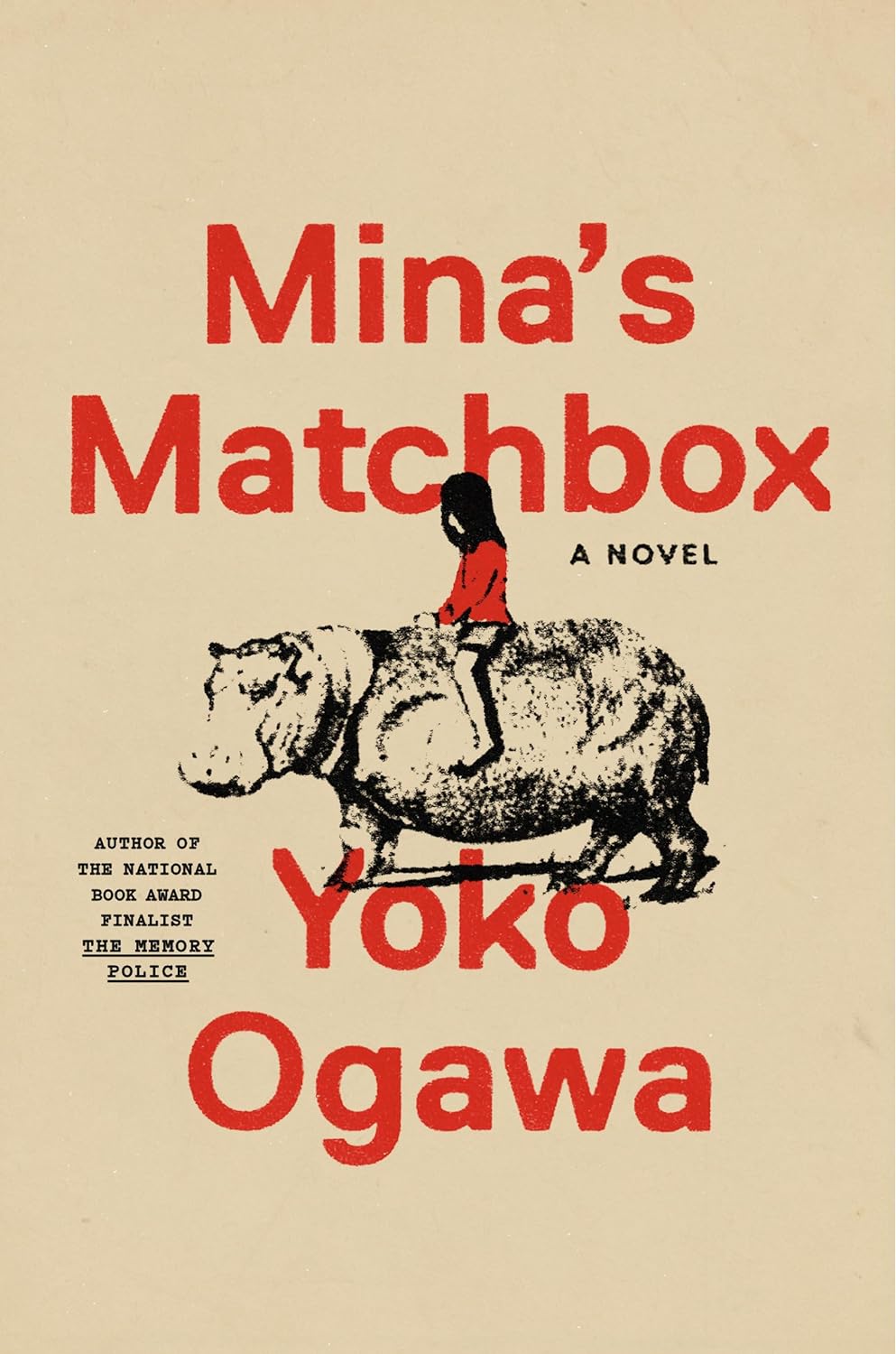
Woah. We are already in the tenth month of the year. Time does fly fast. How has your 2024 been? I hope that it has been great. With the year inching toward its inevitable close, I hope the remainder of the year will shower everyone with blessings and good news. I hope everyone gets repaid for all their hard work. Reading-wise, October will be a mixed bag for I have several things I want to accomplish before the year ends. For one, I want to complete all my reading challenges although I am glad I am nearly finished with my 2024 Top 24 Reading List. I can’t say the same for my 2024 Beat the Backlist Challenge. I am also looking at reading novels shortlisted for the Booker Prize although the books are still in transit. In the meantime, I will be reading any book that I fancy, including Yoko Ogawa’s Mina’s Matchbox.
I wasn’t even aware that the Japanese writer is releasing a new work, or at least a new translation; Mina’s Matchbox was originally published in Japanese in 2005 but was only recently translated into English. It is set in 1972 in the Japanese coastal town of Ashiya. It is narrated by twelve-year-old Tomoko who left Tokyo for the countryside to stay with her aunt’s family. Her aunt was eccentric, married to a foreigner who was the president of a soft drink company. Their house was also eccentric. The pieces of furniture were German and were valued higher than they looked. They also had a pygmy hippopotamus and the land used to be a zoo. This novel is starkly different from my first two Ogawa novels (The Housekeeper and the Professor and The Memory Police) but I am kind of looking forward to how Ogawa will spin this tale which, from the looks of it, is a coming-of-age of some sort. The titular Mina is the household’s daughter and is as complex as the story is, so far.
What have you finished reading?

The past week was rather slow in terms of reading. From a high of three books the week before, I was able to complete just two books in the past week. Oh well, it is still a good number considering that my focus is divided; due to an office event, I had to walk and go out more. Regardless, I am still happy because the last two books I read are part of my 2024 Top 24 Reading List, which means that I am down to my last three books from the said list. The first of the two books I read in the past week was Rohinton Mistry’s A Fine Balance, a book that is also listed as one of the 1,001 Books You Must Read Before You Die. The book then made me hit two birds with one stone.
A Fine Balance is set in mid-1970s India and charts the fortunes of four main characters. Ishvar Darji and his nephew Omprakash, or Om for short, were traveling on a train to a big city after escaping from their village. They belonged to the untouchable Chamaar caste who learned how to sew from a Muslim man named Ashraf. In their countryside village, the lower castes were constantly oppressed by the upper caste. While on the train to the city, the uncle and nephew tandem came across Maneck Kohlah, a college student. Maneck was on his way to the city to pursue his studies. Unlike Ishvar and Om, Maneck was born into a more affluent family in a mountain town in the Kashmir Valley. Completing the quartet of main characters is Dina Dalal. Like Maneck, Dina was born to an affluent background; her father was a doctor. Following her father’s death when she was just twelve and the gradual withdrawal of her mother from life, her brother Nusswan took over family affairs. In an unnamed city – in a country with several metropolises, it could be anywhere – these four characters’ individual threads converged and through their lenses, Mistry provided the readers a compelling probe into modern Indian society, with an emphasis on the consequences of the Emergency declared by Prime Minister Indira Gandhi during the same period. I must say, A Fine Balance is quite an impressive read which reminded me of another Indian literature classic, Vikram Seth’s A Suitable Boy. Both novels were riveting and thought-provoking reads.

Another book that is part of my 2024 Top 24 Reading List is Gu Hua’s A Small Town Called Hibiscus. Before the pandemic, I had never heard of the Chinese writer nor had I encountered any of his works. It was through an online bookseller that I first came across Gu Hua and his novel. Oh. I just learned that this is a pseudonym used by Luo Hongyu (羅鴻玉). Originally published in 1981, A Small Town Called Hibiscus is also considered to be his most renowned work. It also won the inaugural Mao Dun Literature Prize (1982), one of the most prestigious literature prizes in China.
A Small Town Called Hibiscus is set in the Chinese countryside, in the titular town of Hibiscus which is located in the province of Hunan (Gu’s birthplace) and is nestled where three provinces converged (Hunan, Guangdong, and Guangxi). It was also in this quaint town that an eclectic cast of characters converged. At the start, the villagers treated each other kindly. It was teeming with trade. However, the village’s dynamics were adversely impacted by the Cultural Revolution, or, as the novel referred to it, the Great Leap Forward of 1958. With the Communist Party’s ascent to power, the rich were stripped of their properties. Neighbors were forced to go against each other. Capitalism was dismantled, adversely impacting the locals. With the Communist Party’s ideals trickling into the village, the affluent were stripped of their opulence and properties. Among them was Hu Yuyin who the locals referred to as Sister Hibiscus. The village loved her for selling beancurd at a stall at the local market. However, her fortunes changed with the advent of communism. The story of the village and of Hu Yuyin are microcosms of the conditions sweeping the rest of the nation during this period of political and social upheaval. In a way, the book reminded me of Yuan-Tsung Chen’s The Dragon Village. Both provide a window into Communist China and how it shaped the Chinese countryside. Overall, A Small Town Called Hibiscus is a lush and thought-provoking read.
What will you read next?


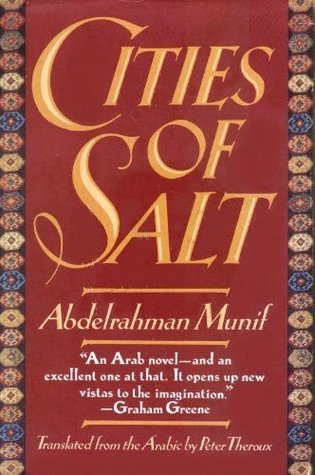
 The Pine-Scented Chronicles
Where did you get a copy of Mina’s Matchbox? I have this in my Want to Read.
LikeLike
Hi. I bought it at Fully Booked. Available rin ata siya sa online shop nila. 🙂
LikeLiked by 1 person
Thank you! I have a long list of books from Japanese authors and don’t know where to find them. I’ll check out Fully Booked.
LikeLike