The Japanese Buddenbrooks
German writer and Nobel Laureate in Literature Thomas Mann is, without a doubt, one of the most recognized names in the ambit of world literature. He boasts a literary career that spanned several decades. His influence His literary masterpieces Buddenbrooks (1901), Death in Venice (1912), and The Magic Mountain (1924) are among the most commended and recognized literary titles. Among the most enduring literary masterpieces, they are considered classics by literary pundits and the general reading public alike. They transcended time and are regular presences in must-read lists, including the 1,001 Book You Must Read Before You Die. The passage of time has not dimmed their luster. They remain germane to contemporary literary discourses, underscoring the extent of the legacy of the German literary titan. His works have endured the passage of time, underlining the longevity of Mann’s literary heritage.
As if to further highlight the extent of Mann’s heritage, his life and works have influenced and are the subject of succeeding works; his influences are ubiquitous and ever-present in the contemporary. The Magic Mountain, for instance, was referenced in equally popular writer Haruki Murakami’s novel Norwegian Wood (1987) and in Ken Kesey’s Sometimes a Great Notion (1964). Mann’s preferred work, the book also inspired songs, a movie, and even a painting. More recently, Nobel Laureate in Literature Olga Tokarczuk recently released The Empusium (2022), a novel also inspired by The Magic Mountain. Death in Venice, on the other hand, was referenced in novels such as Joseph Heller’s novel Closing Time (1994) and Philip Roth’s The Human Stain (2000). The novella was also adapted into a film, a play, and an opera. Further, Colm Tóibín’s 2021 novel The Magician is a fictionalized account of Mann’s life.
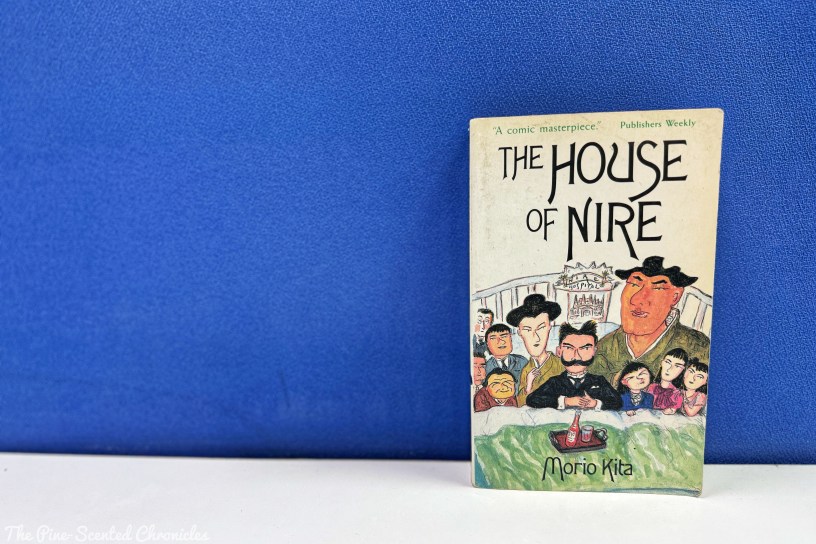
Another writer greatly influenced by the German Nobel Laureate in Literature is Morio Kita (北 杜夫, Kita Morio), one of the most popular and prolific postwar Japanese writers. Born Sokichi Saitō, Kita was a psychiatrist by profession but, motivated by the works of Thomas Mann and a collection of his father’s poems, he decided to foray into becoming a novelist. Writing has always run in the Saitō bloodline. His father, Mokichi Saitō, is a poet – and also a psychiatrist – while his daughter, Yuka Saitō, is an essayist. His older brother Shigeta Saitō, on the other hand, was a psychiatrist. The pivot to writing proved to be successful as Kita’s works received plaudits from both readers and literary pundits alike. Among his works, the labyrinthine Nire-ke no hitobito stands out. It was originally published in Japanese from 1963 to 1964 and was made available to Anglophone readers in 1984 with a translation by Dennis Keene. The English translation carries the title The House of Nire.
She was filled by a sense of the hopelessness of it all, of the terrible pathos of her own situation, although to feel in this way was something so humiliating she soon rejected it. She would not give in. She, and she alone perhaps, would not flinch or be downhearted as she faced this crisis. She would never surrender, no matter how hopeless other people were or how disgracefully they behaved. She was seized with another spasm of irrational anger. She could not sit still but must do something, so she stood up briskly and marched into the kitchen. She then stomped back noisily carrying some dry, used tea leaves. She put these in the machine at the side of the table which transformed all things into powder. Then she knelt before it, back straight, head back, neck firm, biting her lips as if she were daring somebody, anybody, to oppose her; and she began to turn the handle, round and round, busily, relentlessly, with all her might.
Morio Kita, The House of Nire
The House of Nire is an extensive family saga that charted the fortunes of three generations of the titular Nire family, starting at the turn of the twentieth century, particularly in 1918, shortly after the conclusion of the First World War. The novel’s first part was originally serialized in Shinchô from January to December 1962. The story of the House of Nire commenced with the founding of the Nire Hospital for Mental Pathology located in Tokyo’s Aoyama district by the family’s patriarch, Kiichirô Nire. Kiichiro Nire was born in the Japanese countryside. The fourth son, he was given up for adoption by his family and when an opportunity to run away from his adoptive parents presented itself to the young Kiichirô, he took it. In suburban Tokyo, he became a self-made man who rose from relative obscurity and pursued his dream. The hospital transforms into an enduring symbol for the family.
Kiichirô is married to Hisa with whom he sired five children: Ryûko, Seiko, Ôshû, Momoko, and Yonekuni. Kiichirô also adopted two talented young men from the countryside: Tetsukichi and Tatsuji. The patriarch adopted Tetsukichi when he was just fifteen because the Nire patriarch considers him “the finest mind in Japan.” Being the finest mind that he is, Tetsukichi was accepted into the Tokyo Imperial University Medical School and became a psychiatrist, trudging the same path that his adoptive father took. Groomed to be the successor of the hospital, he was employed by the Nire Hospital for Mental Pathology and was married to the household’s eldest daughter, Ryûko. On the other hand, Tatsuji was labeled by his adoptive father as the son with the “finest physique.” The novel’s first part concludes with the rebuilding of the hospital after an act of negligence burned the hospital.
Following the death of the patriarch toward the end of the first part, Tetsukichi took over the helm at the hospital. The second part charted his struggles. Tetsukichi studied in Munich, Germany, alongside German psychiatrists. In a way, this establishes Kita’s link with Thomas Mann. Under his leadership, the old hospital in Aoyama was rebuilt as a branch while a larger main hospital was established at Matsubara in Setgaya Ward. Unfortunately, Tetsukichi proved to be ineffective at managing the hospital’s day-to-day operations. His inability to lead the hospital became a wedge between him and his wife and the hospital’s Deputy Director. Ryûko and the Deputy Director were devout followers of the Nire patriarch. Tetsukichi slowly lost his confidence as a doctor and a director, prompting him to pivot toward research and writing a book about the history of psychiatry.
The novel’s final part – separately published as The Fall of the House of Nire – captures the family’s proverbial fall from grace. The advent of the Second World War adversely impacted the family and their fortunes. With Japan’s entry into the Second World War, the hospital’s employees were drafted into the army, putting the hospital’s day-to-day operations in jeopardy. The family members were not left unscathed by the war as it soon found its way into the House of Nire. Aiko, and Shûji, the two youngest of Tetsukichi and Ryûko’s three children, were forced to work in munitions factories as students. Their older brother, Shun‟ichi, meanwhile, enlisted in the Navy as a military doctor. He served as an aircraft carrier involved in the war operations in the North Pacific. All of these marked the descent and the fall of the House of Nire.
One comes back to the question of time, of what it is, of what we ourselves are, living in the midst of it, laughing like fools, suffering and in pain, or just idly getting through the days. Is it too unimportant to be worth mentioning, or is it the most vital of things, something we daren‟t overlook? And which of those two attitudes is true of us, assuming either of them is? Whatever time may be, one assumes it is recorded on the clocks we make: and the hands of those clocks undeniably move constantly forward.
Morio Kita, The House of Nire
The decline of the House of Nire runs parallel with the enormous upheavals that altered the contemporary Japanese landscape from 1918 until the conclusion of the Second World War. The novel was eventful and brimming with historical contexts. Referenced in the novel were the Great Kantô Earthquake, the Second Sino-Japanese War, the Shôwa Great Depression, and the Second World War. These are events that are germane in the modern Japanese era and they have impacted the denizens of the country; the House of Nire were no exemptions from the consequences of these events. Aiko who used to be a beauty obtained a severe scar from a burn after an incendiary bomb exploded. Shun’ichi, on the other hand, returned from the war a nihilist. Shun‟ichi’s diary provides a starkly different portrait of the heroic Japanese soldier. The historical contexts were faithfully captured by Kita with acuity. Adding a layer of credibility were actual quotes from newspaper and magazine articles of the time. In a way, the novel is a projection of the decline of the Japanese empire, with the Second World War as the final act.
The House of Nire drew influences from Mann’s Buddenbrooks, the lone work named by the Swedish Academy in their citation for Mann. Both novels drew inspiration from the respective writers’ family history and charted how both families, the Nires and the Buddenbrooks, fell from grace. For the Nires, the symptoms of their decline already manifested from the onset. The foundations and values upon which the hospital was built were fragile. Kiichirô condemned his provincial origins which prompted him to change his original name, Kanazawa Jinsaku – it has a provincial tone – to Nire Kiichirô, a name he created for himself. Even the hospital he established was superficial. The hospital is a magnificent structure that fuses Western architectural influences with Chinese and Oriental influences. From the outside, it was aesthetically pleasing, a fortress. However, what passes for marble columns are actually made of wood and concrete. The hospital was a veneer, a projection of the man who built it.
Not to be outdone, Kiichirô was a poseur who employed eccentric – some bordering on the absurd – methods of diagnosis and treatments for his patients. An example was when he used a stethoscope on the patient’s head. He also uses instruments for looking inside noses and ears to diagnose mental illnesses, claiming that he can see the patient’s brain through these instruments. He also used radium baths which did not have any radium in them. Despite his eccentric methods, he had confidence in his treatments. It was his aura of confidence that earned him his eldest daughter’s and the Deputy Director’s admiration. They revered and celebrated, even after his demise, what they perceived were Kiichirô’s successes. Meanwhile, Tetsukichi, who was a more competent doctor than his adoptive father, challenged old Nire’s methods. This earned him the ire of his wife and the Deputy Director despite his methods being more rational. This was exacerbated by his inability to lead the hospital.
The news left him dumbfounded more than anything else. What was he supposed to think about this? It had never once crossed his mind that any human agency could simply call a halt to the war like this when there were so many Japanese people still alive. He had assumed the war was a natural phenomenon beyond the power of man to change, and it would continue until the whole race had been exterminated. But now what had happened? The Allied declaration had been accepted! We had surrendered! How was it possible?
Morio Kita, The House of Nire
The case of Tetsukichi also underlines the pressures of the expectations placed on the shoulders of the younger generation of the Nires. Except for Ryûko, none of Kiichirô’s biological and adopted children measured up to these expectations. They were not able to live up to the patriarch’s name and stature. Tetsukichi’s children, particularly his sons, were equally disappointing; he had high hopes for them but they failed to live up to their father’s expectations. Ironically, due to his endeavors, Tetsukichi barely had any time for his children. Old Nire’s grandchildren lived decadent lives. Failure is a recurring theme with some members of the family, albeit descending from a “fine” line, struggling to live up to the earlier generation’s penchant for success. Some failed as politicians while some failed as intellects. Even Tetsukichi’s extensively researched book on psychology – he always dreamed of a book on psychiatry originally written by a Japanese professional – was challenged by the intellects of the period.
The novel’s preoccupation with failure underscores how failure is a profound reality. One can surmise that Kita was hinting at how we should learn how to cope with failures. The hospital itself was the center of several failures, from failure to comply with standards of health to failure in maintaining its finances. Failure, in the ambit of the story, extended beyond the family and the hospital. When Kita transported the readers to the heart of the Second World War, young Japanese soldiers were confident of victory. They carried with them the confidence of their leaders. However, history would tell a different story, piercing the veil of illusion that once propelled them. The story of the family was juxtaposed with the changes seizing Japan and Tokyo. Kita was resplendent in capturing the atmosphere of pre-war Tokyo. There was a pang of regret as inevitable development altered the landscape.
During the serialization of the novel’s first part, Kita received a postcard from no less than Yukio Mishima who commended the book. This encouragement from one of the titans of modern Japanese literature propelled Kita to pursue writing what would eventually be an extensive, complex, and intricate chronicle of a family’s rise and eventual decline; it would also become his most renowned work. Spanning the start of the 20th century through the end of the Second World War, The House of Nire is an evocative portrait of both a family and a country in a state of crisis. Changes, ever-present and constant, threaten to undo the successes of the patriarch. It is an eventful story brimming with historical contexts, exploring a plethora of subjects such as family dynamics, the consequences of the pressures to succeed, and even mental health. The story was complimented by Kita’s brand of humor and wit. The lush tapestry of the novel is also fraught with philosophical intersections. As these various elements converge, The House of Nire is a riveting period piece from one of Japan’s most talented writers.
He had not been a good father to them, never gone to any trouble for them; perhaps he had even been a source of unhappiness for them. Did they understand that it was not because he didn’t love them? It was, well, just the way he had been, his character, lots of things, some sort of destiny that had made everything as it was. Not that he was trying to excuse himself. He had been a cold, seemingly unloving father. He had certainly not been what society would consider a good father. It was just that there had always been something that seemed to make him behave the way he did. It would do so for the rest of his life.
Morio Kita, The House of Nire
Book Specs
Author: Morio Kita
Translator (from Japanese): Dennis Keene
Publisher: Kodansha International
Publishing Date: 1990 (1964)
No. of Pages: 765
Genre: Historical, Family Saga
Synopsis
The House of Nire will come as a surprise to readers who expect a Japanese novel to be a mixture of gloom and sensitivity. This one is unashamedly comic, and its view of human life derives from a warm curiosity that accepts the world as it is and wastes no time complaining about it. The book relates the history of the Nire family from the end of the First World War to the end of the Second. We meet Kiichiro Nire, founder not only of the family mental hospital but of the family itself, for he has changed their real name to something more sophisticated. Kiichiro, in all his vanity, selfishness, and absurdity, is one of the great comic creations of Japanese literature. His children, adopted children, grandchildren, and any number of hangers-on including a friendly but flabby Sumo wrestler whose career is going nowhere, form a cast of characters who, for all their oddities, tell us more about actual Japanese people and their lives than almost anything we have yet seen in English. And when, with the eventual fall of the House of Nire, the mood changes and the laughter dies away, one recognizes just how true to life this novel is and how involved in it one has become. (Source: Goodreads)
About the Author
Morio Kita (北 杜夫, Kita Morio) was born Sokichi Saitō (斎藤 宗吉, Saitō Sōkichi) on May 1, 1927, in Aoyama in Tokyo. He was the third child of Saitô Mokichi, a prominent tanka poet and psychiatrist, and his wife, Teruko. Kita attended Azabu High School and Matsumoto Higher School (now part of Shinshu University). His interest in insects as a young boy made him pursue his studeis in Matsumoto in Nagano prefecture. Kita graduated from Tohoku University’s School of Medicine in Sendai, Miyagi Prefecture.
From insects, Kita’s interest shifted toward writing after receiving from the family one of his father’s anthologies, Cold Clouds (Kan’un, 1940). It was Kita’s first time reading his father’s works. His father’s works immediately captivated him as it also showed a dimension of his usually domineering father. While in Matsumoto, Kita started composing tanka poems; he even sent some to his father for his criticism. His interest in literature was cultivated by his upperclassmen in higher school. They influenced him to read works by Western and Eastern philosophers and writers. Among them, Thomas Mann and Rainer Maria Rilke stood out. Mann, in particular, was influential in molding Kita’s writing aspirations. Post-university, worked as a doctor at Keio University Hospital. While Kita wanted to pursue a career in writing, he was initially unsure of which form to pursue.
Kita’s initial works were poems, some of which he sent to Takamura Kôtarô, a renowned poet whose works Kita admired. Kôtarô, however, never responded to Kita. In 1949, some of his poems were published in Bungaku Shûdan, but the prose literary works he sent to literary magazines were not accepted. However, his short story The Album of One Hundred Mosses (Hyakuga-fu), which he wrote under his pseudonym was accepted and published in the e short story column of the April issue of Bungei Shuto. Before graduating from medical school, Kita already wrote the manuscript for what would be his first novel, Ghosts (Yûrei). Originally serialized, his most renowned work is The House of Nire (Nireke no hitobito) which was published as a complete set in 1964. Among his other works are In The Corner Of Night And Fog (Yoru to kiri no sumi de) which was awarded the 1960 Akutagawa Prize; and Doctor Manbô at Sea (Dokutoru Manbô kôkaiki). Kita also published essays.
Kita passed away on October 24, 2011. The essayist Yuka Saitō is Kita’s daughter.

