
How time flies. We are another month down in 2024. October just flew past us. Woah. We simply cannot freeze time. It flows regardless. Nevertheless, I hope that everyone’s year is going well. I hope that 2024 has been kind and great for everyone. As the year slowly inches to its inevitable conclusion, I hope everyone has achieved or is on track to achieving their goals this year. We still have two months to complete our goals. Kudos to everyone who already completed their goals. For those who are just about to start, keep going. In any endeavor, the start is always the most challenging part. With this, I hope the remainder of the year will be filled with blessings, positive news, and answered prayers. I hope you get repaid for everything you worked hard for from the start of the year. I hope everyone gets to accomplish their goals before the year wraps up. I hope that everyone will get to savor the fruits of their labor. More importantly, I hope everyone stays healthy, in mind, body, and spirit.
Reading-wise, October is quite similar to my September reading journey. Both are chaotic. Both are mixed. There were no clear directions, especially at the start. To be fair, I can divide my October reading journey into two parts. The earlier part was, without design, dedicated to the works of Nobel Laureates in Literature. The main catalyst was Olga Tokarczuk’s latest novel, reinforced by the announcement of the 2024 Laureate. I was beyond ecstatic when South Korean writer Han Kang was announced as this year’s awardee. I did foresee that this year’s laureate is Asian and female. Kang is actually the first female Asian writer to achieve the feat. Following this mini-reading escapade, I switched my focus to my reading challenges – unfortunately, I was able to read only one book – before capping the month by reading the five other 2024 Booker Prize-shortlisted books; I have already read Percival Everett’s James. Anyway, here was how my October reading journey shaped up. Happy reading!
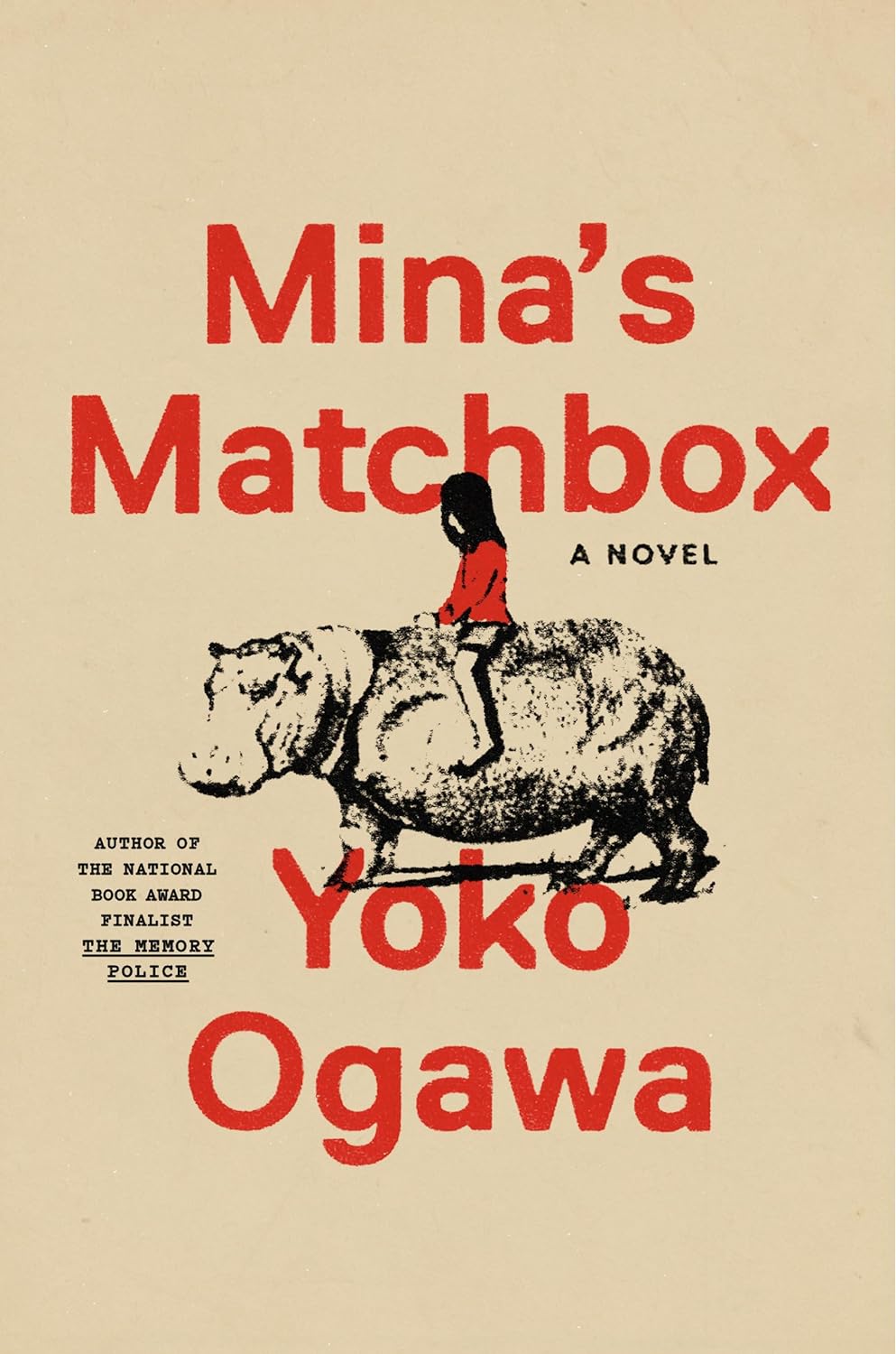
Mina’s Matchbox by Yōko Ogawa
The opening salvo for my October reading journey is a familiar name; I ended September reading works of Asian writers and my first book for October is, in a way, an extension of it. I was unaware that Yōko Ogawa was releasing a newly translated book, Mina’s Matchbox. Regardless, I was excited about the news. I am in for the ride; she gained a fan in me with her heartwarming slice-of-life The Housekeeper and the Professor. Mina’s Matchbox is the third book by Ogawa I read. Set in 1970s Japan, Mina’s Matchbox is told from Tomoko’s perspective. When she was twelve, her mother sent her to her cousin Mina’s affluent estate in Ashiya. Her mother was learning a trade to support Tomoko while her father passed away when she was six. Tomoko’s aunt was eccentric and agreed to keep Tomoko for a year. This was the first time Tomoko was meeting her aunt and her family, including her cousin, the titular Mina. At Mina’s home, Tomoko discovers a lot of things. First off, the estate used to be a zoo and relics of the past were still present. The most palpable relic was Pochiko, a pygmy hippopotamus who is also the family’s pet. Tomoko’s stay with her cousin was a revelation, in various aspects. Tomoko was also getting intrigued by the family. A coming-of-age story by both young girls, Mina’s Matchbox was an unexpected read from Ogawa. Nevertheless, it provided me a different dimension to appreciate the diversity of her oeuvre. Beyond the eccentricities, the story detailed the two young girls’ sexual awakening. For Tomoko, it was an eye-opener as she got to experience a different facet of life far removed from the realities she had to deal with at home. Overall, Mina’s Matchbox was an eccentric but compelling read.
Goodreads Rating:


The Empusium by Olga Tokarczuk
Like in the case of Ogawa, I was not even aware that Olga Tokarczuk was releasing a new work, The Empusium. By design, I made the Polish Nobel Laureate in Literature’s latest work as my 100th read this year; it is also my fourth book by Tokarczuk, making her my most-read female laureate, along with the most recent awardee, Han Kang. The Empusium takes inspiration from a beloved novel written by another Nobel Laureate in Literature, Thomas Mann’s The Magic Mountain, one of my all-time favorite reads. The novel commences in September 1913 when young Polish man Mieczysław Wojnicz arrives at Wilhelm Opitz’s Guesthouse for Gentlemen in the village of Görbersdorf, a health resort in the Silesian mountains. Professor Sokołowski sent the engineer-in-training to the nearby sanitarium to heal from tuberculosis; however, the sanitarium was full, hence, the alternative. Like The Magic Mountain’s Hans Castorp, Wojnicz met an eclectic cast of characters at the Guesthouse. Like Wojnicz, they were waiting for a place to open up at the sanitarium. Among the characters he met are Longis Lukas, a Catholic professor; August August, a Viennese lover of ancient Greek mythology; and Thilo von Hahn, a German Fine Arts student. During Wojnicz’s stay, the wife of Opitz was found lifeless; the husband was quick to conclude her death a suicide. On top of this, the characters were embroiled in intellectual discussion, again, reminiscent of Mann’s masterpiece. While there were several parallels between the two books, The Empusium stands out well on its own, particularly in its probe into feminism and how the patriarchy has, throughout history, stymied the female voice. Overall, it is an interesting book brimming with profound commentaries about a bevy of germane subjects.
Goodreads Rating:


The Black Book by Orhan Pamuk
From one Nobel Laureate in Literature to another. From Poland, my literary journey next took me to Turkey, to a familiar name. The second of the laureates I read during this stretch was Turkish writer Orhan Pamuk’s The Black Book. I also listed the book as part of my 2024 Beat the Backlist Challenge. The Black Book is the fifth book by Pamuk I read. Originally published in 1990 in Turkish as Kara Kitap, The Black Book is set in Istanbul and charts the story of Galip, a lawyer. One winter night, he came home to discover that his wife Rüya disappeared. The only clue she left behind was a note saying she would keep in touch. Rather than reassured, the sequence of events piqued Galips’ interest, prompting him to try to find out what happened to his wife. As he tracks her down, he finds himself immersed in moments of introspection which provides glimpses into their union. Galip and Rüya are cousins who first met when they were both young. Galip falls in love with Rüya but she marries a left-wing activist; she leaves her husband and marries Galip. Rüya loved reading detective novels as if a foreshadowing. The mystery deepened when Rüya’s older stepbrother Celâl, a highly-heralded columnist Galip looked up to, also disappeared. Galip wanted to achieve his stepbrother-in-law’s level of success. The novel alternates between a third-person narrator and Celâl’s voice, with some of Celâl’s columns integrated into the novel. Incisive political commentaries were also subtly woven into the story; this earned Pamuk the ire of Turkish nationalists. The Black Book is quite a complicated book, both because of its premise and its structure. Nevertheless, it was a riveting read that also takes the readers across Istanbul.
Goodreads Rating:

The Rainbow by Yasunari Kawabata
From one Asian Nobel Laureate in Literature to another. From Turkey, my literary journey next brought me to a very familiar literary territory – and one of my favorites – Japan. The first Japanese writer to earn the distinction of being a Nobel Laureate in Literature, Yasunari Kawabata is also one of the primary reasons why I have fallen in love with the lush tapestry of Japanese literature. My foray into his oeuvre started with Snow Country and now I have just read my seventh novel by Kawabata, The Rainbow, making Kawabata my second most-read Nobel Laureate in Literature, just one book behind his countryman Kazuo Ishiguro. The Rainbow charts the story of architect Mizuhara and the three daughters he had with three different women. Momoko and her younger sister Asako grew up together; when Momoko’s mother died, Mizuhara looked after her. However, they were not aware of their younger sister Wakako. At the start of the novel, Asako is on her way home from Kyōto to Tōkyō after traveling to The Old Capital hoping to meet Wakako; it was for naught. On the way home, she saw a rainbow on Lake Biwa, the first of many rainbows riddling the story. The story also details Momoko’s love affairs but one stands out, a kamikaze pilot who died in the battle of Okinawa; she was tormented by his memories. Her lover’s untimely demise set her up for a series of unfulfilling and unsettling affairs. Beyond this, the novel captures a theme recurring in Kawabata’s works, the portrait of post-war Japan where the characters are learning to navigate the ebbs and tides of new influences. While Kawabata has had better works, The Rainbow is nevertheless a welcome addition to a prolific career.
Goodreads Rating:
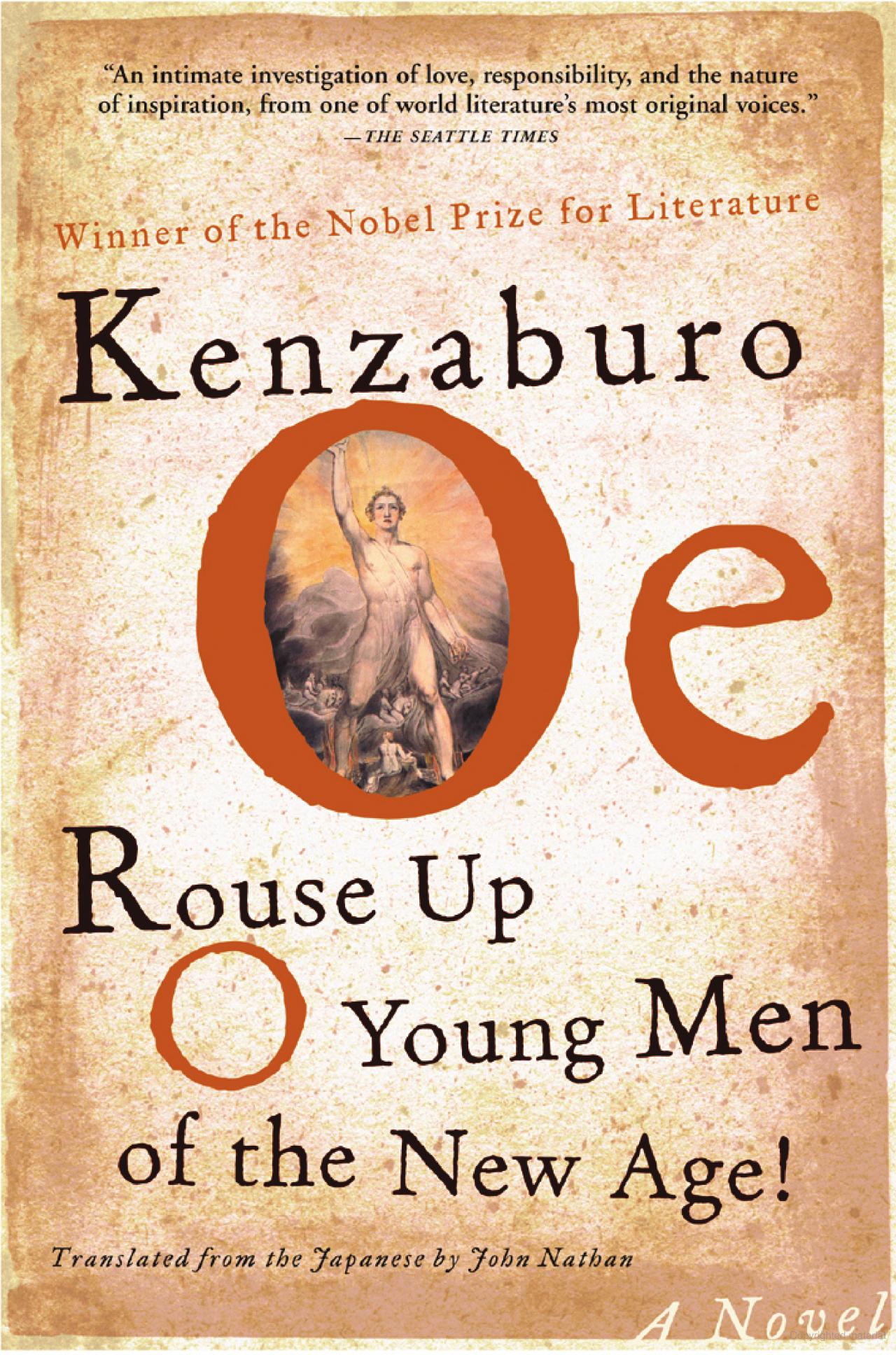
Rouse Up O Young Men of the New Age! by Kenzaburō Ōe
I concluded my quick venture into the works of Nobel Laureates in literature with the work of another Japanese writer. I admit, I used to be ambivalent about Kenzaburō Ōe because he was a well-known critic of Haruki Murakami. I eventually relented and explored his extensive oeuvre. Kenzaburō Ōe’s Rouse Up O Young Men of the New Age! is my sixth novel by the 1994 Laureate in Literature; it is quite interesting that my three most-read Nobel Laureates in Literature are all Japanese. Originally published in 1983 in Japanese as 新しい人よ、眼ざめよ (Atarashii hito yo mezameyo), the novel, in a way, is thematically connected to A Personal Matter (1964) and A Quiet Life (1990). Ōe again takes the role of the primary narrator, with his handicapped son Hikari – fondly called Eeyore – as the locus of his introspection. To the uninitiated, Hikari was born with autism and is developmentally stunted. While A Personal Matter was subdued, Rouse Up O Young Men of the New Age! was more introspective. We read about Ōe preparing his son on how to deal with the world beyond the boundaries of their home. He was understandably anxious but he was in for a surprise. Two elements elevate the story: Hikari’s fixation with music and Blake’s poetry. Blake’s poetry was a vessel upon which Ōe tried to appreciate the intricacies of his son. Ōe slowly realizes that while he was preparing his son for the real world, he was also learning from his son. Hikari was more than his impairment; he was not letting it define him. He had as much wisdom to offer to his father – and the rest of the family – as his father with him. As always, I am always fascinated by Ōe’s intimate glimpses into his interiors.
Goodreads Rating:

The Safekeep by Yael van der Wouden
Following my venture into the works of Nobel Laureates in Literature, I shifted my focus to the rest of the Booker Prize shortlist. This prompted me to move from Asia back to Europe. I have already read one, Percival Everett’s James, and I am looking at reading the other five books; interestingly, all six shortlisted writers are new to me although I have encountered Everett several times before. The second book from the shortlist, and the fourth from the longlist, I read was Yael Van Der Wouden’s The Safekeep. The Dutch writer’s debut novel – the only debut novel to make it to the shortlist – The Safekeep transports us to 1960s rural Netherlands. In the province of Overijssel lies a stately home occupied by one woman, twenty-seven-year-old Isabel. Her two brothers, Hendrik and Louis, had moved away. Following their mother’s death, Isabel looked after the house like it was her own child. Over time, the house became Isabel’s alter ego. Her isolated existence was disrupted by the arrival of Eva, the latest of Louis’ long string of girlfriends. Leaving for a business trip, Louis left Eva in Isabel’s company. From the onset, the two women were the antithesis of each other. Isa was fixed with order while Eva was irreverent and chaotic. While Eva was pushing Isa’s buttons – the wrong ones – a great shift was taking place; this was palpable, making me think the story was predictable. What I was not prepared for were the secrets that were slowly unveiled, particularly when the story shifted to Eva’s point of view. The slow reveal was what made the story compelling. What rises to the fore is a story about the lies we tell ourselves and the lies that accrue over time. Overall, The Safekeep is an impressive debut from a rising literary star.
Goodreads Rating:

Stone Yard Devotional by Charlotte Wood
From one Booker Prize-shortlisted book to another. My literary journey made me cross two oceans again. From the Netherlands, I find myself in Australia; I can’t say I read many works of Australian writers. Apparently, Charlotte Wood is quite a prolific writer. Before Stone Yard Devotional (2023), she already published six novels and works of nonfiction. Her works earned her accolades across the world. Stone Yard Devotional’s shortlisting for the Booker Prize further underlines the strength of her oeuvre, piquing my interest in her works. Stone Yard Devotional was narrated by an unnamed woman who retreated to a convent. She first took notice of the nuns while visiting her parents’ grave sites for the first time in over three decades. The narrator, we learn, worked at the Threatened Species Rescue Center. Her life was unraveling. An impending climate catastrophe and a rocky marriage prompted her to seek escape. At the onset, her spirit was waning but eventually, she found herself immersed in monastic life. However, the outside world kept disrupting the harmony of the convent. First, it was a mice infestation; the mice were driven south by radical climate change in the north. Then it was followed by the impending return of the bones of Sister Jenny, a nun murdered in Thailand years before. Tasked to bring the bones home was Helen Parry, a celebrated but daunting nun who was an environmental and human rights activist. Interestingly, Helen and the narrator were once schoolmates. There is a somber tone that hovers above the story, reverberating the despair the narrator felt. Stone Yard Devotional is a lyrical and riveting story about our memories, despair, and the morality of doing the right things.
Goodreads Rating:
Martyr! by Kaveh Akbar
After reading two Booker Prize-shortlisted books, I decided to take a breather before reading the last three books from the shortlist. This reading break took me to a book that I have been looking forward to since the start of the year. Before this year, I have not come across Kaveh Akbar, an established Iranian American poet. However, while searching for books to include in my 2024 Top 10 Books I Look Forward To, his debut novel Martyr! was a recurring presence in several 2024 most anticipated releases lists. It was a no-brainer for me to include it in my own, making it the eighth book from the said list that I have read. At the heart of Martyr! was twenty-nine-year-old Cyrus Shams who, when we first met him, was recovering from his addiction to alcohol and drugs. Following a turbulent period in his life, he has been trying to straighten himself out. At a young age, he has been at odds with life. Born in Tehran, his mother, Roya, perished shortly after his birth. This prompted his father, Ali, to move them to the United States where Cyrus was raised in Fort Wayne, Indiana. When he entered university, Cyrus’ father died, setting Cyrus’ life into a tailspin. Once he tried cleaning up his acts, he also started a new endeavor: writing a book about martyrs. This was supposed to be the culmination of Cyrus’ preoccupation with death and martyrdom as a means of defining his injuries. His writing project made him cross paths with dying Iranian artist Orkideh who was spending her dying days as an exhibit at the Brooklyn Museum. Martyr! is a complex story but its structure and its compelling writing make it a riveting read. It covers a vast territory, examining themes of identity, sexuality, biculturalism, death, martyrdom, and the complicity of governments. I liked Martyr! and it is easily one of my favorite reads of the year.
Goodreads Rating:

Held by Anne Michaels
Following the brief interlude, I resumed my venture into the books shortlisted for the Booker Prize. As I mentioned, I have never read any of the works of the six authors on the shortlist; in the longlist, it was only Richard Powers with whom I have a background. All these made me look forward to the remaining five writers on the shortlist. My literary journey next took me to Canadian writer Anne Michael’s latest novel, Held. In a way, Held shares a similarity with James and The Safekeep because all three novels are works of historical fiction. However, Held veers away from conventional storytelling. A family saga that spans 1902 to 2025, the plot weaves in and out of the past, the present, and even the future. This is a facet it shares with Martyr! Michaels’ third novel, the story transports the readers to various parts of the world, with most settings taking place in war zones. Because of its episodic structure, one has to wade through the various pieces and characters to fully appreciate the story. The first piece takes us to the trenches of the First World War where John is wounded and cold, reflecting on an encounter in a pub by the railway station. Three years later, he was back in North Yorkshire, married to Helena, the first of several women whose voices dominated the story. Helena is an artist who was not confident in her work. The couple had a daughter named Anna. Anna became a doctor and married a Marxist hatmaker. Their daughter, Mara, is also a doctor. Anna and Mara shared a passion for serving in war zones, much to the dismay of Mara’s husband. For its complex structure, the various episodes were thematically linked as they explore love, war, art, and even sciences; Marie and Pierre Curie made appearances. It takes a while to get used to the time jumps but Held is a riveting read.
Goodreads Rating:

Creation Lake by Rachel Kushner
American writer Rachel Kushner’s latest novel, Creation Lake is the fifth book shortlisted for the Booker Prize I read. I am not sure where I first met her but Kushner seemed like a familiar name. Regardless, I am looking forward to exploring the oeuvre of a writer whose body of work I had not explored before. In a way, Creation Lake is another interesting addition to the shortlist. While three are palpably works of historical fiction (James, The Safekeep, and Held), the remaining three are mixed bags. Creation Lake is a spy novel, at least on the surface. It is also the thickest of the six books on the shortlist. Kushner’s latest novel is written from the perspective of a female American undercover agent who we come to know only through her alias Sadie Smith. She previously worked with the FBI but was fired from her job after she was found guilty of entrapment. The thirty-four-year-old has since become a mercenary for shadowy, private entities. Her current task was to infiltrate a radical farming collective called Le Moulin in Guyenne, a remote region of France. To do so, she got involved with Lucien. It was through Lucien that she was able to access Pascal Balmy, the leader of Le Moulin and Lucien’s friend. The crux of the story, however, was Bruno Lacombe, the commune’s intellectual figurehead. Rejecting modernity and taking residence in a network of caves beneath his farm, Bruno advocated for pre-industrial modes of living. Sadie frowned upon Bruno’s philosophy and teachings. However, the more she got embroiled, the more she found herself drawn toward Bruno and his ideals. Creation Lake is a complex – all of the books on the shortlist are anything but – but compelling read.
Goodreads Rating:

Orbital by Samantha Harvey
Capping my reading month is the last book on the Booker Prize shortlist, Samantha Harvey’s Orbital. Except for Everett, I have not heard of any of the writers on the shortlist before this year. I guess this is one of the reasons why I look forward to the Booker Prize; it is a minefield of amazing writers and books. Harvey, I learned, is quite a highly-regarded British writer. Her debut novel, The Wilderness (2009) was longlisted for the Booker Prize while The Western Wind (2018) was longlisted for the International Dublin Literary Award. Anyway, Orbital transports us to outer space, to the International Space Station which was manned by four astronauts and two cosmonauts, four men and two women. The novel charted a day in their life. Harvey paints their daily routine; it is cyclical and mundane but they have gotten used to the thrum of routine. They were still enthusiastic about their vocation. Outside, the view is captivating, except perhaps for the void. Below, life on Earth was still taking place. From the space station, the astronauts were provided a new vantage point from which to observe the Earth. This makes it ripe for introspection where science and real life intersect. We read about the typhoon looming to inundate the Philippines and Indonesia. Upon observing this, Nell, an English astronaut, recalls the time he spent deep-sea diving in the Philippines. Climate change was one of a range of various subjects examined in the story, along with the characters’ backstories. However, I feel like the story never reached its full potential. There was a lot of promise but Harvey didn’t fully build on the foundations she established. Still, Orbital was an interesting read that provides a different perspective.
Goodreads Rating:

Reading Challenge Recaps
- My 2024 Top 24 Reading List: 21/24
- 2024 Beat The Backlist: 14/20; 94/60
- 2024 Books I Look Forward To List: 8/10
- Goodreads 2024 Reading Challenge: 109/100*
- 1,001 Books You Must Read Before You Die: 16/20
- New Books Challenge: 15/15
- Translated Literature: 49/40
*Updated my Goodreads goal from 80 to 100.
Book Reviews Published in October
- Book Review # 548: The House of Nire
- Book Review # 549: The Empusium
- Book Review # 550: The Three Musketeers
- Book Review # 551: This Strange Eventful History
- Book Review # 552: The Safekeep
- Book Review # 553: Stone Yard Devotional
- Book Review # 554: Martyr!
Despite a busy month, I am glad I was able to sustain the writing momentum I gained in the past two months. I was able to publish seven book reviews, three less than my September output but it is still a good number considering how my focus has been divided by various shifts taking place in my life. However, a pattern is also emerging. Of the twenty-six book reviews I published in the past three months, twenty are of books I read in the current year. I guess this is also a good sign because it has been my goal to review a book within two weeks of completing it; six out of the seven I published in October were books I read this year. On the flip side, this means that my backlog from 2023 remains huge. Nevertheless, as the year inches to a close, I will still try to work on closing the gap. The goal is to reduce it to fifty-five (fifty was the original goal) before the year ends. The mantra, as always, will be to take it one step at a time; although a little sense of urgency might help.
In terms of reading, November is going to be a mixed bag, similar to how my October and September reading journeys developed. The priorities, of course, are my active reading goals and reading challenges. I still have three books to read in my 2024 Top 24 Reading List and six in my 2024 Beat the Backlist Challenge. Sadly, none of these books overlap so that makes it nine books that I must finish. On top of this, I have two books still from my 2024 Top 10 Books I Look Forward To List. I just hope I obtain copies of the last two books on the said list. Works of Japanese literature will be fillers. The translation of Haruki Murakami’s latest novel is set to be released this month. Further, I have several recently translated works by Japanese writers I want to read, including Hiromi Kawakami’s Under the Eye of the Big Bird. I was not expecting the sheer volume of translated Japanese novels but I am all for it.
How about you fellow reader? How is your own reading journey going? I hope you enjoyed the books you have read. For now, have a great day. As always, do keep safe, and happy reading everyone!
 The Pine-Scented Chronicles