Healing Through Books
Tokyo is a city teeming with activities. Rising from the ashes of the Second World War, it is like the Phoenix the largest city in the world, the Japanese capital is one of the most cosmopolitan cities in the world where diverse groups of people converge. It is a bustling metropolis where the traditional merges with innovation and technology. Its vast urban landscape is dotted with historic shrines, temples, and places including the Imperial Palace. Soaring above them are modern skyscrapers such as the Tokyo Tower. It also houses prominent theme parks, a stark dichotomy to the gardens highlighting its vast landscape. It is also a haven for food lovers With the variety it offers – spanning historical, cultural, technological, and educational – it has everything to satisfy every taste. Each ward – equivalent to New York City’s boroughs – and district have something distinct to offer, each distinct from the others.
Shibuya is one of the more renowned wards. It is perhaps more well-known for the statue of Hachiko and its busy crossing. It comes even more alive at night with its busy nightlife. Shinjuku is one of the city’s major transport hubs. It is also a major shopping hub. Ginza is another major shopping district with its upscale shops selling luxury items. It is also a major entertainment hub. Akihabara, meanwhile, is a haven for anime lovers and amusement arcades. Asakusa, on the other hand, is a major gateway for those arriving from Narita airport. The city’s cultural hub is famous for the Sensō-ji Buddhist temple and several traditional shopping streets. On top of these are trendy cafes, international restaurants, and electronic shops. It pulsates with life, may it be during the day or during the night. For sure, with everything it has to offer, one never runs out of things to do in Tokyo.
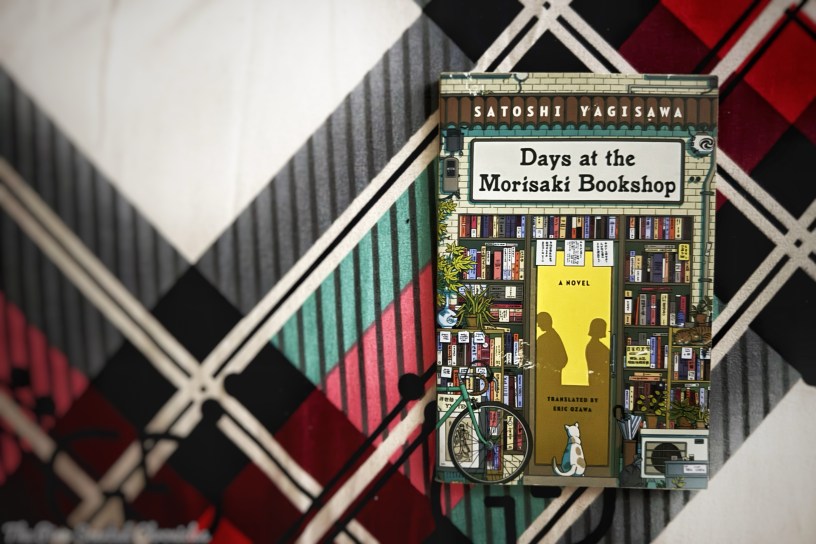
In a city that is teeming with activities that cater to different taste buds, bibliophiles also have a place in Tokyo. Nestled in Chiyoda ward – almost at the heart of Tokyo – is Jimbōchō (or Jinbōchō) district. Jimbōchō Book Town has established itself as Tokyo’s primary oasis for bibliophiles and intellects alike. It is a major hub for the used books trade – there are over one hundred used bookstores in the area – and publishing houses, on top of being a popular antique and curio shopping area. The bookstores offer books covering a vast range of subjects and genres, such as classic literature, philosophy, art, pop culture, science, and foreign and rare antiquarian books. This quaint district formed the backdrop for Japanese writer Satoshi Yagisawa’s debut novel Days at the Morisaki Bookshop. It was a runaway success in Japan and was even adapted to the silver screen.
She and I have the same way of looking at things. It’s what brought us together, and I think it’s also the reason we split up. We met in the middle of the journey and we fell in love. But that doesn’t mean we’ll always be traveling together. At some point, everyone has to find their safe harbor. I’d always thought we’d make it to the end together. Unfortunately, that’s not how it turned out.
Satoshi Yagisawa, Days at the Morisaki Bookshop
Originally published in 2010 as 森崎書店の日々 (Morisaki shoten no hibi), it was made available to Anglophone readers through an English translation by Eric Ozawa in 2023. At the heart of the story was twenty-five-year-old Takako. The story opened with a heartbreak, a literal heartbreak. Takako’s boyfriend Hideaki broke to her the news that he was going to marry another woman. It was a shock, especially when more details of her boyfriend’s other relationship were unveiled. To Takako’s utter shock, her ex-boyfriend is marrying their co-worker, a beautiful woman. She had no inkling about their relationship – she was blindsided – but this revelation was just a scratch on the surface; there was an even more shocking revelation. Takako learned that her boyfriend and their co-worker had been in a relationship for a longer period than Takako and Hideaki’s relationship; Takako and Hideaki had been dating for over a year. Takako was unsure how to feel about the betrayal.
As if adding salt to Takako’s injury, Hideaki was acting obliviously, as though nothing would change despite his act of betrayal. He expected that nothing would change between them. Broken-hearted and her world shattered, Takako resigned from her job. This was despite having no other prospects but the pain of seeing her ex-boyfriend and his fiancé every day far outweighed the other option. To heal, Takako spent her post-resignation days sleeping in her Tokyo apartment, hiding from the rest of the world, not caring about what the future holds. Her grief was disrupted by an unexpected call from her uncle Satoru. It was unexpected due to many circumstances. First, her uncle is eccentric and is living an unconventional life. Uncle and niece’s communications and interactions were intermittent at best. Satoru now runs a bookshop at Jimbōchō. The titular Morisaki Bookshop has been in their family for three generations. Satoru considered the bookshop his pride and joy.
Prompted by Takako’s mother, Satoru got in touch with his niece. He gave her an offer, inviting Takako to occupy the tiny apartment above the bookshop for free. In exchange, Takako will have to open the bookshop every morning. In the hopes of picking herself up after a particularly devastating period, she took on her uncle’s offer despite her apprehensions. Takako has no interest in reading, which she admitted to Sabu, a bookshop regular who often drops by for company and to converse and discuss a plethora of subjects, primarily literature. Sabu yelled at her during their first encounter but he suggested she take up reading. Satoru agreed with Sabu’s recommendation but Takako simply shrugged it off. Apart from opening the bookshop every morning, nothing much has changed in Takako’s daily routine. She spent most of her days sleeping and barely spending any time with her uncle; she was adamant about not establishing any relationship with her “odd” uncle.
Her perspective of her uncle changed after a random walk; Satoru invited his niece to walk around the neighborhood. This quaint moment allowed them to get to know each other better. In the café Saveur, he introduced her to the coffee shop employees Tomo and Takano who were of the same age as Takako. Satoru and Takako spent the time talking. She learned about his life before he took on the job of running the bookshop. When he was her age, Satoru traveled the world searching for a place to belong. However, none of the places he has been to provide him with the same sense of belonging as the Morisaki bookshop which he inherited from his father. Takako did not expect it but she ended up having a great time. She was also impressed by her uncle’s connection with the neighborhood. The development of Satoru and Takako’s relationship was one of the novel’s more endearing facets.
It’s only in secondhand books that you can savor encounters like this, connections that transcend time. And that’s how I learned to love the secondhand bookstore that handled these books, our Morisaki Bookshop. I realized how precious a chance I’d been given, to be part of that little place, where you can feel the quiet flow of time.
Satoshi Yagisawa, Days at the Morisaki Bookshop
Apart from the shift in Satoru and Takako’s relationship, a change also took place in Takako. She started to read and before she knew it, she became immersed in the world of books. From spending time sleeping, she started to spend more and more time reading books. From a staunch nonreader, she turned into an avid reader with a vast appetite which includes a bevy of highly-heralded Japanese writers such as Kafū Nagai, Jun’ichirō Tanizaki, Osamu Dazai, and Ryūnosuke Akutagawa; after all, the book is set in a bookshop. She also started going to Saveur more regularly, eventually gaining a friend in Takano. It didn’t take time before the charm of her surroundings made its way to her. After a particularly tumultuous period when she was at a loss, Takako started her journey toward healing and finding herself again. It was all unexpected but the experience restored Takako’s enthusiasm for life.
Healing and finding one’s self after a rough patch is palpably at the forefront of Days at the Morisaki Bookshop, with books and reading as the crucibles. Yagisawa’s slender book joins a growing list of books probing into the healing qualities of books and literature; this list includes Hwang Bo-reum’s Welcome to Hyunam-dong Bookshop, Michiko Aoyama’s What You Are Looking For Is in the Library, and Sara Nisha Adams’ The Reading List. These stories capture how books, bookshops, and libraries silently reverberate with hope. They are seemingly obscure places that provide safe spaces for people from all walks of life. They are nuclei for the community where diverse minds find fellows to connect with. As such, the novel underscores the value of establishing real connections in one’s healing process. As Takako breathed in her environment, she embraced all the positive reverberations from the denizens of Jimbōchō and also the books she was surrounded with.
Beyond the healing journey, the novel prompts the readers to contemplate life and the things that really matter. Takako, for instance, placed so much weight into her relationship with Hideaki but in her journey to healing, she realized that there is more to life than just romantic relationships. It is more important to establish real connections with the people who truly care for her. Bookshops and libraries create communities where one can establish connections. They provide an alternative kind of romance. In a way, Days at the Morisaki Bookshop is about family, both blood and chosen. It is about finding saving graces through human connection. In this facet, the novel falls into the same category of Japanese novels occupied by Toshikazu Kawaguchi’s popular series Before the Coffee Gets Cold and Sosuke Natsukawa’s The Cat Who Saved Books. They are all heartwarming and tender.
Don’t be afraid to love someone. When you fall in love, I want you to fall in love all the way. Even if it ends in heartache, please don’t live a lonely life without love. I’ve been so worried that because of what happened you’ll give up on falling in love. Love is wonderful. I don’t want you to forget that. Those memories of people you love, they never disappear. They go on warming your heart as long as you live. When you get old like me, you’ll understand.
Satoshi Yagisawa, Days at the Morisaki Bookshop
The changes in the dynamics of the main character’s relationship and Takako’s journey toward healing were captured in the first half of the book. The book’s second half captures another shift in the dynamics of the characters’ lives. The past came haunting the present. This changed the complexion of the story but it also provided it a different dimension. Satoru’s ex-wife Momoko reappeared five years after she left her husband without any preamble. Just like how she left him before, Momoko returned without any explanation. This leads the story to pivot from Takako to Satoru and his own tumultuous romantic life; Takako takes on a supporting role. During their conversations, Satoru admitted to his niece that despite Momoko leaving him unexpectedly, he still loved his wife. Following her departure, Satoru was caught in a state of homeostasis, stuck in the past. Unable to move forward, his heart yearns for her.
Despite the heavy opening sequence that left Takako in a near-depressed state, Days at the Morisaki Bookshop is, overall, a light read. It is a slice-of-life story that is thin in plotting but nevertheless charms the readers with its heartwarming tale. It helps that the experiences of the characters are universal, thus, making it easy for the readers to relate to them and their plights. Yagisawa was also resplendent in capturing the idyll of Jimbōchō. In this atmospheric novel, he walks the readers across the neighborhood, guiding them through the cafes and bookshops that jotted the area. Yagisawa made it come alive with his writing. Overall, the book gives the readers what they expect. It is a familiar tale although some portions were unnecessary to the story; they do not make the story move forward. The shift between the novel’s two major parts also leaves so much to be desired.
In his debut novel, Yagisawa immediately impressed literary pundits and won the reading public in his native Japan. On the surface, Days at the Morisaki Bookshop seems like a mundane tale. However, as one delves into the story, a lot is going on beneath the veneer. From Takako’s heartbreak to finding herself again through a serendipitous mini-family reunion, the slender novel charms with its coziness and brims with tenderness. The story offers a warm embrace, exploring familiar themes of families, both blood and chosen; the healing found in establishing real human connections; new beginnings and forgiveness; and the simple pleasures derived from bookshops and between the pages of any book. The story also paints a gentle portrait of love, grief, and loss and a vivid portrait of the neighborhood. Days at the Morisaki Bookshop barely delves into the books Takako was reading but the story nevertheless provides a warm hug.
So there in that dim room, with only the light of a little lamp near my pillow, I burrowed under my covers and began to read. My hope was that the book would be boring enough that I would fall right asleep. But a funny thing happened. An hour later, I was totally absorbed in it. Sure, there were some passages where the writing was difficult, but the subject of the book was human psychology, which is universal.
Satoshi Yagisawa, Days at the Morisaki Bookshop
Book Specs
Author: Satoshi Yagisawa (八木澤 教司, Yagisawa Satoshi)
Translator (from Japanese): Eric Ozawa
Publisher: Harper Perennial
Publishing Date: 2023 (2010)
No. of Pages: 147
Genre: Literary, Coming-of-age
Synopsis
Twenty-five-year-old Takako has enjoyed a relatively easy existence – until the day her boyfriend, Hideaki, the man she expected to wed, casually announces he’s been cheating on her and is marrying the other woman. Suddenly, Takako’s life is in freefall. She loses her job, her friends, and her acquaintances, and spirals into a deep depression. In the depths of her despair, she receives a call from her distant uncle Satoru.
An unusual man who has always pursued something of an unconventional life, especially after his wife, Momoko, left him out of the blue five years earlier, Satoru runs a secondhand bookshop in Jimbocho, Tokyo’s famous book district. Takako once looked down on Satoru’s life; now, she reluctantly accepts his offer of the tiny room above the bookshop rent-free in exchange for helping out at the store. The move is supposed to be temporary, until she can get back on her feet. But in the months that follow, Takako surprises herself when she develops a passion for books, becomes a regular at a local coffee shop where she makes new friends, and eventually meets a young editor from a nearby publishing house who’s going through his own messy breakup.
But just as she begins to find joy again, Hideaki reappears, forcing Takako to rely once again on her uncle, whose own life has begun to unravel. Together, these seeming opposites work to understand each other and themselves as they continue to share the wisdom they’ve gained in the bookshop.
About the Author
Satoshi Yagisawa (八木澤 教司, Yagisawa Satoshi) was born in Chiba, Japan, in 1977. He made his literary debut in 2009 with the publication of 森崎書店の日々 (Morisaki shoten no hibi). The book won the Chiyoda Literature Prize and was translated into English in 2023 as Days at the Morisaki Bookshop. The book was warmly received by the Japanese reading public. He succeeded it with two Jun Kissa Torunka (Torunka Coffee Shop) novels in 2013 and 2015, and Kimi to Kuraseba (If I Lived With You) in 2015. They were all massive successes in Japan. Yagisawa’s latest published novel is 続・森崎書店の日々 (2023, Zoku – Morisaki shoten no hibi; trans. More Days at the Morisaki Bookshop).
 The Pine-Scented Chronicles