And that is a wrap. 2024 is officially over and over the horizon is a fresh set of 365 blank slates waiting to be painted with memories. Happy New Year everyone!

Before waving 2024 goodbye, I hope that 2024 has been kind to and has gone well for everyone. I hope everyone will take only positive and uplifting memories from the past year. I hope everyone has achieved their goals this year. A pat on the back for everyone who already completed their goals. For those whose year has been awry, a warm embrace for all of you. I hope that there will be a reversal of fortune in the coming year. I hope that 2025 will brim with hope. I hope and pray that the coming year will be filled with blessings, positive news, and answered prayers. Hope springs eternal after all. I hope everyone stays healthy, in mind, body, and spirit.
Reading-wise, the past few months have been chaotic. The books I read were a mixed bag. There was no clear direction or theme I wanted to pursue. For one, I read all the remaining Booker Prize-shortlisted books. I also had a mini-foray into the works of Nobel Laureates in Literature then a mini-run of African literature immediately followed by a mini-run of Latin American literature. Some of the books I read were part of my ongoing reading challenges. This is not unusual as I usually cram toward the end of the year. Nevertheless, I am grateful I was able to complete my 2024 Top 24 Reading List in November and then my 2024 Beat the Backlist Challenge in December. Sadly – I guess this is to be expected – I failed to complete my 2024 Top 10 Books I Look Forward To List. I am just one book short of completing my 2024 Top 10 Books I Look Forward To List; I was not able to obtain a copy of Marie Mutsuki Mockett’s The Tree Doctor.
Anyway, here was how my December reading journey shaped up. Happy reading!

The Story of Edgar Sawtelle by David Wroblewski
Kicking off my December reading journey is David Wroblewski’s The Story of Edgar Sawtelle. It is a book I obtained nearly a decade ago, prompting me to include it in my 2024 Beat the Backlist Challenge. I have been meaning to read the book but other books took precedence. There are just way too many good books out there. Originally published in 2008, The Story of Edgar Sawtelle is Wroblewski’s debut novel. The novel transports us to 1970s rural Wisconsin where we meet the titular Edgar Sawtelle. Edgar was born mute and grew up in a barn. Established by his grandfather, the barn is renowned for breeding dogs using cutting-edge genetic theories. Edgar grew up surrounded by canines. He developed a fondness for dogs, preferring their company over the adults around him. Edgar even helped train the dogs through sign language. We learn more about Edgar and the farm as the story moves forward. Two brothers used to call the farm their home, Edgar’s father Edgar (Gar for short) and his uncle Claude. Due to his interest in the business, Gar inherited the family business. Claude, on the other hand, enlisted in the Navy during the onset of the Korean War. Gar married Gertrude (Trudy), and the couple had one child, Edgar. The natural harmony in the Sawtelle dog farm was disrupted by the reappearance of Claude which set into motion a chain of events that commenced with the sudden demise of Gar. His death was wrapped in mystery, at least from Edgar’s perspective. The mystery deepened with the appearance of Gar’s ghost. The Story of Edgar Sawtelle is, palpably, the coming-of-age story of Edgar, flanked by subjects such as isolation, loss, revenge, and love. Overall, it was a canine-filled story.
Goodreads Rating:

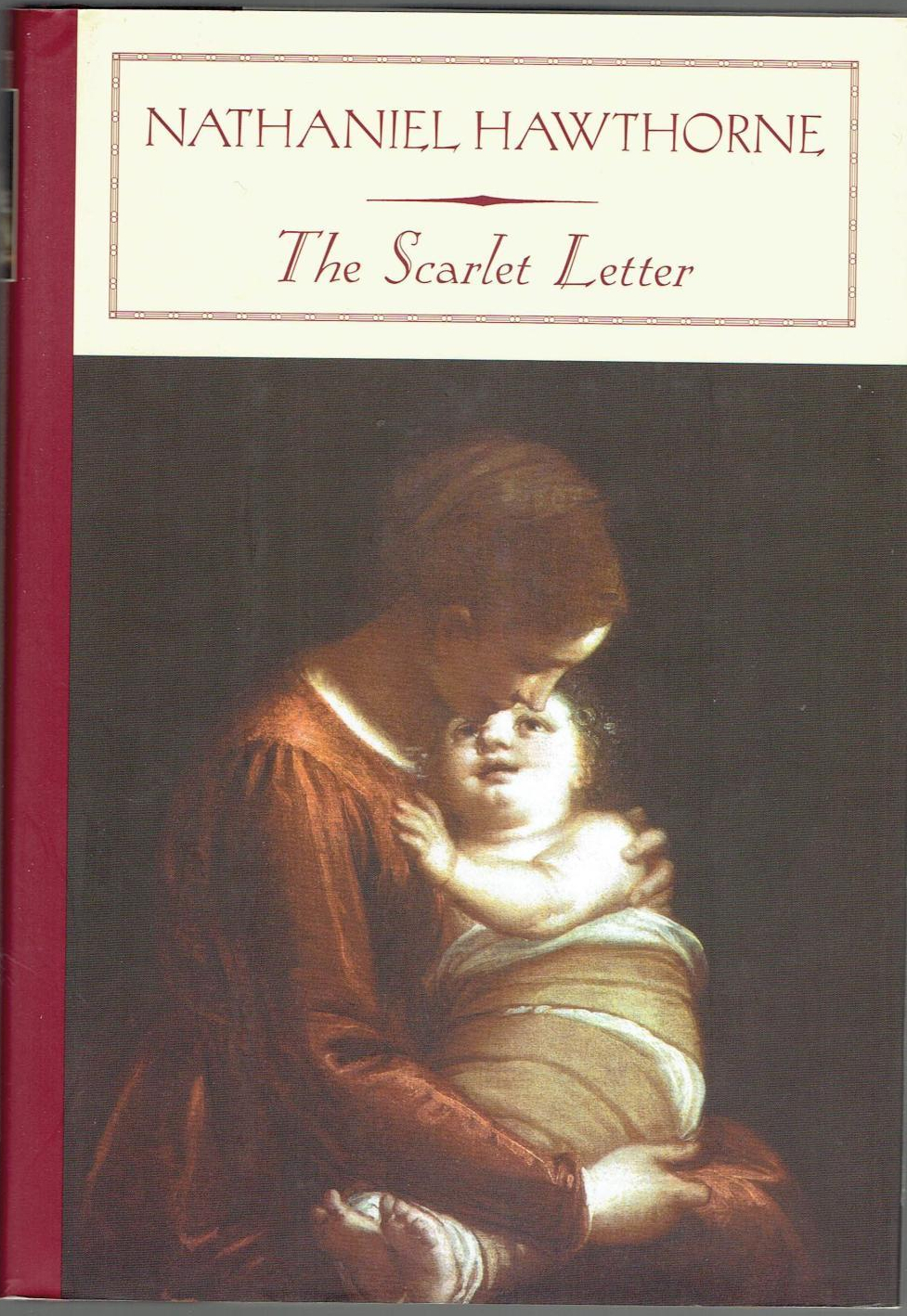
The Scarlet Letter by Nathaniel Hawthorne
The start of December was marked by books from my 2024 Beat the Backlist Challenge. The 17th from the list I read was Nathaniel Hawthorne’s The Scarlet Letter. It was way back in 2019 when I obtained a copy of the book; it was ubiquitous in must-read lists, hence, my curiosity. Originally published in 1850, the book opened with a long preamble of how the story came about which provided me a glimpse into Hawthorne’s writing process. The story is set in seventeenth-century Boston which was, back then, a Puritan settlement. We witness how a young woman, Hester Prynne, was led from the town prison with her infant daughter Pearl. On her breast was the titular Scarlet letter, “A”. Witnessing the spectacle was a crowd waiting for her punishment; she was convicted of adultery. Hester was sent to America by her older husband so that they could resettle there; he was to follow. However, Hester got pregnant with the paternity of her child remaining a mystery. Hester refused to disclose who Pearl’s father was, even before the minister of Hester’s church, Arthur Dimmesdale. The punishment for Hester’s crime was execution. However, the town elders gave her a less severe punishment: public shaming, the scarlet letter, and a couple of years in incarceration. Upon her release, Hester lived a secluded life on the outskirts of town, earning a meager income from her needlework. Meanwhile, her husband took on a new identity, Roger Chillingworth, intent on unmasking the identity of her wife’s lover. Overall, The Scarlet Letter was quite intriguing and I must admit, I did struggle a bit with it. I had to deliberately read the book slowly to wade through its various complex elements.
Goodreads Rating:

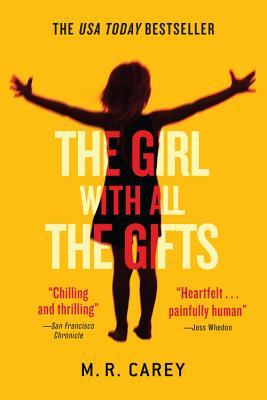
The Girl With All the Gifts by M.R. Carey
Like the first two books I read in December, it has been quite some time since I acquired my copy of M.R. Carey’s The Girl With All the Gifts. I was intrigued by what it had in store back then. However, the magic wore off because the book was left to gather dust on my bookshelf. To finally tick the book off from my long outstanding reading list, I included it on my 2024 Beat the Backlist Challenge List. While I had ideas of what the book was about, I was blindsided by the book. I understand that it is a work of dystopian fiction but I was thinking along the lines of The Chaos Walking trilogy. Regardless, the story takes the readers to the English countryside, to an underground bunker known as Hotel Echo where we meet the titular girl with all the gifts, ten-year-old Melanie. Along with other children, she attends a class escorted by armed soldiers from prison-like cells to the classroom. Apparently, the children are no ordinary children. They are “hungry” children who were infected with a pathogen called Ophiocordyceps unilateralis. Dr. Caroline Caldwell believes she is about to decipher the mysteries of the pathogen. To do so, she must dissect Melanie’s brain. Melanie’s teacher, Helen Justineau, however, did not allow it to happen. Shortly after Helen disrupted Dr. Caldwell’s surgery, chaos ensued after a group of junkers and hungries attacked the bunker. Dr. Caldwell, Helen, and Melanie, along with Sergeant Eddie Parks and Private Kieran Gallagher, were able to retreat. What ensued was a journey across a landscape altered by the pathogen. The Girl With All the Gifts is a pulsating read that rarely lets up. Action-packed, it kept me at the edge of my seat for the rest of the ride.
Goodreads Rating:
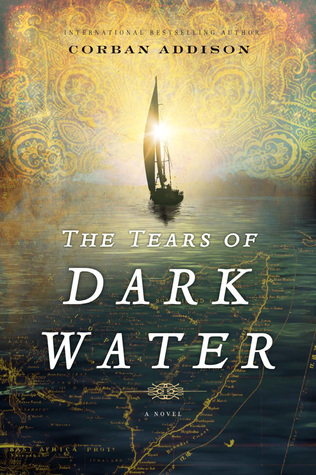
The Tears of Dark Water by Corban Addison
If my memory serves me right, I bought Corban Addison’s The Tears of Dark Water at the same time I acquired The Story of Edgar Sawtelle. Both books, unfortunately, suffered the same fate as they were left to gather dust on my bookshelf. This prompted me to include the books in my 2024 Beat the Backlist Challenge. I am beyond ecstatic to have ticked it off from my long list of to-be-read lists. While I had no expectations of The Tears of Dark Water, I have to admit that it left me in awe. Structurally, The Tears of Dark Water can be divided into two prominent sections. The first tier takes place in the Indian Ocean where David and Quentin Parker’s sailboat was held hostage by Ismail Adan Ibrahim and his motley crew of Somali pirates. Within hours, negotiations were underway, with top-notch FBI negotiator Paul Derrick at the helm. However, Ismail was too quick-witted for Derrick and the two played a game of mental chess. Unfortunately, the deal fell through at the last minute, leaving David dead, Quentin battling for his life, and Ismail on trial in the United States for his crimes. Derrick was also left devastated with ghosts of the past floating to the surface. The unraveling of the courtroom drama forms the meat of the novel’s second tier. Defending Ismail was Megan, Paul’s sister. The novel, however, does not reduce itself to a mere crime and courtroom drama. The novel takes the readers through the history of the conflict in Somalia; in the past few decades, Somalia established a reputation for its warring warlords and their piracy. Politics, history, armed conflict, romance, and even a nail-biting escape converged in this lush and propulsive story. Overall, The Tears of Dark Water is a compelling novel that I lament not having read sooner.
Goodreads Rating:


Thirst for Love by Yukio Mishima
Wrapping up my 2024 Beat the Backlist Challenge is a very familiar name, Yukio Mishima’s Thirst for Love. Thirst for Love is the fifth novel by the controversial Japanese writer I read, making him the fifth Japanese writer who I have read at least five works, joining equally critically acclaimed writers Haruki Murakami and the three Japanese Nobel Laureates in Literature, Yasumari Kawabata, Kenzaburō Ōe, and Kazuo Ishiguro. Originally published in 1950 as 愛の渇き (Ai no Kawaki), the novel is set shortly after the conclusion of the Second World War. A young woman named Etsuko is at the heart of the story. At the commencement of the story, she was navigating the alleys of Osaka to shop. Originally from Tokyo, she moved to the Kansai region following her philandering husband Ryosuke’s demise from typhoid. Following her husband’s death, she received an invitation from her widowed father-in-law Yakichi, inviting her to live with him in the Kansai countryside where he was tending to his farm. Ryosuke’s younger siblings, both adults and married, also lived with their father, helping grow the farm. Feeling alone in uncharted territory, Etsuko eventually relented to the advances of her father-in-law; it was a relationship tacitly accepted by everyone in the household. However, it was another man in the household, Saburo the hired house help, who she had set her sights on. This is, however, no typical romance story. Etsuko obsessed over Saburo but he barely showed any interest in her. She interfered with his personal affairs while lusting over him. It is not a book often associated with Mishima but Thirst for Love provides glimpses into a different dimension of his oeuvre.
Goodreads Rating:

A Woman of Pleasure by Kiyoko Murata
After completing all the books in my 2024 Beat the Backlist Challenge, I commenced a mini-foray into Japanese literature. From Mishima, my literary journey to a name I came across just this year, Kiyoko Murata who I learned was quite a figure in Japanese literary circles. She has won some of the most prestigious Japanese literary prizes, including the Akutagawa Prize. However, very little of her work was translated into English. Among them was A Woman of Pleasure, ubiquitous earlier this year, naturally piquing my interest. Originally published in 2013 as ゆうじょこう (Yūjokō), the novel is set at the turn of the 20th century. Fifteen-year-old Aoi Ichi grew up on the rocky volcanic island of Iojima off the coast of Nagasaki. The island offers little future to its citizens and Ichi is expected to grow up like her mother, a female diver. Unexpectedly, she was sold to an exclusive brothel in Kumamoto to settle a long-standing debt by her impoverished family. At the brothel named Shinonome, she was trained to be a courtesan; the brothel was named after the brothel’s most prominent courtesan who also happened to be Ichi’s mentor. Ichi proved to be a very smart young girl who loved to write and enjoyed her lessons, impressing her teacher Tetsuko. The novel was, in a way, her coming-of-age. Despite her situation, Murata treated Ichi and her fellow courtesans with dignity. The novel also captured the changes shaping the Japanese pleasure industry. Laws were instituted to avoid trafficking and abusive contracts, with the story transforming into a political novel as the courtesans exercised their legal rights. Overall, A Woman of Pleasure is a riveting timepiece that delves into another facet of Japanese society.
Goodreads Rating:

Under the Eye of the Big Bird by Hiromi Kawakami
Interestingly, 2024 is the first time in a while that I have not hosted a Japanese literature month. Nevertheless, I tried my best to read as many works from my favorite part of the literary world as I could. This brings me to Hiromi Kawakami’s latest translated novel, Under the Eye of the Big Bird, which I only learned about when I came across it during one of my ventures into the bookstore. I have been meaning to explore Kawakami’s oeuvre ever since my not-so-satisfactory encounter with The Nakano Thrift Shop which I read back in 2019. Like The Nakano Thrift Shop, Under the Eye of the Big Bird is comprised of interconnected vignettes. Set thousands of years into the future, Kawakami’s latest translated novel paints a grim portrait of the future and of humanity. The human race is on the cusp of extinction. With powerful nation-states dismantled, humans reformed into small and isolated societies across the globe to survive. The chapters comprising the novel are narrated by different beings who provide glimpses into Kawakami’s vision of the future. The beings are generally human-like but some beings developed remarkable powers such as the ability to “scan” (read) other people’s minds while some beings’ physical attributes have been greatly altered. The denizens of this imagined future’s major concern, however, involves the ability to procreate. Various forms of artificial life-creation have become prevalent, usurping natural procreation. The book is less focused on the characters but more on the dynamics of the world that Kawakami conjured. The fragmented structure can be disorienting but Kawakami’s worldbuilding was fascinating. The vivid descriptions made this world come alive.
Goodreads Rating:
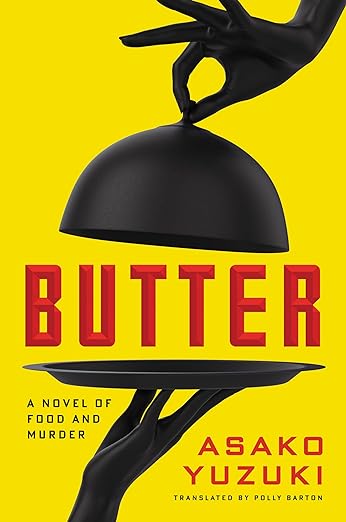
Butter by Asako Yuzuki
From the past to the future, my next read is set in more recent times. Its diversity is why I love Japanese literature. Recently, I noticed a spate of Japanese works being made available to Anglophone readers. Among these books is Asako Yuzuki’s Butter. I had not heard of Yuzuki until early this year when Butter was ubiquitous, piquing my interest. At the heart of Butter is Rika Machida, a young journalist working for a men’s magazine. Born and raised in Tokyo, Rika is the only woman in her news office Rika was often assigned to work on the most controversial pieces but she rarely gets credit for her work. Ambitious, she is resolute in her pursuit of becoming the first woman on the editorial board. Rika finds comfort in the company of her best friend Reiko. The crux of the story, however, was the upcoming retrial of gourmet cook Manako Kajii, otherwise known as Kajimana. She was convicted of killing three of her lovers who share common denominators: lonely businessmen beyond their forties who are in want of a female companion, regardless of how she looks. Kajimana is not conventionally attractive as she is fat and is not the type that the victims’ families think their murdered family member would date. It is alleged that Kajimana seduced her lovers with her cooking. Because of her exterior, Kajimana – who hated margarine and feminists – was subjected to prejudice, especially when her case became a national sensation. While the novel was an indictment of Kajimana’s character, her case was a crucible through which the grander subject of misogyny in Japanese society is explored. The novel, however, has the tendency to meander but, overall, it was a riveting read.
Goodreads Rating:
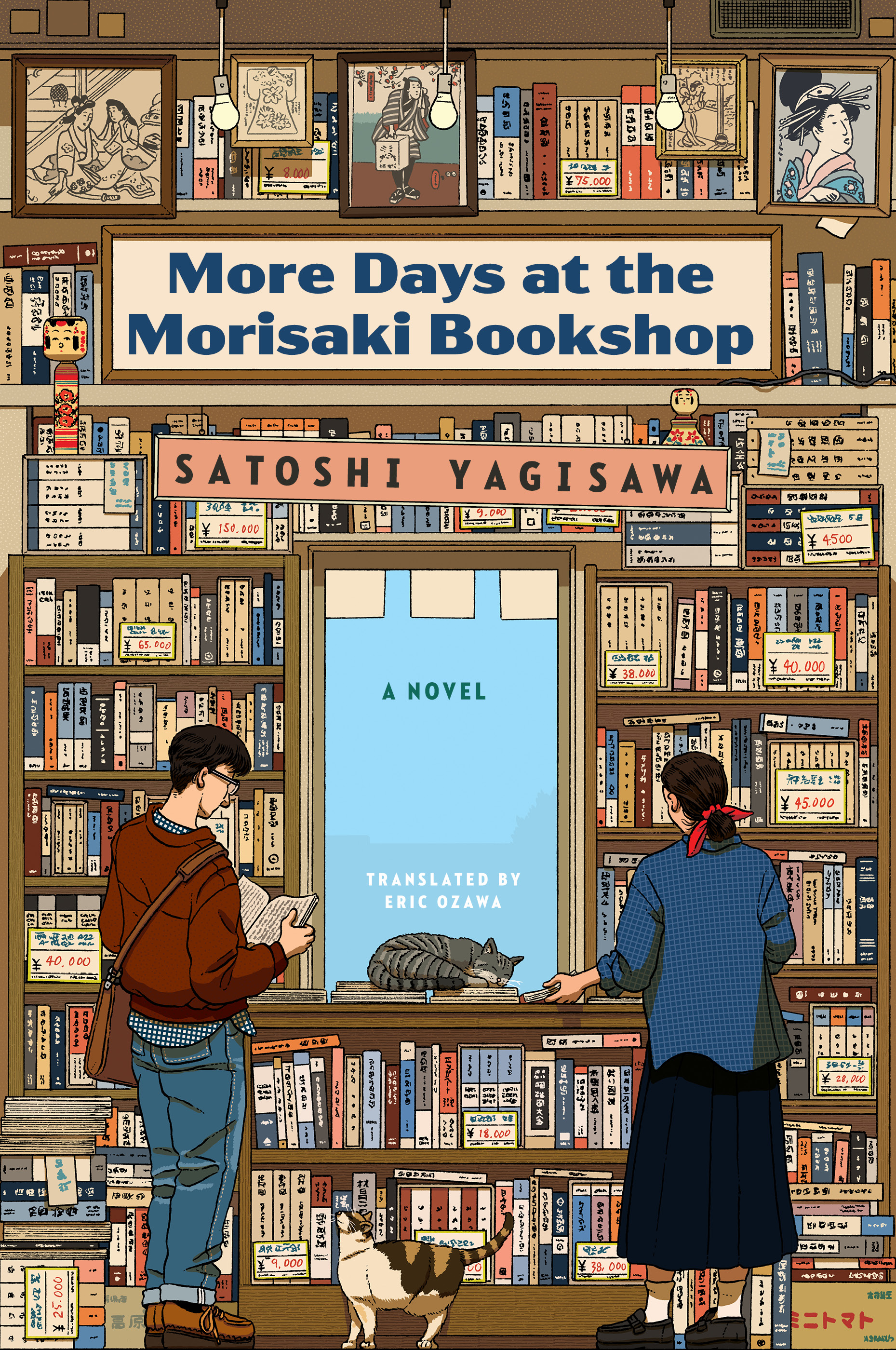
More Days at the Morisaki Bookshop by Satoshi Yagisawa
Satoshi Yagisawa earned global recognition with the English translation of his debut novel, Days at the Morisaki Bookshop. It was ubiquitous when it was released last year. I did not pass on the opportunity to read the book which, interestingly, I read while I was in Tokyo. I liked the heartwarming story and when its sequel, More Days at the Morisaki Bookshop, was released, I was looking forward to it. It was actually my Christmas Day read. More Days at the Morisaki Bookshop reintroduces Takako, the heroine of the first book. After a rough patch following a heartbreak, she was able to pick herself up and heal from her heartbreak while looking after the titular Morisaki Bookshop run by her uncle Satoru. She has moved to a different part of the city but she still occasionally visits the bookshop. Morisaki Bookshop remains unchanged, for the most part. Bookshop regulars still drop by if not to buy books but also to strike conversation with Satoru. Saveur, the community coffee shop, is still teeming with activities. Life went on, as usual. However, the reappearance of Satoru’s wife Momoko altered the dynamics; five years ago, she abandoned her husband without even uttering goodbye. The second book expanded its purview and delved into the lives of the other members of the community. Wada, Takako’s lover, was planning to write his own novel. Takano was dealing with his own heartbreak. And then there is Momoko. The mystery behind her sudden disappearance was slowly brought to light. It drove the story toward a devastating and heartbreaking conclusion. Despite the heartbreaks, More Days at the Morisaki Bookshop maintains the sense of community that elevated its predecessor.
Goodreads Rating:

The City and Its Uncertain Walls by Haruki Murakami
One of the reasons I kept delaying my venture into Japanese literature this year was the release of the English translation of Haruki Murakami’s latest novel, The City and Its Uncertain Walls. It was released in November but I was looking forward to what the long-awaited Murakami novel has in store; when its Japanese copy was released, I was in Japan, my first visit to the Land of the Rising Sun. Typical of Murakami, the story is narrated by an anonymous male character. When he was seventeen, he fell in love with a girl a year younger than him after they both won an essay writing contest. The girl – who was also anonymous – could not reciprocate his feelings because, as she explained to him, her “real” self was residing in a city beyond a wall. Despite this, his yearning and desire for her kept growing. From the fragments of their imagination, they created a vision and a map of the city, the details of which were written down by the boy. The city where her real self lives was surrounded by a wall, hence, the title. There were restrictions to entering the city, such as the shadow separated from the physical body. In alternating chapters, the boy conveys his experiences in both the real and the mystical world. His life unraveled when the girl she fell in love with suddenly disappeared, with not much of a goodbye. Into adulthood, he tried to move on but her memories haunt him. After working for a publisher, he decided to resign and move to the countryside where he worked for a local library; he dreamed of working for a library. The question lingers of if he will ever be able to get to the bottom of the city with the walls. The premise immediately reminded me of an earlier Murakami novel, Hard-Boiled Wonderland and the End of the World, even without reading the author’s Afterwords. Apparently, the original manuscript for the story, a short story, was published as early as the 1980s. Without a doubt, The City and Its Uncertain Walls is one of my favorite Murakami novels, a paean to writing, books, and libraries. Like his earlier works, it was not always easy deciphering the story but Murakami did what he does best, stringing you along for the ride.
Goodreads Rating:

The Curse of Pietro Houdini by Derek Miller
I concluded my 2024 reading year with a book that is part of my 2024 Top 10 Books I Look Forward To List, Derek Miller’s The Curse of Pietro Houdini. At the start of the year, while searching for the most anticipated books for the year, it was one of the titles that was repeatedly mentioned, hence, its inclusion to my own list. It took some time but I was able to obtain a copy of the book. The Curse of Pietro Houdini is set during the twilight year of the Second World War. The Allies were making advances in Italy to liberate it from the Germans and Mussolini. During the bombing of Rome by Americans, a fourteen-year-old girl lost her parents while narrowly escaping, making her way to Naples. She ended up in the small village of Cassino where she was found by Pietro Houdini in a ditch. Pietro takes her to the Benedictine monastery of Montecassino where the girl becomes a boy named Massimo; Houdini presents themselves as an art restorer and his assistant. Soon, the monastery’s extensive art collection earned the interest of the Nazi Germans who want to have the art collection themselves. Pietro crafted a plan to restore and save some of the paintings; they were also vulnerable to the threat of the Allies who wanted to bomb the monastery believing that the Nazis were using it as part of their strategy to thwart the Allies. Stealing, rather, saving some art pieces and Greek coins propelled the action. However, what made the story flourish was the developing relationship between Pietro – named after Harry Houdini – and Massimo. An interesting facet of the story is the shift in gender expression through the narrator. From a first-person point-of-view, the narrator assumed the persona of Massimo before shifting into the third person and Massimo transforming to Eva. Overall, The Curse of Pietro Houdini is a wonderful way to conclude my reading year.
Goodreads Rating:
Reading Challenge Recaps
- My 2024 Top 24 Reading List: 24/24
- 2024 Beat The Backlist: 20/20; 112/60
- 2024 Books I Look Forward To List: 9/10
- Goodreads 2024 Reading Challenge: 129/100*
- 1,001 Books You Must Read Before You Die: 17/20
- New Books Challenge: 17/15
- Translated Literature: 63/40
Book Reviews Published in December
- Book Review # 561: Mina’s Matchbox
- Book Review # 562: Before the Coffee Gets Cold
- Book Review # 563: Deep River
- Book Review # 564: Days at the Morisaki Bookshop
- Book Review # 565: Native Son
- Book Review # 566: Until August
Like in previous years, December has been quite tedious. The holiday rush converges with the year-end activities. While it has been, overall, merry, it was also jotted with reminders of the impending busy season. Nevertheless, despite the tedium, I am glad I was able to sneak in some book reviews. I originally planned to complete seven book reviews to hit 90 for the year. Unfortunately, I fell one review short. Still, I am glad I was able to publish six reviews and sustain the writing momentum I gained in the past four months. Six is still a good number. More importantly, I am making a dent in my 2023 pending book reviews; half of the reviews I published were of books read in 2023. This means that I am welcoming 2025 with quite a huge backlog from 2023; I have over sixty books pending. Nevertheless, I will try to work on and complete as many reviews this year as I can, with my 2023 pending reviews my priority. The mantra, as always, will be to take it one step at a time; although a little sense of urgency might help.
With how chaotic my previous four months have been, reading-wise, I am planning to restore order in the first quarter of the year. I have already decided to dedicate the first two months of the year to works of East Asian literature. This is partly due to my inability to host a Japanese Literature Month in 2024, the first time in a while I did not have one. This is also due to Han Kang’s recent awarding of the 2024 Nobel Prize in Literature, making the South Korean writer the first female Asian writer to earn the most prestigious literary prize in the world. Further, I recently learned that the English translation of one of Kang’s works is to be released later this month.
I can’t wait to immerse myself in works of Chinese, Korean, and Japanese literature; I have been amassing titles from these literatures recently. However, I am deviating for now because I am starting the year with Richard Powers’ Playground. Longlisted for the Booker Prize, I was looking forward to the book last year but, unfortunately, it was only recently that I was able to obtain a copy of the book. From Playground, I am pursuing my foray into East Asian Literature; I already had a mini-run of Japanese literature in mid to late December. It would be no surprise that Japanese literature will dominate it. I already have some works by Shūsaku Endō, Banana Yoshimoto, Osamu Dazai, Sawako Ariyoshi, and Jun’ichirō Tanizaki in mind. I am still wondering when Mieko Kawakami’s latest work is to be released in English translation. I also have a slew of new-to-me Japanese writers whose oeuvres I am raring to explore.
How about you fellow reader? How is your own reading journey going? I hope you enjoyed the books you have read. For now, have a great day. As always, do keep safe, and happy reading everyone!

