Just like that, the curtains have drawn on the first five months of the year. Time is certainly taking its natural course, without regard for anyone. We are already nearly midway through the year. So far, it has been quite an uneventful year for me although, at the same time, it feels like nothing consequential has happened. Anyway, I hope the year has been kind to everyone. I hope that it is granting you favors. I also hope you are having a head start on your goals. I hope that the remaining months of the year will be great. I hope you do well in your individual journeys. I pray for a year of joy, healing, goals achieved, and prayers answered. It is still okay for those whose goals are just to make it from one point to another. With the turmoil enveloping us, muting the noise can be challenging. More importantly, I hope everyone stays healthy, in mind, body, and spirit.
Thankfully, I am already on my way to completing some of my reading goals; I do have some lofty ones. For one, I am already halfway through my goal of reading 100 books this year. Barring any obstacles, this will be the fourth year in a row that I will be crossing the three-digit mark. It is also my goal to read more translated books than books originally written in English. This is one of the reasons why I commenced the year with works of East Asian writers. I then pivoted toward the rest of the Asian continent. Because of the sheer volume of Asian works I wanted to read, I extended this journey to May. I have, literally been, reading works of Asian writers this year. Not that I am complaining as the journey has so far been memorable. So before I move on to the next month of the year, let me share the conclusion of my foray into works of Asian literature. Happy reading!

Deplorable Conversations with Cats and Other Distractions by Yeoh Jo-Ann
While I managed to pick up pace toward the end of April, I suffered a bit of a slump to start May but I managed to regain the momentum toward the end of the month. Opening my May reading journey is a book I thought was written by a Korean writer; I originally planned to make Yeoh Jo-Ann’s Deplorable Conversations with Cats and Other Distractions part of my foray into East Asian literature. Nevertheless. I was able to repurpose Deplorable Conversations With Cats and Other Distractions which was the Malaysian writer’s sophomore novel. It is an addition to my growing collection of feline fiction. At the heart of the story is Lucky Lee, a man in his late thirties. Born to an affluent family whose fortune was built on coffee, Lucky’s family’s affluence allowed him to live a charmed life although he was not much use in any other respect. He had a degree in architecture which he does not practice. Instead, he was living rent-free in the family home although he did try to start multiple business ventures, most of which ended in failure. The only business that flourished is Caffiend, an independent cafe located in his late father’s Joo Chiat shophouse. Meanwhile, Lucky’s sister Pearl Lee was his antithesis. She is a renowned TV chef and food critic. Despite their differences, the siblings grew up close. When Pearl perished in a horrific plane accident, Lucky’s life went tail-spinning. A breath of fresh air came in the form of Coconut, Pearl’s pet cat she left to her brother. As Lucky was locked in grief, and swept by memories of childhood, Coconut bore witness. Then out of the blue, Coconut started to speak, breaking Lucky out of his prolonged lethargy. Deplorable Conversations With Cats and Other Distractions takes the readers on a journey that courses through subjects such as grief, self-discovery, mental health, and meaningful connections. Despite some flaws, Yeoh’s sophomore novel is a riveting read.
Goodreads Rating:


More Than I Love My Life by David Grossman
From Southeast Asia, my next read took me to an unfamiliar literary territory. Israeli literature is a foreign territory to me and it is only recently that I forayed into this part of the literary world. I know very few Israeli writers. Among those I know – and I just learned of him because his work was nominated for the International Booker Prize – is David Grossman who I learned is quite an influential figure in Israeli literary circles. He is also a part of the perennial discussion for possible Nobel Prize in Literature awardees. As part of my ongoing foray into Asian literature, I acquired More Than I Love My Life. Originally published in 2019 in Hebrew as אתי החיים משחק הרבה (Eti Hachi’im Mischak Harva), the novel story charts the fortunes of three generations of women, starting in the contemporary. When Gili, the novel’s primary narrator, was young, she was abandoned by her mother Nina, and was raised by her grandmother Vera Novak. From the present, the story flashes back to the 1960s when Gili’s grandfather, Tuvia, lives with his sickly wife and their son, Rafael, on an unnamed kibbutz. When his wife passed away, Tuvia remarried, to Vera, a recent Yugoslavian immigrant who brought along with her her daughter. During Vera’s 90th birthday in 2008, the whole family converged to celebrate. Soon Nina confesses that she has a degenerative illness. As time ran out, she asked her estranged daughter and former lover, both filmmakers, to create a film about her life which entailed traveling to war-time Serbia and Croatia. More Than I Love My Life is a revelation. It is based on a true story and I can’t help but feel the pain of torture Vera had to go through when she was forcefully incarcerated in Goli Otok, a prison island called the Croatian Alcatraz. The novel is brimming with history but, at its heart, it is the story of resiliency and the indomitable human spirit.
Goodreads Rating:

Water Moon by Samantha Sotto Yambao
From one end of the continent to the other end. My literary journey next took me to somewhere closer to my heart. Interestingly, I initially had no intentions of reading Samantha Sotto Yambao’s Water Moon, a book that has been making the rounds recently. Several encounters later, I relented and acquired a copy of the book. It would be the first new book I read this year. It is also the third book written by a Filipino writer I read this year; yes, I have to explore Philippine literature more, and reading the book is a step in this direction. I was surprised when I learned the book was set in Japan rather than in the Philippines. On an obscure Tokyo alley, Toshio Ishikawa runs a pawnshop that appears like a ramen restaurant to customers; this is an initial hint of the magic that permeates the story. His twenty-one-year-old daughter Hana observes him as he caters to various customers. One morning, Hana woke up to a ransacked shop and a missing father. The worst part is that one of the precious, glowing birds kept in the vault also went missing. Keeping the birds safe was of paramount importance for Hana and Toshio. Otherwise, they risk their lives. The failure to keep the birds safe means apprehension by the Shiikuin, rotting soulless creatures reminiscent of Harry Potter’s dementors. The Shiikuins administer justice in Hana’s world. When the shiikuin made their presence felt, Hana embarked on a quest to locate her father. Meanwhile, Keishin, a prospective customer and scientist, enters the pawnshop and offers to help Hana. Despite their mutual apprehensions, Hana and Keishin set out on a quest. Overall, I find the book fascinating because I rarely read Filipino fantasy books. It helped that the writing is light and lyrical although honestly, I was not a fan of the novel’s romantic overtones because of its predictability. The world-building, however, was resplendent, making it a worthy read.
Goodreads Rating:

War Trash by Ha Jin
While I have been trying to avoid works of East Asian writers, I was not entirely successful. After all, East Asia is still a big part of Asia. It has been a while since I read a work by Chinese American writer Ha Jin who I first encountered through must-read lists. However, it has been nearly a decade since I last read one of his works. This reading experience nevertheless prompted me to acquire a copy of War Trash during the Big Bad Wolf Sale back in 2018. This is the reason why I included it in my 2025 Beat the Backlist Challenge and was supposed to be part of my East Asian literature reading adventure. At the heart of War Trash (2004) is Yu Yuan. During the prologue, we learn that he has settled in the United States and has a family of his own. However, the past lingers, with a tattoo saying “FUCK …U…S…” serving as a reminder. This begs questions and as one can surmise, the answers lie in the past. When he was younger, Yuan trained as a cadet at the Huangpu Military Academy. When the communists took over, the Academy’s loyalty also shifted, prompting Yuan to train to be part of the People’s Revolutionary Army where he served as a low-ranking official. The heft of the story takes the readers to the Korean War where Yuan was sent as part of the 180th Division. Due to his ability to understand English, albeit to a limited extent, Yuan was designated as a translator at the camp. Yuan’s stay at the camp and the battlefield opens the reader’s eyes to the realities and atrocities of war where low-ranking soldiers simply serve as pawns. Prisoners of War (POWs) are treated even worse. They are treated inhumanely, almost like animals. But the story is more than just about the horrors of war. In the terrifying environment, Yuan found himself in, he learned to adapt because it is the only way to survive the tumult. War Trash soars with its depiction of the indomitability of the human spirit.
Goodreads Rating:

Half a Lifelong Romance by Eileen Chang
From one Chinese writer to another. My next book introduced me to a new name, at least to me. A quick search of contemporary Chinese literature yields Eileen Chang’s name. She is a prominent figure in Chinese literary circles. However, I have yet to explore her oeuvre and Half A Lifelong Romance presented this opportunity. I initially featured the book in one of my Goodreads Monday updates because it piqued my interest. It took time but I was finally able to read the book. Originally serialized in a Shanghai newspaper Yi Bao (亦報) in 1948, under the title Eighteen Springs (十八春), it was collectively published as a single volume in 1950. The novel initially introduces Shijun, a man reflecting on his past, particularly his brief love affair with Manzhen. The duo were introduced to each other by their common friend, Shuhui; the trio converged in pre-war Shanghai where they worked to fulfill their dreams. When they were first introduced, Manzhen immediately captured the interest of Shijun. As they got to know each other, their attraction became stronger. The development of their romance, vividly and sweetly captured by Chang, was one of the novel’s strongest facets. But as fate would have it, their budding love affair was nipped in the bud. Family duties and traditions rise to the fore; they were duty-bound. Further, their relationship was undone by selfishness and conceit. The story then diverges into two main plotlines chronicling the families of Shijun and Manzhen. Their contrasting family stories highlight the traditions that permeate Chinese families. The novel highlights how these traditions and the responsibility to adhere to them adversely impact the family members. Drama and intrigue permeate the latter half of the story. However, a tender romance makes Half a Lifelong Romance a worthy read.
Goodreads Rating:

Vanishing World by Sayaka Murata
I didn’t have to go far for my next read. During the height of the pandemic, one of the writers who tickled my imagination – both in a good and bad way – was Japanese writer Sayaka Murata. Earthlings was a weirdly interesting reading experience but Convenience Store Woman was a scintillating and thought-provoking one. When I learned that Murata was releasing a newly translated work this year, I was up on my toes. Vanishing World is actually one of the reasons why I extended my foray into the works of Asian writers. Originally published in 2015 as 消滅世界 (Xiāomiè shìjiè), the novel is set in the not-so-distant future; in a way, this is a dystopian novel. Serving as a guide across this new world is Amane Sakaguchi. With an exponentially decreasing birth rate, society has devised different methods to conceive children. Sex has become taboo and children were mostly conceived through artificial means. Romantic love is also a rarity. Both sex and romantic love were deemed irrelevant and unnecessary. But most interestingly, men now grow fetuses in a sac of artificial skin. How the world has flipped. Amane, meanwhile, was considered a deviation because she was conceived through the physical sex of two individuals who were romantically in love. A stigma surrounded her and her peers treated her as such. It did not help her that she was in love with a fictional character. But as she grows up, she learns to strike a balance between modern society and the history of her conception. The story was quirky, to say the least. I guess I was not expecting anything less from Murata. Vanishing World reminds me of another recently translated Japanese work, Hiromi Kawakami’s Under the Eye of the Big Bird. Both novels subtly underline Japan’s decreasing birth rates. For all its quirkiness, Vanishing World is an interesting and compelling work that will unsurprisingly raise many eyebrows.
Goodreads Rating:

My Name is Adam by Elias Khoury
My foray into Asian literature reminded me how sparse my exploration of Middle Eastern and Arab literature is. Imagine, Elias Khoury’s My Name is Adam is the first book by a Lebanese writer I read. Had it not been for a casual encounter through an online bookseller, I would have not acquired the book; I bought it because it immediately piqued my interest and I wanted it to be part of my venture into Asian literature. Originally published in 2016 as أولاد الغيتو- اسمي آدم, My Name is Adam introduces Adam Dannoun, a melancholic self-exiled man working in a Middle Eastern restaurant in New York City. Through Sarang Lee, one of Khoury’s students, he got acquainted with the writer; this is how the novel was framed. Their friendship was cut short when a film based on Khoury’s book Gate of the Sun was shown. They lose touch but Khoury soon learns about Adam’s demise from an accidental fire. Some of Adam’s notebooks survived the fire and Sarang gave these notebooks to her mentor who decided to publish them. The notebooks contain Adam’s notes for two books he planned to write. One was an attempt at writing his own novel while the other was an attempt to write about his life. Nevertheless, both books provide glimpses not only into Adam’s family history but also into the history of the Palestinian cause, starting with the Nakba. The horror of the Nakba as captured in the novel reminded me how I know very little about this event. Palestinians were abused, forcibly removed from their homeland, placed in ghettos, and even tortured. These details are the reasons why I appreciate this book, as heartbreaking as it can be at times. With the recent events in Palestine, this book is a timely and relevant read. My Name is Adam, the first volume in Children of the Ghetto, makes me look forward to the rest of the series.
Goodreads Rating:


The Understory by Saneh Sangsuk
Toward the end of the month, I picked up pace. I guess my being on holiday for most of it played a role in this. It also made me travel to closer literary territories. Before this year, I have not read any novel originally written in Thai. This places Saneh Sangsuk’s The Understory in a unique position. Interestingly, it was only recently that I came across the Thai writer. Through an online bookseller, I came across the highly-regarded writer. Without ado, I immersed myself in my newly acquired book without ado. Originally published in 2003 as เจ้าการะเกด (Cêā kāraked), The Understory transports the readers to the Thai countryside, to the village of Praeknamdang. In the village, we meet Luang Paw Tien, the ninety-three-year-old abbot of the local temple. Despite his age, Luang Paw Tien spends most of his evenings entertaining the denizens, particularly the children, regaling them with the stories of his youth and myths. He also told stories of present-day Praeknamdang. However, one story stood out – and it would be the heft of the novel. During his youth, Luang Paw Tien had an adventurous life, spending most of it in the jungle, far from human interaction and close to wild animals. Of the animals he crossed paths with, one animal lingers: the tiger. A tiger killed Luang Paw Tien’s mother, Mae Duangbulan; the same tiger nearly killed ten-year-old Luang Paw Tien. He spent most of his youth being a hunter. But his stories are not merely personal. They tell the story of Thailand. Luang Paw Tien’s stories bridge the past with the present. One thing was palpable: the Thai landscape has drastically changed. Take the case of the jungle that enveloped Praeknamdang; it has receded. The same case is happening across the country as the land is claimed for farming and other human use. The Understory is a timely story that also highlights the beauty and the power of storytelling.
Goodreads Rating:

Novel Without A Name by Dương Thu Hương
From Thailand, my foray into works of Asian literature did not take me that far as I traveled to its Southeast Asian neighbor, Vietnam. Like in the case of Thai literature, my venture into Vietnamese literature is also quite limited. Among the few Vietnamese writers I encountered previously is Dương Thu Hương. I first encountered her during the 2018 Big Bad Wolf Sale in Manila. She is quite a prominent name in both Vietnamese literary and political circles; politics, unsurprisingly, is astutely woven into her works. After The Zenith, Novel Without A Name is the second novel written by the Vietnamese writer I read. Originally published in 1991 as Tiểu thuyết vô đề, Novel Without a Name charts the story of Quan, a unit commander serving under the Viet Cong. When he was younger, he and his childhood friends Bien and Luong joined the military in the hopes of making a change for their country. We first meet Quan with his military unit which recently buried six dead girls they found a couple of weeks prior. This has set the tone for the horrors that permeated the novel. Of the three, Luong rose above the ranks and is now Quan’s superior officer. Meanwhile, Bien has gone insane and Luong sends Quan to find him. As Quan navigates the fractured landscape irreversibly altered by the War, the readers are provided glimpses into its atrocities and the imprints of trauma it leaves not only on the land but those who occupy it. During his journey, Quan was reminded of the traumas of the war that he was once part of. But Novel Without A Name is also a political discourse. In Zone K, Quan was forced to confront various political ideologies. In a way, Novel Without A Name takes the readers to a familiar contemporary Vietnamese literary landscape. Shedding light on the heritage of war, Novel Without A Name is a compelling read; I prefer it over The Zenith.
Goodreads Rating:
One Part Woman by Perumal Murugan
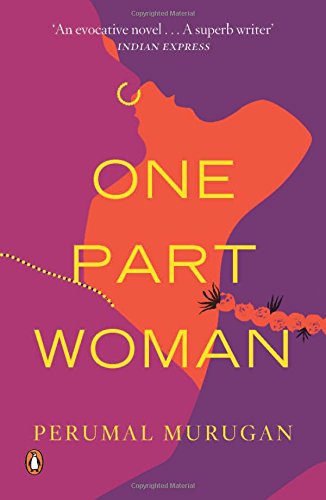
Compared to Southeast Asian literature, Indian literature is slowly becoming a more familiar literary territory to me Honestly, beyond Rushdie, the list of Indian writers I am quite familiar with is quite limited. Thanks to the Booker Prize, I got to know some of them, including Perumal Murugan who I first encountered in 2023 when his novel Pyre was nominated for the International Booker Prize; it was the first novel originally written in Tamil to be nominated for the Prize. I have acquired some of his works, with One Part Woman the second novel I read. Originally published in 2010 as மாதொருபாகன் (Mathorupagan), One Part Woman takes the readers to the Indian countryside town of Tiruchengode in Tamil Nadu. The story focuses on Kali and Ponna, a couple who have been happily married for twelve years. However, their inability to conceive a child haunts them. In a society where bearing and having a child is the norm and the gauge for marital success, the couple received harsh judgments from their families and members of the village. Their childlessness was attributed to various factors such as curses or penance for God’s wrath; this is, after all, set in the countryside where superstition is ubiquitous. Cognizant of everyone’s judgment, the couple tried to find remedies for their malady. However, their pleas fell on deaf ears. Kali was even encouraged to take a second wife. While he considered it, he ultimately rejected the idea. The story was, I learned, inspired by the realities faced by childless couples that Murugan witnessed. As he captures them through his words, Murugan highlights the weight that traditions place on couples and individuals. One Part Woman – the title was derived from the belief that men are one part women and vice versa – reminds me of The Story of a Goat in its evocative portrait of life in the countryside. Murugan is certainly growing on me.
Goodreads Rating:

Deviants by Santanu Bhattacharya
I didn’t stray too far for my next read. While I have been making headways into my overall reading goal, I can’t say the same for my 2025 Top 10 Books I Look Forward To List. Historically, it has been a struggle to acquire copies of recently released books in the Philippines. Thankfully, a trip to Singapore yielded a copy of Santanu Bhattacharya’s Deviants. Before this year, I had not encountered the Indian-born writer who I came across while researching books to include in my own most anticipated 2025 releases. Basically, Deviants is the story of three generations of homosexual men in India. In the contemporary, we meet seventeen-year-old Vivaan who was living in India’s Silicon Plateau. Although Vivaan was discreet, his parents recognized his homosexuality and they were supportive of it. Vivaan’s world unraveled when he met Zed through a dating app. Zed would also be his introduction to the complex world of love and desire. Vivaan’s India was more tolerant of homosexuality. The same cannot be said of the era in which Vivaan’s uncle Mambro grew up. Recognizing himself in his nephew, Mambro prompted Vvaan to record his thoughts and experiences; Vivaan’s story came in the form of notes. In the 1990s, Mambro was also navigating gay life in India. Meanwhile, Vivaan’s great-uncle (or grand-mamu), Sukumar, was studying commerce in Kolkata in 1977. It was a stark contrast to Vivaan’s India. While the world Mambro grew up in was already hostile, Sukumar’s India was even more so and it was all because of section 377 of the penal code which criminalized homosexuality. With no other means to express himself, Sukumar found an outlet in sculpting. In the story of his three equally compelling characters, Bhattacharya provides insights into the life and struggles of gay men in modern India. Deviants is also a story about finding love and acceptance in a world that rejects it.
Goodreads Rating:

The South by Tash Aw
I concluded my May reading journey with another work of queer fiction; this was without design. Like Deviants, Tash Aw’s The South was included in my 2025 Top 10 Books I Look Forward To List, making it the second book from the said list I read. The first book in what the Malaysian writer plans to be a quartet, The South introduces the Lim family. The patriarch, Jack Lim is a professor who married Sui Ching, one of his students and fifteen years his junior. They were living in the capital and had three adolescent children: Lina, Yin, and Jay. The crux of the story was when Sui Ching inherited the Lim ancestral home from her father-in-law; she was not close with her in-laws but she managed to connect with her father-in-law. Due to her inheritance, the family travels to the countryside to assess the farm currently run by Fong, Jack’s illegitimate half-brother. The farm, however, has seen better days. A persistent drought had ruined harvests, driving them into debt. Amenities were scarce. The rigors of rural life posed a challenge to the family. The same, however, cannot be said for Jay who was about to turn seventeen. Jay relished the change in pace and the atmosphere. He also found interest in helping the laborers. However, one person piqued his interest: Chuan, Fong’s nineteen-year-old son. The attraction was expected because the novel opens with Jay and Chuan having sex for the first time. Their blossoming relationship was juxtaposed to the changes sweeping Malaysia in the 1990s. This historical backdrop adds depth and nuance. Unmitigated development is the elephant in the room as Malaysian rainforests – considered the oldest in the world – are being transformed. The world does not bat an eye because it is not the Amazon, as one character noted. Further, the other family members also had their moments of introspection. Overall, The South is a compelling read which makes me look forward to the succeeding books in the quartet.
Goodreads Rating:
Reading Challenge Recaps
- 2025 Top 25 Reading List: 7/25
- 2025 Beat The Backlist: 8/20; 49/60
- 2025 Books I Look Forward To List: 2/10
- Goodreads 2025 Reading Challenge: 52/100
- 1,001 Books You Must Read Before You Die: 1/20
- New Books Challenge: 3/15
- Translated Literature: 41/50
Book Reviews Published in May
- Book Review # 581: There Are Rivers in the Sky
- Book Review # 582: When We Were Orphans
- Book Review # 583: Red Sorghum
- Book Review # 584: Nights of Plague
- Book Review # 585: My Name is Red
- Book Review # 586: Song of Solomon
In terms of writing, I can say that I am slowly building momentum. The past four months have been sluggish to say the least although I have been trying to pick up the pen. I did not expect the opening third of the year was going to be this hectic. Nevertheless, I am glad that I am slowly picking up pace in May. During the month, I managed to complete six book reviews, the most I published in a month this year so far. Further, with Kazuo Ishiguro’s When We Were Orphans, I was finally able to complete all pending book reviews from May 2023. I have now shifted my focus on my June 2023 pending book reviews which are all works of Asian writers. To say I have a lot is quite an understatement.
I actually have a lot of pending book reviews from 2023. This June, I will be doubling my effort to reduce this number. My focus will be on my June 2023 pending book reviews. Nevertheless, the goal is still to take it one step at a time. I will still try to complete as many book reviews as I can. However, I am currently reviewing the works of Nobel Laureates in Literature I read in previous years. After that, I will be working on my review of recently published books. I will then revert to books I read in June and July 2023. I was also reminded that I am inching closer to my 600th book review. Woah. I can’t believe that I am about to hit 600. It still feels like yesterday when I was figuring out how to compose my first book review. It has since evolved.
In June, I have decided to pursue my foray into the works of Asian writers, at least for the first half of the month. This is mainly because I still have several works of Asian literature I want to read. It has been a scintillating journey so far because the books I read provided me windows into the continent’s diverse culture and people. I am currently reading Ocean Vuong’s sophomore novel, The Emperor of Gladness. Ever since his successful fiction debut with On Earth We’re Briefly Gorgeous, I have been looking forward to his succeeding novel. I was beyond excited when I heard of The Emperor of Gladness‘ release this year. I am also looking forward to reading my first Can Xue novel; the Chinese writer has long been touted as a shoo-in for the Nobel Prize in Literature. After this, anything goes but as I navigate Asian literature, I am sure I will be coming across titles I will be adding to my ongoing reading journey.
How about you fellow reader? How is your own reading journey going? I hope you enjoyed the books you have read. For now, have a great day. As always, do keep safe, and happy reading everyone!
 The Pine-Scented Chronicles