
Happy Wednesday, everyone! Wednesdays also mean WWW Wednesday updates. WWW Wednesday is a bookish meme hosted originally by SAM@TAKING ON A WORLD OF WORDS.
The mechanics for WWW Wednesday are quite simple: you just have to answer three questions:
- What are you currently reading?
- What have you finished reading?
- What will you read next?

What are you currently reading?

It is already the middle of the week. How has your week been? I hope it’s going well and going in your desired direction. Woah. Time is indeed flying fast! We are nearly done with the sixth month of the year. We are also closing in on the middle of the year, i.e., July 2. This also means that I am about to become a year older. Anyway, how has the year been so far? I hope it’s going well for everybody. I hope you are being showered with blessings and good news. I hope the rest of the year will be prosperous, brimming with wealth, but more importantly, good physical and mental health. I hope everyone is already making progress on their goals. If the year is going otherwise, I hope you will experience a reversal of fortune in the months to come. In terms of reading, I am well ahead of my goal, but I have been lagging behind in my reading challenges. As such, my focus this second half of the year will be on these reading challenges.
Currently, I am about to draw the curtains on my foray into the works of Asian writers. I basically spent the first half of the year reading works of Asian writers, with the first quarter dedicated exclusively to East Asian writers. As I wrap this journey up, I have been venturing into the oeuvre of new-to-me writers. This includes Turkish writer Sabahattin Ali, whom I only encountered through online booksellers. He is quite a prominent figure in the Turkish literary circles, and among his novels, Madonna in a Fur Coat is widely considered his magnum opus. This made me want to read his work. Since I am just about to read the book, I don’t have much impression to share for now. Nevertheless, I will share more of my impressions of the book in this week’s First Impression Friday update.
What have you finished reading?
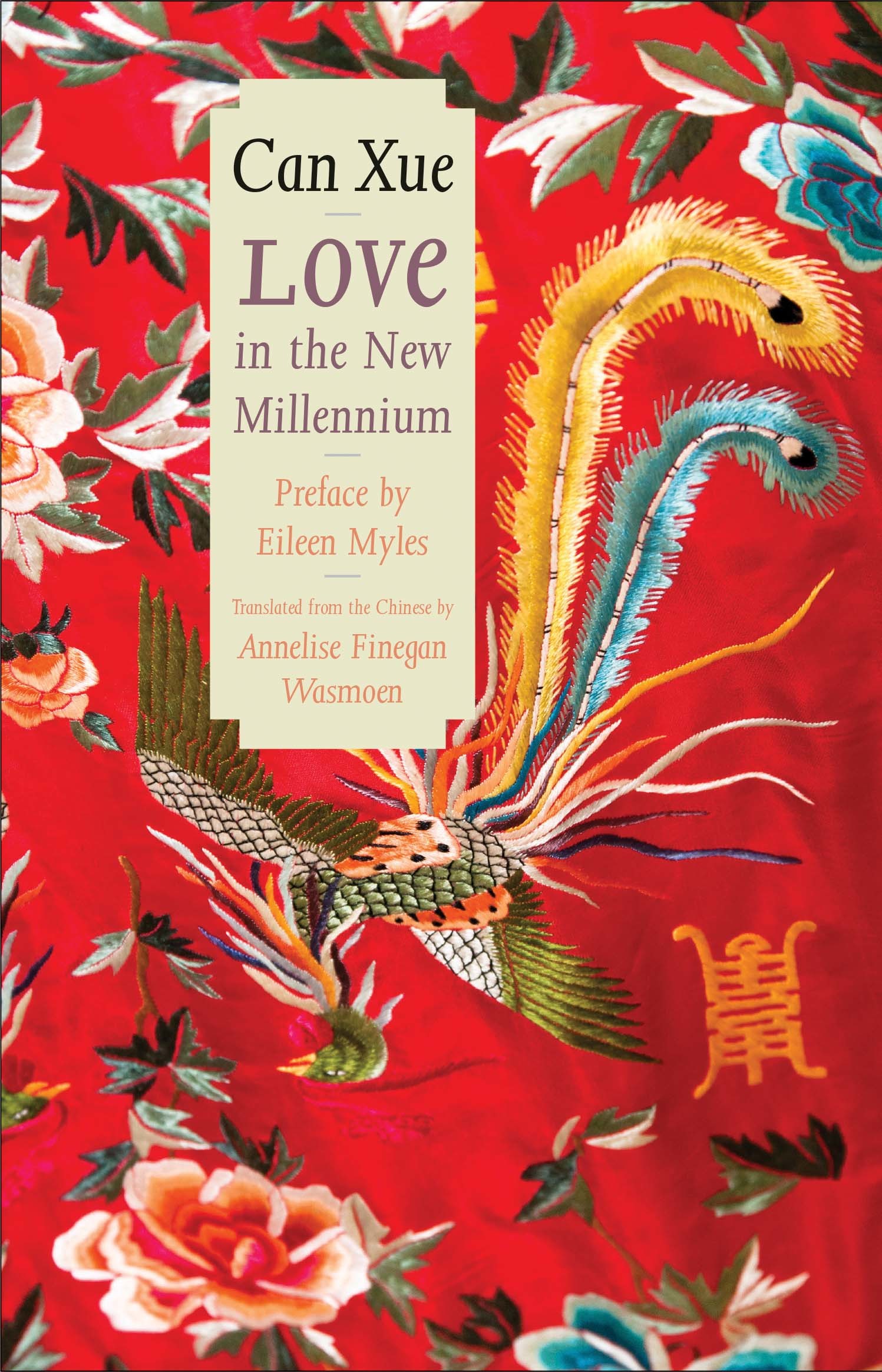
After having two slow reading weeks back-to-back, I have been able to acquire a semblance of momentum. In the past week, I was able to complete three books. This past week was a rather slow reading week, at least in terms of reading output. The first of the three books I completed was Can Xue’s Love in the New Millennium. I first encountered the Chinese writer before the pandemic. However, my unfamiliarity with her kept me from acquiring her works. A couple of years later, I would again encounter her. She has been touted by several literary pundits (and, well, bettors) to be a shoo-in for the Nobel Prize in Literature. She actually topped some betting sites in 2023 and 2024, but lost. Nevertheless, it was more than enough to pique my interest and give her oeuvre a chance.
Love in the New Millennium serves as my primer to the avant-garde writer born Deng Xiaohua. By the way, Can Xue, dubbed as one of the most prominent contemporary Chinese writers, was also awarded the Neustadt International Prize for Literature. Longlisted for the International Booker Prize, Love in the New Millennium introduces a vast cast of characters who were mainly connected to China’s underground sex industry. The novel commences when Wei Bo breaks up with his lover, Niu Cuilan, a factory worker; he is married to Xiao Yuan, a woman with many quirks and a job that requires her to travel. This prompted Cuilan to go back to her ancestral home in the countryside, where things were not making sense either. A Si is another one of Wei Bo’s former lovers. She is a middle-aged woman who works as a prostitute, along with Long Sixiang and Jin Zhu. Changing vocation, or having two at the same time, was prevalent in the story. This somehow underlines China’s unmitigated development and industrialization.
However, as the story progressed, it increasingly became abstract. A robust plot it has not, although the characters grapple with similar themes. Overall, it is not an easy read, but I guess this is also stemming from the fact that this is my first time reading Can Xue’s works. A dreamlike air permeates the story, further adding a layer of complexity. Nevertheless, this strange experience makes me look forward to reading her other works; this initial experience reminded me of my first foray into the works of another East Asian writer, Japan’s Haruki Murakami, who eventually became my most-read writer in the past decade.

Despite having spent three months reading the works of East Asian writers, I was still suffering from a bit of a hangover. This explains why my foray into the rest of the Asian continent was still riddled with works of Chinese and Japanese writers. Anyway, my next read took me to a familiar name in Hiro Arikawa, whom I first encountered back in 2019 when her novel, The Travelling Cat Chronicles, was ubiquitous, prompting me to read it. Lo and behold, the book not only charmed me but left me teary-eyed. The novel turned me into a fan of Arikawa’s writing. In late 2023, I read her short story collection – a feat considering I rarely read short story collections – The Goodbye Cat, which further underlined my appreciation of her works.
Imagine my surprise when I learned that Arikawa was releasing a new work this year. Without ado, I acquired a copy of The Passengers on the Hankyu Line and immersed myself in it the moment I was given the opportunity. The novel’s premise is quite simple. It is the story of a diverse cast of characters who boarded the Hankyu Line, one of the many train lines that riddle the Japanese landscape, particularly the Kansai region. The line provides a crucial means of mass transportation for the people of major urban areas like Osaka, Kyoto, and Kobe. It is aboard this train that we meet interesting characters from all walks of life. Rather than a straightforward plot, Arikawa provides a rich tapestry where each character’s concern is tackled. The characters converged on the wagons of the train line, carrying with them the weights and pressures of the world they live in. Tokie, a grandmother, for instance, was contemplating purchasing a pet dog. Because of her husband’s traumatic experience when she introduced him to her family, she never got to have a dog. Misa, a student, was reconciling the image she had of her boyfriend when she first met him and who he is now.
The characters’ concerns made them relatable. It also underlines how we carry the burden of the world wherever we go, may it be in the library, a café, or even on the train line. The most mundane locations are places to ponder life in general. The glimpses into the inner worlds of characters we thought we would not encounter in real life are one of the subtler wonders of contemporary Japanese slice-of-life stories. We can connect with them as they try to resolve their individual concerns. This is what makes books like The Passengers on Hankyu Line compelling, although the brief glimpses leave so much to be desired.
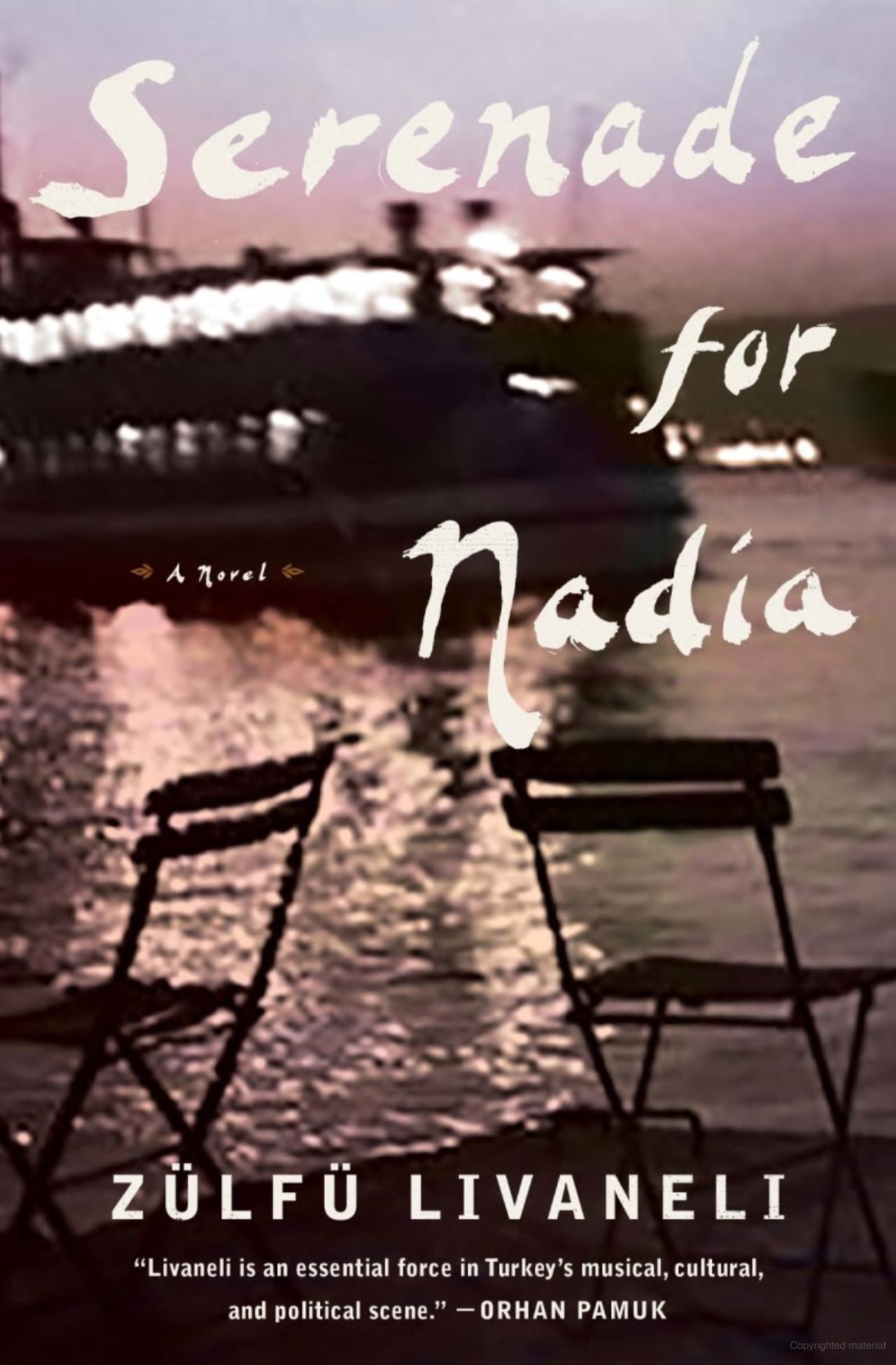
From one side of the continent to the other. Concluding my three-book stint is another writer whom I am unfamiliar with until recently. It was through an online bookseller that I first came across Turkish writer Zülfü Livaneli, who, I just learned, is quite a prominent figure. Not only is he an accomplished writer, but he has also directed some films and is a politician. However, he is more renowned for his literary works, which include collections of short stories, collections of poetry, plays, and, of course, novels. Among his prominent novels is Serenade for Nadia, his first book I encountered. Without ado, I acquired the book and made it part of my ongoing venture into Asian literature.
Originally published in 2011 in Turkish as Serenad, the novel is set in 2001 Istanbul, where we meet the novel’s narrator. Maya Duran is working as an assistant at Istanbul University. She was divorced from her husband, Ahmet, with whom she had a troubled teenage son. The crux of the story was when she was asked to look after a visiting Harvard Professor, Maximilian Wagner. Wagner was returning to the city after a long absence. But there is something deeper that connects the professor with the city, and this was what Maya was about to find out. The story unravels into two prominent threads. The first thread follows the story of Wagner and his wife, the titular Nadia. They were both Germans. But Nadia, being a Jew during Hitler’s regime, things were complicated for them. To escape from the atrocities of the regime, Nadia boarded the Struma, an old boat retooled to be a ship to ferry escaping Jews. Yes, the Struma is an actual ship, and the tragedy that befell it is an infamous one.
There is actually a book nestled within the book. This book chronicles the love story of the Professor and Nadia. And yes, the Professor plays the violin, hence the title. Interestingly, the writer is also a musician. The second prominent thread is anchored in the contemporary as Maya had to navigate a world that has, historically, prejudices toward her sex. She had to grapple with the double standards. While both threads are compelling, the historical context is the heart of the novel and is the one more extensively tackled. I must say Serenade for Nadia is a very interesting and thought-provoking read, as it provided me with glimpses into a part of history I had not heard of before.
What will you read next?


 The Pine-Scented Chronicles
What a beautiful cover on the Can Xue book.
LikeLike
Only know finished and currently:
Finished- Somewhere Beyond the Sea
Currently- James (Kindle) and Islands of the Blessed (Physical)
LikeLike