
Wow. We are already halfway through the year. Time does fly fast, with us barely noticing it. It is taking its natural course, sans regard for anyone. 2025, so far, has been quite an uneventful year for me, although at the same time, it feels like nothing consequential or major has happened. Maybe it will happen in the second half of the year? Anyway, I hope the year has been kind to everyone and that it is granting you favors. I also hope you are having a head start on your goals. I wish you well in your individual journeys. I hope that the remaining months of the year will be great, that it will be a period of joy, healing, goals achieved, and prayers answered. For those whose year is not going as planned, I hope that you will experience a reversal of fortune in the second half of the year. For those whose goal is just to make it from one point to another, do know that it is okay. With the turmoil enveloping us, muting the noise can be challenging. More importantly, I hope everyone stays healthy, in mind, body, and spirit.
Thankfully, I am on track with my reading goals; I do have some lofty ones. My immediate goal of reading 100 books is already more than halfway through. Barring any obstacles, this will be the fourth year in a row that I will be crossing the three-digit mark. In June, I concluded my journey across the Asian literary landscape; I spent the first quarter of the year reading works of East Asian writers, while the second quarter was spent reading works of other Asian writers, although it is also riddled with East Asian writers. Focusing on Asian literary works is in line with my goal of reading more translated books than books originally written in English. I originally planned to spend two months reading works of Asian writers, but because of the sheer volume of Asian works I wanted to read, I had to extend it to June. It was a memorable journey, to say the least. I get to explore new worlds while revisiting old ones. So before I move on to the next month of the year, let me share the conclusion of my foray into works of Asian literature. Happy reading!

The Emperor of Gladness by Ocean Vuong
June is called Pride Month, and what better way to commence the Pride Month than with the work of a queer writer. Vietnamese American poet Ocean Vuong first captured my interest with his debut novel, On Earth We’re Briefly Gorgeous. It was a spare but lyrical exploration of yearning and dysfunctional families. This made me look forward to reading more of his works. When I heard about the release of his sophomore novel, The Emperor of Gladness, it was a no-brainer for me to acquire a copy of it and read it. At the heart of the novel is nineteen-year-old Hai. The setting was the town of East Gladness in Connecticut. The year was 2009. When we first meet him, Hai is about to take his life, about to jump from a bridge. His reverie was disrupted by the shout of Grazina Vitkus, an elderly woman who resided near the bridge. Inviting the young man to her home, they soon built rapport. In the process, we get to know more about Grazina who is a Lithuanian refugee. She and her husband fled her country during the Second World War but she is now a widow suffering from dementia. Because of her condition, Grazina was under state care but her latest caretaker has not returned, prompting her to ask Hai to be her caretaker. Meanwhile, Hai is grappling with his own dysfunctional family. Secrets and lies undermined the family. Nevertheless, Hai found a semblance of home in the company of Grazina. The Emperor of Gladness captures the beauty of found family while also delving into the intricacies of family dynamics. It is also an exploration of the trauma left behind by war, an echo of Vuong’s debut novel. Overall, The Emperor of Gladness is at once funny and thought-provoking. All of these were captured by the beauty of Vuong’s lyrical language. His poetic background is in full force. I can’t wait to read more of his prose.
Goodreads Rating:


The Heike Story by Eiji Yoshikawa
From the Americas, my literary journey next took me to another familiar territory. I was not originally planning on reading Eiji Yoshikawa’s The Heike Story this year. But when I noted that I was about to read my 1,300th novel, I reconsidered the idea of reading the novel although my initial choice was Umberto Eco’s Foucault’s Pendulum. I ended up with The Heike Story because it is aligned with my current reading motif. At the heart of The Heike Story is the titular Heike clan, a warrior clan that thrived in twelfth-century Kyōtō, the Imperial capital. This was also tumultuous period in Japanese history. Emperor after emperor was abdicating or being deposed – or plotting their successor’s overthrow – pushing Japanese society on the cusp of pandemonium. Japanese society was mired in political and social instability. Nevertheless, two houses were the loci of power and influence. As the Imperial Palace was losing control, the Cloistered Palace, which housed the abdicated Emperors, emerged as the de facto source of power. Also wanting to seize control were the courtiers. As the courtiers battled it out in the imperial court, the warrior clans were left to suffer the consequences. The Heike clan was headed by Heita Kiyomori, the central force of the novel. While his provenance was a source of intrigue, this did not hamper him from rebuilding the lost glory of the Heike clan. From being a lowly warrior, he slowly gained a reputation not only as a warrior but also as a wise leader, slowly catapulting his clan to greater glory. The Heike Story is very eventful, with layers of romance, betrayal, forgiveness, and violence permeating it. Apparently, the novel is the modern prose rendering of a classic Japanese epic. It is quite the experience. The details of warrior and clan life, juxtaposed with the lack of political will of the emperors, provide glimpses of the Japan of old. It is an epic and a compelling historical account. Ironically, the Heike clan went head-to-head against the Genji clan.
Goodreads Rating:

Bamboo in the Wind by Azucena Grajo Uranza
With the Philippine Independence Day looming, it was but logical to read a work of a Filipino writer. This led me to Azucena Grajo Uranza’s Bamboo in the Wind. Before last year, I had not heard of Grajo Uranza, nor had I encountered any of her works. A random encounter with her book during an escapade at the local bookstore led me to this interesting title. Bamboo in the Wood transports the readers to the year the Martial Law (Presidential Decree Number 1081) was declared; it is one of the most germane events in contemporary Philippine history. The story charts the fortunes of three families who have converged in the fictional town of Laguardia. In the story’s present, Larry Esteva (Lorenzo Esteva Jr.) returned home to the Philippines after studying abroad. At the airport, he witnesses a violent dispersal of demonstrators by the Philippine Constabulary. Meanwhile, he breezed past Immigration because he belongs to Manila’s alta de sociedad. His father, Don Lorenzo was a haciendero in Laguardia. As a young boy, Don Lorenzo became friends with Arsenio de Chavez, the son of another landowner. Eventually, they met Celestino Limzon while studying in University. Post-university, they rose above their ranks. Don Esteva was a wealthy landowner. Arsenio de Chavez became a senator and a close ally of the sitting president. Limzon became a judge. But the 1970s was a time of social and political upheaval. Their children have increasingly become involved in political activist movements which ran parallel with the growing insurgency. The growing radicalism resulted in the declaration of the Martial Law. Bamboo in the Wind is a harrowing portrait of this important section of contemporary Philippine history, vividly painting scenes that have become synonymous with the Martial Law and have become ubiquitous in documentaries. Overall, it was an insightful read.
Goodreads Rating:

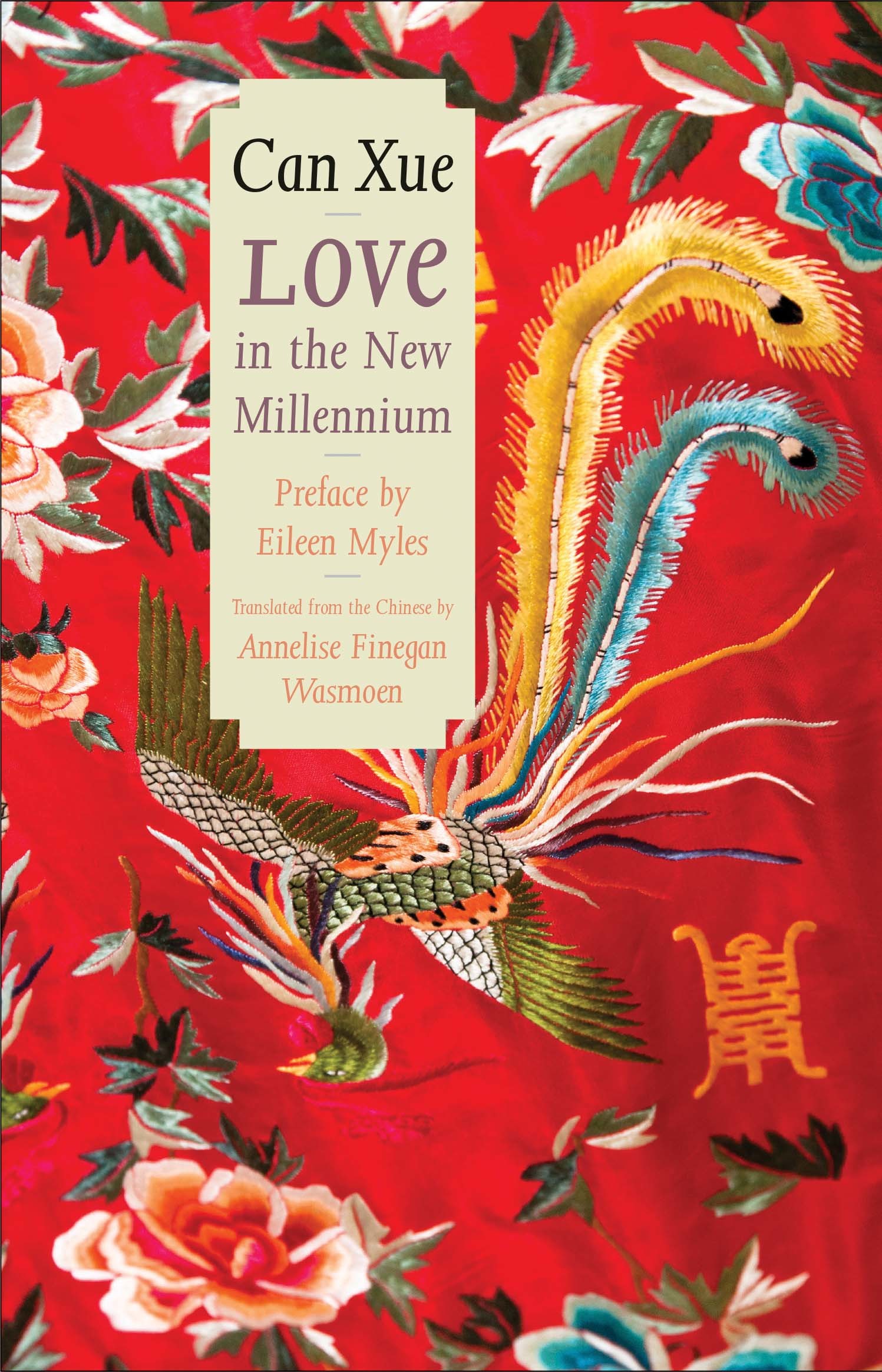
Love in the New Millennium by Can Xue
Before the pandemic, one of the names I encountered was Chinese writer Can Xue. However, my unfamiliarity with her kept me from acquiring her works. A couple of years later, I encountered her again as she has become a part of Nobel Prize in Literature discourses, even topping some betting sites in 2023 and 2024. This further piqued my interest and in her oeuvre. Serving as my primer to one of the most prominent contemporary Chinese writers is Love in the New Millennium which was originally published in 2013 as 新世纪爱情故事 (Xīn shìjì àiqíng gùshì). Longlisted for the International Booker Prize, Love in the New Millennium introduces a vast cast of characters who were mainly connected to China’s underground sex industry. The novel commences when Wei Bo, a married man, breaks up with his lover, Niu Cuilan, a factory worker. This prompted Cuilan to go back to her ancestral home in the countryside, where things were not making sense either. We also get to meet A Si, one of Wei Bo’s former lovers. She is a middle-aged woman who works as a prostitute, along with Long Sixiang and Jin Zhu. Changing vocation, or having two at the same time, was prevalent in the story, underlining China’s unmitigated development and industrialization. However, as the story progressed, it increasingly became abstract, its lack of a robust plot becoming evident. The backbone of the story, however, was the concerns the characters grapple with, from having to keep two jobs to the dichotomies of life in the countryside and in the city. Overall, Love in the New Millennium is not an easy read. A dreamlike air permeates the story, further adding a layer of complexity. Nevertheless, this strange experience only makes me look forward to reading more of her works.
Goodreads Rating:

The Passengers on the Hankyu Line by Hiro Arikawa
Like Ocean Vuong, it was in 2019 that I first came across Japanese writer Hiro Arikawa. Her novel, The Travelling Cat Chronicles, was ubiquitous, prompting me to read it. Lo and behold, the book not only charmed me but left me teary-eyed, turning me into a fan of Arikawa’s writing. In 2023, I made an exception when I read her short story collection The Goodbye Cat, which further underlined my appreciation of her works. Imagine my surprise when I learned that Arikawa was releasing a new work this year. I was looking forward to The Passengers on the Hankyu Line even though its premise is quite simple. Converging on the Hankyu Line – one of the many train lines riddling Japan’s Kansai region – is a diverse cast of characters. The line provides a crucial means of mass transportation for the people of major urban areas like Osaka, Kyoto, and Kobe. Boarding the train is an interesting characters from all walks of life. Rather than a straightforward plot, Arikawa provides a rich tapestry where each character’s concern is tackled, akin to several recently translated works of Japanese writers. The characters carried with them the weights and pressures of the world they live in.. They grapple with a plethora of everyday concerns, thus, making them relatable. It also underlines how we carry the burden of the world wherever we go, may it be in the library or on the train. We ponder life in the most mundane places. The glimpses into the inner worlds of characters we thought we would not encounter in real life are one of the subtler wonders of contemporary Japanese slice-of-life stories. We can connect with them as they try to resolve their individual concerns. This is what makes books like The Passengers on Hankyu Line compelling, although the brief glimpses leave so much to be desired.
Goodreads Rating:
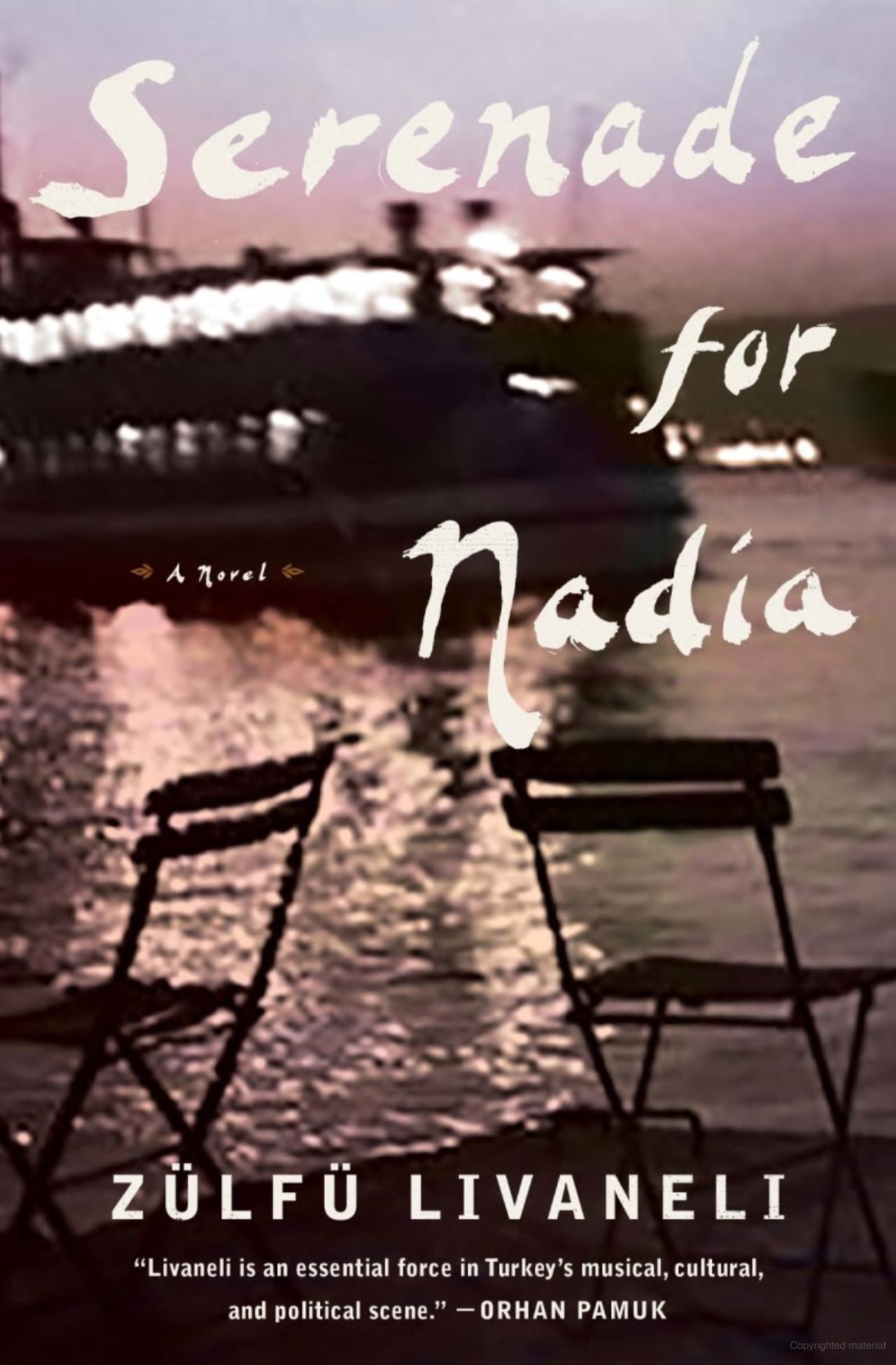
Serenade for Nadia by Zülfü Livaneli
It was Nobel Laureate in Literature Orhan Pamuk and Elif Shafak who introduced me to the wonders of Turkish literature. Their works encouraged me to explore the works of other Turkish writers. One of my most recent discoveries is Zülfü Livaneli who I first encountered through online booksellers. Not only is he an accomplished writer, but he is also a film director and a politician. However, he is more renowned for his literary works, including Serenade for Nadia. Originally published in 2011 in Turkish as Serenad, the novel is set in 2001 Istanbul, where we meet the novel’s narrator, Maya Duran, an assistant at Istanbul University. She was divorced from her husband, Ahmet, with whom she had a troubled teenage son. The crux of the story was when she was asked to look after a visiting Harvard Professor, Maximilian Wagner. It was some sort of a homecoming for the professor because something deeper connects him with the city. The story unravels into two prominent threads. The first thread follows the story of Wagner and his wife, the titular Nadia which transports us to Hitler’s Germany. To escape from the atrocities of the regime, Nadia boarded the Struma, an old boat retooled to be a ship to ferry escaping Jews. Yes, the Struma is an actual ship, and the tragedy that befell it is an infamous one. There story is captured in a book nestled within the book. The second prominent thread is chronicles how Maya navigates a world that has, historically, prejudices toward her sex. She had to grapple with the double standards. While both threads are compelling, the historical context is the heart of the novel and is the one more extensively tackled. Serenade for Nadia is a memorable and thought-provoking read which provided me with glimpses into a part of history I had not heard of before.
Goodreads Rating:

Madonna in a Fur Coat by Sabahattin Ali
From one Turkish writer to another. It was only recently that I came across Sabahattin Ali. Through online booksellers, I discovered his most beloved work, Madonna in a Fur Coat, the book that earned him several accolades. Beyond his literary achievements, Ali was also a prominent activist who, at several points in his career, was arrested for works deemed libelous, with his life prematurely ended by a murder in April 1948. This further piqued my interest in him and in his oeuvre. Originally published in 1943 as Kürk Mantolu Madonna, Madonna in a Fur Coat transports readers to pre–Second World War Ankara. The heart of the story is Raif Efendi whose story begins when the unnamed narrator – recently employed after struggling to find a job – shared an office with Efendi, an unassuming man who had worked at the company for years but had never advanced professionally. Despite his quiet demeanor, Efendi intrigues his new colleague. When the narrator visits Raif during an illness, Raif asks him to destroy a notebook hidden in a drawer. However, he first grants the narrator permission to read it before destroying it. The notebook transports the readers to a decade before when Raif was sent by his father to Berlin learn soap making. However, Raif became more interested in reading and cultural immersion. During one of his gallery visits, he came across a painting he referred to as Madonna in a Fur Coat, a self-portrait by Maria Puder. As fate would have it, he would meet during one of his nightly outings. They became good friends and began spending more time together. Brimming with melancholy and regret for lost love and missed moments, Madonna in a Fur Coat is a story of missed opportunities. It was a quick read although I wished it had lasted longer, thanks to the beauty of Ali’s writing and the emotions that reverberate through every page.
Goodreads Rating:

The Ruined Map by Kōbō Abe
Concluding my foray into Asian literature is another work of Japanese literature, one of my favorite part of the literary world. Among the several unforgettable writers Japanese literature introduced me to was Kōbō Abe. A true staple of the region, Abe’s The Woman in the Dunes was my first encounter with his work. It was, to say the least, an intriguing read. Now, I return with yet another book by Abe—born Kimifusa Abe—titled The Ruined Map, which offers yet another dimension of his unique literary voice. Originally published in 1967 as 燃え尽きた地図 (Moetsukita chizu), the novel, at the onset, masquerades as a work of detective and mystery fiction. The anonymous narrator is a detective from the T______ Detective Agency. His services are engaged by a beautiful but alcoholic woman whose husband, Hiroshi Nemuro, has been missing for six months. Nemuro, a 34-year-old section head at a fuel wholesaler, vanished without a trace. But the long delay in locating him raises questions—why wait so long? The only clue provided by Nemuro’s wife is a map—the titular “ruined map.” However, the map barely made any sense. After all, this is Abe’s world where very little makes sense. Along the way, we also learn about the detective himself. He is essentially a drifter who drinks heavily and is experiencing marital troubles. This transforms the novel into something far more introspective—an existentialist narrative. Still, he is determined to find Nemuro. But it’s not just the detective and Nemuro who are lost. Most of the characters in The Ruined Map are adrift in one way or another. The gradual transformation from a mystery story into a psychological exploration makes the story fascinating. Abe is often a polarizing writer, but The Ruined Map gave me yet another window into his thought-provoking, unsettling oeuvre.
Goodreads Rating:
Reading Challenge Recaps
- 2025 Top 25 Reading List: 7/25
- 2025 Beat The Backlist: 8/20; 56/60
- 2025 Books I Look Forward To List: 2/10
- Goodreads 2025 Reading Challenge: 60/100
- 1,001 Books You Must Read Before You Die: 1/20
- New Books Challenge: 4/15
- Translated Literature: 47/50
Book Reviews Published in June
- Book Review # 587: Paradise
- Book Review # 588: Raised from the Ground
- Book Review # 589: Aunt Julia and the Scriptwriter
- Book Review # 590: Palace of Desire
- Book Review # 591: July’s People
- Book Review # 592: Elizabeth Costello
- Book Review # 593: The General in His Labyrinth
- Book Review # 594: Chronicles from the Land of the Happiest People on Earth
After months of lagging behind my writing targets, I have made quite the progress in June. I was able to carry over the momentum I built back in May. In terms of writing, the first four months of the year have been sluggish to say the least. I have been trying to pick up the pen but I was not expecting that the opening third of the year was going to be this hectic. Nevertheless, I am glad that I am slowly picking up pace. In June, I managed to complete eight book reviews, eclipsing my output of six book reviews I published in May. Eight is now the most I published in a month this year. So far. I am hoping that as the year progresses, I will be able to gain more momentum. Unfortunately, I have failed to make a dent on my June 2023 pending book reviews which are all works of Asian writers. Instead, I focused on the works of Nobel Laureates in Literature I read in 2023. I am now down to my last work of a Nobel Laureate in Literature I read in 2023 pending for review, Naguib Mahfouz’s Sugar Street, the final installment in his renowned Cairo Trilogy.
Despite the eight book reviews I published in June, I still find myself swamped in pending book reviews from 2023. This July, I will ride on the wave of momentum I built in the past two months. I will double my effort to reduce the number of my pending reviews. However, I also must make a dent on my current reading list. As such, I will be focusing on my review of books published this year to make them relevant and timely. Once I tick them off, I will be reverting to my original goal of completing my June and July 2023 pending book reviews. Still, the goal is still to take it one step at a time. I will still try to complete as many book reviews as I can. I was also reminded that I am inching closer to my 600th book review. Woah. I can’t believe that I am about to hit 600. It still feels like yesterday when I was figuring out how to compose my first book review. It has since evolved and I am more satisfied with my current writing although there are still facets of it I want to improve.
In July, I will be leaving Asian literature as I pivot toward works of European writers. Like Asian literature, there are sections of European literature I want to explore further. For one, I am interesting in expanding my venture into the works of Hungarian writers; I commenced this reading journey with Abigail, my second novel by Magda Szabó. I am also currently reading my third novel by Icelandic writer and Nobel Laureate in Literature Halldór Laxness. On top of this, I have several works of German literature listed in my 2025 Top 25 Reading List and my 2025 Beat the Backlist Challenge. Another book I am looking forward to is Umberto Eco’s Foucault’s Pendulum; this will be my fifth novel by the Italian writer. I am also about to read Javier Marías’s A Heart So White, a title I have long been looking forward to after it was recommended to me by a friend and fellow avid book reader. I am also looking forward to Fredrik Backman’s latest translated novel, My Friends. To sum it all up, I am looking forward to this literary journey.
How about you, fellow reader? How is your own reading journey going? I hope you enjoyed the books you have read. For now, have a great day. As always, do keep safe, and happy reading, everyone!
 The Pine-Scented Chronicles