
Happy Wednesday, everyone! Wednesdays also mean WWW Wednesday updates. WWW Wednesday is a bookish meme hosted originally by SAM@TAKING ON A WORLD OF WORDS.
The mechanics for WWW Wednesday are quite simple: you just have to answer three questions:
- What are you currently reading?
- What have you finished reading?
- What will you read next?

What are you currently reading?
It is already the middle of the week; technically, it is already Thursday. Anyway, how has your week been so far? I hope it’s going well and heading in your desired direction. How time flies! We are about to draw the curtains on the seventh month of the year, just like that. The previous days have been quite damp here in the Philippines. I hope everyone stays safe, warm, and dry. I also hope the year has been going well for everyone. I hope you’re being showered with blessings and good news. May the rest of the year be prosperous, brimming with wealth, but more importantly, with good physical and mental health. I hope everyone is already making progress on their goals. If the year has gone otherwise, I hope that the coming months will be kinder and gentler to you. In terms of reading, I am well ahead of my goal, but I’ve been lagging behind in my reading challenges. As such, my focus in the second half of the year will be on catching up with those.
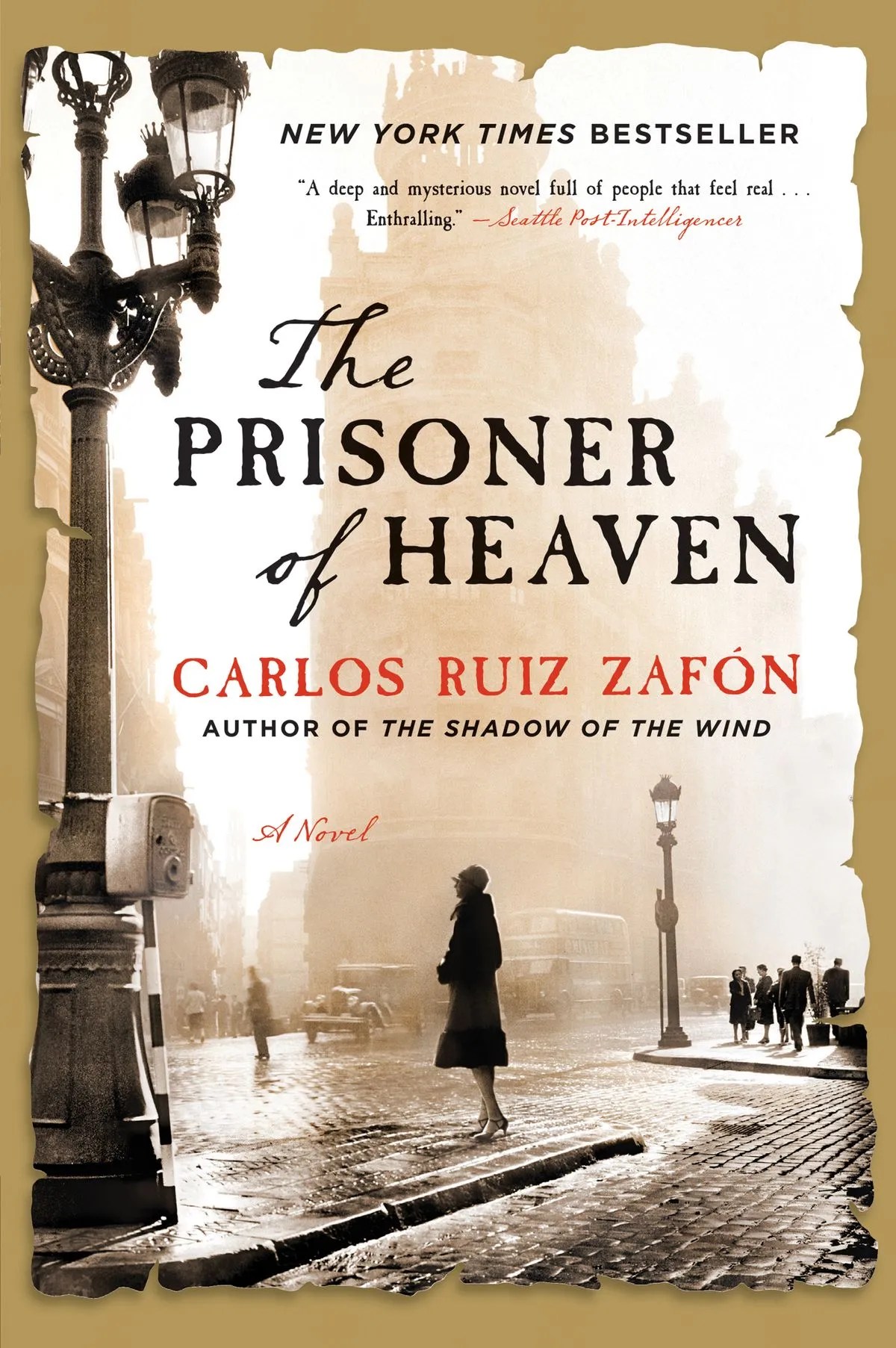
Currently, my venture into the works of European writers is in full swing. I’m reading Carlos Ruiz Zafón’s The Prisoner of Heaven. Although the Spanish writer first caught my interest with The Shadow of the Wind, I only began exploring his body of work during the pandemic. A couple of years later, I’m now on the third book in his popular The Cemetery of Forgotten Books quartet. The Prisoner of Heaven once again transports readers to Barcelona, this time two years after the marriage of Daniel Sempere and Beatriz Aguilar. The couple now lives above the family bookshop, Sempere & Sons, with their son, Julian. The story, however, centers on Fermín Romero de Torres, who is about to get married. While Daniel is tending to the bookshop, a mysterious visitor arrives asking for Fermín. Suspicious, Daniel confronts his friend, prompting Fermín to reveal secrets from his past.
The narrative then flashes back to 1939. Fermín is incarcerated as the nation teeters on the edge of socio-political upheaval with the rise of the Caudillo. We discover that the mysterious man was once imprisoned alongside Fermín. But it’s another inmate, David Martín—the protagonist of Zafón’s second novel, The Angel’s Game—who becomes the focus of this retrospective. Martín holds secrets the prison governor is desperate to extract, secrets tied to the Cemetery of Forgotten Books. Martín is tortured, and Fermín is bribed to spy on him. The story is becoming increasingly engaging, as this third installment begins to weave a clear connection between the first two books. I had always felt The Angel’s Game was somewhat disconnected from The Shadow of the Wind, so I’m eager to see how the threads come together. Like The Angel’s Game, The Prisoner of Heaven is a quick read.
What have you finished reading?

The past week has been quite busy—at least in terms of reading. After a slump caused by Umberto Eco’s Foucault’s Pendulum, I managed to regain momentum, ending the week with three completed books. The first of these was Dušan Šarotar’s Panorama. I first discovered the Slovene writer through online booksellers, making Panorama the first book by a Slovene author I’ve read. Looking forward to a new literary experience, I acquired a copy and even included it in my 2025 Top 25 Reading List. It’s only the tenth book from that list I’ve read so far, underscoring how far behind I’ve fallen in my reading challenges.
Originally published in 2014, Panorama is Šarotar’s fourth novel but his first to be translated into English. At the heart of the story is an anonymous narrator, widely regarded by critics and readers as the author’s alter ego. In his mid-forties, the narrator begins by recalling his travels around Ireland in search of peace and inspiration to finally complete the manuscript he has been working on. In a way, the narrator is a wandering soul—a drifter. During his journey, he encounters a diverse cast of characters. One of them is Gjini, an Albanian who emigrated to Ireland eleven years prior. Gjini initially serves as his guide and driver in Galway. Through him, the narrator is introduced to the frustrations of immigration and the complexities of life in a foreign land. There’s even a reference to the Albanian dictator Enver Hoxha. The narrator later meets Gjini again, this time as a journalist in Ghent. Historical details enrich the narrative, or perhaps more aptly, the ruminations. The novel draws its strength from the narrator’s sharp sense of observation, allowing him to vividly describe everything he sees. Structures and surroundings echo stories through his reflections. Photographs are included to lend an air of credibility and blur the line between fiction and reality, enhancing the book’s identity as a blend of travelogue and journalistic meditation. What follows is a deep dive into history and memory.
While Panorama lacks a robust plot, it delights in nostalgia and thought-provoking insight. Rather than presenting a linear narrative, it feels fragmented—but there is beauty in that fragmentation. The story evolves into a quiet meditation on a wide range of subjects. A layer of enigma surrounds the narrator, adding mystery to his character. His subdued tone invites readers to examine his experiences closely, though the novel offers few, if any, definitive answers to the questions it raises. Still, there is a solemn grace to the book that makes it deeply engaging. Šarotar’s artistry is evident throughout.
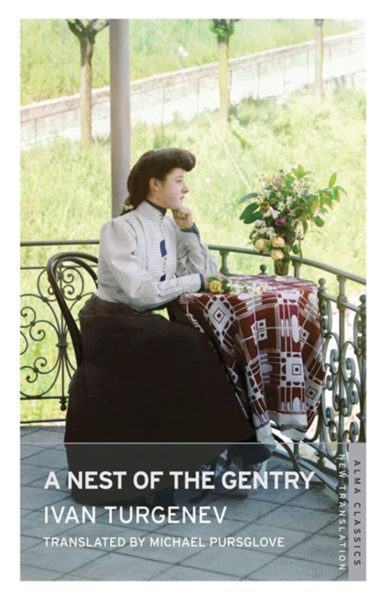
From Slovenia, my journey across the landscape of European literature next took me to Russia. Russian literature has certainly been growing on me, largely thanks to Leo Tolstoy and Fyodor Dostoevsky. However, other Russian writers have also caught my interest. Among them is Ivan Turgenev, whom I first encountered through various must-read lists. My curiosity piqued, I read Fathers and Sons in 2019—the first Turgenev novel I read. Acquiring copies of his other works has proven to be a challenge, but thankfully, I managed to obtain a copy of A Nest of the Gentry, making it the second Turgenev novel I’ve read, and the first in over six years.
Interestingly, A Nest of the Gentry is Turgenev’s second novel. Originally published in 1859 as Дворянское гнездо, it has also been translated as A House of Gentlefolk, Liza, and Home of the Gentry. At the heart of the novel is Fyodor Ivanych Lavretsky, a nobleman born to a distant, Anglophile father and a serf mother who died when he was young. Essentially orphaned, he was raised on the family’s country estate by a stern maiden aunt, notorious for her cruelty. He later pursued his education in Moscow, where he met Varvara Pavlovna, the woman he would eventually marry. The couple moved to Paris, but after an act of betrayal on Varvara’s part, Lavretsky returned to his native Russia. Back in the countryside, near the estate he inherited at Vasilyevskoye, Lavretsky visits his widowed cousin, Marya Dmitrievna Kalitina, who lives with her two daughters: Elizaveta Mikhaylovna (Liza) and Elena Mikhaylovna (Lenochka). Lavretsky is immediately drawn to Liza, who, with her serious and religious disposition, is the antithesis of the coquettish Varvara. Over time, Lavretsky learns that Liza is also in love with him. However, complications soon arise, threatening their budding romance.
A Nest of the Gentry is often considered an autobiographical novel, expressing Turgenev’s reflections on middle age. In many ways, Lavretsky serves as a conduit for the author’s own experiences and emotions. The novel pits two symbolic female figures against one another: Liza represents traditional Russian values and the “old order,” while Varvara embodies shifting attitudes and liberal European ideals. Lavretsky’s return, then, is more than just a physical homecoming—it is also a spiritual one, a reconnection with the values of his homeland. This introspective dive into the Russian spirit echoes the themes found in Dostoevsky’s works. While I personally prefer Fathers and Sons, A Nest of the Gentry is nonetheless a compelling read from a gifted Russian storyteller.

Capping my three-book stretch is another title from my 2025 Top 25 Reading List, which takes me to Italy. Like Russian literature, Italian literature is steadily growing on me. This is primarily due to Umberto Eco and Italo Calvino, whose masterpieces The Name of the Rose and If on a Winter’s Night a Traveler captivated me. Another Italian writer who recently caught my attention—discovered through online booksellers—is Ignazio Silone. Interestingly, “Ignazio Silone” is the pseudonym of Secondo Tranquilli, who was also a renowned political leader. My introduction to his work came through Fontamara.
Fontamara, Silone’s debut novel, was originally published in 1930 and written during his exile in Switzerland. The titular Fontamara is a fictional hillside town, although many literary critics consider it a representation of Silone’s birthplace. The novel focuses on the struggles of the cafoni—a term commonly used to describe southern Italian peasants—who reside in the town. The story begins with a writer visiting Berardo Viola and his lover, Elvira. Berardo and Elvira recount the history of the village to the writer, and their narrative essentially unfolds into the novel. The plot is set in motion when Pelino, a Cavaliere (Italian knight), gathers the villagers and has them sign a blank sheet of paper. Though they have no idea what it’s for, they sign it without hesitation. To their dismay, a crew of road workers arrives the next day to divert the stream that irrigates their fields. In desperation, the village women travel to the capital to protest, only to be deceived by the mayor—now aligned with the fascists. This marks the beginning of a cycle of exploitation, as the fascists and local opportunists suppress the villagers’ attempts to reclaim their rights.
Several characters leave a strong impression, chief among them Berardo Viola, the vocal leader of the villagers. However, a series of personal misfortunes gradually turns him bitter. Meanwhile, the villagers are surrounded by proverbial wolves: the Contractor (or Impresario, in some translations) looms as the main antagonist; Don Circostanza pretends to be an ally but has no qualms about exploiting them; and Don Carlo Magna and Donna Clorinda—once the wealthiest family in Fontamara—represent a bygone era of local influence now overshadowed by fascist forces. Fontamara is deceptively slender, but within its modest length lies a rich depiction of how fascism reshaped the Italian landscape in the years leading up to the Second World War. The town becomes a microcosm of a nation gripped by corruption, fear, and betrayal. Despite its overt political themes, Fontamara made me eager to explore more of Silone’s works.
What will you read next?


 The Pine-Scented Chronicles
IT’S FUN TO BE A KID AGAIN.
THERE STILL IS A CHILD IN US ALL.
AFTER-ALL’S RUNAWAY CLOUD
LikeLike