
Happy Tuesday everyone! This also means a Top 5 Tuesday update. Top 5 Tuesday was originally created by Shanah @ the Bionic Bookworm but is now currently being hosted by Meeghan @ Meeghan Reads.
This week’s topic: Top 5 books with a colour in the title

My Name is Red by Orhan Pamuk
Snippet from my review: In this labyrinthine and multifaceted novel, life and death emerge as subtly prominent themes explored through the lens of Islam. Several characters express a belief in the afterlife. As Elegant reflects on his own death, he declares: “There is indeed another world, thank God, and the proof is that I’m speaking to you from here. I’ve died, but as you can plainly tell, I haven’t ceased to be.” Even inanimate objects and animals are imbued with consciousness. Viewed from one perspective, this is an extension of art imitating life. The inclusion of these non-human perspectives not only adds unique texture to the narrative but also invites readers to question how the objects surrounding us might perceive our existence. Beyond art, Pamuk explores religion with depth and nuance. He advocates for a separation between religion and state affairs. With an unflinching yet objective gaze, he illustrates how religious extremism can hinder the progress of multicultural societies—Turkey being a prime example. Through his exploration, Pamuk critiques the rigidities of dogma while still acknowledging the spiritual weight that religion holds for his characters.

The Bluest Eye by Toni Morrison
Snippet from my review: Despite the dark and complex subject matters, what Toni Morrison has conjured is a fabulous story about the challenges and trials that African-Americans. Yes, books about racism are clique yada yada yada. However, her perspective and her interpretation is a towering achievement for female African-American writers. Together with Zora Neale-Hurston and Alice Walker, they form a formidable trifecta of imposing writers. I say this because so far, they are the only female African-American writers whose narratives I have come to appreciate.

Yellowface by R.F. Kuang
Snippet from my review: In a gripping tale, Kuang takes her readers into the world of publishing. Yellowface unpacked several seminal and timely subjects that have become integral parts of contemporary discussions. The most prevalent of these subjects revolve around cultural appropriation and the discussion of “own voices”. Cultural authenticity was prominently examined in the novel. This is a discussion sparked by the question of who should write about a certain event, especially if the subject carries cultural contexts and implications. Recently, several books have been scrutinized because of the “own voices” discourse. A recent example was Jeanine Cummins’ American Dirt which flirted with controversy. The premise itself – it examined the Mexican diaspora – was common enough. Cummins’ white background, however, raised questions on cultural authenticity.

Black Rain by Masuji Ibuse
Snippet from my review: The novel’s fine elements were woven together by Ibuse’s masterful storytelling into a lush albeit bleak tapestry. Ibuse made the readers walk the same streets and witness the same horrors that Shigematsu did. The structure of the novel provided a vicarious experience but still distanced the readers from the real horrors of the war. By weaving details and accounts from other survivors, Ibuse provided a more complete picture of the aftermath of the bombing. This was further complimented by Ibuse’s descriptive but delicate writing It is also a nod to Ibuse for handling a sensitive subject in an evenhanded manner. He neither vilified the Americans nor did he glorify Japan’s role in the War. There was a balance but nevertheless, the novel managed to give voices to those who were muted by the tumult.
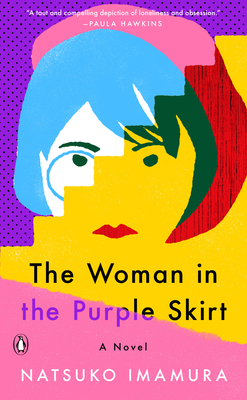
The Woman in the Purple Skirt by Natsuko Imamura
Snippet from my review: Japan’s epidemic of loneliness is driven by a plethora of factors. Some of these factors were elucidated in other contemporary literary works. Mizumi Tsujimura’s Lonely Castle in the Mirror explores the futoko who is described as a child who decides to stop attending school for an extended period due to mainly bullying or family issues. They become social recluses. Socially awkward individuals have become a norm in Japan; the Japanese have even coined a term for them: hikikomori. Imamura probes deeper into the other factors driving this growing social concern. Among these factors is the pressure placed by Japanese society on its denizens to conform to its highly and strictly regimented social norms. Those who refuse to conform to these norms are often frowned upon.
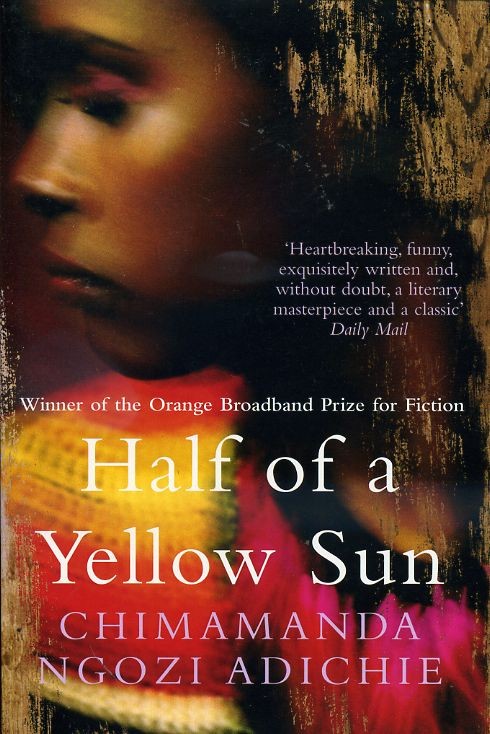
Half of a Yellow Sun by Chimamanda Ngozi Adichie
Snippet from my review: Through Half of a Yellow Sun, Ngozi Adichie swept readers. The narrative stirs emotions and provokes thoughts. The boldly imagined and conjured characters are the quintessence of Nigeria and its peoples. They represent all facets of the societal spectrum. The interesting plot was also complimented by Ngozi Adichie’s nostalgic writing. Ngozi Adichie’s conviction to deliver her message is admirable. The depth of the plot and the characters all converge to convey the unheard stories of Nigeria.
 The Pine-Scented Chronicles