
Happy Tuesday everyone! This also means a Top 5 Tuesday update. Top 5 Tuesday was originally created by Shanah @ the Bionic Bookworm but is now currently being hosted by Meeghan @ Meeghan Reads.
This week’s topic: Top 5 classics I love

Crime and Punishment by Fyodor Dostoyevsky
Snippet from my review: Dostoyevsky’s prose flowed naturally even though he was dealing with a difficult subject. The highest form of his body of work was extensively showcased in Crime and Punishment. His writing is impeccable and his astute portrayal of human behavior is even more remarkable. This lofty standard if literary excellence is also showcased in Brothers Karamazov, the only other Dostoyevsky that I have read. His depiction of human nature is an intellectual endeavor that awakens the inner literati in his readers. It makes one probe deeper into one’s self.

War and Peace by Leo Tolstoy
Snippet from my review: On the surface, War and Peace is a daunting read because of its sheer length. But when I got over my intimidation, I realized how easy of a read it was – Tolstoy’s words flowed smoothly. It is a drag of a read because of its length, however, the mixture of chapters about war and chapters about peace gave the novel a different texture. It is complex but this is mostly due to its intricateness. The vivid portrayals gave life to numerous memorable scenes, including the part where Prince Andrey was lying wounded in the Austerlitz battlefield, looking up at the endless azure. His contemplation of his fate is finely written, and very relatable.

Sense and Sensibility by Jane Austen
Snippet from my review: Overall, there are so much to appreciate in Jane Austen’s first published work. I loved that Austen was able to conjure two contrasting yet believable characters while making them revolve around the emotionally taxing requirements of the Victorian society. But Sense and Sensibility is more than just an ordinary story about two sisters and their journeys in love. It is critical observation and commentary on money and how it motivates men in general. But the biggest winner in the story is the elegance of Austen’s prose. It is truly astounding and timeless.
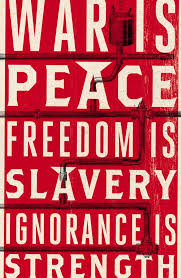
Nineteen Eighty-Four by George Orwell
Snippet from my review: Largely a political and social narrative, Nineteen Eighty Four was Orwell’s bleak prognosis of the future where totalitarianism, perpetual war, and civil unrest prevailed. Modeled after Stalinist Russia, the 1984 society was dominated by the ideology of “Ingsoc”, a newspeak shortening of English Socialism. The enemy of the state, Emmanuel Goldstein, described Ingsoc as anti-socialism that rejects the principles of the Socialist movement. In Ingsoc, the citizenry is required to submit – physically, mentally, and morally – to the teachings of the state. Submission to the Party’s various policy was paramount. Dissent, regardless of how minute, was subjected to punishment, including reeducation by the Ministry of Love.

The Woman in the Purple Skirt by Margaret Mitchell
Snippet from my review: Amidst the plethora of subjects and varying themes, one centrifugal element stands out all through out the narrative. From the onset, the prevailing theme was survival; even Mitchell herself acknowledged that it was the novel’s heart. She was once quoted saying, “What makes some people come through catastrophes and others, apparently just as able, strong, and brave, go under? It happens in every upheaval. Some people survive; others don’t. What qualities are in those who fight their way through triumphantly that are lacking in those that go under? I only know that survivors used to call that quality ‘gumption.’ So I wrote about people who had gumption and people who didn’t.”

The Three Musketeers by Alexandre Dumas
Snippet from my review: These adventures and misadventures were not complete without the three Musketeers whose individual portraits Dumas painted as the four friends and comrades set off on their adventures. Athos was born into an aristocratic background and his real name is Comte de la Fère, an identity he obscures from the public. Haunted by the past, he found reprieve in alcohol. He was also the oldest of the four and served as d’Artagnan’s father figure. Meanwhile, Aramis was born René d’Herblay. He is also a skilled writer. Raised in a monastery, he was biding his time as a musketeer before pursuing his dream of becoming a priest. The novel’s comic relief was Porthos whose real name is M. du Vallon. He was the epitome of vanity and was the most worldly of the four. Through d’Artagnan and the three musketeers, Dumas explored the intricacies of loyalty and friendship. They had each other’s backs and shared their triumphs and tribulations as individuals and as a unit. They were selfless and willing to sacrifice their desires for what would benefit the group.


Haven’t read any of those- classics are still a favorite genre of mine. But narrowing down to a top 5 is not that easy one bit
LikeLike