
Time does fly fast. In the blink of an eye, we are already in the tenth month of the year. Just like that, we’ve already completed the first three quarters of the year. Time continues to take its natural course, with no regard for anyone. As the year slowly approaches its inevitable close, I hope the past nine months have treated you well. I hope that the last quarter of the year will usher in more blessings, progress, and fulfillment. May it be filled with joy, healing, achievements, and answered prayers. I also hope you’re making headway toward your goals. I wish you well on your individual journeys. I hope everyone’s hard work pays off. For those whose goal is simply to get from one point to another, know that that’s fine, too. In times like these, with turmoil flanking us, muting the noise can be a challenge. As such, I hope everyone stays healthy—in mind, body, and spirit.
Reading-wise, my 2025 reading is proceeding smoothly. For the fourth year in a row, I’m on track to finish the year having read at least 100 books. Imagine, reading 100 books in a year used to be a dream I never thought I would be able to fulfill. Lo and behold, just when I was not expecting it, I was able to do it. However, I can’t say the same for my other reading goals. This is the catalyst for my pivot toward the work of European literature in the third quarter of the year; many of the books on my reading challenges are written by European writers. As always, the literary journey has been both memorable and enriching. I’ve explored new worlds while revisiting old ones. In September, I finally concluded this amazing journey. But before diving into October, let me share how the final month of my venture into European literature shaped up. Happy reading!
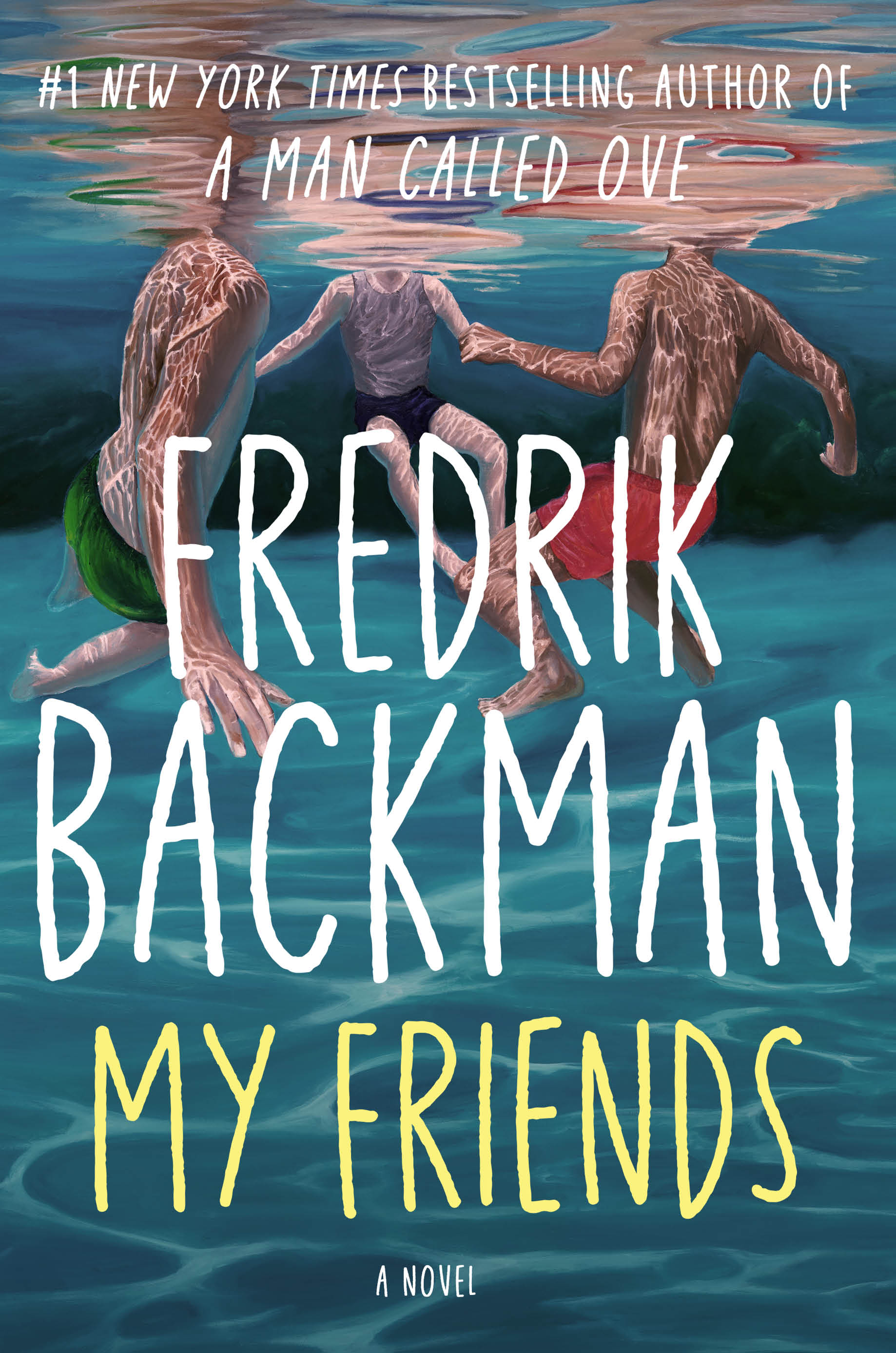
My Friends by Fredrik Backman
I commenced my September reading venture with a familiar name, a writer who has grown on me during the pandemic years. I wasn’t even aware that the Swedish writer was set to release a new work this year. However, when I learned about the release of My Friends, I needed to read it. My Friends is the seventh novel by Backman I’ve read. The story begins with seventeen-year-old Louisa running away from her foster home and breaking into a posh art auction as an act of protest against the commodification of art. She also wanted to see the painting, The One of the Sea by C. Jat. The painting features four friends sitting on a pier, which often escapes the notice of casual viewers. Louisa, however, sees the painting as a symbol of friendship and the hope of belonging. Reeling from the loss of her best friend, Fish, and her mother’s abandonment, Louisa found herself thrown out of the auction and into an alley where she collides with a sick, homeless man. She pours out her story to him, and, moved by her pain, he returns the favor by revealing his own. The story then rewinds twenty-five years before. The homeless man turns out to be Kimkim, a once-famous painter known as C. Jat. In the present, C. Jat is about to be arrested by the policebut another man, Ted, intervenes; Ted and Kimkim knew each other. The second plotline chronicles the friendship between Ted, Kimkim, Joar, and Ali. Each carried personal burdens and came from dysfunctional families. In each other, they found the sense of family they had yearned for. They often hung out at Ted’s house, but their favorite spot was an abandoned pier where they could be free. Like Backman’s previous works, My Friends plucks the proverbial heartstrings. With his unflinching gaze, he captures the beauty of human connection and the complexity of the human condition, mapping the emotional landscape of lived experience. This makes his works soar, like in My Friends.
Goodreads Rating:


Wolf Hall by Hilary Mantel
I’ve immersed myself too much in the works of mainland Europe that I forgot that the United Kingdom is part of the continent. Several works by British writers are included in my current reading challenges and goals, including Hilary Mantel’s Wolf Hall, which is part of my 2025 Beat the Backlist challenge. The book initially did not pique my interest, but I eventually relented. After Mantel’s passing in 2022, reading her work has felt even more imperative. Winner of the 2009 Booker Prize, Wolf Hall transports readers to early 16th-century England. At the heart of the story is Thomas Cromwell, who, as a young boy, was physically abused by his father, Walter. He eventually left home and became a soldier in France. When he returned to England, he built a life for himself—practicing law, marrying, and fathering three children. His intelligence and ambition eventually led to employment under Cardinal Wolsey, the Cardinal of York and chief advisor to King Henry VIII. It was a period when political tensions began to mount. The King wanted to annul his marriage to Queen Katherine of Aragon, who failed to produce a male heir. Both Wolsey and Cromwell found themselves in a precarious position; during this period, England was firmly Catholic. Wolsey’s inability to secure the annulment from the Vatican drove a wedge between him and the King. Enter Anne Boleyn and her ambitious family. Cromwell cultivates his relationship with Anne and becomes one of her advisers. Her rise promises not only religious and political upheaval but also Cromwell’s own ascent to power. Cromwell is deeply ambitious yet intellectually curious. Wolf Hall presents a layered and morally complex protagonist, while also offering readers vivid insights into Tudor England—its court politics, religious conflicts, and social dynamics.
Goodreads Rating:

The Prodigy by Herman Hesse
From the United Kingdom, my literary journey next took me to Germany, with the work of a familiar name whom I first encountered through must-read lists. Through these lists, I came across Nobel Laureate in Literature Herman Hesse. I have since read some of his works, starting with his widely acclaimed Siddhartha. Nearly a decade since I read that novel, I have now completed my fourth Hesse novel, The Prodigy. Originally published in 1906 as Unterm Rad, it was also translated as Beneath the Wheel and was Hesse’s sophomore novel. At the heart of the story is Hans Giebenrath, a gifted student from a quiet Black Forest village. His parents, particularly his father, pushed him relentlessly to pursue academic excellence. From a young age, it was inculcated into him to prioritize intellectual achievement, even at the expense of personal growth. Things begin to change when he attends Maulbronn, where he meets Hermann Heilner, a more liberal and free-spirited fellow student. Despite being polar opposites, they get along well. Under Hermann’s influence, Hans begins to envision a life beyond the confines of scholarly achievement, defying the rigid expectations imposed on him since childhood. Eventually, Hermann is expelled, and Hans returns home after his academic performance declines and symptoms of mental illness begin to emerge. Back home, he is apprenticed to a mechanic, in which he finds satisfaction despite it being primarily manual labor. At its heart, The Prodigy is a scathing commentary on the flawed ideal of academic excellence, especially when the pursuit of academic excellence comes at the price of the student’s personal development. Echoing themes prevalent in Hesse’s later works, The Prodigy is another thought-provoking read from the highly esteemed German writer.
Goodreads Rating:
Sons and Lovers by D.H. Lawrence
From Germany, my literary journey next took me back to the United Kingdom. D.H. Lawrence’s Sons and Lovers is not part of any of my ongoing reading challenges, although it is listed among the 1,001 Books You Must Read Before You Die. It’s my annual goal to read at least twenty books from that list. Furthermore, Sons and Lovers is just my second novel by Lawrence. Originally published in 1913, the novel is set primarily in the fictional English coal-mining village of Bestwood in Nottinghamshire. The novel charts the story of Gertrude Coppard, the polished and intelligent daughter of a “good old burgher family.” During a country Christmas dance, she meets Walter Morel, a rough-hewn coal miner. A whirlwind romance ensued despite Gertrude’s religious and ascetic temperament. Gertrude was soon disillusioned after their marriage when she discovered that Walter was not as wealthy as she had initially thought. Struggling to manage the household on his meager salary, and frowned upon by other women in the mining community, she soon channeled all her emotional energy into her children, particularly her sons; the couple had four children. William is Gertrude’s favorite, but after tragedy strikes, she shifts her devotion to her second son, Paul. Unlike William, Paul is sensitive and artistically inclined, both repulsed by and drawn to his mother’s suffocating love. Yearning for independence and romantic love, Paul fell in love with Miriam Leivers. Later, he also became involved with Clara Dawes, a feminist-leaning woman separated from her husband, Baxter. Sons and Lovers initially reminded me of Lawrence’s Lady Chatterley’s Lover, his first novel I read. Still, Sons and Lovers stands as a distinct work that explores the complexities of mother-son relationships, the emotional costs of parental influence, and early feminist themes.
Goodreads Rating:

Rites of Passage by William Golding
From one British writer to another. I have been meaning to explore the oeuvre of Nobel Laureate in Literature William Golding, whom I also first encountered through must-read lists. His novel Rites of Passage appears frequently on these lists. I acquired a copy back in 2019, but it was left to gather dust on my bookshelf, hence its inclusion in my 2025 Beat the Backlist Challenge. Rites of Passage transports readers to the early 19th century, when a diverse group of British migrants converged and embarked on a voyage to Australia aboard a converted man-of-war. The novel unfolded through the journal entries of Edmund Talbot, a young aristocrat whose influential godfather arranged for him to be employed by the Governor of New South Wales. His godfather also gave him the journal to record the significant events of the journey. Talbot detailed life aboard the ship, including its squalid conditions and the motley assortment of passengers and crew. Through his observations and interactions, Talbot offered a penetrating look into the social dynamics on board. One character, however, stood out: Reverend Robert Colley. The Reverend’s social ineptitude made him an object of both mockery and pity, including by the ship’s captain, Captain Anderson. Tensions escalate, eventually concluding in Colley’s death after he became inebriated. His death also drew a scandal, which the Captain initially set to investigate. However, the investigation was abruptly shut down after a crew member suggested that other officers may have been involved. Winner of the 1980 Booker Prize, Rites of Passage is a compelling exploration of the duality of human nature and the very concept of justice. Overall, it served as a strong introduction to Golding’s oeuvre, which I hope I get to explore more, particularly with the rest of the To the Ends of the Earth trilogy, of which Rites of Passage is the first installment.
Goodreads Rating:
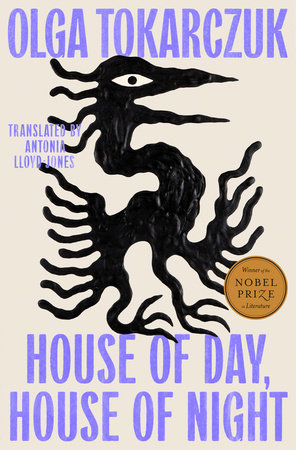
House of Day, House of Night by Olga Tokarczuk
My foray into European literature next took me to another Nobel Laureate in Literature. Before 2019, I had never heard of the Polish writer Olga Tokarczuk. When she was announced as the recipient of the 2018 Nobel Prize in Literature, my interest was immediately piqued. I started exploring her works, beginning with Drive Your Plow Over the Bones of the Dead. Midway through this year, I learned about the re-release of her first English-translated novel, House of Day, House of Night. Originally published in 1998 as Dom dzienny, dom nocny, House of Day, House of Night transports readers to Nowa Ruda, a small, remote village in southwestern Poland, near the border with Czechia, where an unnamed woman and her partner R. have moved. Structurally, the novel reminded me of Flights. As it turns out, both Flights and House of Day, House of Night are described as “constellation novels.” In place of a straightforward narrative, Tokarczuk weaves a rich tapestry of loosely connected stories, sketches, and essays. Through these fragments, a portrait of the village slowly emerges. Tokarczuk fuses folklore with local legends — among them the tale of Kummernis of Schönau, a bearded female folk saint crucified by her father, and Paschalis, a monk who longed to be a woman and chronicled her life. In their new home, the narrator and her partner meet an eccentric cast of characters, including the elderly Marta, who can read mushrooms. Mushrooms are recurring symbols in the novel. The digressions and the meandering structure made many readers call the novel Tokarczuk’s most difficult. Yet it is this unorthodox form that makes the novel compelling. Tokarczuk masterfully builds a web of interconnected narratives that capture the vibrant, layered history of the town where time becomes a fluid concept. House of Day, House of Night is yet another memorable and thought-provoking read from the incomparable Polish storyteller.
Goodreads Rating:

Death in Venice by Thomas Mann
A third Nobel Laureate in Literature in a row. It was over a decade ago when I first encountered the German writer Thomas Mann through a local book vendor. His novel The Magic Mountain immediately grabbed my attention. I was finally able to read it in late 2023, my primer to the oeuvre of Mann. The book made me even more eager to explore Mann’s other works. Death in Venice, meanwhile, was a book I had acquired back in 2019, hence its inclusion in my 2025 Beat the Backlist Challenge. Originally published in 1912 as Der Tod in Venedig, the novella follows Gustav von Aschenbach, a renowned Silesian author in his early fifties. Recently honored for his artistic achievements, Aschenbach has devoted himself entirely to his craft following the early death of his wife. On an afternoon stroll in Munich, he encountered a red-haired foreigner whose stare left an unsettling moment that stirred something strange within the writer. He also suddenly felt an irresistible urge to travel. He initially traveled to Pula on the Austro-Hungarian coast (in present-day Croatia), before traveling to Venice, where he checked into a suite at the Grand Hôtel des Bains on the island of Lido. While waiting for dinner, a fourteen-year-old boy from a Polish family immediately captivated him. Aschenbach deemed the boy “perfectly beautiful.” He later overheared that the boy’s name is Tadzio. Disturbed by the intense feelings the boy evoked in him, Aschenbach decided to leave Venice, but his luggage was mistakenly sent to Como. He also soon realized that his true desire was to remain near Tadzio. Beyond its themes of desire, youth, and travel, Death in Venice also explored repression and artistic obsession. Partly autobiographical, Death in Venice is a quick yet powerful read that offered me deeper insights into both Mann the writer and Mann the individual.
Goodreads Rating:

Amsterdam by Ian McEwan
Another book I listed on my 2025 Top 25 Reading List is Ian McEwan’s Amsterdam. I first ventured into his oeuvre with his most recognized novel, Atonement. Nearly a decade later, I read my fifth McEwan novel, Amsterdam. Originally published in 1998, Amsterdam charted the story of two old friends — Clive Linley, a celebrated composer, and Vernon Halliday, the editor of a struggling newspaper. At the start of the novel, the two men met outside a London crematorium after attending the funeral of Molly Lane, a writer and photographer they had both been romantically involved with in the past. An unspecified, rapid-onset brain disease left Molly entirely dependent on her husband, George Lane, a man both Clive and Vernon deeply disliked. Meanwhile, another of Molly’s former lovers, Julian Garmony, the right-wing Foreign Secretary, also attended the funeral. Garmony wanted to challenge his party’s leadership. The plot thickened when Vernon obtained a set of private photographs taken by Molly showing Julian cross-dressing. For Vernon, it was an opportunity to revive his declining newspaper and bring down a man he deemed a hypocrite. Clive objected to what he saw as an unethical journalistic decision. Their disagreement drove a wedge in their friendship. The tension escalated further when Clive, while hiking in the Lake District, witnessed what appeared to be a man attacking a woman. Instead of intervening or contacting the authorities, he fled the scene; Vernon later realized that the man might have been the elusive Lake District rapist. The two friends eventually converged in Amsterdam, each with a plan in mind. What followed is a darkly ironic and twisted finale that’s quintessentially McEwan. Amsterdam bears the hallmarks of McEwan’s style. Amsterdam is a compelling meditation on friendship, ambition, ego, and the ethics of journalism in post-Thatcher Britain.
Goodreads Rating:

Coraline by Neil Gaiman
I have always thought that Neil Gaiman is American. Oops. Anyway, my next read is another work of British literature. I first explored Gaiman’s oeuvre through his popular American Gods, followed by Neverwhere. However, it has been quite some time since I last read a book by the British author. For this reason, I picked up Coraline, a book I’ve been meaning to read. I first heard about it as a movie, although I haven’t seen the film. At the heart of the novella is the titular Coraline Jones, a young girl who moves with her parents, Charlie and Mel, into a large, old house in a new town. The house has been structurally divided into individual units, each occupied by eccentric tenants. Despite working from home, Coraline’s parents rarely have time for their curious, adventurous, and perceptive daughter. Coraline then becomes acquainted with the other tenants, particularly April Spink and Miriam Forcible, retired actresses; and Mr. Bobo, who claims to be training a mouse circus. As in many Gothic tales, the house becomes a major character. One day, Coraline discovers a locked door in the living room, setting into motion a strange and unsettling series of events. Misses Spink and Forcible read her fortune in tea leaves, while Mr. Bobo warns her of a message from the mice: “Don’t go through the door.” Despite the warning, Coraline opens it and, lo and behold, on the other side of the door is a flat identical to her own. It was also inhabited by eerie doppelgängers of her parents — her “Other Mother” and “Other Father.” The world beyond the other side of the door also had younger versions of Misses Spink and Forcible. The premise may seem simple, but Coraline explores a wide range of themes, from the meaning of home, the nuances of family relationships, to Coraline’s coming-of-age. The novella blends horror, fantasy, and emotional depth — making it a quintessential Gaiman tale.
Goodreads Rating:

We by Yevgeny Zamyatin
This year is certainly my most prolific Russian literature reading year yet; Russian literature has grown on me over the years. While my appreciation for Russian literature is largely shaped by the works of Fyodor Dostoevsky and Leo Tolstoy, I’ve always sought opportunities to expand my understanding of it. Yevgeny Zamyatin’s We is the fifth work by a Russian author I’ve read this year. Originally written between 1920 and 1921, We‘s English translation was first published in 1924, well before the full Russian text Мы (My) appeared in 1952. Set in a dystopian future, the novel is presented as a series of 40 “Records” written by D-503, a mathematician and spacecraft engineer tasked to lead the design of the INTEGRAL—a rocket ship commissioned by the One State to invade extraterrestrial planets. You see, D-503 lives in a dystopian future, in a hyper-rational society built almost entirely of glass and ruled by an authoritarian regime led by a figure known as the Benefactor. The INTEGRAL is going to be used to spread the ideology of the One State: complete subservience to the government and absolute faith in logic, mathematics, and rationality. The Benefactor believes that individual freedom is a threat to collective welfare. D-503’s journals provide glimpses into the rigid, transparent, and surveilled world of the One State, where citizens are called “ciphers.” They lived in glass apartment buildings and were constantly monitored by the Bureau of Guardians, the regime’s secret police. A chance encounter with I-330, a bold and unconventional woman, unraveled his life. I-330 invites him to the mysterious Ancient House, and as his obsession with her deepens, she reveals her ties to Mephi, a rebel group seeking to overthrow the One State. Will the Mephi succeed? We is a vivid and haunting portrait of a future in which individuality is sacrificed for the supposed greater good. It’s not just a dystopia—it’s a diagnosis and a warning.
Goodreads Rating:
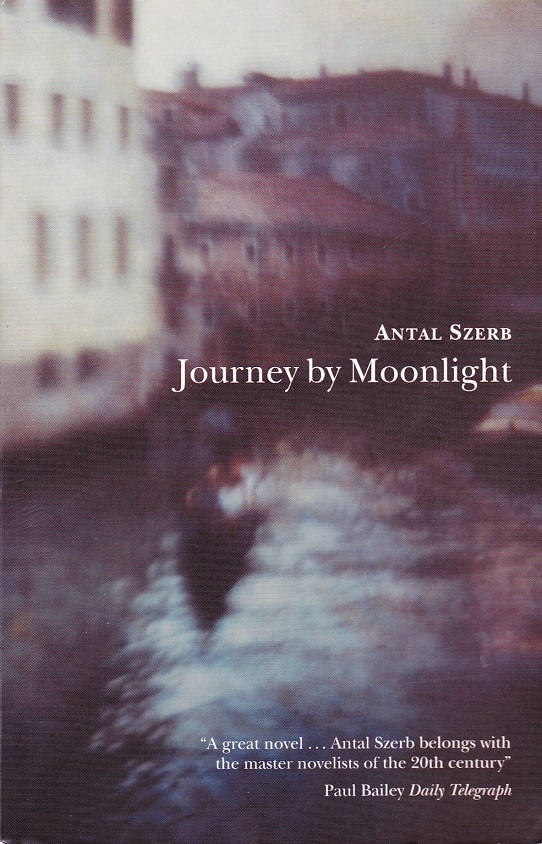
Journey by Moonlight by Antal Szerb
I originally planned to conclude my venture into European literature with We. However, since I had time, I decided to squeeze in one more book. Hungarian writer Antal Szerb is another writer I discovered through online booksellers. As it turns out, Szerb is one of the most important Hungarian writers of the 20th century. Originally published in 1937 as Utas és holdvilág, Journey by Moonlight is Szerb’s second and best-known work. At the heart of the story is Mihály, a Budapest native in his thirties. Everything in life was handed to him: he was pushed into a job at the family firm and pressured into marrying the beautiful and wealthy Erzsi. At the start of the novel, Mihály and Erzsi were on their honeymoon in Venice, Italy; it was his first time visiting the country. It should have been a happy and memorable trip for the couple, but things quickly began to unravel when they chanced upon an old friend, János Szepetneki. This sends Mihály spiraling into memories of his youth, particularly his friendship with the mysterious siblings Tamás and Éva Ulpius. Ervin and János later joined their circle. They were intellectuals, dreamers, and romantics, obsessed with history and prone to theatrical playacting—all while competing for Éva’s attention. However, Tamás’s suicide shattered the group and scattered its members in different directions. In the present, a mishap causes Mihály to board a different train from Erzsi. This separation marks the start of Mihály’s personal odyssey across Italy. Mihály is dreamy and romantic, struggling to break free from the rigid expectations of bourgeois life. Though aware that he’s been separated from Erzsi, he nonetheless follows the pull of something deeper—an inner calling to explore his own identity and desires. Journey by Moonlight is, at its core, an eccentric and nostalgic novel about marriage, friendship, selfhood, memory, and the quiet rebellion against conformity.
Goodreads Rating:
Reading Challenge Recaps
- 2025 Top 25 Reading List: 17/25
- 2025 Beat The Backlist: 15/20; 84/60
- 2025 Books I Look Forward To List: 3/10
- Goodreads 2025 Reading Challenge: 90/100
- 1,001 Books You Must Read Before You Die: 11/20
- New Books Challenge: 6/15
- Translated Literature: 70/50
Book Reviews Published in September
- Book Review # 604: Vanishing World
- Book Review # 605: Heike Story: A Modern Translation of the Classic Tale of Love and War
- Book Review # 606: Man Tiger
- Book Review # 607: State of War
- Book Review # 608: Someone Else’s Garden
- Book Review # 609: Miss Chopsticks
- Book Review # 610: Snow
- Book Review # 611: The Reluctant Fundamentalist
After a writing rut that lasted for a couple of months, I was finally able to build momentum in September. I have been feeling sluggish in the past four months, but I am glad I finally was able to find my way out of it. As I said last month, I am capable of writing at least eight book reviews in a month. I made good of it this September. I guess patience is the key, and maybe because I was finally able to allot time to writing. More than this, I was finally able to make a dent in my pending book review from June 2023. Further, with the five reviews of works of Asian writers I read in June and July 2023, the number of books reviewed is now more than the number of books I have yet to review. Yay to that. I still have thirteen (although technically twelve because I published one more on October 1), and I am going to further reduce this number this October.
Sure, I’m still swamped with pending book reviews from 2023 to the present, but I am making some decent progress. It doesn’t help that I am reading more than I am reviewing. This October, I’m aiming to carry over the momentum I built in September. I am already working on my second review of the month. Like in September, my primary focus will be on those pending June and July 2023 reviews. I’ll try to work on some from 2024 and 2025. Occasionally, I might also publish reviews of books I read before I began publishing reviews—such as Haruki Murakami’s Norwegian Wood and Kafka on the Shore, Kazuo Ishiguro’s An Artist of the Floating World, Salman Rushdie’s The Ground Beneath Her Feet, Ian McEwan’s Atonement, and Naguib Mahfouz’s Miramar. I just published my review of Pamuk’s Snow, a book I read in 2016, in September. These books hold special significance for me as they were the first works I read by these authors.
In October, I will be focusing on works of American writers – not just the country, but the entire continent, from North to South. The focus is on the books that are part of my reading challenges, among them Jonathan Franzen’s The Corrections, Mario Vargas Llosa’s Death in the Andes, Margaret Atwood’s Alias Grace, Thomas Pynchon’s The Crying of Lot-49, Julia Alvarez’s In the Time of Butterflies, George Saunder’s Lincoln in the Bardo, and John Steinbeck’s East of Eden, among others. I am also looking at Isabel Allende’s latest novel, My Name is Emilia Del Valle, and Pynchon’s latest release, Shadow Ticket. And, of course, I might pick up a book or two outside my challenges as the month progresses. How about you, fellow reader? How is your own reading journey going? I hope you enjoyed the books you have read. For now, have a great day. As always, do keep safe, and happy reading, everyone!
 The Pine-Scented Chronicles