
Happy Wednesday, everyone! Wednesdays also mean WWW Wednesday updates. WWW Wednesday is a bookish meme hosted originally by SAM@TAKING ON A WORLD OF WORDS.
The mechanics for WWW Wednesday are quite simple: you just have to answer three questions:
- What are you currently reading?
- What have you finished reading?
- What will you read next?

What are you currently reading?

It’s already the middle of the week—how time flies! I hope everyone’s week is going well. The good news is that we only have two more days to go before the weekend. I hope everyone makes it through the workweek. Also, we are already in the final month of the year, and tomorrow is New Year’s Day. This means today is the last day of 2025! How time flies! It still feels like yesterday when 2025 started, but now it is about to draw to a close. I hope that everything went well for everyone this year. If not, I hope that 2026 will usher in blessings and healing. May blessings and good news shower upon you, and may your prayers be answered. I also hope everyone will do well—both physically and mentally—in the coming year. May 2026 be kinder to you and reward you for all your hard work.
Like in previous years, I spent the closing months of the year ticking off books from my reading challenges. It has now become a tradition for me to spend the latter part of the year catching up on these goals. Thankfully, I was able to complete all of them—at least the major ones—before the year ended. This allowed me to read other books that were not part of these challenges. When the Swedish Academy awarded the Nobel Prize in Literature to Hungarian writer László Krasznahorkai, I was ecstatic. Like most literary pundits, I felt it was long overdue. Interestingly, it was during the lead-up to the announcement of the 2018/2019 Nobel Laureate in Literature that I first encountered him. He has since earned a fan in me—along with his countryman, Péter Nádas. In December, I was able to acquire three works by the recent awardee, hoping to read at least one of them before the year ended.
My wish was granted, as I finally got to read The Melancholy of Resistance. Aside from Sátántangó, it is often cited as Krasznahorkai’s magnum opus. Originally published in 1989 as Az ellenállás melankóliája, The Melancholy of Resistance transports readers to a run-down Hungarian provincial town with a noticeably apocalyptic air. There lingers a sense of hopelessness and despair—the same atmosphere that permeated his debut novel and Baron Wenckheim’s Homecoming. Trains run sporadically, streets are strewn with rubbish, and streetlights are dysfunctional. Nervous denizens make their way home cautiously after dark. The story then introduces a seemingly diverse cast of characters, again reminiscent of Sátántangó. Mrs. Plauf and her son Valuska, the village idiot, are introduced early on. The crux of the story, however, is the news of the arrival of a strange circus. So far, all of this aligns with my expectations of Krasznahorkai. Still, I am looking forward to seeing how the story unfolds. I will be sharing more of my impressions in this week’s First Impression Friday update.
What have you finished reading?

As mentioned in the introduction, I spent the past few weeks reading works from my reading challenges. It ultimately paid off, as I was able to complete all my major reading goals and challenges. A staple of my annual reading journey is my Beat the Backlist Challenge. As has been customary, I listed 20 backlist books that I committed to reading during the year, no matter what. The last book on this list was Elizabeth George Speare’s The Bronze Bow. It is a book that is really not up my alley, but since I already owned a copy—acquired nearly a decade ago—I decided to finally give myself the opportunity to read it. Honestly, I had no idea who the author was or what the book was about when I first acquired it. I suppose the bargain price was simply irresistible.
The Bronze Bow transports readers to first-century Galilee, Israel. At the heart of the story is eighteen-year-old Daniel bar Jamin, a Galilean living under the Roman occupation of Palestine. He is a Zealot living with a band of rebels in a cave overlooking his home village of Ketzah. One day, he encounters Joel bar Hezron, a former classmate from synagogue school, and Joel’s twin sister, Malthace (or Thacia), while sightseeing on the mountain. Anxious for news of his grandmother and younger sister Leah back home, Daniel approaches the twins, who recognize him as the runaway apprentice of Amalek, the village blacksmith. The story then flashes back to Daniel’s childhood. When he was young, Daniel’s uncle and father were imprisoned by the Romans. By the time he was eight, he had grown to hate and distrust them, seeking revenge for his father’s death. Shortly afterward, his mother died of grief. Traumatized by these events, Daniel’s younger sister Leah was believed to be possessed by demons and rarely left the mountains. Although their great-grandfather twice removed took them in, he eventually sold Daniel to Amalek the blacksmith. Amalek proved to be a cruel master, prompting Daniel to run away to the mountains, where he was rescued by Rosh, the leader of an outlaw band of rebels.
Word soon reached Daniel that his grandmother was on the brink of death. He chose to return to care for her, even though it meant returning to slavery. Thankfully, Amalek had already died, freeing Daniel from bondage. However, he was saddened by his grandmother’s condition during his absence, and Leah still appeared unreachable. A series of events eventually led Daniel’s path to converge with Jesus. Yes, the novel contains biblical elements, and it is essentially a children’s book. Still, it grapples with serious, adult themes such as the tension between love and hate, and how hatred is often bound to vengeance. Friendship, trust, and the nuances of leadership are also subtly woven into the novel’s narrative. Earthly values and biblical values are likewise explored in this Newbery Medal–winning work. Overall, The Bronze Bow is quite an experience.

From an unfamiliar name, my next read took me to a more familiar one. It has been eight years since American writer Dan Brown last published a novel. I was genuinely surprised when, at the start of the year, I learned about his latest release. Nevertheless, I was looking forward to The Secret of Secrets. I was hoping that this novel would redeem Brown for me, as I was not particularly impressed by his previous work, Origin. Thankfully, I was able to acquire a copy of the book with minimal fuss. I suppose Brown is simply too popular for his works to be easily accessible here in the Philippines.
The sixth Robert Langdon novel, The Secret of Secrets, transports readers to yet another cosmopolitan city: Prague, the capital of the Czech Republic. At first, Prague seemed an unusual choice, but as the story unfolds, it quickly begins to make sense. The city is home to the Golem, a clay giant from Jewish tradition, making Prague a hotbed of symbols and hidden messages. Before Professor Langdon’s arrival in the city, the novel opens with a grisly prologue. A mysterious figure, caked in mud and known as the Golem, tortures Dr. Brigita Gessner, a renowned neurologist, in her underground laboratory. The Golem forces her to confess to committing horrific acts on human test subjects. The prologue closes with Gessner’s murder and the Golem’s vow of vengeance on behalf of an unnamed woman. A few hours before Gessner’s death, Professor Langdon attends his girlfriend Katherine Solomon’s lecture on her new book, which aims to revolutionize noetic science—the study of consciousness. Solomon delivers the lecture at Gessner’s invitation. Afterward, Solomon has a nightmare about a woman wearing a spiked crown who warns of an explosion at their hotel. The following morning, while jogging, Langdon sees the woman from Solomon’s dream on the Charles Bridge. Panicked, he rushes back to their hotel, and when he cannot locate Solomon, he pulls a fire alarm to evacuate the building. It is, however, a false alarm—the hotel does not explode. Or at least, that is how it appears at first.
After all, this is the Dan Brown universe, where nothing is quite what it seems. Langdon soon learns that police defused a bomb at the hotel earlier that morning. During a conversation with Captain Oldřich Janáček, Langdon mentions details from Solomon’s dream. The captain subsequently accuses Langdon and Solomon of staging the bombing as a publicity stunt for Solomon’s book, capitalizing on the public’s fascination with her supposed ability to foresee the future. The fact that the couple had already evacuated the hotel only strengthens the captain’s suspicion. Meanwhile, Solomon remains missing. She had been scheduled to meet Gessner at her laboratory in the Crucifix Bastion. Thus, the stage is set for yet another breathless story that takes readers across Prague—though mostly beneath it. The Secret of Secrets explores complex subjects, as one would expect from a Langdon novel. Neuroscience and the potential of the human brain lie at its core, while mental health issues are subtly woven throughout the narrative. Brown also offers pointed commentary on the dangers of technology, particularly our growing dependence on artificial intelligence and social media. Personally, I did not expect The Secret of Secrets to be this compelling. I enjoyed it far more than I care to admit.
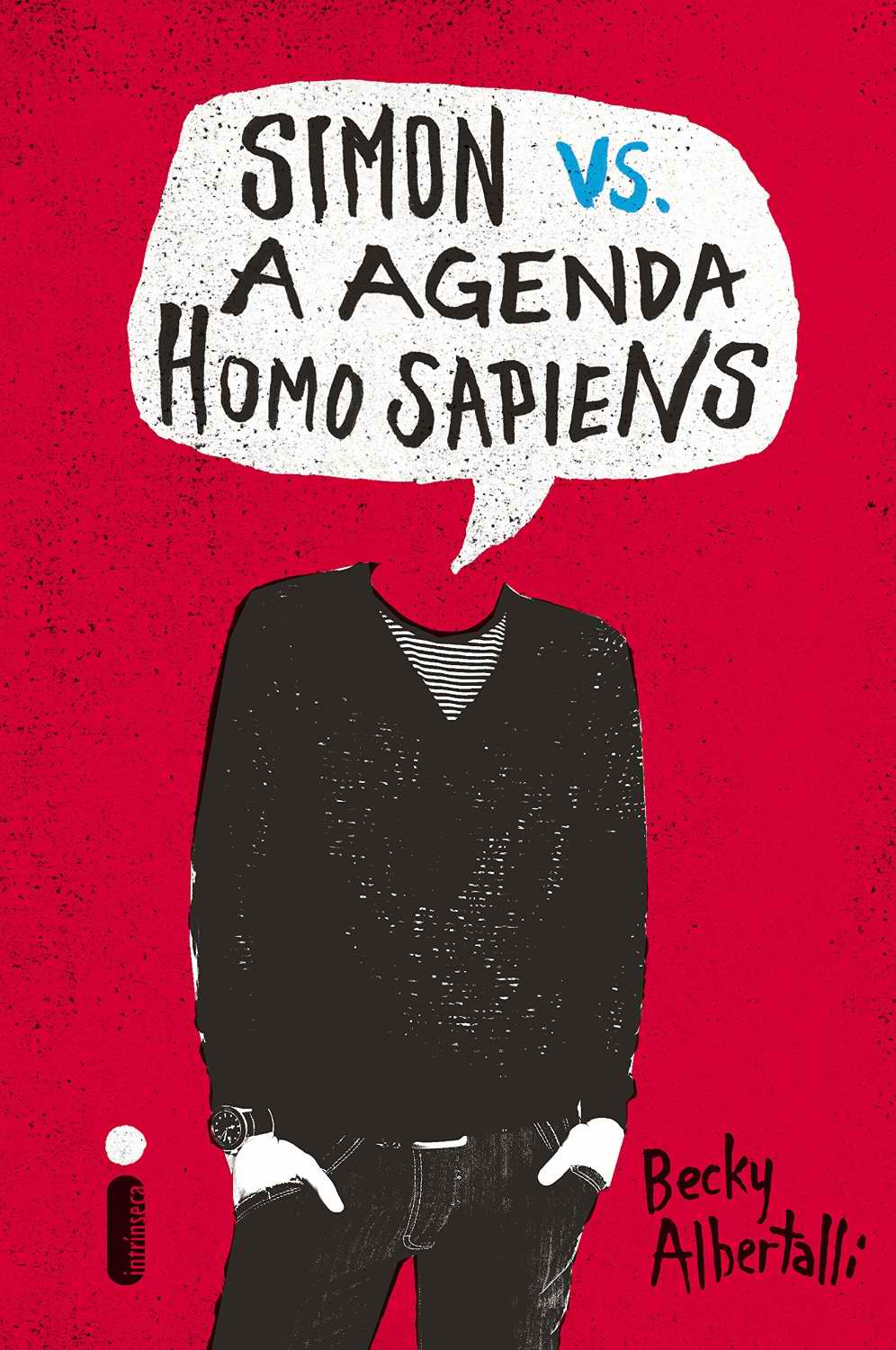
The past week has been quite a busy reading week. I was able to complete three books, largely because my schedule became less hectic. We also had more holidays, which certainly helped. Regardless, I am grateful for the opportunity to build some momentum before the year turns over a new leaf. I initially thought that Becky Albertalli’s Simon vs. the Homo Sapiens Agenda was part of my 2025 Beat the Backlist Reading Challenge. After all, it has been seven years since I acquired a copy of the book. For this reason, I set it aside with my challenge reads, hoping to finally read it this year. I later learned that it was not actually part of the challenge. Still, I wanted to tick it off my list, which ultimately led me to proceed with reading it.
Albertalli’s debut novel, Simon vs. the Homo Sapiens Agenda, takes readers to mid-2010s suburban Atlanta. The titular Simon is sixteen-year-old Simon Spier, a high school junior at Creekwood High School. On the surface, he seems to have a perfect life: loving parents, an awesome younger sister and a cool older sister, and three best friends—Nick, Abby, and Leah. Unbeknownst to them, Simon is a closeted gay teen. One day, Simon discovers through his school’s confession website that there is another gay student at his school. He initiates an email exchange with this anonymous individual. They communicate under codenames—the mystery student goes by Blue, while Simon adopts the name Jacques, a reference to Jacques a dit, the French equivalent of “Simon Says.” The novel alternates between Simon’s first-person narration and the email exchanges between Blue and Jacques. As life would have it, Simon begins to fall in love with Blue. They share a love for Oreos and a mutual fear of coming out. However, Blue is reluctant to reveal his identity. Trouble arises when Martin, a fellow student, stumbles upon the emails and uses them to blackmail Simon into helping him get a date with Simon’s friend Abby. Simon reluctantly agrees in order to protect Blue’s secret.
As the story progresses, Simon begins to wonder who Blue really is, suspecting several boys at school. Despite everything, their email exchanges continue, while Simon struggles to keep Blue’s secret intact. Meanwhile, his life slowly starts to unravel. He is consumed by guilt as he hides his identity from those closest to him, and the constant threat of being outed by Martin weighs heavily on him. This strain also puts his friendships to the test. The novel’s overarching themes are romance and identity. Simon’s conversations with Blue help him come to terms with who he is and with the possibility of coming out. His dilemma mirrors that of many closeted individuals around the world—from the fear of rejection to the risk of being ostracized by family and peers. Still, Albertalli approaches the subject with warmth and tenderness. As the old adage goes, the truth will set you free. In Simon’s case, it does—but only after he takes control of his own narrative. Honestly, I am not usually a fan of young adult fiction, largely because of the writing quality. Still, I found Simon vs. the Homo Sapiens Agenda to be a compelling and empathetic read about identity, courage, and understanding.
What will you read next?


 The Pine-Scented Chronicles