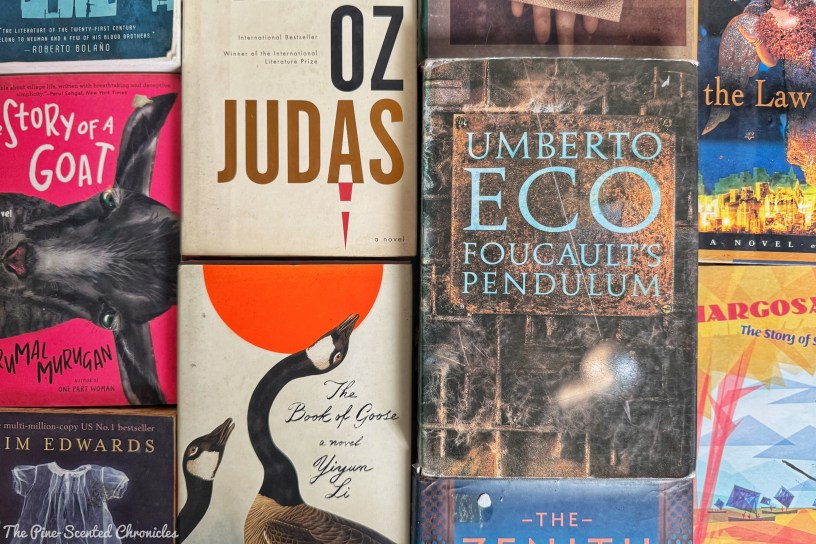
Before anything else, let me greet everyone a Happy New Year!

Time truly flies fast. 2025 is already in the books, and a new set of 365 blank pages is before us. I hope that everyone ended 2025 on a high note. I hope all your prayers were answered and your hard work repaid. I hope everyone is entering 2026 with renewed energy. Sure, the future is brimming with uncertainties, but it is also abounding with opportunities. It is an opening for fresh starts and new adventures. May 2026 be filled with joy, healing, achievements, and answered prayers. I wish you well on your individual journeys. For those whose goal in 2025 was simply to move from one point to another, know that that’s perfectly fine, too. I am proud of you and your resilience. In times like these, with turmoil surrounding us, silencing the noise can be a challenge. I hope that 2026 will be kinder to you. As such, I hope everyone stays healthy—in mind, body, and spirit.
Reading-wise, my 2025 reading journey has gone smoothly. For the fourth year in a row, I was able to complete at least 100 books. Imagine, for years, I struggled to complete 100 books. Just when I nearly lost hope, I finally crossed the line in 2022. Interestingly, I thought 2022 was an anomaly, but lo and behold, I was able to replicate the feat four years running. Thankfully, I was able to complete all my major reading goals and reading challenges. Like how it has been in the previous years, I used the remaining weeks of the year scrambling to complete these goals. It adds thrill to the chase, I guess. The remaining books, as always, were written by American authors, hence my pivot toward American literature. When I say American literature, I refer to the entire continent—from North to South—and including the Caribbean. Before diving into the new year, here’s a glimpse of how my December venture into American literature – and a little of African literature – has shaped up.
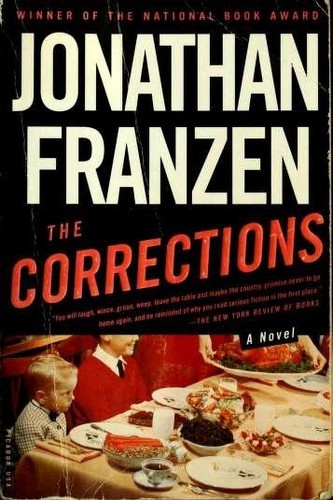
The Corrections by Jonathan Franzen
Must-read lists introduced me to American writer Jonathan Franzen. Some of his works came in highly recommended, including The Corrections. Interestingly, it was the first work by the American writer I acquired; I acquired it nearly a decade ago. However, it was left to gather dust on my bookshelf. It was because of this that I included it on my 2025 Top 25 Reading List and 2025 Beat the Backlist Challenge. Originally published in 2001, The Corrections charts the fortunes of the Lamberts, a dysfunctional family living in St. Jude, Missouri. The patriarch, Alfred Lambert, is a retired engineer who has developed Parkinson’s and dementia. His wife, Enid, is a homemaker. Together, they had three children: Gary, Chip, and Denise. In their own ways, their children have rejected their Midwestern upbringing, moving away from their birthplace and leading lives starkly different from their roots. This left the couple to spend their days in each other’s company in their family home, mainly bickering. Flashbacks paint a vivid portrait of the family, including their children. Alfred is a distant husband and father. Yet the couple managed to survive the rigors of living in the Midwest. Chip, meanwhile, was a failed academic who was fired for having a sexual relationship with a student. Gary was married to Caroline and is living in Philadelphia with their three sons. Denise has also moved to Philadelphia, where she opened her own restaurant. The crux of the story was Enid’s desire to gather her children together in the family home for the Holidays. Cognizant that Alfred’s health would further deteriorate, the matrarch became fixated with the idea of a family reunion. Getting from point A to point B, however, takes navigating a path with several curves, such as the children’s reluctance to return home. The Corrections is the typical Franzen novel. It examines the intricacies of politics, dysfunctional families, and family dynamics. These subjects converge in this timeless examination of American life; the Lambert family is a microcosm of contemporary America. Overall, The Corrections is a compelling story, a vivid portrayal of the American family.
Goodreads Rating:


Idu by Flora Nwapa
From North America, my literary journey next brought me to Nigeria, a literary landscape that has become familiar to me in recent years. It was my effort to diversify and expand my reading base that led me to different Nigerian writers, although they are primarily men. It is then my goal to explore more works of female Nigerian writers. Among those whom I recently encountered is Flora Nwapa, who is a prominent figure in African literary circles. Last year, I was finally able to acquire a book by Nwapa, which I then included in my 2025 Top 25 Reading List. Originally published in 1970, Idu is set in a remote African village and charts the fortunes of the titular Idu. Idu is married to Adiewere. The couple was devoted to each other. However, their marriage was haunted by their inability to conceive a child despite years of trying. With motherhood fundamental in African culture, their childless state earned the disapproval of their village. While trying to conceive, the couple was able to establish their business. The business flourished, but an emergency prompted the couple to forfeit their wealth. Their successes, however, did not pacify the villagers, who kept on pressuring them to have a child. They even asked Adiewere to take a second wife; polygamous relationships are a norm in Nigeria. Adiewere was, however, adamant about staying in a monogamous marriage, despite Idu’s approval. When he did take a second wife, Adiewere treated her like a child rather than like a wife. Suddenly, Idu fell pregnant, exciting the villagers. The news prompted the second wife to leave. While it seemed that fate finally smiled on the couple, life has its pleasant surprises. The novel reverberates with feminist overtones, vividly examining the role of African women whose worth was defined by their ability to produce children. Women’s inability to conceive is automatically blamed on them. African women are subservient to the expectations of society. Still, Idu is a woman of strength and resilience. Overall, Idu is a compelling read that provides deep insights into the intricacies of marriage, African culture, and even village life.
Goodreads Rating:

Dream Count by Chimamanda Ngozi Adichie
From one Nigerian writer to another. It was while researching books to include on my 2025 Top 10 Books I Look Forward To list that I learned about Chimamanda Ngozi Adichie’s latest release. Adichie won me over with Half of a Yellow Sun. Dream Count is the third of her novels that I have read, although I was initially reluctant to read it due to the controversies surrounding her, particularly vis-à-vis her stance on feminism. Still, my curiosity is greater. Divided into five sections, Dream Count charts the fortunes of four women. The backbone of the story is Chiamaka, or Chia, a travel writer born to a Nigerian family who currently resides alone in Maryland. When the COVID-19 pandemic struck, Chia tried to adjust to the changes. Zoom calls with her family in Nigeria only left her feeling lonelier. It was evident that there was a missing piece in her life. The pandemic set into motion a universal experience: a moment of self-reflection. The silence that enveloped her prompted introspection about her life. Her loneliness and the seeming meaninglessness of her days make her wonder whether her life is going to waste. Meanwhile, her friend Zikora, a lawyer in Washington, D.C., was left alone by her partner, Kwame. He fled from her home and went incommunicado after she informed him of their pregnancy. Zikora’s mother travels from Nigeria to oversee her delivery. Unlike the other women in the novel, Kadiatou—Chia’s housekeeper—is a poor Francophone Guinean who grew up in a small village with her parents and sister, Binta. Following a string of tragedies, she moved to the United States with Amadou, her childhood love, in pursuit of the American Dream. Omelogor, Chia’s cousin, returned home to Abuja from the United States. Still, her own concerns mirror those of her cousin’s. The characters’ stories examine the intricacies of love and relationships. While their lives were initially anchored on men, they soon discovered their own strength and resilience amid change. The novel also explores staple themes such as misogyny, abuse, race, and class divides. Dream Count fascinates in its topical scope, carrying with it messages that continue to resonate in the present.
Goodreads Rating:
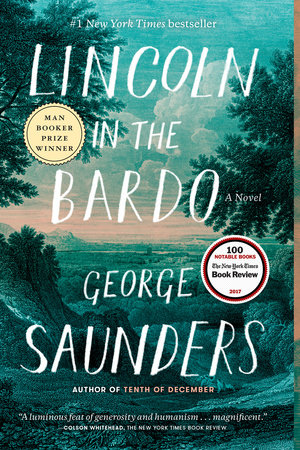
Lincoln in the Bardo by George Saunders
After reading the works of two female Nigerian writers, my literary journey brought me back to the United States. It was the Booker Prize that introduced me to George Saunders. His earlier works consist mainly of novellas, short stories and short story collections, and essays. In 2017, he stepped out of his comfort zone and published his first full-length novel, Lincoln in the Bardo. The story unfolds through a series of monologues, beginning with the voice of Hans Vollman, a former printer who now exists in the Bardo. Bardo pertains to the space between death and rebirth, where ghosts who refuse—or are too frightened—to move on are trapped. The year is 1862, when Abraham Lincoln was the president of the United States. Along with Vollman is his friend, Roger Bevins III; they are among many souls who retain attachments to the real world. Meanwhile, Willie Lincoln, a young boy, has just arrived in the Bardo. Believing that children should not remain there, the two men encourage Willie to move on. The boy, however, meekly responds that he feels he is “to wait.” Typhoid fever resulted in Willie’s untimely death in the White House. Out of the blue, President Lincoln—Willie’s father—arrived in the cemetery a few hours after Willie’s burial. He cradled his son’s body and mourned. Willie, frightened and lonely, was unable to comprehend his situation; he was unaware of his own death. This realization forms the crux of the story, risking Willie of becoming permanently trapped in the Bardo. This prompts Vollman, Bevins, and the Reverend to act, lest he remain a ghost bound to this in-between realm. The winner of the 2017 Booker Prize, Lincoln in the Bardo, is a compelling and unusual novel. The historical backdrop provides further depth. Lincoln must endure not only the public’s resentment due to the Civil War but also the private grief of losing his son. The novel underscores themes of impermanence, grief, and empathy, while also exploring the tension between public and private lives and the beauty of forming authentic connections. Overall, Lincoln in the Bardo is a tender and affecting story about death and the afterlife.
Goodreads Rating:

House Made of Dawn by N. Scott Momaday
It was a random encounter through an online bookseller that introduced me to N. Scott Momaday. I had no idea who the Native American writer was, nor what House Made of Dawn was about. Still, my curiosity was piqued. Unfortunately, it suffered the same fate as many of my other books: it was left to gather dust on my bookshelves. Driven by lingering curiosity and Momaday’s passing in early 2024, I resolved to read House Made of Dawn. At the heart of the novel is Abel, a young Native American who, at the start of the story, returns to Walatowa, his home in the Jemez Pueblo of New Mexico. The Second World War, in which he served, has just ended. However, the trauma he experienced during the war followed him home. Emotionally devastated, he turned to alcohol and was too drunk to recognize his grandfather, Francisco, his only remaining relative. Abel’s mother and older brother, Vidal, had already passed away when he was young. Francisco, a respected member of the community, had instilled in his grandson Native traditions and values. However, the war irreversibly damaged Abel’s psyche, severing his connection to spiritual and physical wholeness. Childhood memories resurfaced upon his return to the reservation, yet he struggled to reconnect with his homeland and community, even as he tried to immerse himself in them. A series of unfortunate events ultimately led to Abel’s incarceration. After completing his sentence, he moved to Los Angeles, only to find himself eventually returning to his homeland. The novel is deceptively slender; however, it probes a wide range of themes. Among the most prominent is the exploration of the meaning of home, extending into questions of belonging and identity. The novel also examines humanity’s relationship with nature and its connection to our existence. Religion, tradition, and even the nature of storytelling itself are likewise explored by Momaday. Winner of the 1969 Pulitzer Prize, House Made of Dawn has certainly commanded my attention. It is no surprise that it is widely regarded as a hallmark of Native American literature—a seminal work that helped bring Native American literature into the mainstream.
Goodreads Rating:

Alias Grace by Margaret Atwood
Over the past few years, Canadian writer Margaret Atwood has become one of my favorites. She and her works are ubiquitous in the literary world, and her body of work is essential reading. Interestingly, my first novel by Atwood, Bodily Harm, left only a faint impression on me. Thankfully, this initial experience did not preclude me from exploring her other works. Almost a decade since this first taste, I have read my sixth Atwood novel, Alias Grace, which I listed as part of my 2025 Top 25 Reading List, and with it, I finally completed the list. The novel is inspired by the real-life story of Grace Marks, a poor Irish immigrant and servant in Canada. The story begins in 1859 when we learn that Grace is serving a life sentence. In 1843, she was convicted of the brutal murders of her employer, Thomas Kinnear, and his housekeeper, Nancy Montgomery. Her fellow servant, James McDermott, was hanged for the same case. Still, mysteries surround the murders, prompting a group of gentlemen and ladies from the Methodist church to advocate for Grace’s pardon. They believed she was innocent. Unfortunately, their efforts proved futile. The committee then enlisted Dr. Simon Jordan, a psychiatrist, to assist in proving Grace’s innocence. Grace claims she cannot remember the events of the day of the murders and exhibits symptoms of hysteria. To understand the circumstances surrounding the case, Atwood transports readers into Grace’s past; Grace was evasive to Dr. Jordan’s queries about her dreams. Grace grew up in Ireland before her family emigrated to Canada. Her mother died during the journey, leaving Grace and her siblings under the care of their alcoholic and abusive father. Upon arriving in Toronto, he forced Grace to find work. Grace’s narrative alternates with Dr. Jordan’s notes, written in the third-person point of view, allowing readers to witness the story unfold from multiple angles. Alias Grace surprises in its conclusion. Nevertheless, I am in awe of how Atwood weaves the tale. Throughout the novel, she probes familiar themes of female sexuality, memory, and gender dynamics, while also exploring power, class, justice, and, of course, the intricacies of storytelling itself.
Goodreads Rating:

The Crying of Lot 49 by Thomas Pynchon
Before I began perusing must-read lists, I had never come across Thomas Pynchon, nor had I encountered any of his works. Although he is a literary titan, Pynchon has maintained a reclusive existence, and his public presence is meager at best. This only adds to his allure. Moreover, his works are frequently recommended and regularly appear on must-read lists, with several titles included in 1,001 Books You Must Read Before You Die. Among them is The Crying of Lot 49, his fourth novel I read. A part of my 2025 Beat the Backlist Challenge, the novella differs from the other Pynchon novels I read this year. Originally published in 1966, it is, so far, the shortest of his works. It charts the fortunes of Oedipa Maas, a young, disgruntled housewife living in the fictional Northern California suburb of Kinneret-Among-the-Pines. Her life changed when she received a letter from Metzger, the lawyer of her recently deceased ex-boyfriend, Pierce Inverarity. Oedipa has been named executrix of Inverarity’s last will and testament. Inverarity was a wealthy businessman who virtually owned the Los Angeles suburb of San Narciso. This baffles Oedipa, who last heard from her ex-boyfriend a year earlier. By this time, Oedipa has been married to Wendell “Mucho” Maas, a rudderless radio jockey and ephebophile. Their marriage, however, is lackluster. Oedipa soon meets Metzger, setting the stage for the novel’s increasingly bizarre developments. Additional elements quickly emerge. For one, Inverarity had ties to the American mafia, prompting Oedipa to investigate further. A labyrinth of conspiracy theories unfolds; she uncovers a centuries-old feud between two mail distribution companies. As paranoia emerges, Oedipa struggles to rationalize what she has uncovered; this underscores the human search for meaning. The novel also served as a critique of the breakdown of communication in modern society. The exaggerated characters Oedipa encounters have much to say but little interest in genuine connection. Oedipa was unable to establish meaningful relationships, reinforcing the novel’s themes of alienation and isolation. Overall, The Crying of Lot 49 is another compelling and intellectually stimulating work from Pynchon, although I would want it to be longer.
Goodreads Rating:

The Bronze Bow by Elizabeth George Speare
Completing my 2025 Beat the Backlist Challenge is a writer whose oeuvre I have yet to explore. It was nearly a decade ago when I acquired a copy of Elizabeth George Speare’s The Bronze Bow. I barely had any idea about who she was, but I guess the bargain price was irresistible. I have not encountered any of her works before. It is a book that is really not up my alley, but since I already owned a copy, I decided to finally allow myself to read it. The Bronze Bow transports readers to first-century Galilee, Israel. At the heart of the story is eighteen-year-old Daniel bar Jamin, a Galilean living under the Roman occupation of Palestine. He is a Zealot living with a band of rebels led by Rosh. They occupied a cave overlooking Ketzah, Daniel’s home village. One day, he encounters Joel bar Hezron, a former classmate from synagogue school, and his twin sister, Malthace, while sightseeing on the mountain. The twins recognized him as the runaway apprentice of Amalek, the village blacksmith. The story then flashes back to Daniel’s childhood. When he was young, Daniel’s uncle and father were imprisoned by the Romans. By the time he was eight, he started seeking revenge for his father’s death. His mother died of grief while Leah, traumatized, was possessed by demons and rarely left the mountains. Although their great-grandmother took them in, she eventually sold Daniel to Amalek, who proved to be a cruel master. This prompted Daniel to run away to the mountains, where he was rescued by Rosh. When Daniel learned that his grandmother was on the brink of death, he chose to return to care for her, even though it meant returning to slavery. Thankfully, Amalek’s death freed Daniel from bondage. A series of events eventually led Daniel’s path to converge with Jesus. While it is essentially a children’s story, the book grapples with serious, adult themes such as the tension between love and hate, and how hatred is often bound to vengeance. Friendship, trust, and the nuances of leadership are also subtly woven into the novel’s narrative. The winner of the Newbery Medal, The Bronze Bow, is quite an experience.
Goodreads Rating:

The Secret of Secrets by Dan Brown
From an unfamiliar name, my next read took me to a more familiar one. It has been eight years since American writer Dan Brown last published a novel. I was genuinely surprised when, at the start of the year, I learned about his latest release, The Secret of Secrets. I was hoping that this novel would redeem Brown for me, as I was not particularly impressed by his previous work, Origin. The sixth Robert Langdon novel, The Secret of Secrets, transports readers to yet another cosmopolitan city: Prague, the capital of the Czech Republic. Prague seemed an unusual choice, but as the story unfolds, it quickly begins to make sense. The novel opens with a mysterious figure, caked in mud and known as the Golem, torturing Dr. Brigita Gessner, a renowned neurologist, in her underground laboratory. The Golem murdered her after she confessed to committing horrific acts on human test subjects. A few hours before, Professor Langdon attended his girlfriend Katherine Solomon’s lecture, initiated at Gessner’s invitation, on her new book. It aims to revolutionize noetic science, the study of consciousness. Afterward, Solomon had a nightmare of a woman wearing a spiked crown, warning of an explosion at their hotel. The following morning, while jogging on the Charles Bridge, Langdon saw the woman from Solomon’s dream. Panicked, he rushed back to their hotel and pulled a fire alarm to evacuate the building. It is, however, a false alarm—the hotel does not explode. Or at least, that is how it appears. Langdon soon learned that police had defused a bomb at the hotel earlier that morning. When Langdon mentioned to Captain Oldřich Janáček, Langdon the details from Solomon’s dream, he and Solomon were soon accused of staging the bombing as a publicity stunt for Solomon’s book. This set the stage for a pulsating chase across the city as Langdon tries to locate Solomon and solve the mysteries related to Gessner’s death. The Secret of Secrets explores complex subjects, with neuroscience and the potential of the human brain lying at its core. Mental health issues were subtly woven throughout the narrative. Brown also offers pointed commentary on the dangers of technology, particularly our growing dependence on artificial intelligence and social media. Personally, I did not expect The Secret of Secrets to be this compelling.
Goodreads Rating:
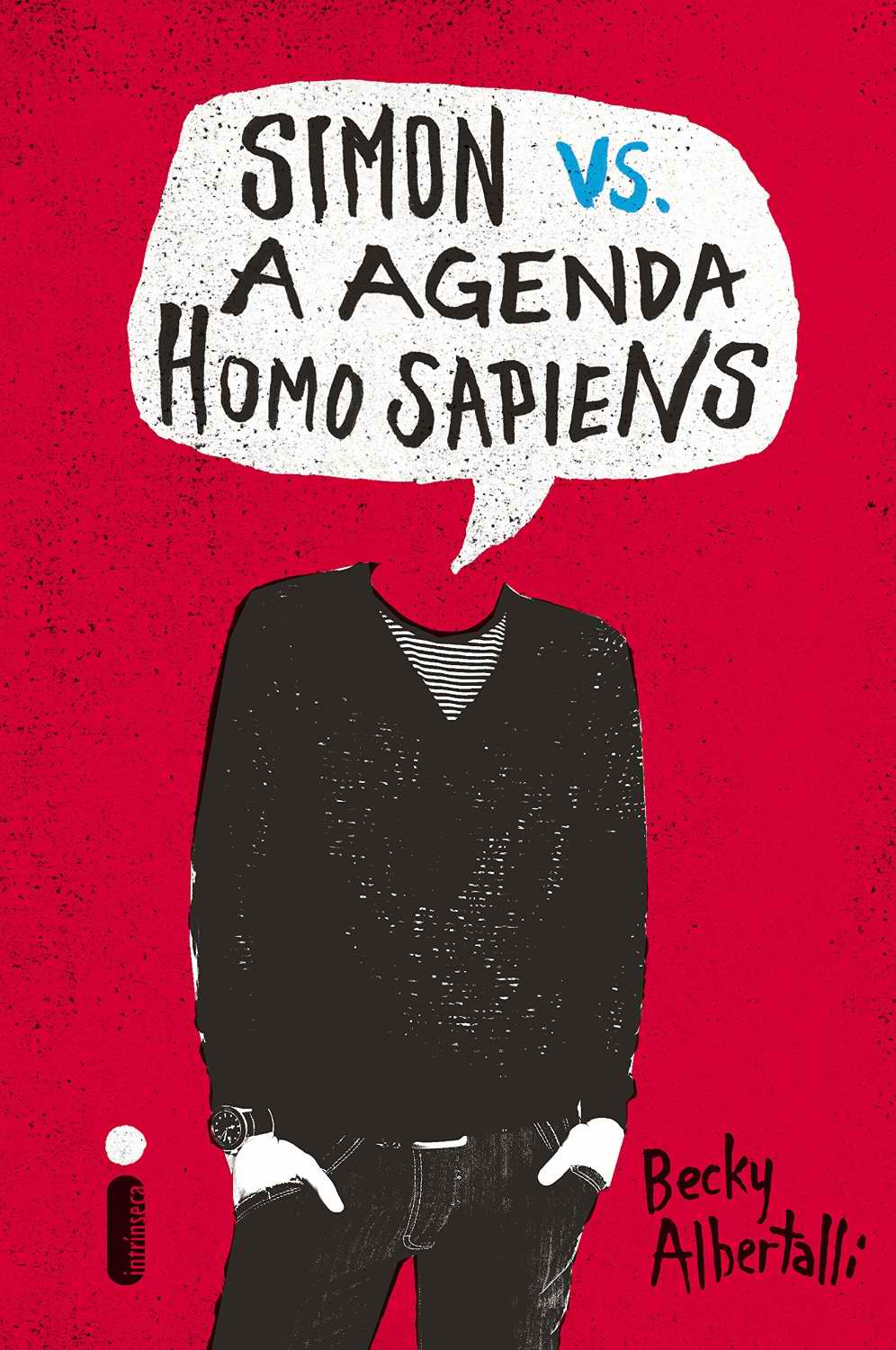
Simon vs the Homo Sapiens Agenda by Becky Albertalli
Concluding my 2025 reading journey is a work by a writer whose oeuvre I have not explored before. I initially thought that Becky Albertalli’s Simon vs. the Homo Sapiens Agenda was part of my 2025 Beat the Backlist Reading Challenge. After all, it has been seven years since I acquired a copy of the book. For this reason, I set it aside with my challenge reads, hoping to finally read it this year. Albertalli’s debut novel, Simon vs. the Homo Sapiens Agenda, takes readers to mid-2010s suburban Atlanta and introduces the titular Simon. Sixteen-year-old Simon Spier is a high school junior at Creekwood High School. He seems to have a perfect life: loving parents, an awesome younger sister and a cool older sister, and three best friends—Nick, Abby, and Leah. Unbeknownst to them, Simon is a closeted gay teen. His school’s confession website introduced him to another gay student at his school. Through email exchanges under codenames—the mystery student goes by Blue, while Simon adopts the name Jacques, a reference to Jacques a dit, the French equivalent of “Simon Says”—they started to create a bond. As life would have it, Simon begins to fall in love with Blue. However, Blue is reluctant to reveal his real identity. Trouble arises when Martin, a fellow student, stumbles upon the emails and uses them to blackmail Simon into helping him get a date with Simon’s friend Abby. Simon reluctantly agrees to protect Blue’s secret. As the story progresses, Simon begins to wonder who Blue really is, while his life slowly starts to unravel. He is consumed by guilt as he hides his identity from those closest to him. The constant threat of being outed by Martin weighed heavily on him, putting strain on his friendships. The novel’s overarching themes are romance and identity. Simon’s conversations with Blue help him come to terms with who he is and with the possibility of coming out. This is a universal experience: the fear of rejection and the risk of being ostracized by family and peers. Still, Albertalli approaches the subject with warmth and tenderness. The truth soon set Simon free—but only after he takes control of his own narrative. I found Simon vs. the Homo Sapiens Agenda to be a compelling and empathetic read about identity, courage, and understanding.
Goodreads Rating:
Reading Challenge Recaps
- 2025 Top 25 Reading List: 25/25
- 2025 Beat The Backlist: 20/20; 107/60
- 2025 Books I Look Forward To List: 5/10
- Goodreads 2025 Reading Challenge: 119/100
- 1,001 Books You Must Read Before You Die: 17/20
- New Books Challenge: 12/15
- Translated Literature: 76/50
Book Reviews Published in December
- Book Review # 622: Sugar Street
- Book Review # 623: Theft
- Book Review # 624: A Girl’s Story
- Book Review # 625: Foucault’s Pendulum
- Book Review # 626: Flesh
- Book Review # 627: My Friends
I really wanted to end December with aplomb. However, things got work at the office, especially as I have just tendered my resignation. Further, the holiday season is brimming with activities, mainly get-togethers with old friends. This set me back on my goals; I wanted to complete at least ten book reviews in December. Still, I am glad I was able to sneak in six book reviews despite my busy December schedule. It is also a better writing month than November. Six, after all, is still a decent number. I was also able to make a dent in my 2025 pending book reviews. On the other hand, this means that I had to push back on my 2023 pending book reviews; I was able to complete just one. It was my goal to finish all my 2023 pending book reviews in 2025, but I failed, horribly. Nevertheless, I am still positive I will be able to complete these twenty-eight book reviews within six months; at least that is the goal.
But while I am having a writing slump, my pending list continues to grow. It is not helping that I am reading more than I am reviewing. I hope I get to obtain the writing momentum I built in late December; January, historically, has been a slow book reviewing month. I am hoping that this will set me up for a better writing year. For now, my primary focus will be on those pending June and July 2023 reviews while trying to work on some from 2024 and 2025. Occasionally, I might also publish reviews of books I read before I began publishing reviews—such as Haruki Murakami’s Norwegian Wood and Kafka on the Shore, Kazuo Ishiguro’s An Artist of the Floating World, Salman Rushdie’s The Ground Beneath Her Feet, Ian McEwan’s Atonement, and Naguib Mahfouz’s Miramar. These books hold special significance for me as they were the first works I read by these authors.
As we have entered a new year, I am starting to set my goals. Definitely, it is still my goal to complete 100 books this year, which I decided to open with works of Latin American writers. I believe it was in 2023 when I had my last Latin American Literature month. While I am currently reading László Krasznahorkai’s The Melancholy of Resistance, I have already lined up Carlos Fuentes’ Where the Air is Clear, Roberto Bolaño’s The Skating Rink, Oscar Hijuelos’ The Mambo Kings Play Songs of Love, and Alejo Carpentier’s The Kingdom of this World. I am also considering Isabel Allende’s and Julia Alvarez’s latest novels. As for the rest of the year, anything goes. It is still my goal to completely reduce my backlist; I have over 300 unread books staring at me at home. With the new year, I will also be swamped with year-end writing endeavors while setting my new goals. I can’t wait to see how the year unfolds.
How about you, fellow reader? How is your own reading journey going? I hope you enjoyed the books you have read. For now, have a great day. As always, do keep safe, and happy reading, everyone!

