Happy Wednesday, everyone! Woah! Just like that, we are nearly two-thirds through the fifth month of the year. I hope the year has been kind and great to everyone. I know life isn’t a walk in the park, but it is my fervent prayer that everyone’s year is going well. Regardless, I hope the rest of the workweek goes smoothly.
That said, the middle of the week also brings a fresh WWW Wednesday update. WWW Wednesday is a bookish meme hosted originally by SAM@TAKING ON A WORLD OF WORDS.
The mechanics for WWW Wednesday are quite simple: you just have to answer three questions:
- What are you currently reading?
- What have you finished reading?
- What will you read next?

What are you currently reading?
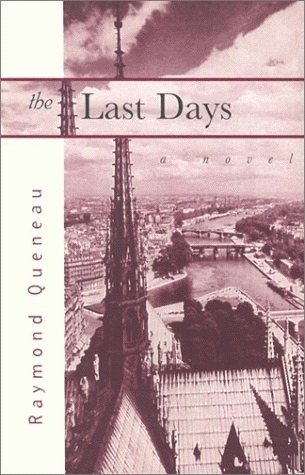
It’s already the middle of the week, which means we have only two more days until the weekend. I hope everyone makes it through the workweek. Anyway, my 2026 reading journey is going as planned. After spending the first two months of the year reading works by Latin American and Caribbean writers, I am now in the midst of a European literary adventure. While I had not originally planned to embark on a journey across European literature this early in the year, realizing that I had listed several works by European writers in my reading challenges prompted me to pivot toward them in March. Because of the number of European works in my reading challenges, I am extending the journey into this month. I believe this is the first time I have read works of European literature for three consecutive months. This shift has reintroduced me to familiar names while also introducing me to writers whose oeuvres I have yet to explore. My current read has introduced me to a new name.
It was through an online bookseller that I first encountered French writer Raymond Queneau during the height of the COVID-19 pandemic. His novel The Last Days immediately piqued my interest, prompting me to secure a copy. However, it suffered the same fate as most of my books: it was left to gather dust on my bookshelf. To redress this – and partly because I learned that Queneau is an influential name in French literary circles – I included the book in my 2026 Top 26 Reading List. Originally published in 1936 as Les Derniers Jours, the novel transports us to 1920s Paris and introduces Vincent Tuquedenne, the novel’s main character. He is from the countryside and was a student of philosophy at the Sorbonne. Being from the countryside, he was not entirely comfortable in the big city. I just started reading the book. As such, I don’t have much impression to share for now. However, I will be sharing more of my initial impressions in this week’s First Impression Friday update.
What have you finished reading?
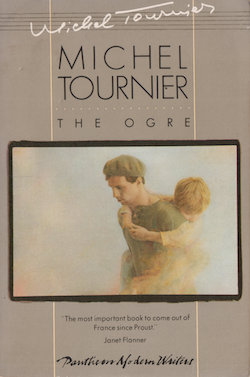
Interestingly, in 2025, I have not read any book originally written in French. I was surprised by this realization. It was unintentional, but it happened nonetheless. To make up for this, I included several works by French writers in my ongoing reading challenges. Among the books in these challenges is The Ogre by Michel Tournier. It was through an online bookseller that I first encountered Tournier during the height of the COVID-19 pandemic. I came across his novel The Ogre, and it immediately piqued my interest, prompting me to secure a copy. I would later learn that it is listed as one of the 1,001 Books You Must Read Before You Die. Personally, this added value to the book; I also later learned that it was Tournier’s sophomore novel. This meant I was bound to read it. However, the book suffered the same fate as most of my books: it was left to gather dust on my bookshelf. I eventually included it in my 2026 Top 26 Reading List.
Originally published in 1972 as Le Roi des aulnes, The Ogre charts the fortunes of Abel Tiffauges, a very tall and myopic man. The book opens with the “Sinister Writings” of the protagonist. This section is written in a first-person narration, almost in the form of diary entries. He opens his accounts on January 3, 1938: You’re an ogre, Rachel used to say to me sometimes. An ogre? A fabulous monster emerging from the mists of time? Well, yes, I do think there’s something magical about me, I do think there’s a secret collusion, deep down, connecting what happens to me with what happens in general, and enabling my particular history to bend the course of things in its own direction. He then delves into the past. He was once a sensitive misfit who entered an all-boys religious school, St. Christopher. There, he met Nestor, a privileged student who took him under his wing. Despite their glaring differences, they became close friends. Nestor adored Abel so much that he indulged his obsessions. Their friendship was cut short when the school burned down, with Nestor perishing in the flames. Interestingly, Abel had fervently wished for the school to burn down. Abel’s reflections on the past alternate with events in the present. As an adult, he owns a Parisian garage. He spends his free time haunting school playgrounds to photograph children and record their voices. One day, a girl accuses him of molestation, resulting in his arrest. Fortunately for him, his arrest coincides with the outbreak of World War II. It was St. Christopher all over again. The case against Abel was dropped, and instead of serving prison time, he was drafted into the army. In the second part, the story shifts to a third-person narrative. On the battlefield, Abel experiences a picaresque series of adventures. Ironically, his freedom increases amid the constrictions of army life. He is assigned to the communications sector and roams the French countryside requisitioning pigeons for military communications. He is later taken prisoner by the Germans and dispatched to a Prussian labor camp. After catching the attention of Hermann Göring’s forester, he is transferred to the Kaltenborn fortress, a Napola institution for boys selected to become the elite of the future Lebensraum. All the while, the war moves on.
In many ways, The Ogre is a book that is difficult to describe. On the surface, it is a novel about the horrors of the Second World War. Tournier takes readers to the battlefield, providing them with a vicarious experience of war. On the other hand, one cannot shake the sense that Abel is an unusual protagonist. Even the novel’s title points to him as a kind of monster; at one point, Abel believes himself to possess magical qualities. He sees signs in everything, all of which carry mystical significance for him. There is also a megalomaniacal side to him, as he imagines himself a hero in the same vein as St. Christopher. What sets the novel apart, however, is its sympathetic portrayal of the Second World War experience on German soil. This is one reason the novel has been considered controversial, with some critics calling it pro-Nazi for allegedly glorifying certain aspects of Nazism. Overall, The Ogre is an interesting literary experience, one that deserves at least a second glance.
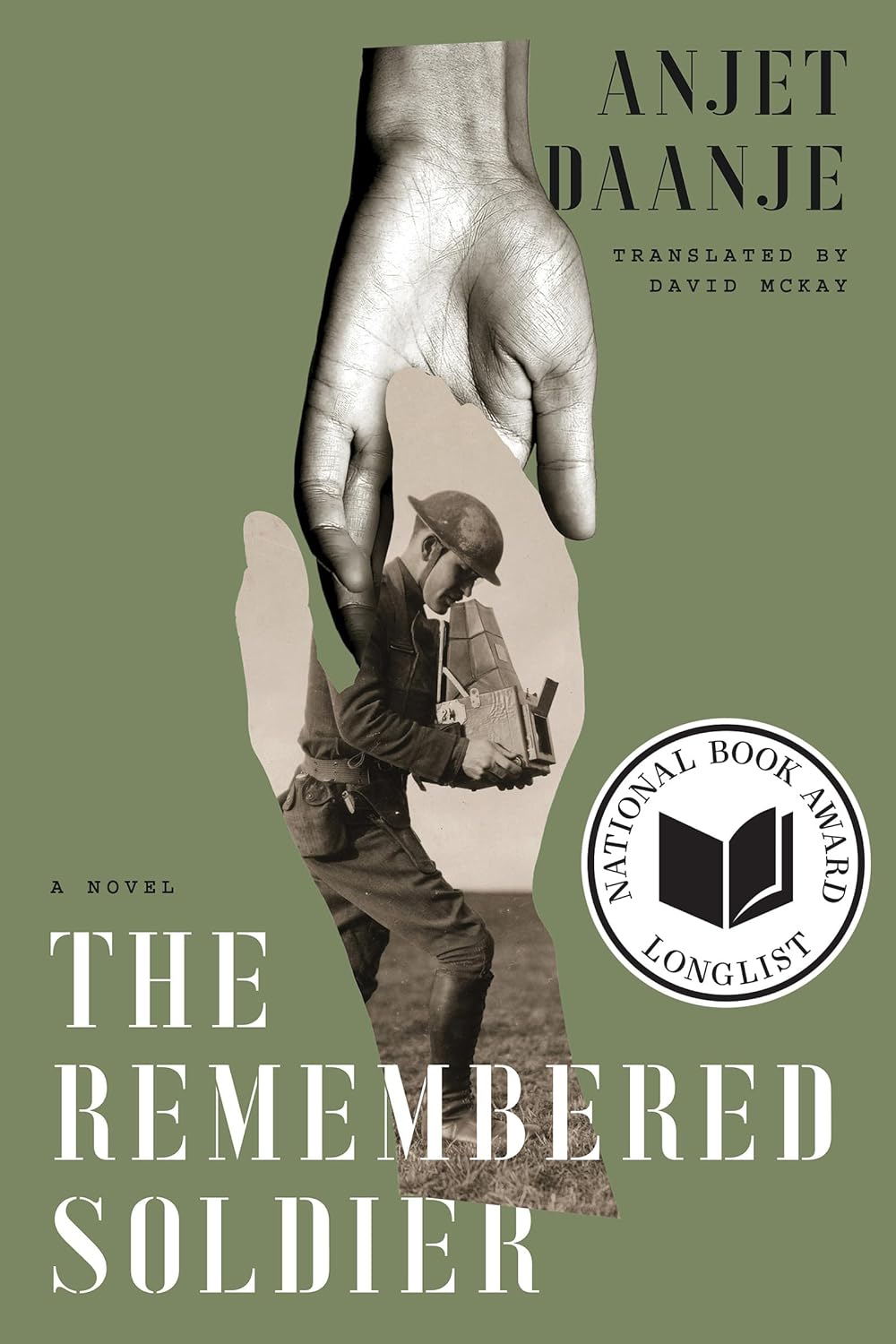
From one unfamiliar writer to another—all the writers featured in this week’s WWW Wednesday update are new to me—my venture into the vast European literary landscape next takes me to unfamiliar territory. I admit that my foray into Dutch literature is rather limited. In fact, the only book I have read that I could associate with the Netherlands is The Safekeep by Yael van der Wouden. On top of this, I have yet to read a book originally written in Dutch. This places The Remembered Soldier in a unique position. Had it not been for the International Booker Prize, I would not have encountered Anjet Daanje. Her novel was nominated for the prestigious literary prize. Apparently, Anjet Daanje is the pseudonym of Anjet den Boer. Her most renowned work is De herinnerde soldaat, which was published in 2019 and earned her several accolades. In 2025, it was made available to Anglophone readers as The Remembered Soldier.
As the title suggests, The Remembered Soldier grapples with the legacy of war, particularly the Great War—the name commonly used for the First World War. The story commences at the Guislain Asylum, a psychiatric institution in Ghent, Belgium, in 1922. There, we meet Noon Merckem, a World War I veteran patiently waiting to be introduced to several women searching for their husbands. Four years earlier, he had been discovered wandering in a field in Flanders. Unfortunately, his memory had been wiped clean. He could not recall who he was or anything about his former life. He also had no memory of fighting in the war. The name given to him refers to the time and place where he was found. He has since become accustomed to life in the asylum. Following the conclusion of the First World War, he was visited by a succession of war widows, all searching for their lost husbands. All of them, however, went home disappointed. He had also lost hope of ever regaining his past. One day, a Flemish Belgian woman named Julienne appeared and swore that Noon was her missing husband, Amand Coppens, and the father of her two young children. Amand, a photographer, had been missing and was already presumed dead. Julienne, however, remained resolute, relentlessly searching for her husband. For years, she visited hospitals and asylums, refusing to abandon her search. Finally meeting Noon is a cathartic moment—a reward for her refusal to give up. Against medical advice, she whisked him home to the Belgian city of Kortrijk. Initially, the arrangement was meant to last for one month, but it eventually became permanent. Despite the unfamiliar environment, Noon—now Amand—slowly grows accustomed to his new life. However, at the back of his mind lingers the fear that Julienne might return him to the asylum. Despite finding comfort with Julienne and their children, Gus and Rosa, he still cannot remember anything. Julienne, on the other hand, is determined to make the reunion work. Amand, however, remains unconvinced that he is who she claims he is. He notices that he lacks the photographic knowledge Julienne insists he once possessed. He also discovers that he is skilled at carpentry—a skill she claims he never had.
Is Amand really who Julienne claims he is? This mystery haunts Noon/Amand. Naturally, it also piques the readers’ curiosity. I learned that the novel was inspired by the true story of Anthelme Mangin, a French soldier who suffered from amnesia after the First World War. As is common in war-related literature, The Remembered Soldier captures the cost of war and the trauma it leaves behind, particularly its psychological toll. It reminds me of Regeneration by Pat Barker, which also grapples with the legacy of the First World War. The sentences are long and flowing, marked by repeated use of the word “and.” Traditional dialogue is also largely avoided, as rambling sentences are utilized to capture the racing thoughts of an injured and confused mind. The broad scope of the story also allows Daanje to take things slowly, capturing how Amand and Julienne navigated the complications of their relationship and circumstanes. Memory and the psychological toll of war are the novel’s primary themes, with romantic overtones enriching the story. The Remembered Soldier may not have won the International Booker Prize, but it certainly captured the attention of many readers, including mine.
What will you read next?