
First Impression Friday will be a meme where you talk about a book that you JUST STARTED! Maybe you’re only a chapter or two in, maybe a little farther. Based on this sampling of your current read, give a few impressions and predict what you’ll think by the end.
Synopsis:
Smilla’s Sense of Snow presents one of the toughest heroines in modern fiction, Smilla Qaavigaaq Jaspersen is part Inuit, but she lives in Copenhagen. She is thirty-seven, single, childless, moody, and she refuses to fit in. Smilla’s six-year-old Inuit neighbor, Isaiah, manages only with a stubbornness that matches her own to befriend her.
When Isaiah falls off a roof and is killed, Smilla doesn’t believe it’s an accident. She has seen his tracks in the snow, and she knows about snow. She decides to investigate and discovers that even the police don’t want her to get involved. But opposition appeals to Smilla.
As all of Copenhagen settles down for a quiet Christmas, Smilla’s investigation takes her from a fervently religious accountant to a tough-talking pathologist and an alcoholic shipping magnate and into the secret files of the Danish company responsible for extracting most of Greenland’s mineral wealth – and finally onto a ship with an international cast of villains bound for a mysterious mission on an uninhabitable island off Greenland.
To read Smilla’s Sense of Snow is to be taken on a magical, nerve-shattering journey – from the snow-covered streets of Copenhagen to the awesome beauty of the Arctic ice caps. A mystery, a love story, and an elegy for a vanishing way of life, Smilla’s Sense of Snow is a breathtaking achievement, an exceptional feat of storytelling.
It’s the end of the workweek—yay! Technically, it is already Saturday. Nevertheless, I hope the week has been kind to everyone and that you’re all ending it on a high note. How time flies! We are nearly through with the fifth month of the year. In a couple of days, we will be welcoming June. Nevertheless, I hope May proved to be a promising one. I also hope the conflict in the Middle East continues to de-escalate—or, better yet, is resolved soon. As the year progresses, I hope everyone is given plenty of opportunities to grow and improve. With the weekend here, I hope everyone has a great one and truly ends the workweek on a high note. It’s time to dress down and wear more comfortable clothes. I hope everyone spends the weekend wisely—whether by resting from the rigors of a demanding career, pursuing passions, completing household chores, spending time with loved ones, or simply relaxing. I hope you’re all doing well—physically, mentally, and emotionally.
I am still in the midst of a European literary adventure. I have already spent the past two months reading works from one of the most extensive literary canons in the world, and I am about to wrap it up. I am just completing books in my reading challenges. Interestingly, I was not originally planning to read European literature this early in the year; I usually read such works later in the year. However, I realized that several works by European writers are included in my reading challenges. I have always been a crammer, although in recent years I have been changing my ways by reading books from my challenges earlier than usual. In March, I read works by European women writers, in line with the month’s major motif. March is Women’s History Month, and International Women’s Day is celebrated on March 8. April, on the other hand, was dedicated primarily to European Nobel Prize in Literature laureates. May, on the other hand, was a mixed bag.
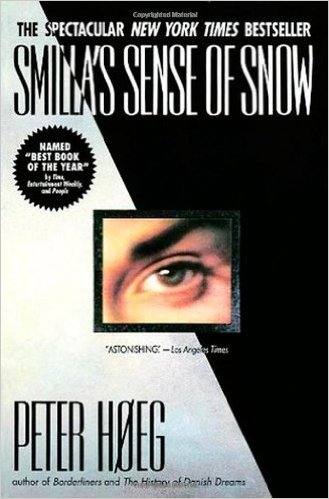
Currently, I am reading Smilla’s Sense of Snow by Peter Høeg. It was must-read lists and online booksellers that first introduced me to the Danish writer. However, despite repeated encounters with his novel, I kept on holding back from securing a copy of it. However, this year, I finally took the leap of faith and acquired a copy of the book. Still, I was not planning on reading the book immediately. As is always the case, I changed my mind. After all, it is also listed as one of the 1,001 Books You Must Read Before You Die. I also learned that Høeg is quite a character. Before pursuing a literary career, he worked as a sailor, ballet dancer, and even an actor; somehow, Scandinavian writers who were either singers or actors are prevalent. On top of this, Høeg had interests in fencing and mountaineering.
Originally published in 1992 as Frøken Smillas fornemmelse for sne, Smilla’s Sense of Snow (or Miss Smilla’s Feeling for Snow), that catapulted Høeg to global literary recognition. The titular Smilla is Smilla Qaaviqaaq Jaspersen, a thirty-seven-year-old woman whose mother is an Inuk hunter unwilling to leave her homeland in Greenland, while her father, Peter, is a Danish anesthesiologist. She is a scientist living alone in the Danish capital in a dreary apartment in the neighborhood of Christianshavn. She feels out of place in the city, having been born and raised in Greenland. In search of company, she befriended six-year-old Isaiah, the neglected son of her alcoholic neighbor. Like Smilla, Isaiah is an Inuit from Greenland, hence not truly at home in Denmark. Through flashbacks, Smilla explained in greater detail her friendship with Isaiah. Interestingly, Smilla loathed children in general, but Isaiah’s circumstances somehow earned him a soft spot in her heart.
Her life unraveled one day due to a shocking event. It was just before Christmastime. Upon her arrival at her apartment complex called White Palace, she found a boy lying face down in the snow. Next to him was a mechanic, Peter Føjl. The boy turns out to be Isaiah Christensen. Isaiah’s sudden demise was ruled out by the police to be an accidental fall from the roof of an adjacent warehouse whilst playing. However, Smilla was unsatisfied with the conclusion. For one, Isaiah suffered from acrophobia, the fear of heights. Further, Smilla’s understanding of the tracks Isaiah left on the snowy roof convinced her that it was not an accident. She surmised that Isaiah deliberately jumped off the roof, perhaps to evade an attacker. Although Smilla is unable to hold a steady job, she is a leading authority on snow and ice who has made nine expeditions to her homeland. She has also published highly esteemed scholarly articles on glaciology.
Smilla then approached the authorities to complain about how the case was hastily handled. She asked them to open a homicide investigation. Instead, an expert in the fraud division was dispatched to the crime scene. Because it was deeply personal, Smilla commenced her own investigation. Smilla even enlisted the assistance of various experts, including the Director of Arctic Medicine Institute, Johannes Loyne. Despite the claims of the experts, Smilla was resolute in her theory that Isaiah was murdered. She then dug deeper. As she browses through Isaiah’s mother, Juliane’s file, Smilla found a connection between him and the Cryolite Corporation, a Danish company mining natural resources in Greenland. Apparently, Isaiah’s father was killed during a mining mission in Greenland. The corporation has since given Juliane a widow’s pension.
But it seems that there is more to the story. Apart from the mystery that shrouded the story, I am intrigued by the novel’s exploration of the dichotomies between the Danish and the Greenlanders. Early on, the novel repeatedly highlighted the cultural dichotomies between the two. This is highlighted by Smilla’s palpable ambivalence about living in Copenhagen, despite having a mixed heritage. It seems that there are also political undertones. I am just a little over a hundred pages into the story, and I am already intrigued. There is still a lot to unpack. I am looking forward to how Høeg weaves all of the novel’s various elements together.
How about you, reader? What book or books are you taking with you this weekend? I hope you all have a great one—and that whatever you’re reading provides a brief respite.

