Happy Wednesday, everyone! Woah! Just like that, we are already in the sixth month of the year. I hope the year has been kind and great to everyone. I know life isn’t a walk in the park, but it is my fervent prayer that everyone’s year is going well. Regardless, I hope the rest of the workweek goes smoothly.
That said, the middle of the week also brings a fresh WWW Wednesday update. WWW Wednesday is a bookish meme hosted originally by SAM@TAKING ON A WORLD OF WORDS.
The mechanics for WWW Wednesday are quite simple: you just have to answer three questions:
- What are you currently reading?
- What have you finished reading?
- What will you read next?

What are you currently reading?

It’s already the middle of the week, which means we have only two more days until the weekend. I hope everyone makes it through the workweek. Anyway, my 2026 reading journey is going as planned. After spending the first two months of the year reading works by Latin American and Caribbean writers, I am now in the midst of a European literary adventure. While I had not originally planned to embark on a journey through European literature this early in the year, realizing that I had listed several works by European writers in my reading challenges prompted me to pivot toward them in March. Because of the number of European works included in these challenges, I am extending the journey slightly into this month. I just need to finish the books in my reading challenges, which is ironic. The reason I started a European Literature Month was to read the books in these challenges, and yet I am barely finished with them.
So, my venture into European literature has now stretched into its fourth month. My current read is one of the books I listed on my 2026 Top 26 Reading List. Like most of the writers I have recently been exploring, it was must-read lists that introduced me to Vassilis Vassilikos. The Greek writer’s novel, Z, is listed among the 1,001 Books You Must Read Before You Die. I am basically hitting two birds with one stone, as it is my goal to read at least twenty books from that list. Originally published in Greece in 1966, Z was the work that catapulted Vassilikos to global acclaim. Set in an unnamed European country, the novel’s central event revolves around the titular Z, a charismatic left-wing politician. The first chapter’s title immediately sets the tone for the story: “The Assassination.” Referred to as “The Deputy,” Z is presented as someone with a superb physique, notable achievements in competitions, and the qualities of being convincing, brave, powerful, intelligent, and capable of leading crowds.
Z’s arrival in an unnamed city stirred the city’s extreme right wing. Paramilitary forces supportive of the ruling elite orchestrated his assassination during a rally he attended. What ensued was chaos, vividly captured by Vassilikos. Evidently politically motivated, the murder became a national sensation. As the investigation commenced, it became increasingly evident that uncovering the truth would be an uphill battle. A detailed examination of the evidence revealed a complex plot involving the collusion of various influential individuals, including police officers, military officials, and members of the judiciary. The judge began to suspect that the assassination was not merely the work of a lone fanatic. He surmised that it was a systematically planned operation intended to make an example of Z and his followers.
Chapter Three chronicles the trial itself. Witness testimonies point to an elaborate conspiracy aided by the highest echelons of power. This is further underscored by several attempts to obstruct justice, tamper with witnesses, and threaten those who wish to speak the truth. Still, the judge persists, and most of the witnesses remain undeterred by these attempts. With such powerful forces at play, will justice remain elusive? Interestingly, the novel was inspired by the 1963 assassination of Gregoris Lambrakis, a leftist parliamentarian, in Thessaloniki. I am nearly done with the story, and I must say that I am in awe of Vassilikos’ writing despite its challenging subject matter.
What have you finished reading?
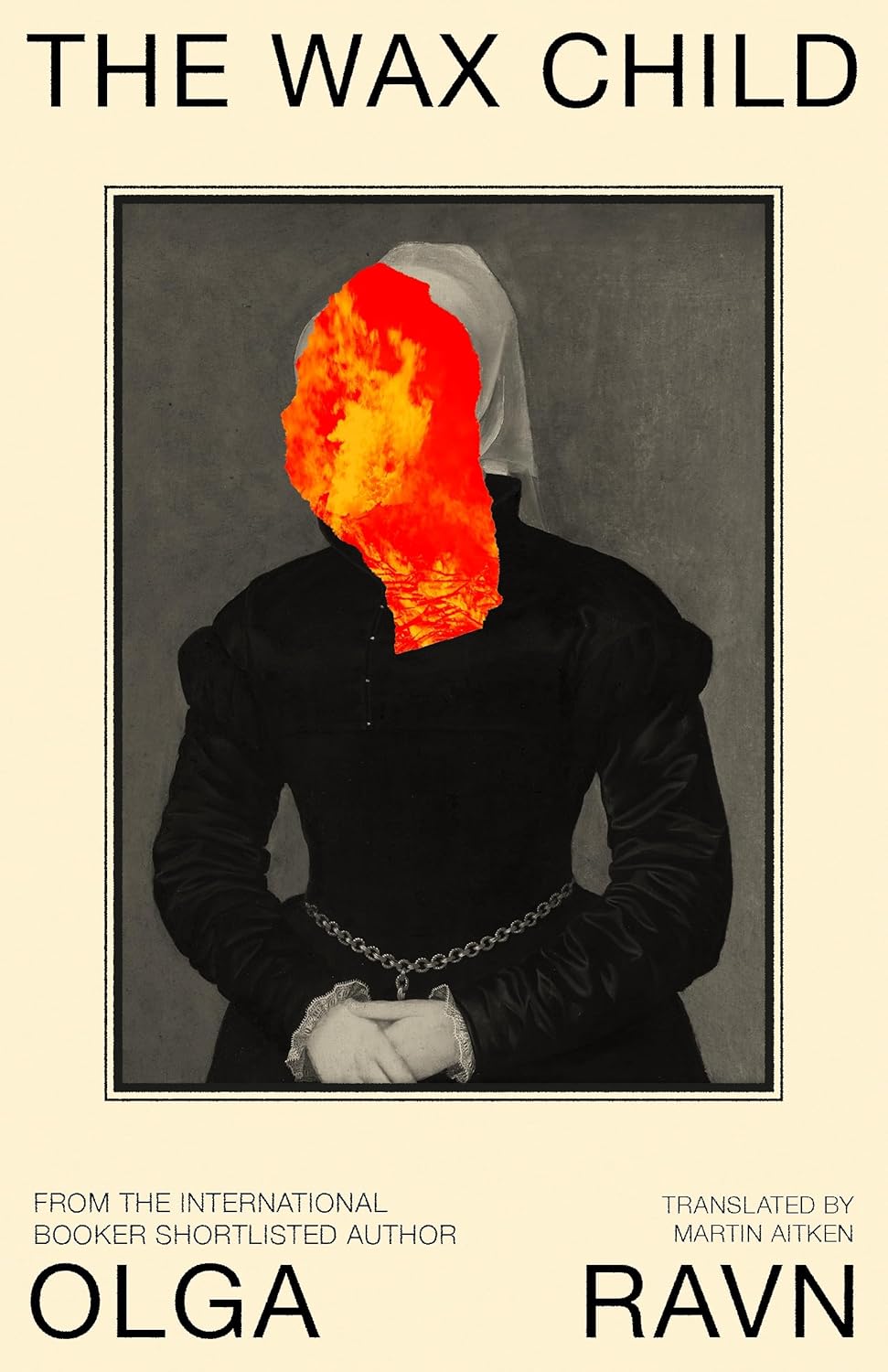
Unfortunately, in the past week, I was only able to complete one book. I guess this was partly due to the length of Z. Nevertheless, I am still happy that I was able to finish at least one book. The only book I read, however, was not part of any of my reading challenges. As the year progressed, however, it naturally became part of my reading plans for one reason. Early this year, Danish writer Olga Ravn’s The Wax Child was longlisted for the International Booker Prize, prompting me to secure a copy of the book. It is actually the fourth book from the longlist that I have read. It was during the pandemic that I first heard about Ravn, when her 2020 novel Mit arbejde catapulted her to global recognition. The novel’s English translation, My Work, was shortlisted for the International Booker Prize. I am not exactly sure why I held back from reading it.
While The Wax Child failed to make the shortlist, I am still intrigued by what it has in store. Originally published in 2023 as Voksbarnet, The Wax Child transports readers to 17th-century Denmark. The spiritual guide of the story is the titular wax child, a small human effigy made from beeswax. It is the creation of Christenze Kruckow, an unmarried noblewoman who carries the wax child with her, shaping it diligently as if breathing life into it. The wax child observes its creator’s life, even listening to the whispers of the townspeople. Meanwhile, Christenze, despite her noble birth, possesses no fortune. As such, she serves as a companion to the wealthy Anne Bille and lives with Anne and her husband in a manor house at Nakkebølle Fjord on Funen, Denmark’s third-largest island. Anne desperately wants to be a mother. However, she repeatedly suffers losses—stillbirths and infants who die shortly after birth. By the age of thirty-two, she has lost fifteen children. Christenze, meanwhile, remains unmarried, making her the subject of envy and controversy. Her unconventional lifestyle raises the eyebrows of the locals. In her desperation, Anne turns to Christenze for help following a difficult childbirth. Christenze obliges by concealing a spider in sheep’s milk, which Anne then feeds to the baby. The infant survives, but when Anne sees the spider crawl out of the baby’s mouth, she panics and accidentally drops the infant onto the stone floor, killing it. As time passes, Anne becomes convinced that Christenze is the source of her misfortunes. She also resents Christenze’s independence. Furthermore, Christenze’s refusal to conform to traditional gender norms leads many to suspect that she practices witchcraft, along with another woman named Ousse. The period is marked by heightened paranoia surrounding witchcraft. Christenze, however, brushes off the rumors. She believes that her noble status will protect her.
However, the increasingly bitter Anne, driven by shame and grief, identifies Christenze as a devilish spell-caster responsible for her tragedies. While Ousse is burned at the stake on charges of sorcery and witchcraft, Christenze manages to flee to the larger town of Aalborg. There, she meets Maren Kneppis and her circle of friends—Apelone and the one-eyed widow, Dorte. The move to Aalborg, however, only delays the inevitable. The Wax Child is inspired by the condemnation and execution of four Danish women in the early 1600s. It was alleged that they were part of a “society of witches in North Jutland.” While the three other women were burned at the stake, Christenze was instead decapitated as a mark of her social class. She was the only member of the Danish nobility ever condemned to death as a witch.
The paranoia fueled by allegations of witchcraft makes everyone suspicious of anything that deviates from the norm—in this case, Christenze. The Wax Child captures the intricacies of female camaraderie. When motherhood is used as a moral yardstick, women are set against one another, as seen in Anne’s scathing allegations against Christenze, whose independence she also resents. Meanwhile, Christenze finds camaraderie in Maren and her circle of friends. The novel also vividly portrays the pervasiveness of patriarchy and the imbalance of power dynamics. Its depiction of misogyny is evident in the way women who resist conformity are viewed as threats to society. Overall, The Wax Child is an eerie exploration of the plight of women, transcending both time and place.
What will you read next?