
Happy Tuesday, everyone! I hope your week is going great. Otherwise, I hope that it will start looking up in the coming days. It is my fervent hope that it will usher in positive energy, blessings, healing, and forgiveness for everyone. As it is Tuesday, it is also time for a Top 5 Tuesday update. Top 5 Tuesday was originally created by Shanah @ the Bionic Bookworm but is now currently being hosted by Meeghan @ Meeghan Reads.
With the year halfway through, it is also time to look at the best books I have read so far. Literary pundits and publications also churn out their own lists, although they tend to focus on newly released books. For this Top 5 Tuesday update, I will be sharing my best reads this year, so far. Interestingly, I am yet to read a book released this year, hence why I am choosing from all the books I have read. Regardless, here are some of the best books I read this year.
This week’s topic: Top 5 books of 2026… so far

Melancholy of Resistance by László Krasznahorkai
Snippet from my Book Review: An evocative political allegory. A scathing social commentary. An immersive historical meditation. A propulsive satire. All of these facets underscore the multilayered complexity of The Melancholy of Resistance. Building upon the achievements of his debut novel, Krasznahorkai paints a vivid portrait of a town poised on the brink of physical and moral collapse. Ominous signs abound. The descent into pandemonium feels inevitable. The absurd presses uncomfortably close. A circus. A dead whale. Reclusive intellectuals. A dreamer. A domineering reformer. All converge in a desolate Hungarian town, participating in what feels like a fevered apocalyptic vision. The Melancholy of Resistance stands as a searing critique of humanity’s insatiable desire for power and control. Krasznahorkai masterfully dramatizes the tension between order and chaos, revealing the fragility of human constructs. The Melancholy of Resistance ultimately serves as a testament to his mastery of apocalyptic imagination.
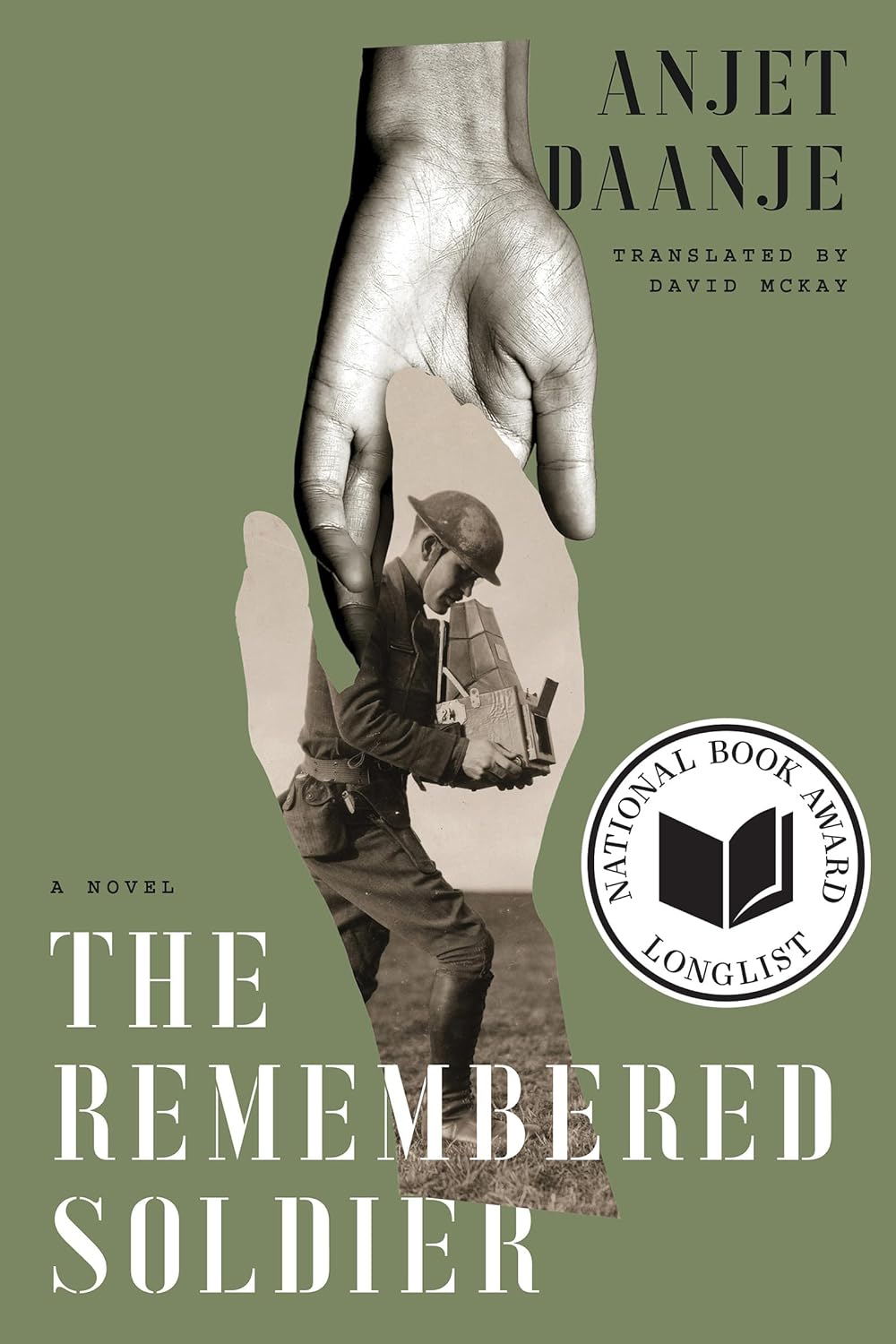
The Remembered Soldier by Anjet Daanje
My foray into Dutch literature is rather limited. This places The Remembered Soldier in a unique position. Had it not been for the International Booker Prize, I would not have encountered Anjet Daanje. Her most renowned work is De herinnerde soldaat (2019), which was made available to Anglophone readers as The Remembered Soldier in 2025. The novel grapples with the legacy of war, particularly the Great War. At the heart of the story is Noon Merckem, a veteran of the First World War, patiently waiting to be introduced to several women searching for their husbands. Four years earlier, he had been discovered wandering in a field in Flanders, with his memory wiped clean. One day, a Flemish Belgian woman named Julienne appeared and swore that Noon was her missing husband, Amand Coppens. Amand, a photographer, had been missing and was already presumed dead. Julienne, however, relentlessly searched for her husband. Against medical advice, she whisked him home to the Belgian city of Kortrijk. However, Noon still cannot remember anything. He remains unconvinced that he is who she claims he is. Apparently, the novel was inspired by the true story of Anthelme Mangin, a French soldier who suffered from amnesia after the First World War. As is common in war-related literature, The Remembered Soldier captures the cost of war and the trauma it leaves behind. Memory and the psychological toll of war are the novel’s primary themes, with romantic overtones enriching the story.
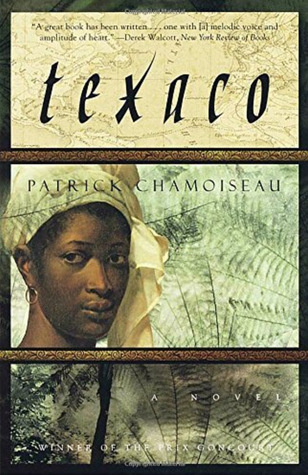
Texaco by Patrick Chamoiseau
It was only recently—through an online bookseller—that I came across Martinican writer Patrick Chamoiseau. This was one of the chief reasons I secured a copy of his book, Texaco. Originally published in 1992, Texaco is set in a shantytown on the outskirts of Fort-de-France, the Martinican capital. At the heart of the story is Marie-Sophie Laborieux, the daughter of a formerly enslaved man, Esternome, who was granted freedom after saving his master’s life. When his wife Ninon was killed, and his hometown Saint-Pierre was destroyed during the 1902 eruption of Mount Pelée, Esternome moved in with Adrienne Carmélite Lapidaille, a witch who enchanted Esternome. Her spell was broken when Esternome impregnated Adrienne’s blind sister, Idoménée. Thus begins the story of Marie-Sophie. In the present, Marie-Sophie’s life was disrupted by the arrival of the Urban Planner named Christ, a city employee tasked with “rationalizing” Texaco. His mission was met with resistance from Marie-Sophie, Texaco’s de facto community leader. Her story of resilience amid chaos mirrors Martinique’s own tumultuous history, from the struggle to end slavery to the enduring legacy of colonialism. Chamoiseau paints a vivid portrait of his homeland, its people, and its vibrant culture. Texaco serves as a microcosm of the diversity that has long defined Martinique. Overall, Texaco is a rewarding read—one that deepened my appreciation for Martinique, its people, and its history.
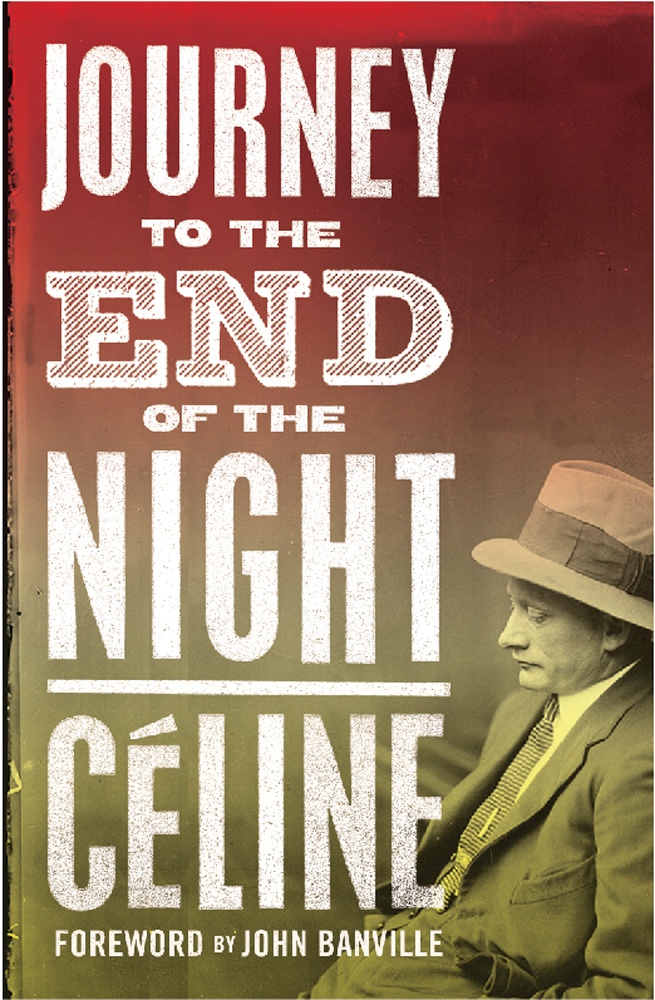
Journey to the End of the Night by Louis-Ferdinand Céline
It was through must-read lists that I was first introduced to Louis-Ferdinand Céline, and Journey to the End of the Night was a prominent presence on them. Journey to the End of the Night is Céline’s debut novel, originally published in 1932 as Voyage au bout de la nuit. It charts the fortunes of Ferdinand Bardamu, whom we first meet as a medical student in 1914 Paris. Despite his political ideologies, he was moved by military parades. A sense of heroism seizes him, prompting him to volunteer for the French Army at the outbreak of the First World War. He was soon disillusioned by the realities of war, making him question his purpose and intentions. When Bardamu was wounded, he returned to Paris, where he received treatment and was awarded a military medal. Yet, he cannot seem to escape the shadows of war. Journey to the End of the Night is a highly eventful story, capturing Bardamu’s adventures and misadventures. His story is a futile pilgrimage in the pursuit of self-knowledge. Ironically, Bardamu experienced a reverse character development: his youthful enthusiasm was replaced by disdain and resentment. The novel is semi-autobiographical, which helps explain its raw, cutthroat, and often pessimistic tone. Céline’s writing is incisive, yet it allows for moments of reflection. The absurdities he witnesses invite disillusionment, eroding his sense of self. Alienation emerges as a recurring theme in his life. Still, his picaresque journey offers him a fleeting sense of being. Overall, Journey to the End of the Night is an insightful read, deserving of its place among the world’s literary canon.

Bring Up The Bodies by Hilary Mantel
Last year, I read the first book in Hilary Mantel’s Thomas Cromwell Trilogy, Wolf Hall. This year, I resolved to read Bring Up the Bodies. After successfully orchestrating the divorce of King Henry VIII from his first wife, Katherine of Aragon, Thomas Cromwell has risen above the ranks, assigned as Master Secretary to the King’s Privy Council. Meanwhile, the King began to tire of his second wife, Anne Boleyn, after three years of marriage. During a hunting trip as guests of the Seymour family, one of the “ancient families” of English nobility, the King grew fond of Jane Seymour. Back in London, Cromwell was faced with several challenges. The King’s separation from Katherine created a diplomatic vacuum, resulting in tension with Emperor Charles V of the Habsburg territories. The King also asked him to work on his separation from Anne. Ever loyal, Cromwell vowed to make it happen, not only to earn the King’s trust, but to silence the naysayers; older nobles the King trusted looked down on him. But Cromwell was ambitious, diligently building the case against Anne. History is riddled with conspiracies and rumors that led to the downfall of prominent people. All it took was corroboration. History has always been written by the victors, and for Cromwell, it is also written by the tenacious. The novel explored social classes and social change. The classist overtones run parallel to sexist overtones. Anne’s downfall was bits of sexual gossip, underscoring the double standards around sexual promiscuity that persist in Tudor England. Interestingly, I find Bring Up the Bodies a more compelling read than Wolf Hall, although both books are intriguing in their own right. I can’t wait to read the last book in the trilogy.
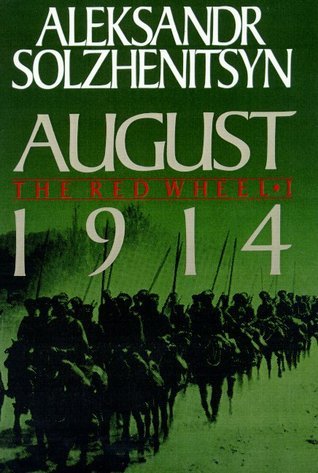
August 1914 by Aleksandr Solzhenitsyn
I believe it was in 2015 when I read my first novel by Russian writer Aleksandr Solzhenitsyn, One Day in the Life of Ivan Denisovich. This year, I was able to acquire August 1914. First published in 1971 as Август четырнадцатого, the novel takes us to the early 20th century—a time of great political and social upheaval in Russia. The story opens with Sanya, a young university student who boarded a train bound for Moscow, planning to enlist in the army after Russia joined World War I. Tsar Nicholas II’s resolute declaration inspired Sanya. His newfound sense of patriotism made him reject his pacifism. Interestingly, the tsar was apprehensive about joining the war, but was pressured by his generals to mobilize the Russian army. His trusted adviser, Prime Minister Pyotr Stolypin, was murdered at the Kyiv Opera House by a police agent and assassin, Dmitri Bogrov. The story then shifts to the battle lines at the Battle of Tannenberg. Colonel Vorotyntsev, a General Staff officer, was sent to the Russian Second Army, which is invading East Prussia under the command of General Alexander Samsonov. He was tasked to document the conditions at the front and report back. However, the chaos at the battle lines was worse than initially thought, forcing Colonel Vorotyntsev to abandon his original mission and instead bring order to the battle line. With his friend Arseny Blagodaryov, they managed to rally the soldiers. From the battle lines, the narrative returns to Russia. These chapters focus on Prime Minister Pyotr Stolypin, emphasizing how he rose through the ranks to become the tsar’s most trusted adviser. The background and personality of Stolypin’s murderer, Dmitri Bogrov, are also explored. While there was a sense of disconnect between the two halves of the novel, I was still engrossed by the historical context woven into its rich fabric. Interestingly, it explores a familiar theme: the Russia of the old and the Russia of the new—a tension that would eventually culminate in the Bolshevik Revolution, which dismantled the Russian monarchy. Overall, August 1914 is an insightful examination of history, leadership, and a nation at a crossroads.

