Happy Wednesday, everyone! Woah! Just like that, we are already through the sixth month of the year. Hello July! I hope the year has been kind and great to everyone. I know life isn’t a walk in the park, but it is my fervent prayer that everyone’s year is going well. Regardless, I hope the rest of the workweek goes smoothly.
That said, the middle of the week also brings a fresh WWW Wednesday update. WWW Wednesday is a bookish meme hosted originally by SAM@TAKING ON A WORLD OF WORDS.
The mechanics for WWW Wednesday are quite simple: you just have to answer three questions:
- What are you currently reading?
- What have you finished reading?
- What will you read next?

What are you currently reading?
It’s already the middle of the week, which means we have only two more days until the weekend. I hope everyone makes it through the workweek. Anyway, my 2026 reading journey is going as planned. I spent the first two months of the year reading works by Latin American and Caribbean writers. I then followed that with a venture into European literature, a journey that lasted four months. I think this is the longest time I have spent immersed in European literature in a single year. I am just glad I was finally able to complete all the works by European writers in my reading challenges. Ironically, I first ventured into European literature because of these books, yet they were the last ones I read. In any case, I am glad I was finally able to conclude that journey. Nevertheless, it was a journey that I truly relished. Still, I am happy to begin a new literary adventure. With July being my birth month, I have decided to venture into the works of Asian writers.
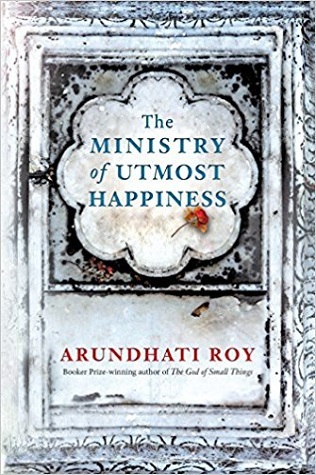
My current read takes me to India. It has been nearly a decade since I last read a work by Arundhati Roy. Her Booker Prize-winning masterpiece, The God of Small Things, was my introduction to her oeuvre. Nearly a decade later, I have finally read my second Roy novel, The Ministry of Utmost Happiness. It was only this year that I finally decided to pick it up. Originally published in 2017, the novel follows the interwoven lives of an eclectic cast of characters. The novel opens with Anjum, a Muslim Hijra (a traditional third gender in India). She was born intersex and was initially raised as a boy named Aftab. Rejecting her assigned male identity, she joined the Khwabgah, or “House of Dreams,” a local community of Hijras. After spending decades as an entertainer, Anjum decided to leave the Khwabgah and adopt Zainab, an abandoned toddler. Her plans, however, were disrupted by the rise of anti-Muslim sentiment in the early 2000s.
The second major storyline takes us to Delhi. However, the story primarily concerns events that unfolded in Kashmir during the 1990s. The narrative gradually takes shape through the perspectives of different characters. At the heart of these narratives is S. Tilottama, or “Tilo,” the illegitimate daughter of a well-to-do Syrian Indian woman who “adopted” her. As she grew up, Tilo attended an architecture school in Delhi, where she met three men who fell in love with her. Biplab Dasgupta was a pragmatic man who worked for the Indian government. Nagaraj Hariharan, on the other hand, was the passionate son of Hindu bureaucrats who became a radical journalist and eventually a security analyst. Musa Yeswi was a Muslim Kashmiri who also studied architecture. The four were college friends who met in the mid-1980s. However, after college, they lost touch, only for their lives to intersect again years later in Kashmir, where each played a different role. Tilo, however, remained shrouded in enigma.
The Ministry of Utmost Happiness is certainly a very eventful novel that chronicles several of the darkest and most violent episodes in modern Indian history, making its title deeply ironic. Spanning decades, the novel captures events ranging from the land reforms that dispossessed poor farmers to the Bhopal disaster, the 2002 Godhra train burning, and the Kashmir insurgency. Along the way, Roy introduces equally fascinating and compelling characters from different walks of life, each representing a different facet of Indian society. I am now only a couple of pages away from finishing the novel, and I am looking forward to seeing how it unfolds and concludes.
What have you finished reading?
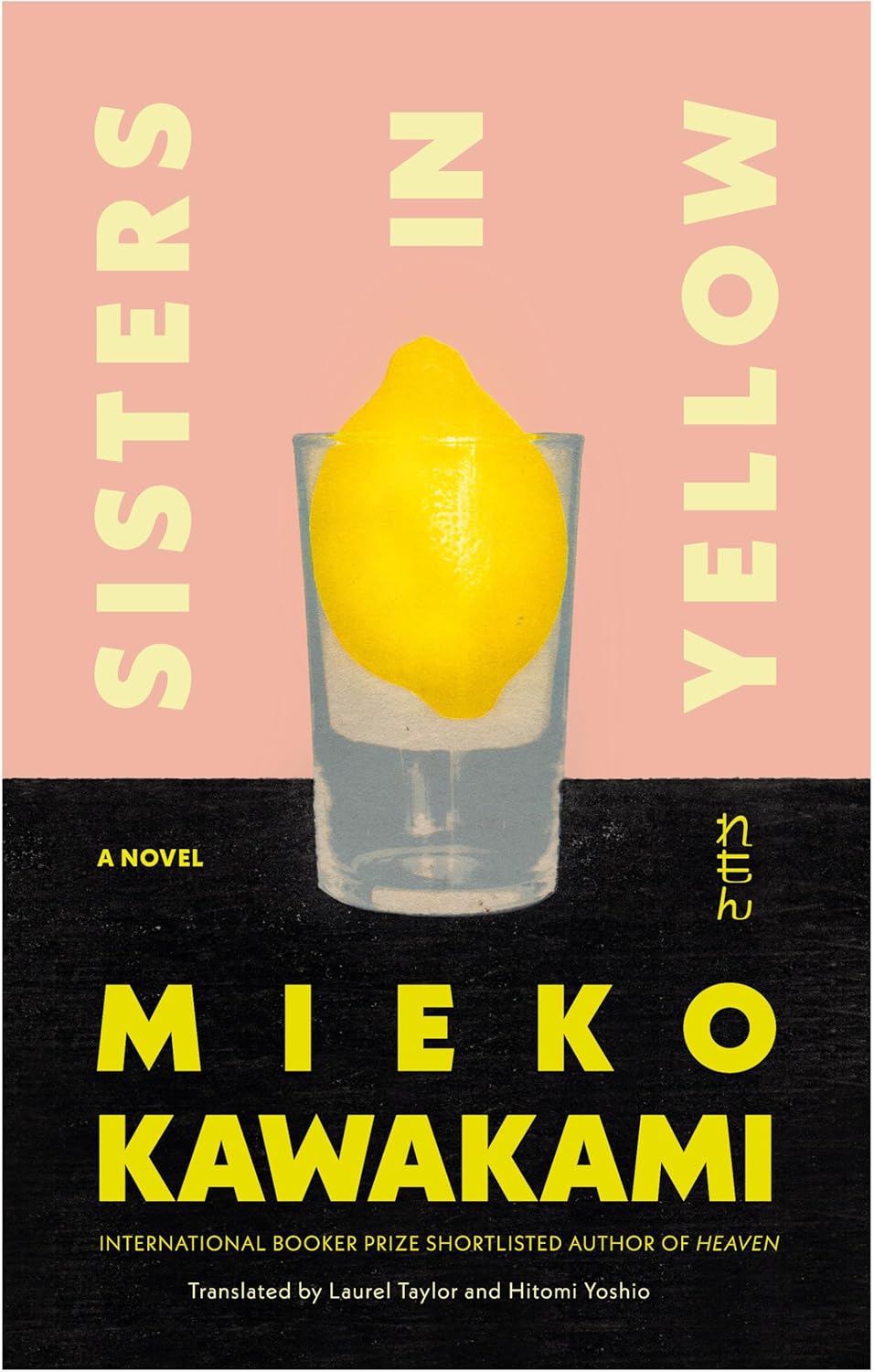
It took some time, but I was finally able to finish my venture into European literature. After spending four months in European literary territory, I figured it was time for a breath of fresh air. This means that I have commenced a new literary journey. One of the reasons I ventured into the works of Asian writers is my love affair with Japanese literature, aside from the fact that this region is my home as well. Anyway, opening this literary journey is a novel I have long been looking forward to reading. Mieko Kawakami first piqued my interest during the pandemic, when her novel Breasts and Eggs became ubiquitous. It was the first of her works that I read, and it won me over, making me eager to explore her oeuvre further. I would go on to read two more of her works, including her International Booker Prize-shortlisted novel, Heaven. I recently acquired a copy of Sisters in Yellow, Kawakami’s latest novel to be translated into English. In fact, I had been looking forward to the book ever since I first learned of its release back in 2023. However, it was only this year that it was translated into English.
This makes Sisters in Yellow the fourth Kawakami novel I have read. Originally published in 2023 as 黄色い家 (Kiiroi Ie), the novel is narrated by Hana Ito, who, at the beginning of the story, is forty years old. It is the start of the COVID-19 pandemic, and Hana is working part-time at a deli in Tokyo. As Japan is about to shut down because of the spread of the coronavirus, Hana stumbles upon an online news article that stops her in her tracks. It concerns a crime involving a woman named Kimiko Yoshikawa. The sixty-year-old Yoshikawa is accused of keeping a vulnerable young woman locked in her apartment for two years. The article stirs long-buried emotions in Hana, causing her thoughts to drift back to the Kimiko she knew two decades earlier, when Hana was twenty and Kimiko was forty. As memories begin to haunt her, Hana worries that the past she has long suppressed might resurface. From the present, Kawakami takes us back to Japan in the 1990s. Hana is fifteen years old and full of hope. However, little else is going well in her life. She lives in a small, run-down apartment with an absent-minded mother who drifts in and out of both her home and her life. Her father has long been gone, while her mother works in late-night dive bars. One day, Hana wakes up to find a strange woman lying beside her: Kimiko. Hana’s mother has disappeared and asked her friend Kimiko to look after Hana for the summer. In Kimiko’s care, Hana finally experiences what it feels like to be cared for. When she later gets the chance to move in with Kimiko, Hana accepts the offer. Wanting to earn enough money to leave poverty behind, she agrees to help Kimiko open a bar, which they call Lemon. Located in a run-down apartment block, the bar derives its name from the color yellow. Kimiko is fascinated by feng shui, in which yellow symbolizes wealth. Lemon eventually becomes a refuge of sorts for them both. While it lacks glamour, it is something they can call their own. For Hana, it represents hope. For Kimiko, it means survival. The two women become known as the “sisters,” hence the book’s English title. They are eventually joined by Ran Kato, a calming influence, and Momoko, a runaway rich girl. Despite Hana’s hard work, something always seems to thwart her plans. Everything comes to a head when the bar burns down after becoming entangled in a credit card scam. No matter how hard Hana tries to build a future, she always finds herself starting from scratch. These are difficult economic times. The world grows darker, Hana changes, and reality reveals itself in all its cynicism.
Sisters in Yellow is quintessential Kawakami. Hana shares many qualities with Kawakami’s other protagonists. She is the kind of character with whom readers naturally form a deep connection. However, Sisters in Yellow also stands on its own. Kawakami’s latest novel takes readers into the Japanese underworld and consequently employs elements of noir and suspense. At its heart, however, the novel is Hana’s coming-of-age story. The intersection of these elements makes the novel a compelling read. Darkness looms over the story, and Kawakami depicts it with remarkable vividness. She can be utterly unsparing when it comes to detail. The characters are consumed by the basic struggles of daily survival. They grapple with depression, trauma, abuse, and illness. At one point, Hana hears several brutal aphorisms about systemic poverty. An engrossing coming-of-age tale about a young woman living in the shadows of Japan’s criminal underworld, Sisters in Yellow is a welcome addition to Kawakami’s growing oeuvre.
What will you read next?