
Happy Wednesday, everyone! Woah! Just like that, we are nearly through the seventh month of the year. In a couple of days, we will be welcoming August. How time flies! I hope the year has been kind and great to everyone. I know life isn’t a walk in the park, but it is my fervent prayer that everyone’s year is going well. Regardless, I hope the rest of the workweek goes smoothly.
That said, the middle of the week also brings a fresh WWW Wednesday update. WWW Wednesday is a bookish meme hosted originally by SAM@TAKING ON A WORLD OF WORDS.
The mechanics for WWW Wednesday are quite simple: you just have to answer three questions:
- What are you currently reading?
- What have you finished reading?
- What will you read next?

What are you currently reading?
It’s already the middle of the week, which means we have only two more days until the weekend. I hope everyone makes it through the workweek. Anyway, my 2026 reading journey is going as planned. I spent the first two months of the year reading works by Latin American and Caribbean writers. I then followed that with a venture into European literature, a journey that lasted four months. I think this is the longest time I have spent immersed in European literature in a single year. I am just glad I was finally able to complete all the works by European writers included in my reading challenges. Ironically, I first ventured into European literature because of these books, yet they were the last ones I read. In any case, I am glad I was finally able to conclude that journey. Nevertheless, it was one that I truly relished. Still, I am happy to begin a new literary adventure. With July being my birth month, I have decided to venture into the works of Asian writers.
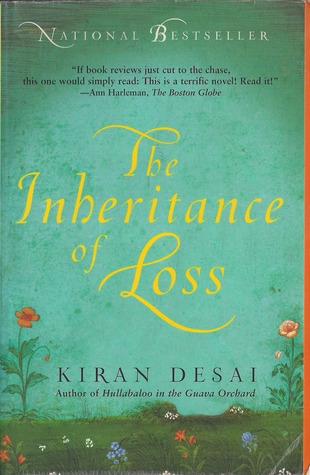
This brings me to my current read. Over the past few years, I have repeatedly encountered Kiran Desai’s The Inheritance of Loss. However, for reasons I cannot recall, I have been apprehensive about reading the book. I eventually relented and acquired a copy; I even included it in my 2026 Top 26 Reading List. Originally published in 2006, The Inheritance of Loss is Desai’s second novel. The novel is primarily set in 1986 and opens with the judge—later identified as Jemubhai Patel—and his granddaughter, Sai, sitting on the veranda of their home, Cho Oyu, a dilapidated mansion in the Himalayan town of Kalimpong. Meanwhile, their cook makes tea, while the judge’s dog, Mutt, sleeps on the porch. Their reverie is broken by the arrival of a group of boys from the Gorkha National Liberation Front (GNLF). They demand that the judge hand over his guns, threaten him with a rifle, and steal anything of value they can find in the house.
The judge sends the cook to the police station, but when the police return to the house, they accuse the cook of having a hand in the robbery. When the policemen tear apart the cook’s meager hut, they uncover letters from his son, Biju. Biju works at Gray’s Papaya in the heart of Manhattan. However, he has to leave when the restaurant’s manager is instructed to conduct a green-card check. He tries to find work at other restaurants, but he faces the same rejection. Meanwhile, the story flashes back to the time Sai arrived at Cho Oyu nine years earlier following her parents’ untimely deaths in the Soviet Union. Raised in convent schools, Sai is introverted and disconnected from her Indian heritage. This lays out the landscape of the story, which I have only just begun reading. Nevertheless, I am expecting an eventful novel. I will be sharing more of my impressions of the book in this week’s First Impression Friday update.
What have you finished reading?
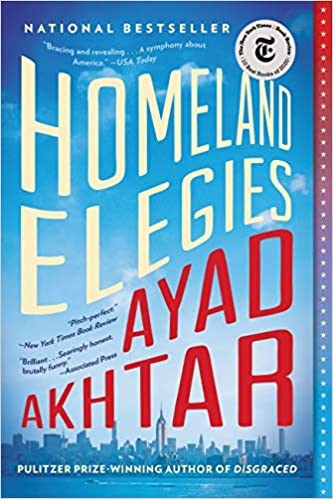
After a couple of slow reading weeks, I was finally able to regain some badly needed reading momentum over the past two weeks. I was able to complete two novels after reading three books the week before. I just hope I can sustain this reading momentum. Those slow reading weeks were due to a hectic workload. Thankfully, things are starting to look up. The first of the two books I read was Ayad Akhtar’s Homeland Elegies. Born in the United States to Pakistani parents, Ayad Akhtar has established a reputation as a playwright. For his work on Broadway, he received nominations for the Tony Award for Best Play for Disgraced (2015) and Junk (2017). He is also a renowned novelist. In 2012, Akhtar published his first novel, American Dervish. He gained even greater recognition as a novelist with his sophomore novel, Homeland Elegies. Shortly after its release, Homeland Elegies was listed by several literary publications as one of the best books of the year. This naturally piqued my interest. Half a decade later, I am finally reading the book, which I also included on my 2026 Top 26 Reading List.
Akhtar’s sophomore novel, Homeland Elegies, begins with an overture dedicated “To America.” Akhtar himself serves as the spiritual guide, and the novel integrates elements of autobiographical memoir. In the overture, Akhtar recalls Professor Moroni, a memorable college professor who instilled in him the idea that America is not what it claims to be. This sets the tone for the story—or at least that is what I can surmise so far, as I have only just begun reading the novel. We learn that Akhtar’s parents were doctors who emigrated from Pakistan to the United States when they were younger, drawn by America’s promise of opportunity for physicians. Interestingly, Akhtar’s parents were the antithesis of each other, at least in terms of how they viewed America. Sikander adored America, including Donald Trump. His wife, Fatima, yearned to return to the country of her birth. She did not feel that she belonged in America. The novel’s first section, titled “Family Politics,” begins with Donald Trump’s first year in office. Due to a medical emergency, the Akhtar family became acquainted with Trump, with Sikander treating him for a heart condition. It was through this acquaintance that Sikander developed an obsession with the American Dream. Sikander even tried to emulate Trump’s success. It was, however, all for naught, although their lives share certain parallels. In an attempt to assimilate into American culture and its lifestyle, Sikander left his medical career to speculate in real estate. It failed, prompting him to return to his original profession. The Akhtar family’s acquaintance with Trump eventually ended, but Sikander maintained the consumerist lifestyle he had embraced while treating him. Eventually, Sikander was forced to sell his private practice and declare bankruptcy. “Scranton Memoirs” focuses on Ayad’s struggles to assimilate into American culture. Akhtar draws on his experience of being profiled by a state trooper and a white business owner in Scranton. Both fixate on Ayad’s name and appearance; to them, he does not look American. They impress upon Ayad that there is more to being American than simply being born in America. The last section, “Pox Americana,” turns further inward as Ayad grapples with his identity and how it is shaped by his own prejudices. It centers on his relationship with Asha, a Pakistani-American woman.
There is something about Homeland Elegies that makes it stand out from the rest. Its autobiographical elements already give it a distinct texture, providing the novel with greater nuance. Akhtar’s sharp observations are integrated with evocative storytelling. He astutely blends memoir elements with fictional storytelling, resulting in a compelling and propulsive exploration of a plethora of themes and subjects. On a personal level, the novel is a vivid exploration of identity, as Akhtar shuttles between his two identities. He is American enough—at least in terms of his birthplace—to belong to the United States, yet not Pakistani enough to claim his parents’ homeland. A different dimension of identity is portrayed through his father, who was willing to shed his old identity for the proverbial American Dream. Ironically, when the American Dream died, Sikander went running back home. Beyond identity, Akhtar engages with contemporary issues of debt, capitalism, and xenophobia. He also captures the residual effects of September 11 on the Muslim community. Overall, Homeland Elegies is an insightful and profound exploration of identity, family dynamics, and the absurdities of modern life in America.
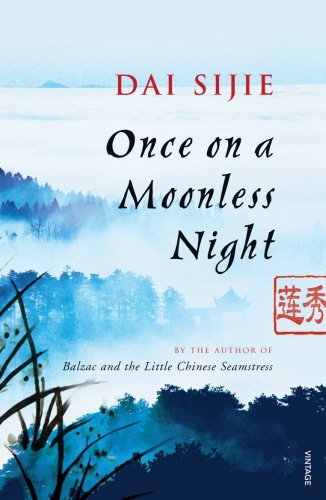
From the United States—and, effectively, Pakistan—my literary journey next took me to China. I believe Dai Sijie’s Once in a Moonless Night is my first work by a Chinese writer this year. Interestingly, Dai Sijie writes in French rather than in Chinese. Born in China to professors of medical sciences at West China University, Dai left China in 1984 for France on a scholarship to study at the Institut des hautes études cinématographiques. There, he developed a passion for film and became a director. He has since resided in France. Before pursuing a literary career, he made three critically acclaimed feature-length films. He first piqued my interest with his short novel, Balzac and the Little Chinese Seamstress, which was the first book of his that I read. Nearly a decade later, I have decided to read my second Dai novel, Once in a Moonless Night. I believe the book has been sitting on my bookshelf for quite some time already.
Originally published in 2007 as Par une nuit où la lune ne s’est pas levée, Once in a Moonless Night is narrated by an anonymous French scholar of Asian and African languages. As a young student, she spent time in 1978 and 1979 in a newly opened China, studying in “Peking.” In the aftermath of the Cultural Revolution, she fell in love with a bright young man who worked in her neighborhood greengrocer’s shop. Tumchooq Zhong, however, was no ordinary greengrocer. He was the estranged son of the French linguist Paul d’Ampère, the first person to “crack” the dead language Tumchooq. Paul turned his back on his affluent European heritage in favor of Chinese citizenship, devoting his adult life to finding a fragment of an ancient text written in Tumchooq. The language was initially known to modern scholars through a partial Buddhist sutra written on a torn scroll that played a part in the lives of both of China’s “last emperors” and some of their predecessors. When Puyi, the last emperor, was exiled to Manchuria in the early 1930s, it is said that he carried the silk scroll with him. When Puyi was taken prisoner by the Japanese, he was said to have torn the scroll in half and flung both pieces from a plane. D’Ampère named his son after the lost language. His obsession with the sutra gave rise to a rumor that he had traded his wife for the scrap of the scroll, which supposedly explained his absence from his son’s life. D’Ampère spent the last years of his life in a horrific Chinese labor camp as a state prisoner. Meanwhile, the anonymous narrator first heard of the mysterious sutra in 1978, when she was working as a translator during a meeting about The Last Emperor. It would eventually connect her to Tumchooq. Romance would blossom, but as fate would have it, history repeated itself. The lovers’ paths diverged. Tumchooq abandoned his girlfriend following news of his father’s death. He decided to take up the search for the sutra, essentially leaving his girlfriend behind. He was unaware that she was pregnant. Abandoned by her lover, the unnamed narrator returned to France and spent the succeeding years studying and teaching in Africa. She also spent her time thinking about her lover and rationalizing what had happened between them. Meanwhile, Tumchooq was trying to understand the father he had barely known.
The stories of Tumchooq and the narrator are intertwined with those of various Chinese scholars, politicians, and nobles, as well as figures such as Marco Polo. This convolutes the story to some extent, making it challenging to appreciate. Nevertheless, as one wades through its various elements, what emerges is an exploration of the different representations of the written word. As the story moves forward, it becomes palpable that it is exploring language and its intricacies. This is juxtaposed against a troubled Chinese history, passages from books both published and imagined, legal testimonies, hidden memoirs, and even private diary entries. These different elements somehow come together to create an epistolary novel. In his sophomore novel, Dai highlights the power of language to heal people from madness and despair. On the other hand, language also has the power to drive people to obsession. As if to subtly underscore the power of language, Dai is a Chinese-born writer who writes in French, his adopted tongue.
What will you read next?


