
Happy Wednesday, everyone! Woah! Just like that, we are nearly in the eighth month of the year. How time flies! I hope the year has been kind and great to everyone. I know life isn’t a walk in the park, but it is my fervent prayer that everyone’s year is going well. Regardless, I hope the rest of the workweek goes smoothly.
That said, the middle of the week also brings a fresh WWW Wednesday update. WWW Wednesday is a bookish meme hosted originally by SAM@TAKING ON A WORLD OF WORDS.
The mechanics for WWW Wednesday are quite simple: you just have to answer three questions:
- What are you currently reading?
- What have you finished reading?
- What will you read next?

What are you currently reading?

It’s already the middle of the week, which means we have only two more days until the weekend. I hope everyone makes it through the workweek. Anyway, my 2026 reading journey is going as planned. I spent the first two months of the year reading works by Latin American and Caribbean writers. I then followed that with a venture into European literature, a journey that lasted four months. I think this is the longest time I have spent immersed in European literature in a single year. I am just glad I was finally able to complete all the works by European writers included in my reading challenges. Ironically, I first ventured into European literature because of these books, yet they were the last ones I read. In any case, I am glad I was finally able to conclude that journey. Nevertheless, it was one that I truly relished. Still, I am happy to begin a new literary adventure. With July being my birth month, I decided to venture into the works of Asian writers.
This brings me to my current read. Over the past few years, I have made a concerted effort to read more works by Filipino writers. This has led me to discover writers I had not encountered before. Among them is Edith L. Tiempo, who, I just learned, was from Bayombong, Nueva Vizcaya; her hometown is quite close to mine. She was a prolific writer whose oeuvre spanned poetry, short stories, literary criticism, and, of course, novels. Among National Artist for Literature Edith L. Tiempo’s novels is His Native Coast, a book I acquired out of sheer curiosity. I later made it part of my ongoing venture into Asian literature. The novel opens in Pagatban, a mountainous forest in Negros. At the heart of the story are Marina Manuel and Lieutenant Michael Linder. Marina is the daughter of an Ifugao woman (it is mentioned that she grew up in Lagawe) and a Batangas congressman, both of whom have passed away.
Michael, on the other hand, is a member of the American guerrilla forces who has recently arrived from Australia to reinforce the Philippine resistance movement. And yes, the story begins during the twilight years of the Second World War, specifically in 1944. Before the war, Marina worked as a schoolteacher at Silliman University; Tiempo herself studied at and earned a degree from the same university in Dumaguete. Since the war began, Marina has been with the Pagatban underground resistance movement. With the war approaching its inevitable end, it is time for the resistance movement to make its move and descend to the lowlands. I just finished the first of the novel’s six chapters. Admittedly, the writing is rather dense, but I look forward to exploring Tiempo’s body of work. As I only started reading the book today, I don’t have many impressions to share yet. I will be sharing more of my thoughts on the book in this week’s First Impression Friday update.
What have you finished reading?
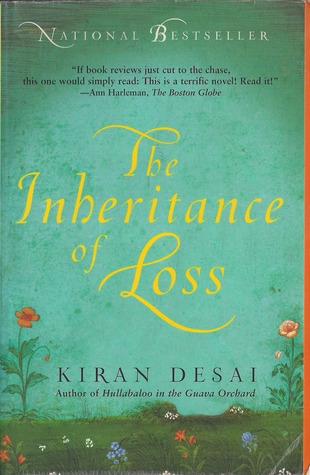
After a couple of slow reading weeks, I was finally able to regain some badly needed reading momentum over the past two weeks. I completed two novels after reading three books the week before. I just hope I can sustain this momentum. Those slow reading weeks were due to a hectic workload. Over the past decade, my exploration of Indian literature has expanded exponentially. I owe much of this to Salman Rushdie. While he was among the first writers to introduce me to Indian literature, I have since discovered many new-to-me voices. Among them is Kiran Desai, whom I first encountered through various must-read lists. In particular, her sophomore novel, The Inheritance of Loss, was a constant presence on those lists. Over the past few years, I have repeatedly come across the book. However, for reasons I cannot recall, I had been apprehensive about reading it. I eventually relented and acquired a copy; I even included it in my 2026 Top 26 Reading List.
Originally published in 2006, The Inheritance of Loss is primarily set in 1986 and opens with the judge—later identified as Jemubhai Patel—and his granddaughter, Sai, sitting on the veranda of their home, Cho Oyu, a dilapidated mansion in the Himalayan town of Kalimpong at the foot of Mount Kanchenjunga. Meanwhile, their cook prepares tea while the judge’s dog, Mutt, sleeps on the porch. Their quiet reverie is disrupted by the arrival of a group of boys from the Gorkha National Liberation Front (GNLF), an insurgent movement of Nepalis demanding statehood in India. The boys threaten the judge and steal anything of value they can find in the house. The judge then sends the cook to the police station. However, the police accuse the cook of having a hand in the robbery. Tearing apart the cook’s meager hut, the policemen uncover letters from his son, Biju, the third major character in the novel. Biju has been living illegally in New York City after overstaying his tourist visa. This forces him to search for work in restaurants, even if the pay is meager. Unfortunately, he faces rejection and prejudice. Ironically, the letters he sends to his father exaggerate and idealize his life in the United States. His father boasts about Biju’s “successful” American Dream to his friends, family, and neighbors. Meanwhile, the story flashes back to the time Sai arrived at Cho Oyu nine years earlier. She had left St. Augustine’s Convent after her parents were killed in a bus accident. The nuns sent her to live with her grandfather. Upon her arrival, Sai and her grandfather exchange only a few words, but the judge is pleased to discover that they seem accustomed to similar cultural sensibilities. Sai grows up in isolation under her grandfather’s care. Reading National Geographic magazines and colonial travelogues becomes her primary means of escape. The cook serves as a surrogate father, although she constantly yearns for her parents. The judge hires two elderly anglophiles, Noni and Lola, to tutor Sai, but when she surpasses Noni’s abilities, he hires Gyan, a recent university graduate, to tutor her in mathematics and physics. We also learn about the judge’s own past. Born into poverty, he became devoted to colonial England as a young man. When he was twenty years old, Jemubhai left India to study for the Indian Civil Service at Cambridge University, leaving behind his fourteen-year-old wife, Nimi Patel, and using the dowry he had received from their marriage to finance the trip. In Cambridge, however, he becomes deeply disillusioned, treated as an outcast and a second-class citizen. His attempts to assimilate are rejected. He tries to adopt English speech and customs, eventually finding his own skin color odd and his accent strange. By the time he returns home, he has grown contemptuous of both his homeland and his wife.
Winner of the 2006 Booker Prize, The Inheritance of Loss proved to be an unexpectedly rewarding read. Beneath its expansive narrative lies a rich exploration of numerous themes, with isolation a recurring theme. In retirement, the judge withdraws from the world, while Biju confronts a similar sense of estrangement as an undocumented immigrant in New York. The remote Himalayan setting reinforces this atmosphere of solitude and disconnection. Through these characters, Desai examines questions of belonging, cultural displacement, and the gradual erosion of identity, while also probing the elusive meaning of home. At the same time, the novel lays bare the deep social divide between privilege and poverty by following characters from vastly different backgrounds. True to its title, the story offers a moving meditation on loss, balanced by moments of love and tenderness. These deeply personal experiences unfold against a backdrop of political upheaval and ethnic conflict, allowing Desai to weave intimate human drama with broader historical realities. Kiran’s evocative prose captures both the landscape of 1980s India and the social and political tensions that shaped the era.
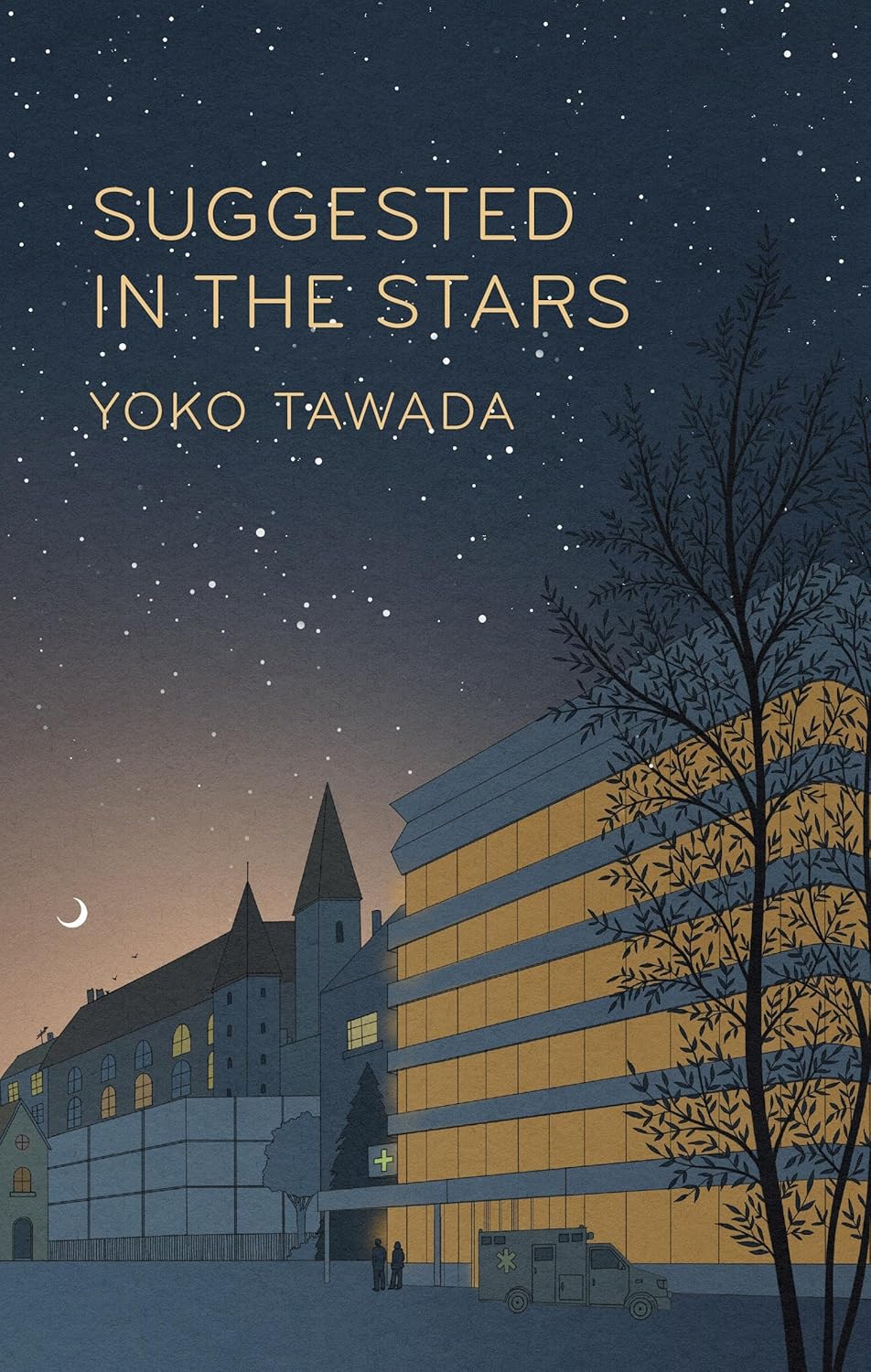
From India, my literary journey once again took me to a very familiar literary territory: Japanese literature. Ever since I encountered Yōko Tawada during the lead-up to the 2018/2019 Nobel Prize in Literature, she has become a fixture in my literary journeys. She was among the favorites, piquing my interest. While she was not awarded the prestigious literary prize, my curiosity was enough to make me want to explore her oeuvre. In 2019, I read Memoirs of a Polar Bear. It was an interesting read, one that stood outside the conventional Japanese literary mold. This is perhaps because Tawada has resided in Europe since her early twenties; she also writes in both German and Japanese. Of the four Tawada books I have read so far, including Suggested in the Stars, three are set outside Japan. Only The Last Children of Tokyo is set in Japan. Still, all four novels share the quality of being unconventional, or at least of dealing with familiar subjects in ways that are intriguing and unexpected. Suggested in the Stars is the fourth Tawada novel I have read.
Originally published in 2020 as 星に仄めかされて (Hoshi ni Honomekasarete), Suggested in the Stars is the sequel to Tawada’s 2018 novel Scattered All Over the Earth, which I read last year. It reunites readers with the trilogy’s quirky cast of characters introduced in the first novel. Like its predecessor, the novel is composed of chapters narrated in the first person by different characters. The story is set in a dystopian world that both resembles and diverges from our own. The primary setting is a large hospital in Copenhagen, where three of the new characters work. The bizarre hospital is an eerie space where reality and rationality are undermined by a series of surreal and increasingly absurd events. Central to the cast is Hiruko, a native of “the Land of Sushi.” In the first book, we learn that her homeland—which can be inferred to be Japan—has vanished beneath the sea due to a mysterious environmental disaster. She has since embarked on an odyssey to find someone else who speaks her mother tongue. In this second book, Hiruko makes her way to the hospital because she believes that one of its patients, Susanoo, is among the last members of her ethnic group—that is, among the last people who can still speak her lost language. Susanoo may or may not have aphasia, a condition involving the loss of speech, and he is receiving treatment from Dr. Velmer. Having been studying in Scandinavia, Hiruko hopes to speak with Susanoo in their shared language and reconnect with someone from her vanished homeland. Hiruko’s friends—Nanook, Nora, Knut, and Akash—also try to reach the hospital, each driven by different motivations. Knut, for instance, is motivated by her deep interest in languages, while Akash is drawn by his attraction to Knut and his desire to spend more time with her. Likewise, Nora and Nanook were formerly in a relationship. The characters eventually reunite in Copenhagen, although each of their journeys is interesting in its own right. Along the way, they encounter a series of seemingly random events, including hitchhiking, bad weather, and cancelled public transport. While these incidents appear arbitrary, they also reflect a world shaped by the existential crises of climate change and the erosion of cultures. Once in Copenhagen, the characters try to help Susanoo regain his lost voice.
In Suggested in the Stars, Tawada revisits many of the ideas introduced in Scattered All Over the Earth, with language once again occupying the novel’s thematic center. In the first installment, Hiruko creates Panska, a self-fashioned language that blends vocabulary and linguistic features from several Scandinavian languages. Through this invented language, Tawada examines the search for identity in an increasingly interconnected world, where languages and cultures constantly intersect, diverge, and transform. The sequel further expands these ideas by exploring the possibilities and limitations of human communication. These questions are intertwined with concerns about climate change, displacement, and the crossing of both physical and symbolic borders. The narrative is marked by an engaging surrealism that unsettles conventional notions of reality. Ultimately, Hiruko’s journey becomes less a quest to find another speaker of her native tongue than a meditation on belonging, memory, and the ways identities are both preserved and relinquished. Suggested in the Stars is an intellectually rich and remarkably ambitious novel.
What will you read next?


You got me at i hope everyone makes through the workweek..😭
Also i could see some lovely recommendations here!
I finished reading Forty Rules of Love by Elif Shefak, and currently on Letters to Milena by Franz Kafka. Next in could be any of Dostoevsky, or maybe i’ll finish part 2, more days at morisaki bookstore ✨
LikeLike
I am actually looking forward to Shafak’s Forty Rules of Love! How was it, by the way, if you don’t mind?
LikeLiked by 1 person
Absolutely. It was a great read. I’d had it on my TBR for a long time, and it was well worth it.
I do have some criticisms of Ella, the main character, and even of Rumi’s portrayal in the story within the story. Love, as a concept, is very much glorified and often placed above rules and boundaries. The central idea is brilliant, and the book is full of philosophical reflections. If you enjoy reading Rumi or have an interest in Sufism, I think you’ll really appreciate it.
LikeLike