
Happy Wednesday, everyone! Woah! Just like that, we are already in the ninth month of the year. How time flies! I hope the year has been kind and great to everyone. I know life isn’t a walk in the park, but it is my fervent prayer that everyone’s year is going well. I hope that the coming months will usher in blessings and positive news for everyone. I hope the rest of the workweek goes smoothly.
That said, the middle of the week also brings a fresh WWW Wednesday update. WWW Wednesday is a bookish meme originally hosted by SAM@TAKING ON A WORLD OF WORDS.
The mechanics for WWW Wednesday are quite simple: you just have to answer three questions:
- What are you currently reading?
- What have you finished reading?
- What will you read next?

What are you currently reading?

It’s already the middle of the week, which means we have only two more days until the weekend. I hope everyone makes it through the workweek. After a couple of damp weeks, the sun is finally shining here in the northern part of the Philippines. Reading-wise, I am currently in the midst of a foray into the works of American writers. American literature has always been a staple of my annual literary journey. With American literature being one of the most readily available, I guess one can never escape it. I also realized that I have several works of American literature in my ongoing reading challenges. This reminds me that we are already in the final stretch of the year, and I still have quite a lot of books to read for my reading challenges. I guess it is time to lock in to avoid cramming during the last month of the year.
My current read, however, is not part of any of these reading challenges. Last year, I noted the release of Yáng Shuāng-zǐ’s Taiwan Travelogue. The book piqued my interest, but for some reason, I held back. A year later, I would come across the book again when it was nominated for the International Booker Prize. It became imperative for me to secure a copy of the book and read it. The urge to read it became even stronger when it won the said prize. Thankfully, my Taiwanese friend gifted me a copy of the book, a sort of welcome-back gift. Without further ado, I immersed myself in the book. Originally published in 2020 as 臺灣漫遊錄 (Táiwān Mànyóu Lù), the novel is framed as an autofiction written by a Japanese author, Aoyama Chizuko (青山 千鶴子). Chizuko is a celebrated young novelist. Her book A Record of Youth was recently adapted into a popular film.
Her story, however, transports us to Japanese-occupied Taiwan. In May 1938, she traveled to the Japanese colony at the joint invitation of the colonial Government-General and the Nisshinkai, a Japanese women’s organization. While the invitation was meant to serve the interests of propaganda, Chizuko was less interested in promoting the Empire’s agenda than in experiencing authentic Taiwanese life. Upon arriving in Taichū (the Japanese name for Taichung), Chizuko was overwhelmed by the sights and sounds of the Islander market; Islanders pertain to Taiwanese people, while Mainlanders pertain to the Japanese. At the local market, Chizuko struggled to buy a pineapple. A petite Taiwanese woman intervened, speaking flawless Japanese. Interestingly, food is at the heart of the novel; Chizuko was actually looking forward to experiencing Taiwanese life through its cuisine.
Chizuko was disappointed when her assigned government guide, Mishima, repeatedly deflected her requests for local cuisine. Even her host, Madame Takada of the Nisshinkai, disappointed her when she served her meals tailored to Japanese tastes. Madame Takada then arranged for a Taiwanese interpreter named Ō Chizuru, a former schoolteacher preparing for marriage, to accompany Chizuko. Chizuko immediately recognized her as the woman from the market. Chizuru, however, was more than just an interpreter. She possessed an extraordinary knowledge of Taiwan’s geography, history, ethnic groups, and cuisines. It was serendipitous, as Chizuru provided Chizuko with the window of opportunity she yearned for. But it seems that there is more to the story than what appears on the surface, especially as Chizuko is slowly growing attached to her guide.
Yáng is certainly providing a vicarious experience. The food that permeates the story seduces both the olfactory and gustatory senses. I am nearly halfway through the book, and it is certainly achieving its goal of being a travelogue. It is a delightful treat. I have personally traveled to Taiwan three times, but the book is providing me with a different glimpse into Taiwan, its people, culture, and, more importantly, its cuisine. I am looking forward to seeing how the story unfolds. By the end of it, I surmise I will be full.
What have you finished reading?
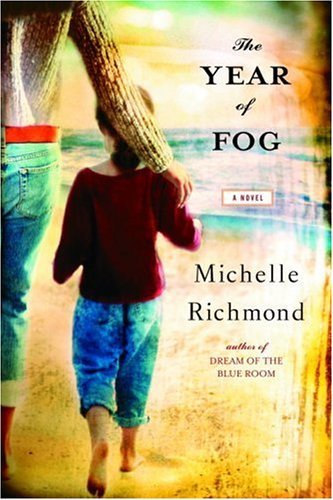
I am still trying to gain some reading momentum as my life has been experiencing a couple of transitions, both professionally and personally. Nevertheless, I am glad I was able to allot time to reading. In the past week, I was able to complete two books, which I still consider a good number. More importantly, these books are part of my reading challenges. I sure hope I won’t be cramming toward the end of the year again. Anyway, the first of the two books I read is Michelle Richmond’s The Year of Fog. It has been nearly a decade since I acquired a copy during one of my random ventures into the local bookstore. While I had no inkling of who Richmond was, the book piqued my interest. It, however, suffered the same fate as most of my books: gathering dust on my bookshelf. It was because of this that I included it in my 2026 Beat the Backlist Challenge.
Originally published in 2006, The Year of Fog opens with Abby Mason, a photographer and soon-to-be stepmother. She is at Ocean Beach looking after her fiancé Jake’s six-year-old daughter, Emma, while Jake is away on a trip. It is a foggy day at the beach, but Abby and Emma are holding hands as they walk along the shore. While Abby is busy taking photographs, Emma is busy looking for sand dollars. However, a brief moment of distraction irreversibly alters Abby’s life. As Abby looks away toward the Great Highway for mere seconds, Emma is enveloped by the fog and vanishes inexplicably. This brief moment of inattention leads to heartache and turmoil, prompting a desperate search. News of Emma’s disappearance fills the news. Still, no traces of Emma are found. Soon after, the police lose interest in the case. There are no leads. Meanwhile, Abby’s life begins to unravel. Emma’s disappearance consumes Abby with guilt, causing her to repeatedly replay that moment in her mind. She hopes to find clues. While everyone is pessimistic, Abby holds on to the unwavering hope that Emma is still alive. Jake is understandably shattered. Days soon stretch into weeks, yet Abby remains resolute in her desperate quest for answers. This inevitably collides with her own childhood memories. Richmond also skillfully captures Abby’s internal turmoil. She feels both joy and fear about becoming a mother figure to Emma, especially about the space she has to fill in Emma’s life. Despite her apprehensions about stepmotherhood, Abby feels an undeniable connection to the child. Abby wanders the beaches, searching for any signs. She relentlessly searches for fresh leads. Emma’s disappearance under her care profoundly affects Abby’s psyche. Her determination leads her to unexpected places, both geographically and emotionally. However, with the passage of time, fliers bearing Emma’s face fade from view. The once-bustling search efforts dwindle. Emma’s name is no longer mentioned in the news. Still, Abby’s hope remains. It keeps pushing her forward even when everyone seems to have given up hope. The case also creates a chasm between her and Jake, who leans on religion and scientific theories even as he loses hope. Abby, despite societal pressures, continues her pursuit. This journey becomes her obsession. But even her quest for the truth and answers eventually takes a toll on her. Her fixation on Emma’s disappearance leads her to alcohol, something she rarely indulged in before Emma’s disappearance.
When it all became too much, Abby left San Francisco behind. Her search took her to a different country. In a way, her quest for truth transforms into a quest for her true self. In Costa Rica, she immerses herself in a new cultural setting filled with wanderers and surfers. There, she learns new things about herself. The new people she meets influence her path. Slowly, her perspective begins to shift. The novel, however, does not reduce itself to a mere work of mystery. It also explores love, loss, and the emotional turmoil that accompanies them. It grapples with the intricacies of parenthood, including stepparenthood, and the anxieties that come with raising a child. What was at the onset a quest for a missing child gradually transforms into a quest for understanding oneself. Photography takes on an interesting allegorical role, as it is a means of capturing memory. The conclusion was a downer, and the dialogue was stilted. Still, The Year of Fog was a propulsive read.
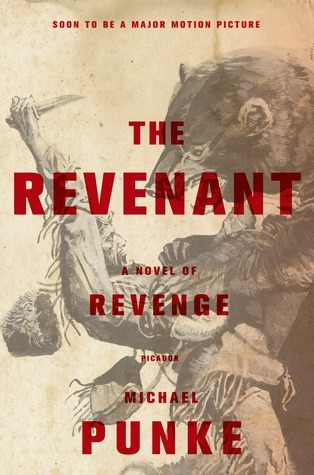
From a new-to-me writer to another new-to-me writer. The second book I read in the past week is Michael Punke’s The Revenant. I first came across the story through its film adaptation. The Revenant starred none other than Leonardo DiCaprio. It was also the film that earned him the elusive Academy Award for Best Actor. It was this title recall that made me secure a copy of the book when I came across it during the 2018 Big Bad Wolf Sale. I was not even aware that the movie was based on a novel. Interestingly, I have not watched the movie; I am not a cinephile. Still, this did not keep me from acquiring the book. Unfortunately, the book was left to suffer the same fate as most of my books: gathering dust on my bookshelf. It is for this reason that I included the book in my 2026 Beat the Backlist Challenge.
The Revenant: A Novel of Revenge was originally published in 2002. The novel’s subtitle, I guess, already provides a clue as to what the novel is about. The novel opens in September 1823. We meet Hugh Glass, a trapper for the Rocky Mountain Fur Company. However, he is in bad shape, lying severely wounded after a grizzly bear attack. He is unable to speak due to a throat injury. His two companions, John Fitzgerald and Jim Bridger, who were tasked with staying behind to care for him until his inevitable passing, abandon him. Fearing an approaching Arikara war party, Fitzgerald takes Glass’s rifle, powder horn, and other essential gear. They then leave the helpless man to die. The story then shifts back several days to August 1823. William H. Ashley, a leader of the Rocky Mountain Fur Company, is at Fort Brazeau, frustrated by the closure of the Missouri River to trade due to a battle with the Arikara tribe. He crafts a plan to bypass the hostile territory. Two parties will be sent overland. Captain Andrew Henry will lead one group, including Glass, Fitzgerald, and Bridger, up the Grand River. The group is tense as they travel along their initial route to Fort Union. Henry even confides in Glass about his anxieties over past failures. That night, Bridger accidentally fires his faulty musket while on watch, causing a panic that Glass defuses by blaming the poor equipment. Then comes the fateful day. While scouting an area, Glass is brutally mauled by a grizzly sow. He kills the bear, but it collapses on top of him, leaving him near death. When his fellow scout, Black Harris, finds him, Captain Henry and Bridger crudely stitch his wounds. Glass is carried on a litter for three days. However, this slows their progress and places them in constant danger. Captain Henry then decides to leave Glass behind and offers a seventy-dollar bonus for two men to stay with him until he dies and give him a proper burial. Fitzgerald volunteers for the money, followed by Bridger. This then leads to the opening sequence. Fitzgerald, however, is remiss in his judgment. Despite his grievous injuries and being on the brink of death, Glass miraculously survives. He then embarks on a treacherous journey of survival and vengeance. His only goal is to track down Fitzgerald and exact retribution for his betrayal. Throughout his harrowing trek, Glass encounters various people and unimaginable hardships, including starvation and freezing temperatures. Each meeting further shapes his growing need for retribution. His sense of isolation heightens as he battles a dual struggle: the elements and his relentless pursuit of vengeance.
The Revenant is a story steeped in historical detail. Punke vividly captures the contours of the American frontier during the nineteenth century. The landscape mirrors Glass’s struggle, filled with both beauty and danger. It is a gripping historical novel that immerses us in the brutal realities of the early American frontier. The traders are in conflict with different elements of nature. However, their worst enemies are their fellow men, from hostile Native American tribes to their fellow traders. Still, the novel captures Glass’s resilience in the face of these challenges. He learns to use his surroundings to his advantage, even if it entails resorting to desperate measures, such as eating raw meat, to stay alive. His survival skills and determination carry him through the ordeal, while his desire for revenge gives him another reason to press forward. His struggle is juxtaposed with the natural beauty of the American wilderness, creating a stark contrast between the unforgiving conditions he faces and the landscape surrounding him. Overall, The Revenant is an engrossing story about the indomitable human spirit in the face of adversity.
What will you read next?


Interesting looking books. Enjoy your current and next reads.
Have a great week!
Emily @ Budget Tales Book Blog
My post:
LikeLike